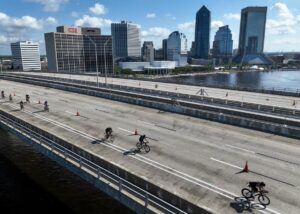
Management versus peloton
Written by: Dan Empfield
Date: Mon May 18 2009
Over the weekend The Giro d’Italia featured a circuit race around Milan. This, to remind cycling fans, in this grand tour centennial year, of the Giro’s special attachment to this fine Italian city.
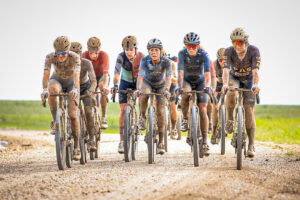
The riders, however, protested the stage by staging a sit-in or, sit-on if you prefer, not getting out of their saddles to accelerate past 20mph the entire day.
The problem, say the riders, is a lack of attention by tour organizers to rider safety. I read a report in the New York Times referencing a Saxo Bank rider clocked at 73mph on a descent during Stage 7. This is emblematic of the issues angering the riders, which include problems with the course on which the circuit race was contested.
Professional sportsmen are no different than any other class of worker. They will fight for safety and fairness in the workplace, and for what they see as appropriate pay and conditions.
Or not.
About a decade ago I chronicled the history of pro triathletes’ attempts to unionize; suffice it to say that, during the intervening decade, it’s been more of the same. While you hear a smattering of complaints about the prize money in a non-Kona Ironman, which remains the same as it was almost 20 years ago, you don’t see anything approaching a common voice about athlete pay.
Happily, our sport’s pros don’t commonly run up against safety issues in triathlon—and it’s not like safety is not an issue. Were I putting on either a triathlon or a bike race (and i have produced both), my first thought is for athlete safety. I think any speed in excess of 55mph is too much to expect of bike racers. It’s not rodeo, it’s not cage fighting, it’s bike racing. Descents in the Dolomiti should be on roads like Passo Pordoi, where there are 33 switchbacks on one side and 27 on the other (and each side is only about 7mi long). These turns keep descent speeds down to 40mph or less, most of the time, and technical descents ask more of a rider's talent and less of his skin.
When most or all of the rider’s strong men—not just Armstrong, but Simoni, Basso, Di Luca—agree that the stages are too dangerous, were I a race director I’d feel overmatched on this issue (and rightly so).
i certainly hope, for the riders' sake, the NYT article was wrong when it wrote: "But Sunday’s course [the Giro’s RD] said, was fine. What proved it, he said, was when the teams ramped up their speed at the end of the race, without any incidents." The fact that a small segment of the peleton (3 or 4 teams out of 22) was able to race two of a scheduled 10 laps without a crash "proved" that the course was safe?
The riders, however, protested the stage by staging a sit-in or, sit-on if you prefer, not getting out of their saddles to accelerate past 20mph the entire day.
The problem, say the riders, is a lack of attention by tour organizers to rider safety. I read a report in the New York Times referencing a Saxo Bank rider clocked at 73mph on a descent during Stage 7. This is emblematic of the issues angering the riders, which include problems with the course on which the circuit race was contested.
Professional sportsmen are no different than any other class of worker. They will fight for safety and fairness in the workplace, and for what they see as appropriate pay and conditions.
Or not.
About a decade ago I chronicled the history of pro triathletes’ attempts to unionize; suffice it to say that, during the intervening decade, it’s been more of the same. While you hear a smattering of complaints about the prize money in a non-Kona Ironman, which remains the same as it was almost 20 years ago, you don’t see anything approaching a common voice about athlete pay.
Happily, our sport’s pros don’t commonly run up against safety issues in triathlon—and it’s not like safety is not an issue. Were I putting on either a triathlon or a bike race (and i have produced both), my first thought is for athlete safety. I think any speed in excess of 55mph is too much to expect of bike racers. It’s not rodeo, it’s not cage fighting, it’s bike racing. Descents in the Dolomiti should be on roads like Passo Pordoi, where there are 33 switchbacks on one side and 27 on the other (and each side is only about 7mi long). These turns keep descent speeds down to 40mph or less, most of the time, and technical descents ask more of a rider's talent and less of his skin.
When most or all of the rider’s strong men—not just Armstrong, but Simoni, Basso, Di Luca—agree that the stages are too dangerous, were I a race director I’d feel overmatched on this issue (and rightly so).
i certainly hope, for the riders' sake, the NYT article was wrong when it wrote: "But Sunday’s course [the Giro’s RD] said, was fine. What proved it, he said, was when the teams ramped up their speed at the end of the race, without any incidents." The fact that a small segment of the peleton (3 or 4 teams out of 22) was able to race two of a scheduled 10 laps without a crash "proved" that the course was safe?
I have yet to face my first “worker backlash.” Maybe my time is coming (Herbert and Rappstar, are you planning a strike?). Certainly I’ve infuriated particular professional athletes, because I do require adult, professional behavior from an athlete who styles him or herself a professional (e.g., a recent forum thread on mechanicals). But in the main, the pro athletes seem to have been pretty happy with me, and I like to think it’s because I’ve been respectful of them.
I’ve also been disappointed in them because—like Mark Cavendish in the Milan circuit race—many pro triathletes have proven more interested in their personal, short-term reward than in the long-term collective good of the worker class in which they belong. Were the professional men’s field in an Ironman to stand motionless for 30 seconds after the sound of the gun before commencing the swim, I’d feel a sense of professional pride in our sport’s athletes, and maybe those tasked to run the Ironman would consider adding a few dollars to the prize purse.
But I don’t expect this pre-swim “stand-in” to happen and, until it does, I can’t really blame WTC from returning this money to Providence Equity Partners shareholders—the one worker class who did step up and take a financial risk.
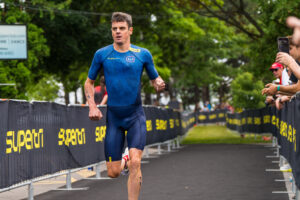
I’ve also been disappointed in them because—like Mark Cavendish in the Milan circuit race—many pro triathletes have proven more interested in their personal, short-term reward than in the long-term collective good of the worker class in which they belong. Were the professional men’s field in an Ironman to stand motionless for 30 seconds after the sound of the gun before commencing the swim, I’d feel a sense of professional pride in our sport’s athletes, and maybe those tasked to run the Ironman would consider adding a few dollars to the prize purse.
But I don’t expect this pre-swim “stand-in” to happen and, until it does, I can’t really blame WTC from returning this money to Providence Equity Partners shareholders—the one worker class who did step up and take a financial risk.
Articles related to this one
Are Pro Triathletes Getting Stepped on? Or are They Getting Their Just Desserts?
Give Scott Tinley the task of beating up on a gaggle of pro triathletes on the race course and he's more than capable. Ask him to organize those same professionals into a union that will represent their best interests and you might as well ask him to raise the dead. 12.10.99
Politics versus Purity of Purpose
Are the Beijing Olympics just another totalitarian infomercial? Or do they signal something hopeful—China reaching out to free world values? Granting the Games to countries with mixed human rights records is not new. 8.17.08
Comments
Mike Pigg, Shop Steward
Steve Blum
Reviewed by: Steve Blum, May 19 2009 8:31PM
In a dozen years of refereeing and briefing US pros, only one has stood up and challenged me on behalf of the group. At the Pacific Grove Tri in 2000, when USAT was experimenting with different draft-legal formats, there was grumbling about women being allowed to ride in with the men. Mike Pigg - who had absolutely no personal interest at stake - politely but thoroughly grilled me on the rules and argued that the athletes should be able to decide the matter by a vote. He knew his seniority carried responsibility, and he met it without hesitation. A true gentleman, in the old, rarely seen sense of the word.
Pro Unions
Reviewed by: Brandon Marsh, May 18 2009 8:24PM
Dan,
A fellow athlete and I had a short discussion about this in Florida.
I think that there are a number of pros who would be willing to do something. The problem is getting the 'buy in' of ALL the pros at a race. So, how do you do it? Prize money for WTC events has been the same for probably 10 years. I'm not saying that pros shouldn't have to pay their entries, but why not dump that back in on top of the purse? With a men's field of 40, that would add almost another $5k to the purse depending on the entry fees.
There are a host of other issues, but getting buy in from all of the pros is always going to be the difficult part.
Good article, I'll have to go re-read the one from a decade ago.
-Brandon
A fellow athlete and I had a short discussion about this in Florida.
I think that there are a number of pros who would be willing to do something. The problem is getting the 'buy in' of ALL the pros at a race. So, how do you do it? Prize money for WTC events has been the same for probably 10 years. I'm not saying that pros shouldn't have to pay their entries, but why not dump that back in on top of the purse? With a men's field of 40, that would add almost another $5k to the purse depending on the entry fees.
There are a host of other issues, but getting buy in from all of the pros is always going to be the difficult part.
Good article, I'll have to go re-read the one from a decade ago.
-Brandon