
We Test Hookless, Part II — On the Rollers
When we published our original feature on putting hookless to the test:
the inbox and comment section lit up. Readers wanted to know not just if a hookless tire could hold static pressure in a freezer chamber — but how it behaved under real-world dynamic load.
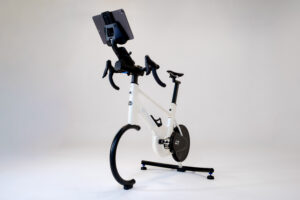
So we went back to the lab — or, in this case, our studio on a Wahoo KICKR ROLLR. Keep in mind this is the continuation of a lot of tests we will continue to run.
As a reminder, these tests are NOT designed to prove anything one way or another. They are not designed to tell you to do anything one way or another. They sure aren’t, in any way, shape or form some sort of example of why you should do anything expect follow the instructions from manufacturers. With that disclaimer out of the way…
The Setup
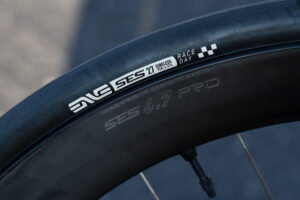
For this follow-up, we used the exact same wheel and tire combinations from our first test: hookless rims from CADEX, Zipp, and ENVE. We did skip the hooked Reserve wheel, as we all know those are fine at this level of PSI. For tires, by request we added the popular Continental GrandPrix 5000 TT TR and eliminated some redundant wheel/tire combos. As you can imagine, this means we didn’t check every single tire on every single wheel.
| Wheel | Inner Rim Width |
|---|---|
| CADEX 40 WHEELS | 22.4mm |
| ZIPP 358 NSW | 25mm |
| ZIPP 454 NSW | 23mm |
| ENVE 3.4 SES | 25mm |
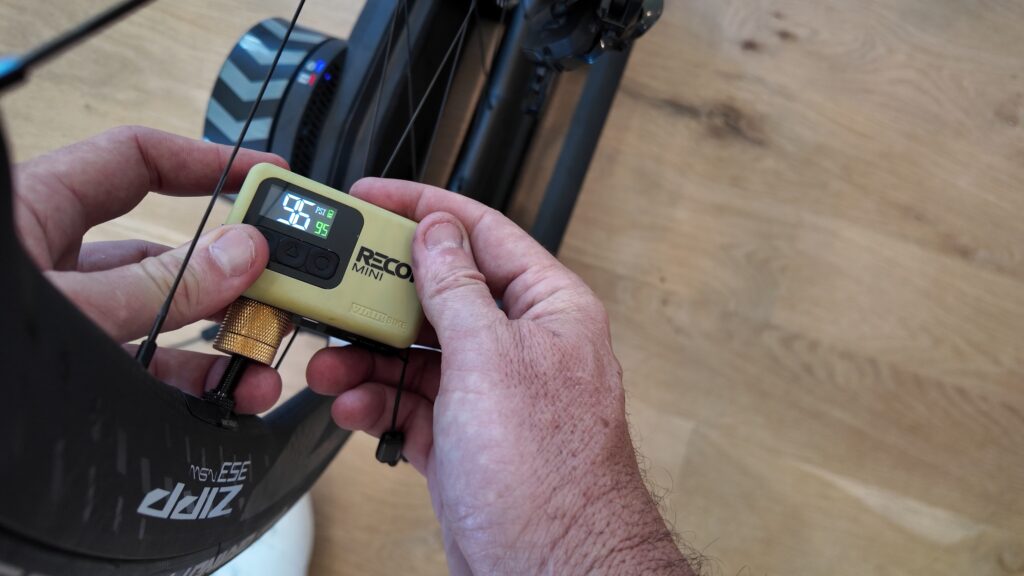
Each tire setup was mounted dry (no sealant), checked for bead seating, and inflated to 95–98 PSI — roughly what the average, old school rider would pump a tire to, assuming they are flying blind to hookless.
We should also note that we are using the same tires through each test, meaning they’re being inflated and deflated multiple times. We wanted to better test the life cycle of a tire and see if repeated use might impact results.
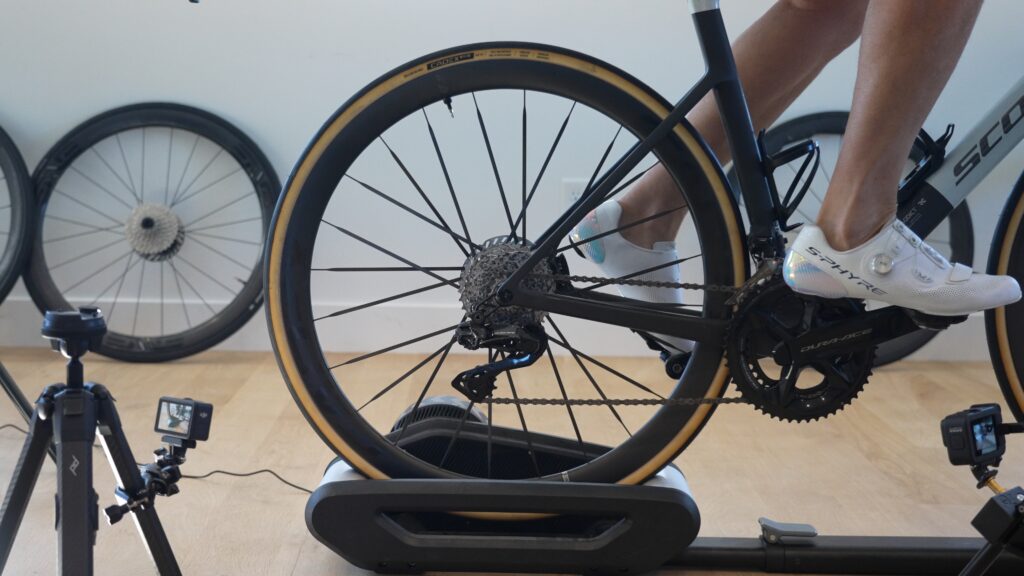
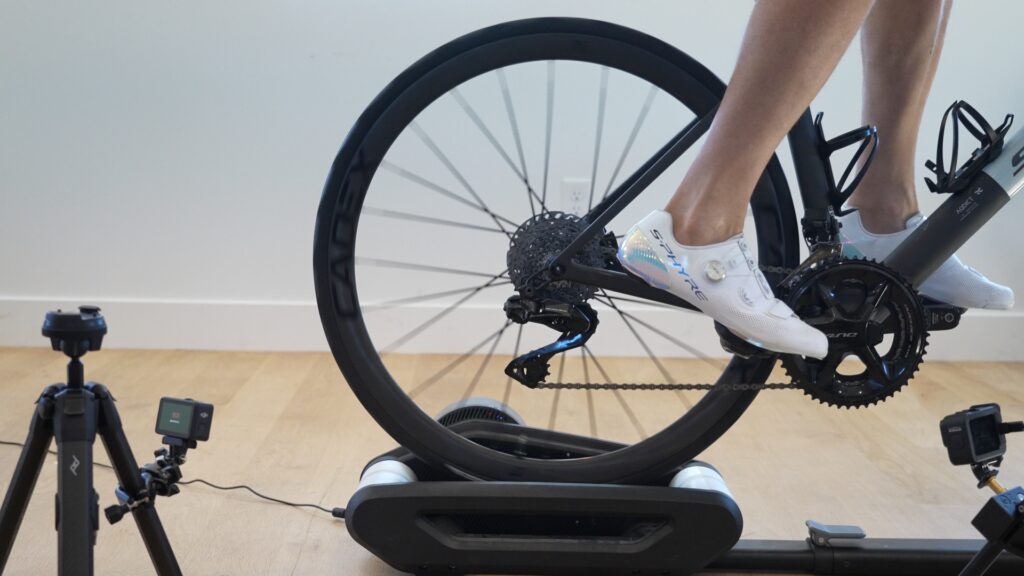
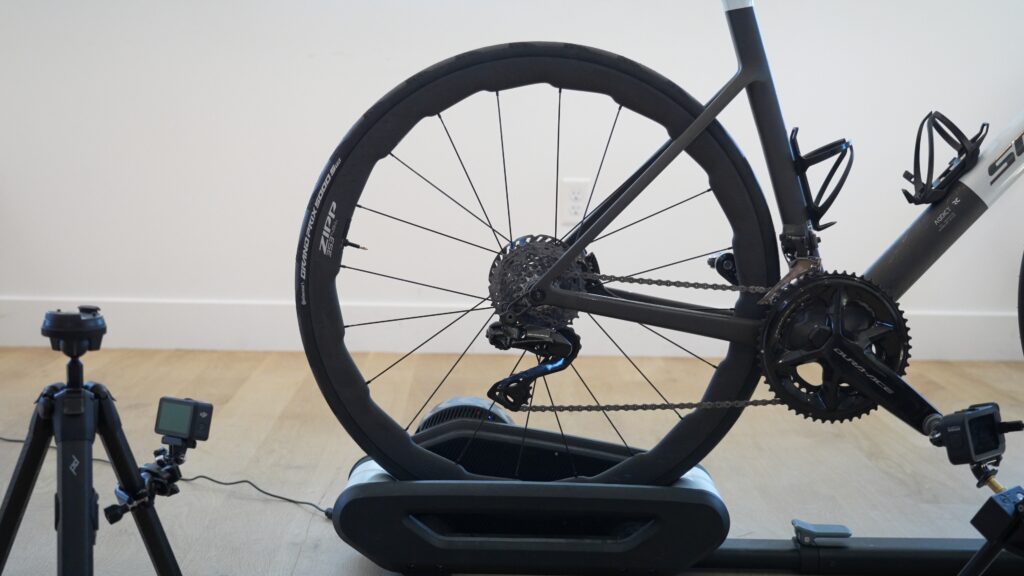
The goal of this test: simulate some sort of quick dynamic stresses.
Each wheel/tire combo was mounted on the rear wheel and placed on our Wahoo KICKR ROLLR.
The three-minute test included distinct repeatable phases:
- 60 Seconds spin
- 10 Seconds of bouncing up and down
- 50 Seconds Spin
- 10 Seconds bouncing up and down
- 50 Seconds of spin
You can see how that protocol went here:
Here are all of the various combinations that we tested:
The Results
Across all of the wheel and tire pairings, none of the hookless systems we tested failed or showed visible bead creep during our short test. Even with the deliberate heavy bouncing inputs during testing, pressures stayed within ±3 PSI of starting values with zero sealant.
The takeaway: besides the above, I’m not really sure, but we know the following: it was a very short test that shows the hookless systems handled short-duration, dynamic stress without issue. The interface between tire bead and rim shelf remained secure, and no loss of integrity was detected — even under deliberate rider-induced impact.
What It Means?
Well, we know this test doesn’t replicate a full descent over cobbles or the kind of abuse a road rider or gravel rider might see, and it doesn’t introduce sealant and isn’t meant to be the “whole enchilada.” But it does start to bridge the gap between our lab inflation tests and some real-world dynamics. It reinforces what our first test suggested: we think that the “danger” with hookless isn’t inherent to the design or at least at this point in the hookless game — it’s in misuse. When tire fit, pressure, and rim specs are respected, modern hookless road systems can perform safely and predictably.
As always, the biggest risk is human error: over-inflating beyond limits, mismatching unapproved tire and wheel combinations, or assuming every 28 mm label means the same thing. This is the biggest issue we see in the hookless game. Lack of knowledge leads to mistakes and mistakes could lead to road rash.
Next Steps
We’ll continue this series with who currently is doing a good job at education. Some companies are doing better than others..and I have my thoughts on that coming soon. We also have been pushing hard at ZIPP to “show us the data” so we see what we can get from them.
AGAIN.. We don’t think hookless is the best choice for all situations. We also don’t think it’s a bad choice either. It is in fact simply just a choice.
For more Quick Links and information, please visit our hookless information page.
Related Articles:

Continue the discussion at forum.slowtwitch.com
133 more replies



“We wanted to better test not spending a mega ton of money”
I appreciate the testing you did. Good protocol. I do have a question to how you’re maintaining these pressures without sealant. I just mounted tires on my new 303s (hookless) and while I got them to seat dry there were little leaks i needed sealant to fill.
Your “quotes” really have nothing to do with $$. Some of the biggest feedback we have gotten from people we respect like @marcag and others is the importance of doing these tests over and over again to have some sort of “Strain” on the tires so we can have some sort of life cycle that would be somewhat more reliable.
A lot of your question has to do with Tires. What tires are you running? For example I have 100% noticed that some tires can go days without sealant and they might end up- 5psi while others loose air in 20 mins.. of even 5 mins at that.. I will say that what I think helped with these is that all of these tires have been used before so I think their beads fit a little more snug and also putting the LBS of pressure on that side wall as soon as we aired them up probably help. I would say that outside of the branded tires matching the branded wheels all of these tires would have lost air sooner than later.
Interesting. Thanks for the answers. I put on Schwable G-One RS Pros (35s), probably the 4th or 5th time mounting them.
Flogging a dead horse here…
This might have made sense 5 years ago. Now it is futile.
Even if we accept for the sake of argument that hookless is exactly as safe as hooked, why would anyone want hookless for road. It has no advantages only the disadvantages of needing to be wider and not being able to run high pressures.
it’s completely pointless from a consumer standpoint .
Keep in mind that this is not a matter necessarily of identifying whether people want this in wheels. It is to also help the consumers who have acquired bikes that come with these types of wheels, period.
If the bike count data is showing us anything, it’s the trend that people are making their bike decision all in one swoop, and running that bike (plus a hydration accessory or two) exactly as spec’d from the manufacturer. Hence the big movement with the likes of DT Swiss, for instance. But that also means that if, say, you bought a Ventum Tempus as your new race bike…congrats, you have tubeless/hookless Zipps on your hands. People will race that combination. It exists.
Sure they will, but WITH NO SEALANT ??
Considering the number of people I know who would only rely on the glue residue on a rim for a set of tubulars…
…yeah, that probably will happen more often than you think.
What is the question?
Unless you’re actually trying to show that the use of sealant is the cause tire blow-offs, why are you continuing to test without it? In the real world, almost all tubeless bicycle tire setups need it to hold air long term - they all need it to seal punctures - it’s why we are all using it, regardless of whether hook or hookless rims.
Very simple.. Every single tester including ETRTO. Doesn’t use sealant for any of their blow off tests…
“The European Tyre and Rim Technical Organisation (ETRTO) standards for tubeless bicycle systems are primarily focused on ensuring a safe and precise physical fit between the tire bead and the rim to prevent blow-offs, and these safety tests are conducted without sealant.
ETRTO Standards and Sealant
Safety Testing Without Sealant: The key ETRTO safety test for tire blow-off on hookless (straight-side) rims requires the tire to hold 110% of its maximum rated pressure for five minutes without the bead coming off. Testing organizations and manufacturers perform these crucial safety tests using just air pressure, specifically without adding liquid sealant, to verify the mechanical integrity of the tire-to-rim interface.
“Tubeless Ready” vs. “UST”:
UST (Universal System Tubeless): The original UST system, developed by Mavic, featured very precise, square-profile rim hooks and tire beads designed to create an airtight seal without sealant. This required specific, often heavier, tires and rims with strict manufacturing tolerances, and each tire was individually tested for air impermeability.
Tubeless Ready (TLR/TLE): Modern “tubeless ready” or “tubeless compatible” (TLR or TLE) systems, which are the most common today, rely on ETRTO standards for fit but generally do not have an impermeable inner layer. They are designed with the assumption that sealant will be used to seal small leaks and the tire’s porous casing, which makes the tires lighter but means they typically won’t hold air long-term without sealant.
Sealant’s Role: Sealant is considered an integral part of most modern tubeless systems, essential for both maintaining air pressure and sealing punctures.
Summary
In short, the ETRTO sets the dimensional standards that allow different brands’ components to work together safely, and the primary safety tests for blow-off are indeed done without sealant. However, this does not mean the tires themselves are designed to be run without sealant in real-world use; the sealant is required for long-term air retention and puncture protection in all but the original, heavy UST systems.”
Absolutely brilliant - No One is actually testing Hookless the way they it will actually be used (except some nondescript YouTubers & some unfortunate Pros in the Peloton)!!!
Who here at ST rides tubeless on the road (hook or hookless) WITHOUT sealant??
you know, its just not as comfortable…and some folks have latex allergies. And afterall, why not simply pull out…
a tube?
…or better yet, abstain !!
I can 100% understand your thought process. Which I have explained in our first article HERE . We are not becoming a tire pressure tester.. We are simply doing some simple tests surrounding some concepts and general concerns around the tech. Mostly to Validate or Not Validate “Claims” in the market place. I feel like we have very up front about this.