
Strength Training to Improve Your Swim in 2026
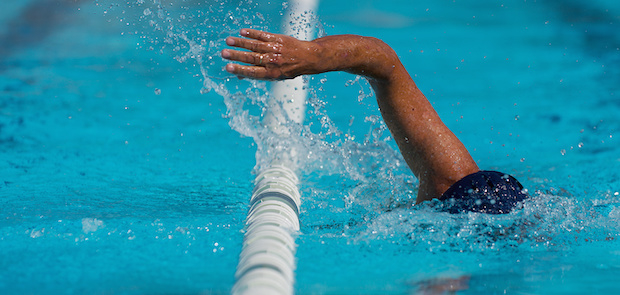
For most triathletes, the swim is the hardest of the three disciplines. Even if you’re in the pool multiple times a week, it can take a long time for your splits to get faster. This can be incredibly discouraging, but what if we told you that the gains you’re searching for might not be in the pool at all?
We’re not saying you can ditch swim training completely to become a better swimmer, but you can definitely get faster by incorporating strength work into your weekly training schedule. Not sure where to start? Don’t worry, we’ve got you covered.
Strength Training for Swimmers
Claire Haines is a swimming and triathlon coach in St. Catharines, Ont. She coaches the Ridley College swim team, she is a coach at Edge Sport (a training centre with multiple disciplines, including swimming, running and more) and she heads the Brock University triathlon team.
Haines is also an athlete herself and, after swimming competitively in her youth, rowing in university and competing in triathlon for many years, she is now an avid Hyrox athlete. With years of competition and coaching under her belt, she knows a lot about what it takes to craft the ideal training schedule.
She says that her answer to how often triathletes should strength train has “changed a lot over the past few years” and, since she got into Hyrox, she has added a lot more time in the gym to her weekly schedule. Despite only being in the pool once a week, she says her swimming has not suffered. In fact, it’s improved.
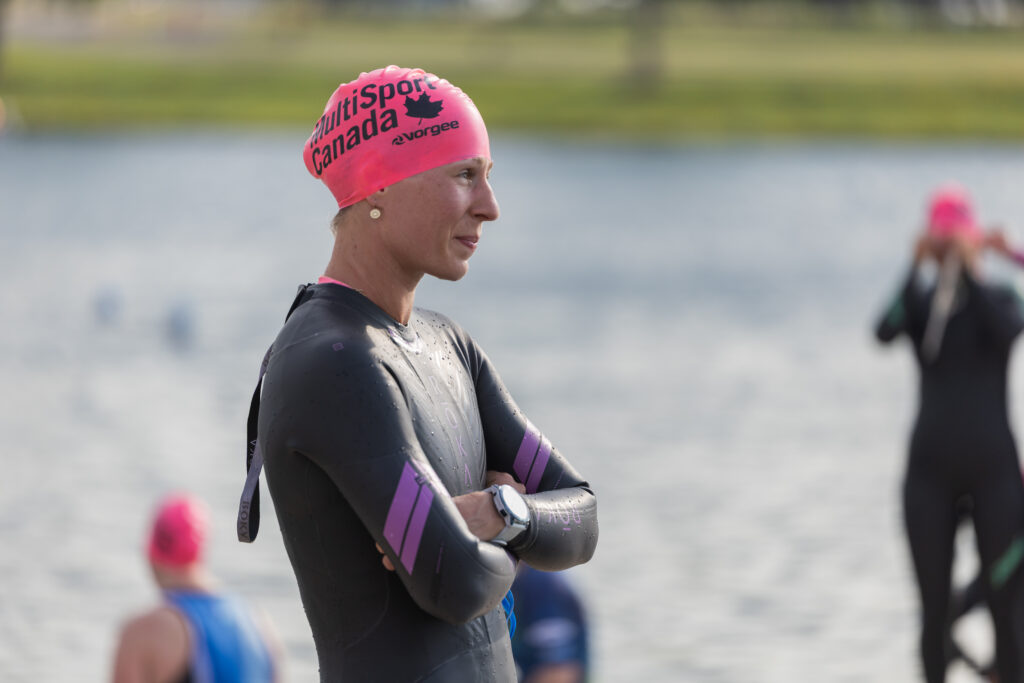
“I’ve never been swimming less than I am now,” Haines says, “[but] my swimming has never been better.”
Before adding so much strength work to her own schedule, Haines says she would have said strength training once a week would be sufficient for swimmers and triathletes. Now, however, she gives her athletes three days of strength work each week.
“I actually think three days a week is perfect,” she says. This might sound like a lot (especially for athletes who are trying to fit swim, bike and run sessions into their schedule, too), but Haines emphasizes that these “are not big sessions” at all.
“These are, like, 30-minute sessions three times a week,” she says. “It’s something that should be accessible to everyone’s schedule, and it also doesn’t require a ton of equipment.”
The Workout
Haines says she gives her “high-level swimmers” (athletes who are looking to race in post-secondary school and beyond) a lot of “max power” workouts, but she says that is not necessary for the average athlete.
“I think you can get a lot of bang for your buck doing high reps at lower weight, and also just using your body weight,” she says.
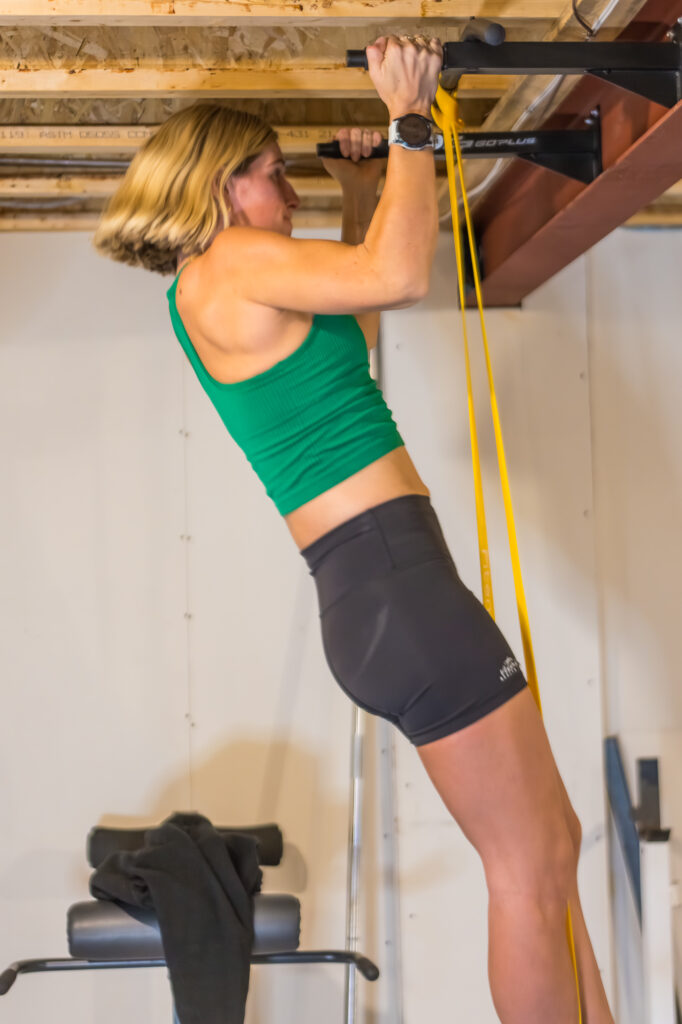
Haines most often recommends a five-round circuit for beginners. All you will need for this routine is a pull-up bar. If you don’t have a pull-up bar, there are plenty of cheap options (some even under $30) online, but if you don’t want to buy one, all you have to do is find a playground and you can use the monkey bars for your workout.
The workout is very simple. Haines says you can change the total number of reps per exercise depending on your level, but she recommends the following:
5 Rounds
Pull-ups (as many as you can)
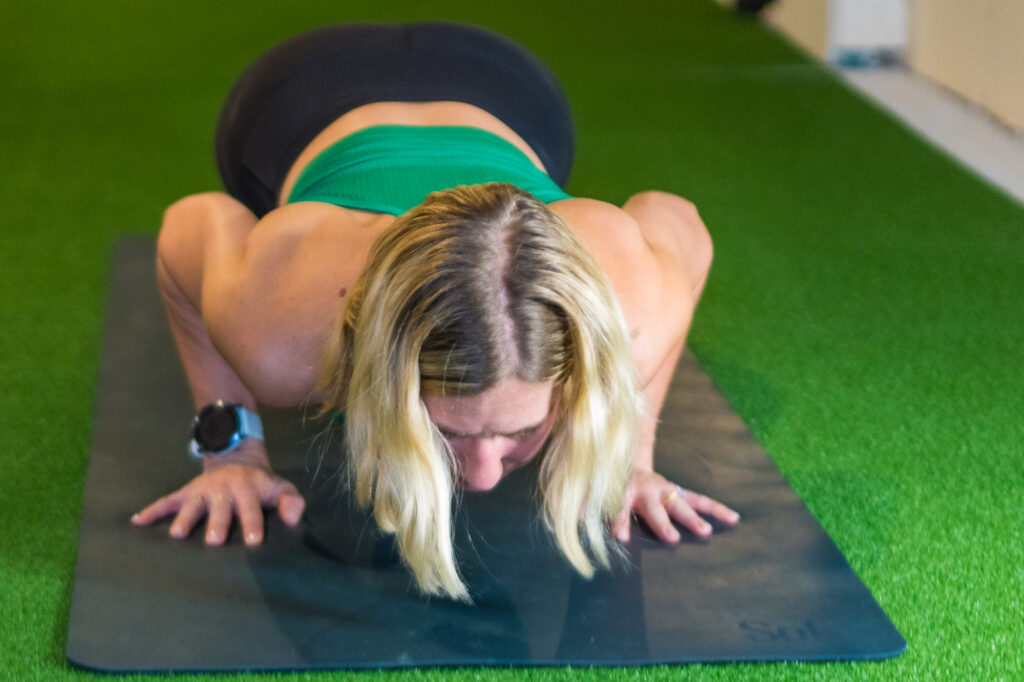
20 pushups
30 squats
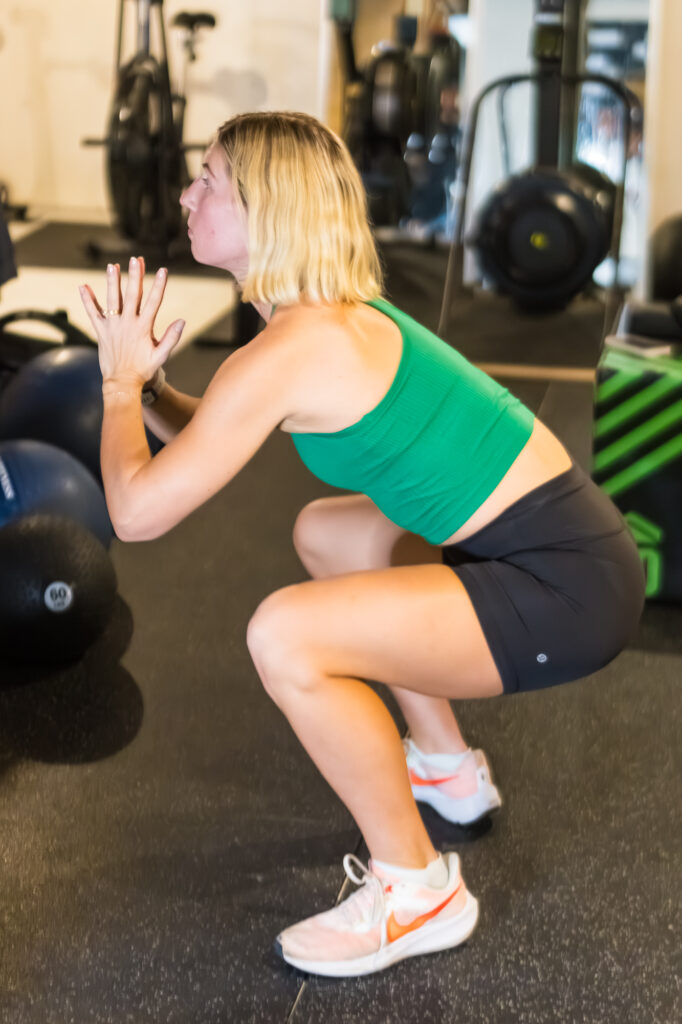
10 jump squats
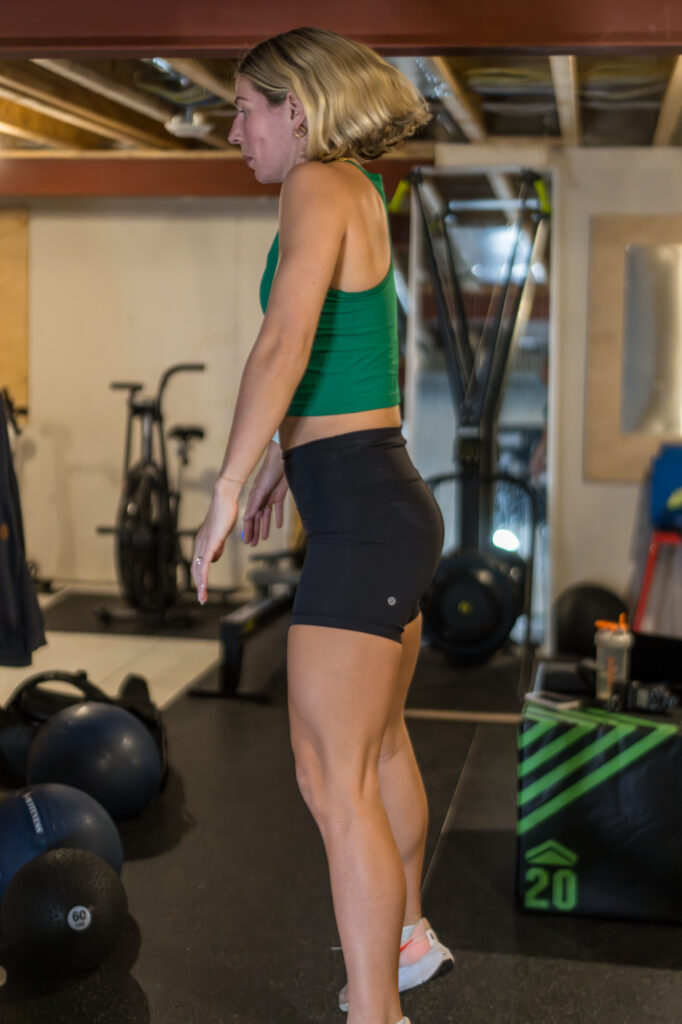
Haines says to try to go from one exercise right into the other with minimal rest. Once you complete a round, take 30 seconds or so, then get right back into it.
This is a simple, but effective workout that anyone can do. You don’t need a gym membership, you need next to no equipment (none if you can find those monkey bars) and it only takes 20 minutes.
A Core Routine
As a bonus, Haines offered a quick and simple core routine that she gives to her athletes. Having a strong core is so important, not just for swimming, but for all three disciplines of triathlon.
3 Rounds
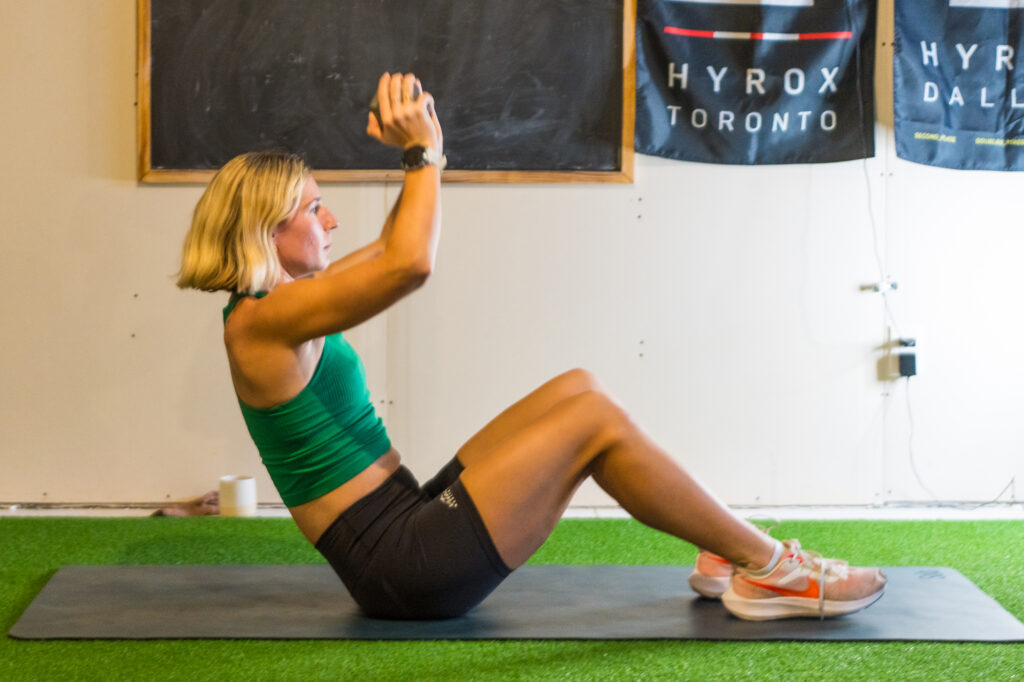
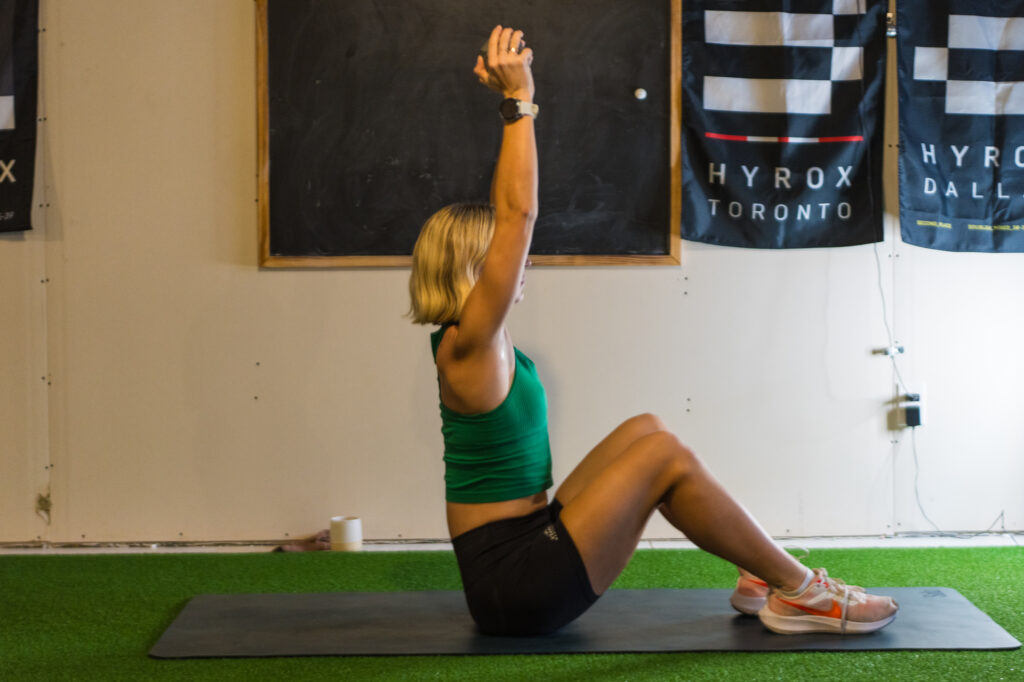
40 sit-ups with dumbbell into overhead press
30 leg raises
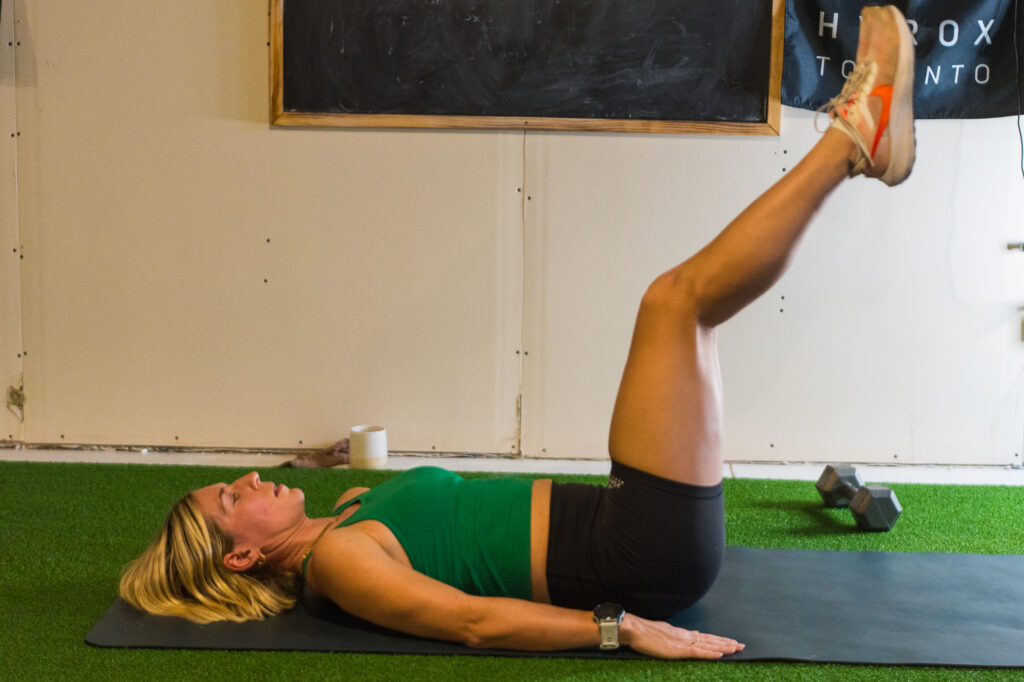
20 Russian twists with dumbbell (each side)
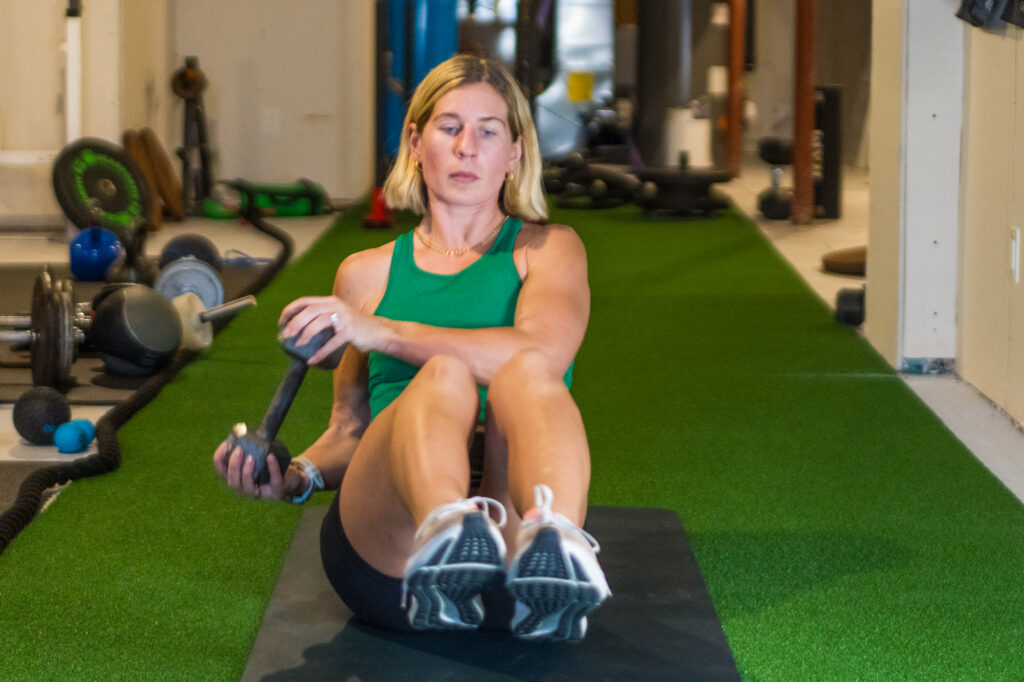
One-minute high plank
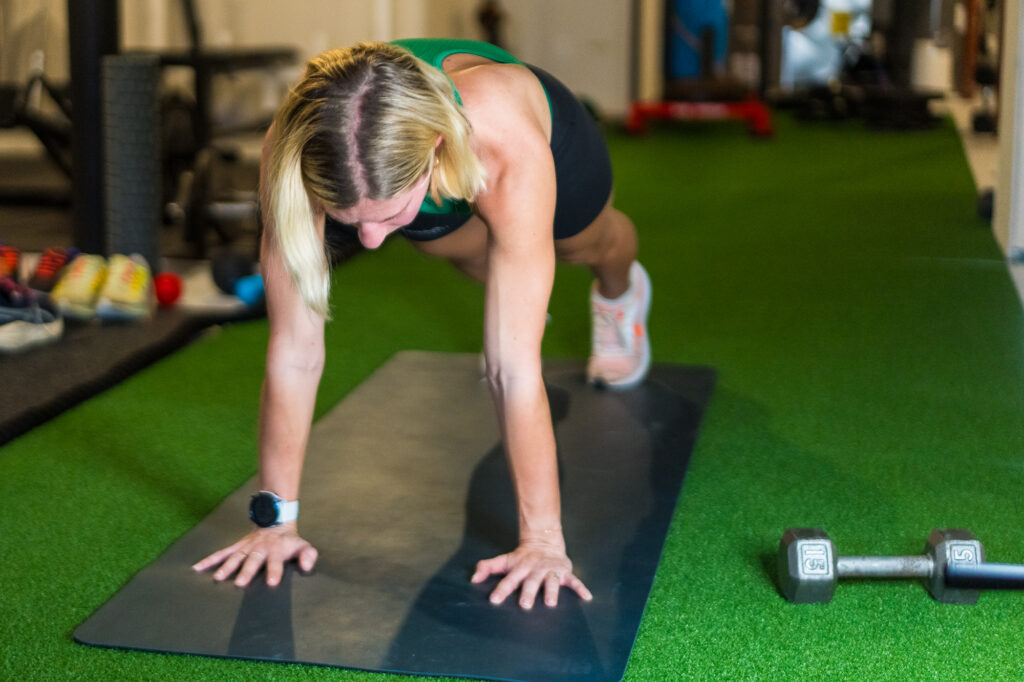
For the sit-ups, hold the dumbbell at your chest. Once you are full upright, lift it above your head in a shoulder press, then lower it back down to your chest and repeat. When you get to the plank, Haines says she recommends a high-plank (on your hands instead of forearms).
“You get a core workout and shoulder stability in this position, which is great for swimmers,” she says.
Haines recommends hitting this core routine five days a week, but even if you only do it two or three times each week it will go a long way in making you a stronger athlete.

Start the discussion at forum.slowtwitch.com