
A Beginner’s Guide to Finding the Perfect Running Shoe
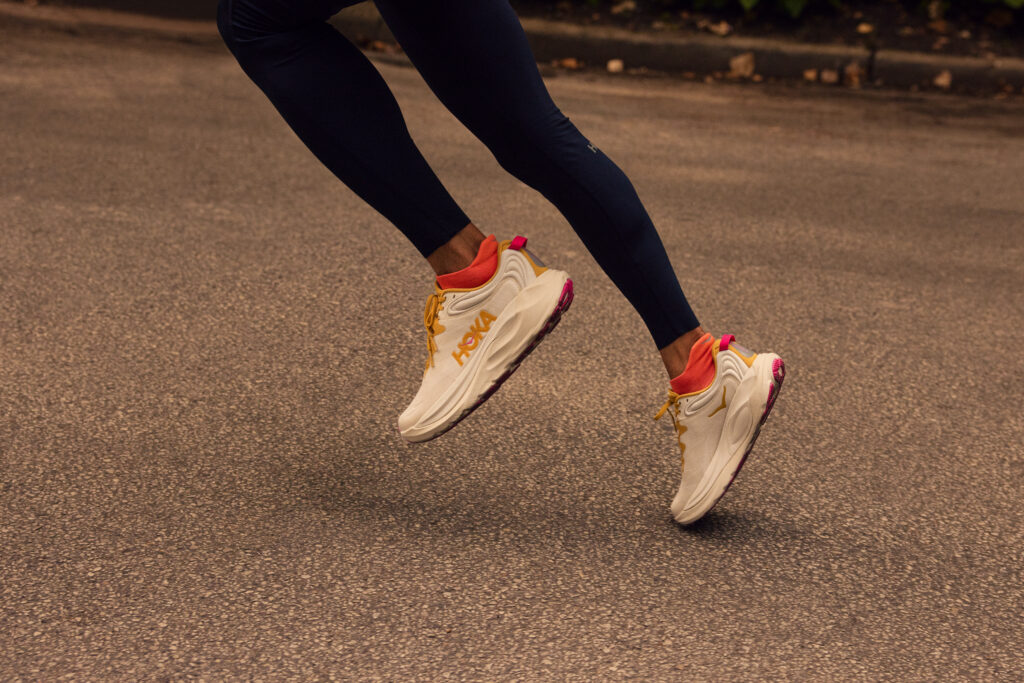
If you’re new to triathlon (or, honestly, even if you’re not), buying running shoes can be overwhelming. When you go to a shoe store, there are dozens and dozens of options available, and if you’re not familiar with the different types of shoes and styles of running, it is pretty easy to get lost in the decision-making process.
We can’t help you make the final call on what shoe to buy, but we can provide a bit of guidance that should help you come to a conclusion that will work well for you. Here are a few tips to use next time you’re looking for a new pair of runners.
What Are You Running?
The first thing you need to determine when looking into new shoes is what you’ll be using them for. Are they for training or racing? Fast workouts or long runs? Short-course or long-distance races? Answering these questions will help you eliminate shoes from the list of options, saving you time when you visit your local run shop.
If you’re in the market for training shoes that you plan to take on your everyday runs and long and easy sessions, you’ll want to look for an option with plenty of cushioning and good stability. You might be able to get away with training in low-cushioned shoes with less support and not get injured, but if you’re looking for training shoes, there’s really no reason to go this route.
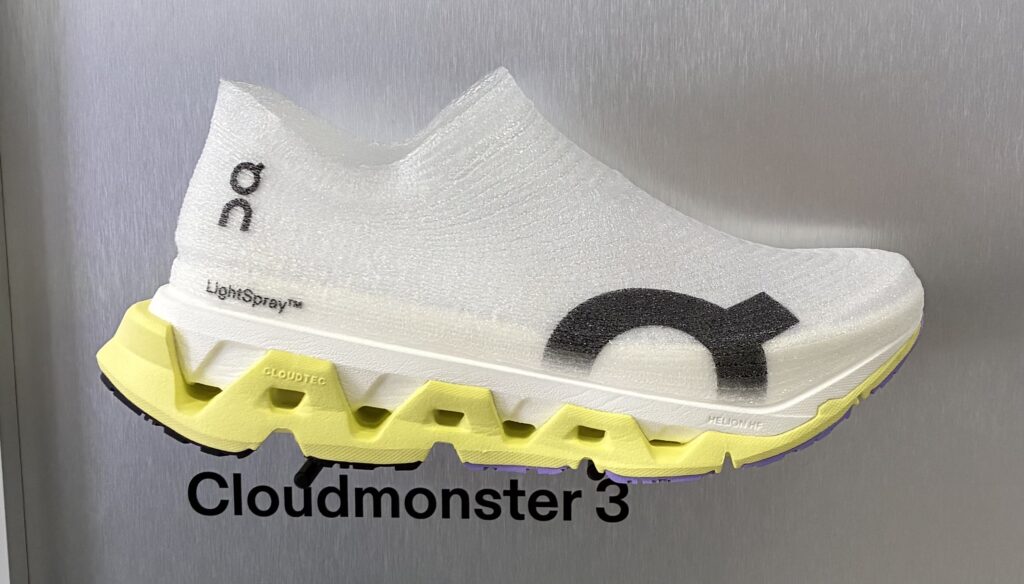
Yes, a shoe with less cushioning may be lighter or less bulky, but that’s where the payoff ends, and it will leave you more likely to end up with an injury. Of the three sports of triathlon, running is the hardest on your body. You’re pounding the pavement, trails, track or treadmill for miles upon miles every week, so it is very important to wear the best equipment that can protect your muscles and joints with each step.
This is not to say that low-cushioned, minimalistic shoes aren’t OK to use in training. There is certainly a time and place where these can be used, but you don’t want to train in them exclusively. Instead, reserve your flats for speed and track workouts. These sessions are hard, but they are shorter than your long and easy runs. Of course, it is perfectly fine to run your speed sessions in stability shoes, too. There is no wrong time to wear these shoes in training, you just might be a tad slower if you opt for them on your speed days.
When it comes to competing, you might want lighter, less-cushioned racing flats if you’re entering sprints (which tend to feature three-mile runs) or Olympic-distance events (which have six miles of running). Anything longer (100K races, 70.3s, IRONMAN events, etc.) and it is in your best interest to go with a plusher ride. You’ll sacrifice a bit of speed per mile, but the heavy cushioning will protect your legs and keep them fresher longer into the race, helping you finish stronger.
Test Different Brands
If you’re truly brand new to running, the big names in shoes that you probably know are Nike, Adidas and maybe Asics. Just because those are the brands you’ve heard about for years doesn’t mean they’re the shoes you should buy. In fact, even if you’ve worn a brand of shoe in other sports, it doesn’t mean that company has the right running shoe for you.
I have worn Nike shoes to play tennis and basketball, and while they didn’t make me Roger Federer or LeBron James, they worked quite well for me. They were comfortable, they fit well and they helped me perform at my best. Whenever I have tried Nike running shoes, however, they don’t fit me properly. They’re too tight and therefore I can never get comfortable on runs in them.
This is not to say Nike running shoes are bad by any means — they’re not. It’s just that they are not the optimal shoe for me as a runner.
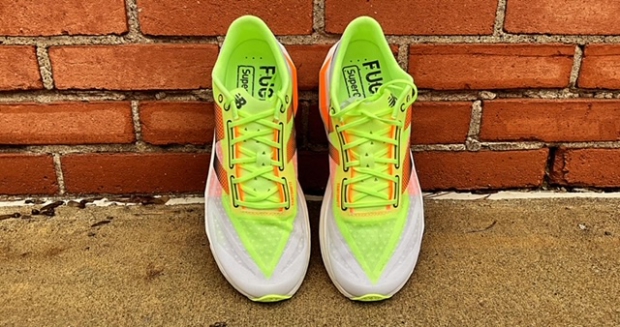
It could be the same with you — or perhaps it will be Adidas that are a weird fit for you, or Hokas, or On, or any other brand. That’s why it’s important for you to test different brands and models out before buying, instead of diving in head-first and getting a shoe you’ve heard of before, or seen advertised online or been told about by your friend at work who runs.
Go to a run shop, speak with an expert and try various shoes out for yourself. Depending on the store you visit, you might be able to run on a treadmill to get a good test, while some stores even have a mini track that loops around the sales floor. This will help you determine what type of shoe you would like,
and whether your foot is wider or more narrow.
Also, a lot of stores with treadmills will have camera setups to analyze your gait. This is something else you might not think of on your own when going to a running shop, but it is very important to keep in mind during your search for new shoes.
What is your gait? It’s how you run — whether your ankles roll inward with each step (pronate), if they roll outward (supinate), if you’re a heel-striker, if you’re flat-footed. The team at your run shop will be able to help you figure all of this out and, from there, use that information to point you to the right shoes.
Don’t Stress Out
It can be overwhelming to see all of the things you need to learn whenever you start something new. With triathlon, though, it’s especially stressful since there are three disciplines to train for, along with three sports and their gear to research and buy.
When it feels like too much (like when you Google “running shoes” and see hundreds of options), take a breath and remember that everyone in this sport has been in your position before. They somehow made it out and now know what they’re doing. Plus, remember that there are plenty of beginner resources on Slowtwitch, so if you’ve got a question, there’s a good chance it’s been answered.
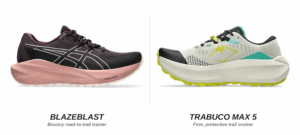
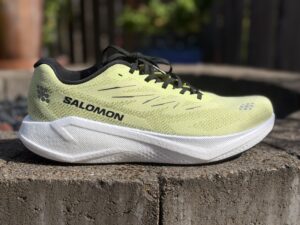






I was thinking about this the other day when I saw this, but at what volume of running should you look at multiple types of shoes. I feel like probably more than 20 miles per week? Dunno. I just see no purpose in having a second type of shoe right now when I’m running just over 11.5 mpw.
Let’s caveat with the fact that I get a fair number of shoes for free:
If you’re running more than 3 days a week, I think having a second pair in the rotation is well worth it. Whether that’s simply another pair of the same shoe, or something within the same rough category, is up to you, your wallet, and your preferences.
My current rotation includes a bunch of HOKA, some Salomon’s, a Diadora, and then whatever racing shoes I have kicking around.
BJSM did a study on RRI (running related injuries) and mileage/# of shoes.
IIRC > 20 mpw saw significantly less RRI if runners had 3 or more pair of (different) shoes. The injury risk went up something like 30-40% maybe and load variety is maximized by having different models of shoes. So not just a different pair of the same shoe.
I’ll try and find the study and hope I didn’t butcher the results.
I ran in 1 pair of shoes for years. Mostly in the HOKA Cliftons (the last 7-8 years) which suited me well. My 5k PB is still set in a pair.
I then switched it up and tried a pair of the HOKA Mach shoes (slightly faster, but not a “super shoe”) and used that for everything. That didn’t agree with me, so I actually ended up buying another pair of Cliftons for the easy stuff and used the Mach for speedwork/races.
I’ve since stuck with the 2 shoe policy, using the speedy shoe for racing and faster efforts, and the Cliftons for easy stuff. Right now I have the Mach X2, but will soon retire those and probably look at something like the Rocket X3.
In reality I run maybe 30-40km a week so I don’t feel the need for multiple pairs of shoes, but it’s nice to know I’ve got something “fast” lined up for race day.
Quick abstract on a study from 2013: Can parallel use of different running shoes decrease running-related injury risk? - PubMed
Would love to see a follow up with more modern, higher cushion shoes. Personally, Achilles injuries for 25 years has been a struggle!
Right now I’m running in More v5s, I’ve put about 145 miles in them. (42 runs) I have other shoes that I bought last year but didn’t really run at all and I’m being disciplined. I really liked the More v5s if I’m being honest and with what I’m doing they’re plenty “fast” but I’m also heavy right now so I can’t really tell how light a shoe feels everytime some shoe tuber talks about the weight of a shoe they’re full of a portapotty’s worth of shit. These aren’t army boots that weigh 18 oz each.
Anyways, I picked up the Vomero Plus Ekiden version and I think I’m going to mix them in quite shortly as they’re another max cushion shoe. I’m on a walk-run program for awhile I think and I’m just adjusting workload in small chunks of 15 minutes per week after 9 runs. But I’ll probably top out at 120 minutes for awhile as I’m going to add cycling back in and then ramp that up somewhat.
But back to the point, this is all steady state, no workouts so I think the same “type” of shoe but multiples works in this situation. I’m thinking in my head that past 20 miles per week it’s worth having other types and doing workouts. Dunno.
ETA: Additional context, I don’t see myself getting past 50 minutes per session before Summer and my current intent is treat Summer like winter since I’m in PHX and switch to a heavier strength training regimen and do more swimming and more cycling and dial back the running to just 40 minutes per session as I see most of that ending up on the treadmill.
I dunno, me and my size 13 boats definitely tell the difference between some shoes and others. Think it also depends in some cases whether the bulk of the weight in that shoe sits closer to the foot, or if it’s closer to the outsole; ASICS gel cushioned shoes have always felt heavier than a similarly weighted pair of Mizunos.
But – I think you’re generally right that, for your purpose, there’s no real need for radical differences between your shoes given current purpose.
This is helpful, because I don’t see myself running much more than 30KMs per week anytime soon.
Definitely would race in a lighter pair, which is what I’m doing next weekend, throw on some 1080 v13s NY Marathon Edition (green).
Also, can we stop the cabal that tries to prevent these brands from keeping green colorways? More green shoes please.