
From Surgery to Start Line: Hayden Wilde Builds a Better Swim
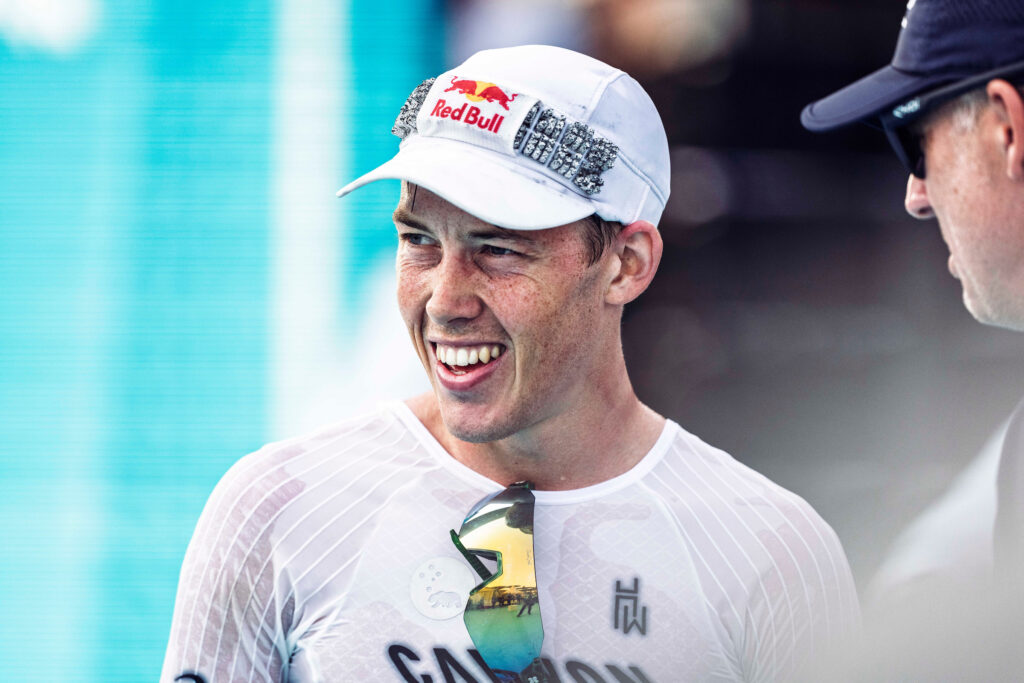
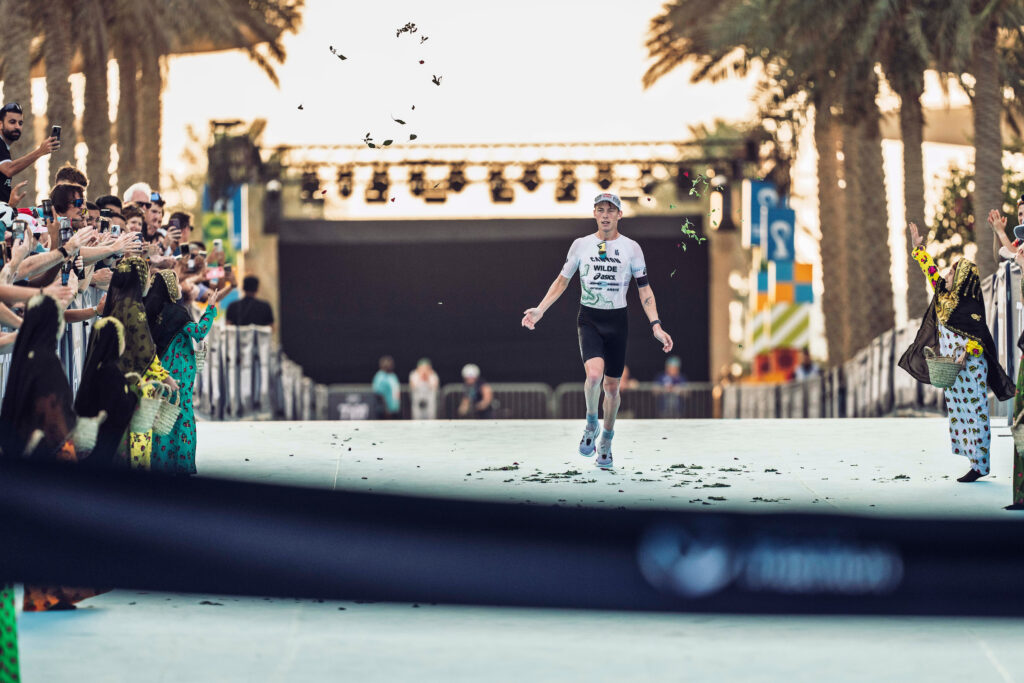
The triathlon world has known the 28-year-old for a while now, but in the last two years he’s been hard to forget. After winning the bronze medal at the Tokyo Olympics, he won silver in Paris and finished third in the overall WTCS rankings in the same year. (He also finished second at 70.3 world champs five months later in what seemed like just a fun bonus). In 2025, he stepped into the T100 sphere and won the season opener in Singapore. He went on to win six of the seven T100s he started (yes, the outlier was that lap counting disaster in Dubai where he officially finished eighth), taking the overall win and the $200,000 bonus that came with it. But that’s not why his 2025 season was so memorable.
In May, he suffered a horrific bike crash in Japan where he collided with a truck. He broke six ribs, punctured a lung, and required a five-hour surgery on his left scapula. Not only did it appear as if his season was over, but his career hung in the balance. However, diligent in his recovery, Wilde shocked the world and returned to racing an incredible three months later. With a massive “shark bite-looking” scar on his back, he won T100 London. He might have still been gaining fitness and strength back, especially in the water, but winning by over a minute said otherwise. His dominance continued and he won the series to finish #1 for the season.
Building A Better Swim
After the crash and his shoulder surgery, swimming was the hardest sport to regain. But swimming is something he has had to work on from the start of his triathlon career. Coming from mountain biking and moving into XTERRA, Wilde was strong enough to mitigate his deficits in the water when he started. He was a very successful XTERRA racer and won the world championship in 2021. But, when he transitioned to short course racing (where less than a minute is the difference between first and 50th) things were different.
“When I decided to make the switch for the Olympic dream, the start was relatively rocky roads,” Wilde recalls. “Making only the third swim group, you’re only getting below par results so I definitely knew something needed to change in the swim aspect. In 2015, when I was aiming for my first overseas trip to Europe, that’s when I really put the work in on the swim.”
Wilde sacrificed bike and run time for more pool sessions and it slowly started to pay off. He started making the second chase pack and being just seconds behind the leaders. Closing that gap helped him medal in Tokyo, but Wilde wasn’t done improving his swim.
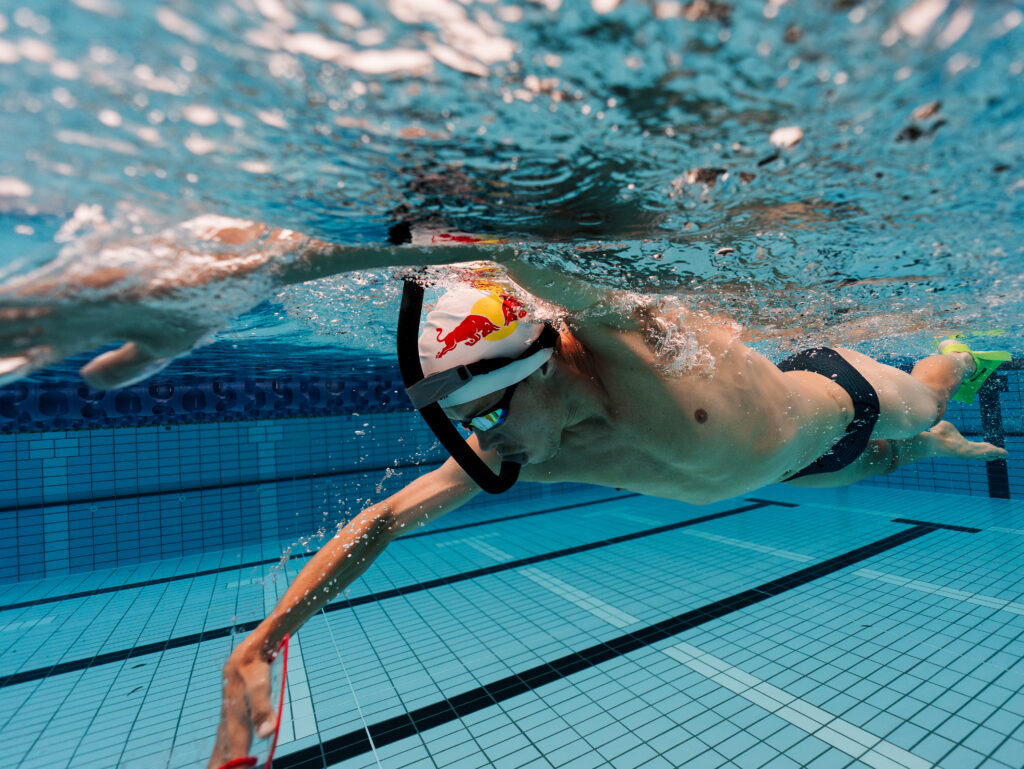
At the time, Wilde was based in Wuustwezel, a town just outside of Antwerp, with his now fiancee, triathlete Hanne de Vet. As a member of the Belgian national team, it was de Vet that gained them access to the national training pool where renowned swim coach Fred Vergnoux was leading the program. Wilde “just joined to help out” de Vet, but meeting Vergnoux was pivotal.
The two started working together, but a year later Vergnoux left the Belgium program to become the director of CN Antibes and the international aquatic training center there.
“He still wanted to coach me on the side,” Wilde explains. “From there, I was able to have access to his swim camps, so I was swimming with some pretty awesome French swimmers…He coached me through those years heading into Paris and just kicked my ass–and it’s been great.”
The Hard Yards
Great in hindsight, but Wilde isn’t exaggerating when he says he got his ass kicked.
“Two sets of 8 broken 200s,” he says referring to the hardest session Vergnoux has him do. “You do it as 50 m max on 60 seconds go time, and then into 150 on a 2 minute cycle. For me, I try to get out at 29-32 pace and then going into threshold, aiming for 1:42-1:43 (for the 150 m). You do that eight times and then 400 meters of recovery and get back into it.”
But it’s not the hard sets that really turned Wilde’s swimming around, it was the “easier” days or, more specifically, the “easier said than done” days.
Just six months before the Paris Olympics, Vergnoux completely reconstructed Wilde’s technique.
“I wasn’t going any faster,” Wilde says point blank. “I went to this 1,500 meter meet and I got my ass kicked by 10 and 15 year olds and I was 40 seconds slower than my PB from five years ago– it was a disaster… I was like, this is ridiculous. Why am I changing my technique months before the Olympics?”
Wilde questioned the process, but Vergnoux, who was unphazed, reassured him it would all come together. Just in time for the Olympics, Wilde’s doubt was replaced with proof.
“ A few months after that, we did that hard session, the two sets of eight broken 200s, and I was five seconds quicker over the 150s and two seconds quicker over the 50s,” Wilde says. “I was like, yeah, that’s pretty sick.”
From Zero to T100
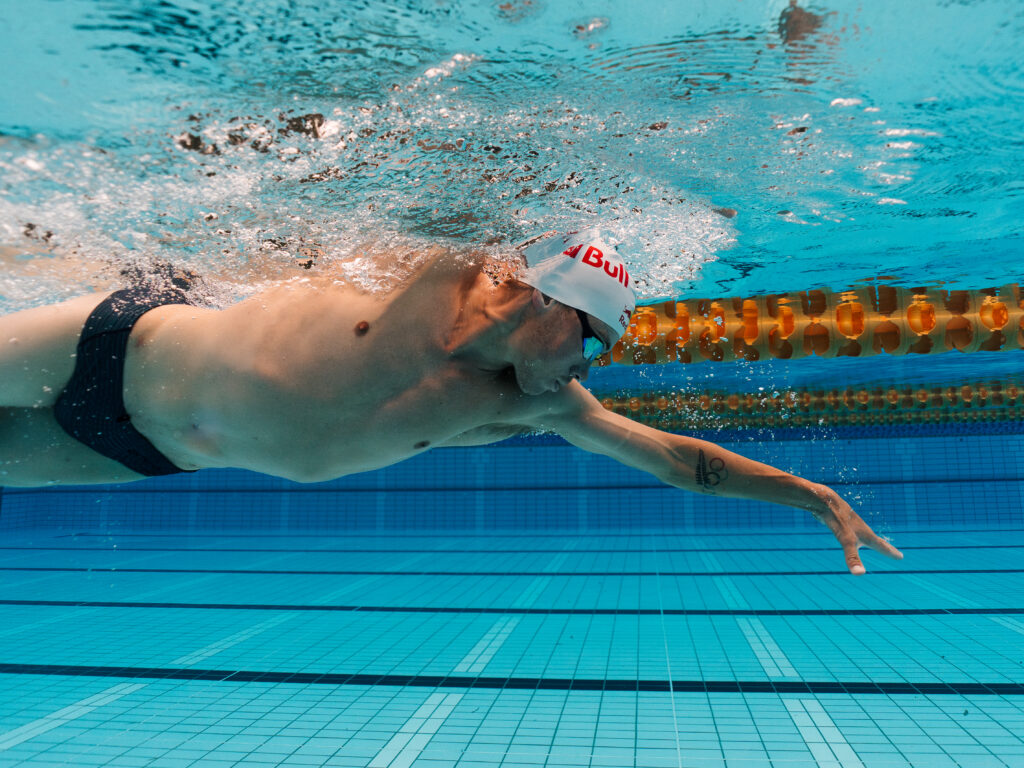
Wilde and Vergnoux still work together and, once again, they are adjusting his stroke. This time it’s because of his bike crash in Japan. After the surgery on his shoulder, Wilde was hardly able to move his arm. On his YouTube channel, he captures the basic movements that challenge him in the first weeks after surgery.
“There’s no such thing as a setback,” he teases in the video as he jumps into a rehabilitation pool.
All jokes aside, anyone can see it’s an incredibly massive setback. His rehabilitation in the water started with jogging, easy kicking and gentle sculling. Several weeks later, he managed a kind of one-arm swim/dog-paddle combination that shows his determination and world champion mindset. And then, in what seems like no time, Wilde gained enough mobility and strength to practice full stroke swimming but still nowhere near his former self.
“Mentally, it was quite hard,” he admits. “You look at the times and I’m so far off what I was…It was great to be back in the water and see the progression, but then you’re just not even close to where you were and that was the rut and the frustrating part.”
Part of the struggle was building back up his technique which, after surgery, was different.
“My coaches said my technique has changed a lot and probably in a good way because my shoulder is a little bit smoother, but it’s now trying to find connection with the rest of my body,” he says. “I still really struggle to get my top end speed. My thresholds are back to where they were in some ways, but trying to find the connection around the shoulder muscular area and how do I connect those back together in the neural system–that’s definitely been a journey and I’m still on that journey.”
The emotional demands of the comeback were evident when he took the victory at T100 London three and half months post crash. He buried his face in his hands before embracing de Vet in an emotional moment. Rebuilding his stroke or not, Wilde’s dominance the rest of the season was unmatched.
“With all the T100 races I was doing, I was getting better and better and better every single race,” he says.
Better to Best
Being the athlete Wilde is, “better” and winning the T100 series still wasn’t his best. After “making some good gains” physically and strategically during the off season, his focus will shift back to short course racing.
“It’s 1,000 days to the Olympic Games in LA,” he reminds his YouTube audience.
To come full circle, he had planned to open his 2026 season at WTCS Abu Dhabi, which was his last race before the crash and the last time he was at absolute “peak” fitness. However, due to the ongoing war, Abu Dhabi was cancelled and Wilde will be racing alongside Kristian Blummenfelt and Jelle Geens at IRONMAN 70.3 Geelong (the second race in this year’s IRONMAN Pro Series) instead. But, while Wilde and the rest of us want to see and compare his short course racing to his former self, after what he has been through and the comeback he impressed the world with, why be interested to see if he is better? The best version of Wilde is about to step into the arena and that’s a version that will be much more enticing to watch.





The bike crash wasn’t in May. It was way earlier. Please check the facts and update accordingly
He ran the Tokyo 10k on May 3rd, he crashed the next day on a bike ride, so May 4th?
Yeah it actually was! That makes his 2025 season even more incredible. I don’t know why I thought it was months sooner, watched all of his updates through recovery back then.