
Athletes Keep Choosing Big Races. Is It Sustainable?
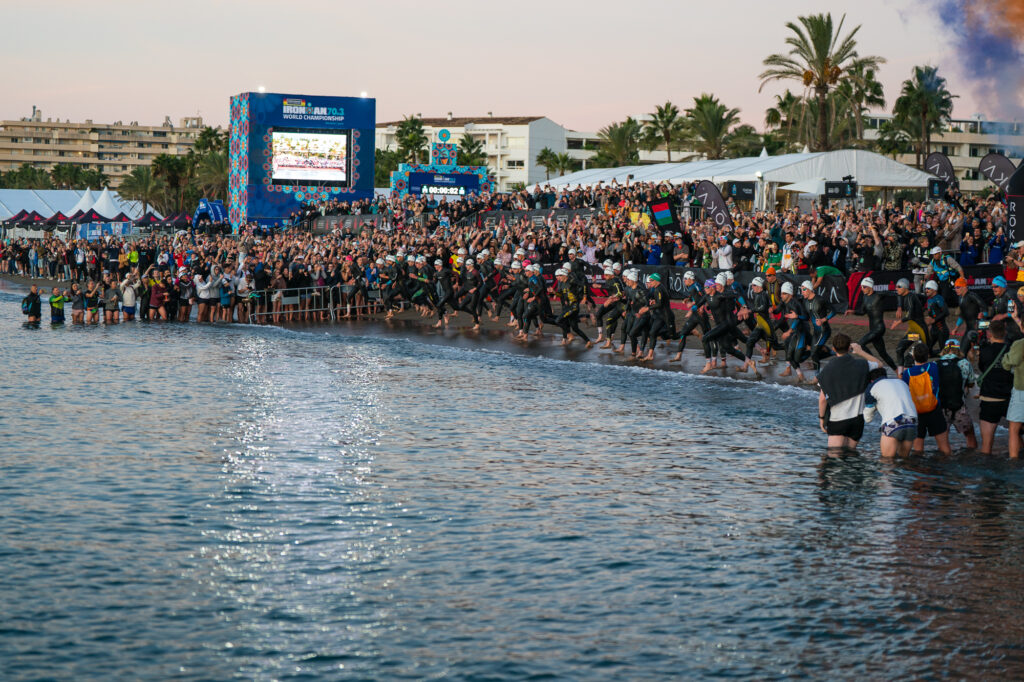
It’s been roughly a year since IRONMAN released data showcasing growth across both the full and half distance triathlons and, more specifically, growth of the sport amongst younger cohorts. That coincided with recent USA Triathlon data showing that the bulk of growth in membership is coming from 20-39 year-olds, for the first time in well over a decade. It helps paint a picture of a sport that seems to be rebounding in participation.
Yet, as our reader forum has pointed out in a couple of threads on the topic of participation and barriers to competing, not all is perfect. Some triathlon clubs have folded, or decreased significantly in membership. Smaller, grassroots events are less likely to have fields that are even close to capacity. Some report that, in conversations with fellow club members of single-sport events, price is a significant barrier to entering a given event — and if its not the race entry, it’s the equipment.
But it’s not just triathlon that is seeing this push for larger events to sell out. It’s everywhere in endurance sport.
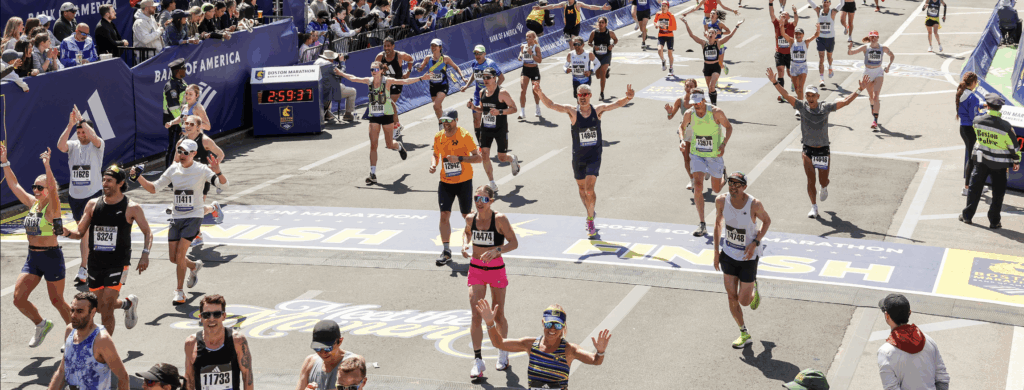
Take, for instance, the Boston Marathon, which takes place this Monday. The field of 30,000 runners includes 24,362 qualifiers, all of whom had to run roughly 4.5 minutes faster than their respective qualifying times. Over 9,000 applications who had met the qualifying standard time were rejected. Charity slots for the race, which include fundraising minimums that approach five figures, sell out nearly instantaneously.
The runDisney Marathon next January sold out within minutes of registration opening to the general public. The London Marathon had 37 runners apply for every slot in its 30,000 person race. Large trail running and gravel races see much the same effect, whether it’s a UTMB series trail run or Unbound or Leadville. All of these events feature high price tags, and no shortage of demand for them.
So why the disconnect? Why is it that we both identify cost as a participation barrier, and yet the biggest of races have more demand than ever?
I’d suggest that there are a couple of factors in play here. The first has to do with the economics of race production in 2026, and the perceived value associated with entering a larger event. As we have written about since the pandemic, the cost of race production has skyrocketed. Every single item that is involved in a race has gotten significantly more expensive since 2020. And with amenities at nearly every event distance, even outside of our sport, offering a bare-bones experience is something that does not draw appeal to newer entrants to the sport. There’s levels of expectation there. This was borne out by a recent article over in Triathlete that spoke with race directors of independent full-distance triathlon events. It’s just awfully expensive to try and put on a race right now, let alone keep up with any semblance of athlete expectations on experience.
Perhaps coincidentally, though, it’s becoming apparent that people are more willing to spend more of their dollars for specific experiences, regardless of their preferred leisure activity. Based on recent travel data, people are taking fewer vacations, but when they do, they are increasing their spend accordingly. Delta, for instance, announced in their recent earnings that revenues from premium seating exceeded that of economy for the first time. I, admittedly, am part of that trend; I don’t typically upgrade domestic or work travel, but I have paid for an upgrade to premium on international flights to improve the chances that I will sleep.
In other words: people will spend the money. They just might only do it once or twice a year, as opposed to a bunch of times.

That raises one primary question: what does that do to a sport that, by-and-large, has been built on a model of athletes participating in events multiple times per season? The answer, I think, is probably a bit more complex. For IRONMAN, I think it’s mostly fine. Particularly for their namesake distance, there’s really just Roth and Norseman that can compete from a prestige and demand perspective. I think that bears out in the mostly strong numbers across the full-distance portfolio.
The answer gets a little murkier for 70.3. There’s more athlete churn, there’s more location burn-out (e.g., “oh, I’ve done that race before,”), and there’s still a north of $500 price tag staring you in the face. This is why I think we’ve seen a little bit more location rotation in the IRONMAN schedule, with locations phasing in and out of the schedule as athletes chase down another new finish line. And there’s probably a lesson to be learned somewhere in there for World Triathlon and the PTO for the 2027 World Tour — don’t necessarily expect to be parked in venues for long-term.
I also think generally the large, festival-type weekend events are going to be fine. It’s the large-city model that Supertri has effectively pivoted to. It’s why we’ve seen a run in consolidation on some of those types of events, what with Chicago, Captex, and New Jersey triathlon all part of the By Supertri umbrella now. If I were a betting man, I think we see more of this move over the next 12 to 24 months in the marketplace.
And it’s also where, I think, outside of your indoor triathlon events, you are most likely to have interest from new athletes. Your beginner athlete is generally captivated by some degree of size and scale of the event, and having large-scale sprint and Olympic distance races is what helps feed that dueling need for an accessible race (as there’s less equipment or training need out of this distance), while also maintaining the large event feel that is clearly a key differentiator and why people register for one race or another.
That, unfortunately, leads us to the generalized small independent race. And that’s where I see the greatest struggle in the marketplace. Having worn that hat for a long while, I fear that outside of very specific niches, like beginner youth triathlon or pool swim based events, it’s going to be an extremely hard challenge to put on events and have athletes actually be attracted to them. I don’t think that means it’s harder to become a triathlete; I think it just means that people will continue to push towards the largest version of an event they can, which eventually will see more consolidation in this space.




Great article. I continue to believe that local races are the “doormat” to the sport, and if that dries up (it is hurting) it is a negative long term indicator for the sport.
Here’s the thing – I don’t think the 150-200 person sprint or Olympic triathlon is a long-term sustainable venture. There’s too much cost, red tape, time, and effort as compared to putting on a local 5K or 10K.
My guess is that in the US we’re going to pivot something to:
1.) Local indoor tris – pool swim, might be a gym bike / treadmill run or an outdoor one, but limits the swim factor. (This will probably include most youth triathlon, FWIW).
2.) Your big sprints and Olympics with at least 1000+ registrants, which obviously are fewer and further between, and
3.) Long course, which will continue to be mostly an IM show.
If we continue to lose local grass root races and it becomes pool only, I think we are in a big heap of trouble. But with that being said, I’m also kinda wondering when IM distance will go back to just a few races and the majority of “long course” will suddenly be 70.3. Which I did laugh I was scrolling last night and it was "when you tell ppl you are doing an IM race and it’s really a 70.3 IM race” side eye…ha