
RaceRanger Takes Big Step Towards Age-Group Draft Detection
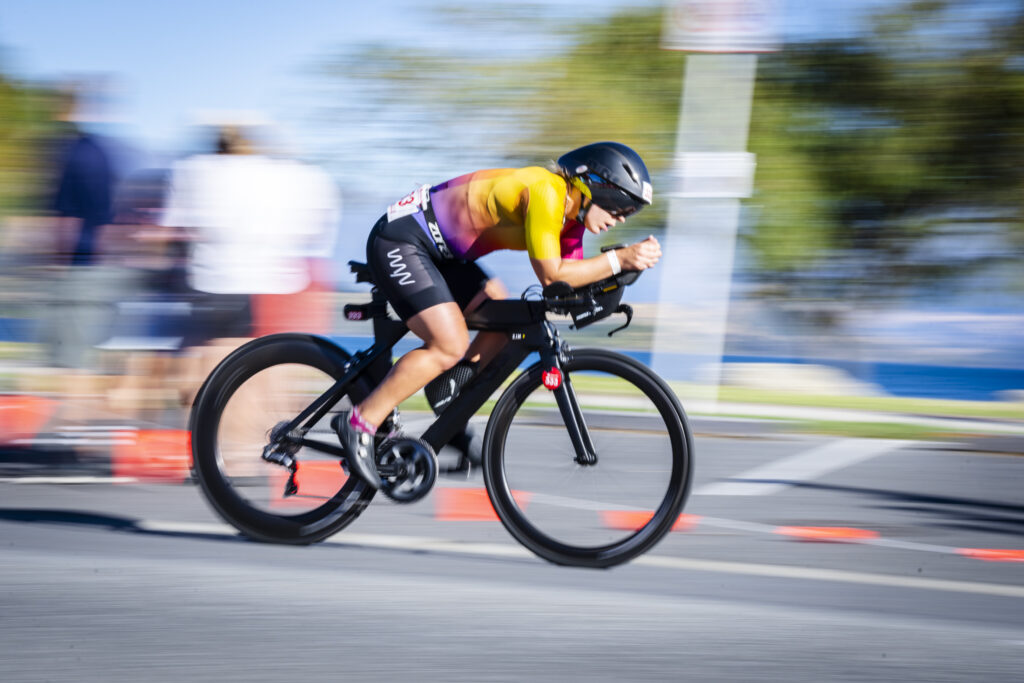
Earlier this year we spoke with James Elvery, who developed the RaceRanger along with fellow pro Dylan McNiece, about the innovative technology and its potential future for age-group racing. Today we can pass on the news that RaceRanger has taken another step towards making that long-range goal more attainable – it will be used by all the athletes – both pros and age groupers, at both the Tauranga Half (January, 2027) and Challenge Wānaka (February, 2027). The races will be “the first two events to commit to a whole-field amateur-level use of the technology,” RaceRanger reports, “and they mark RaceRanger’s first deliberate step out of pro-only racing.”
Use of the systems will be included in the entry fees, so athletes won’t see any additional fees for the use of the RaceRanger devices.
Originally conceived by Elvery and McNiece in 2014, RaceRanger got some financial backing from World Triathlon in 2017, and has been working closely with Jimmy Riccitello, IRONMAN’s Rules and Projects Coordinator since 2018. The system has been used at over 100 professional races – mainly IRONMAN and PTO/ T100 events, since 2023. (The system was also used at the Paris Paralympics and Challenge Roth.) Scaling up from a pro race with roughly 100 athletes is one thing, but being able to offer the service to hundreds, or even thousands, of competitors offers some daunting challenges for the New Zealand-based company. Last year RaceRanger did a trial run at Challenge Wānaka with just under 300 age-group competitors, setting the stage for next year’s races.
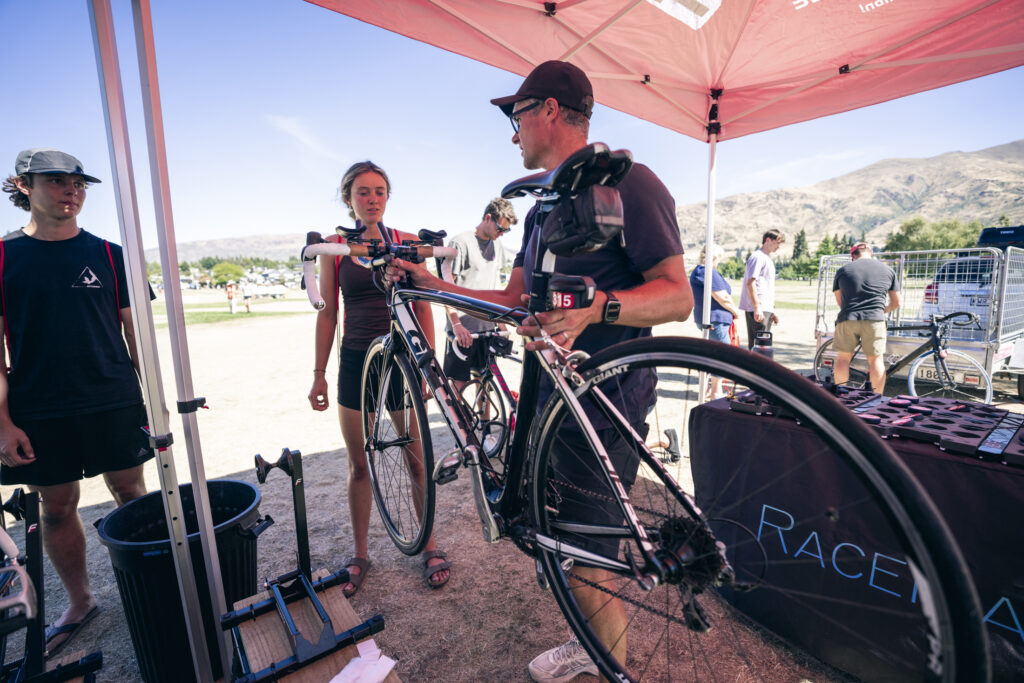
“Our age group trial with RaceRanger in 2025 showed us quickly that athletes were ready for this. The feedback was overwhelmingly positive, particularly around fairness, confidence, and the overall race experience,” said Jane Sharman, Challenge Wānaka race director. “Delivering a world-class athlete experience is hugely important to us. With our bike course, the ability to track every athlete in real time also adds an important safety dimension. We’re proud to be one of the first events globally to deliver RaceRanger across the whole field.”
Now onto its third iteration of the RaceRanger units, the company now has over 1,000 devices, enough to cover the two races in New Zealand next year. (This year the Tauranga race had 650 competitors, while Challenge Wanaka’s half-distance race had 850 participants.)
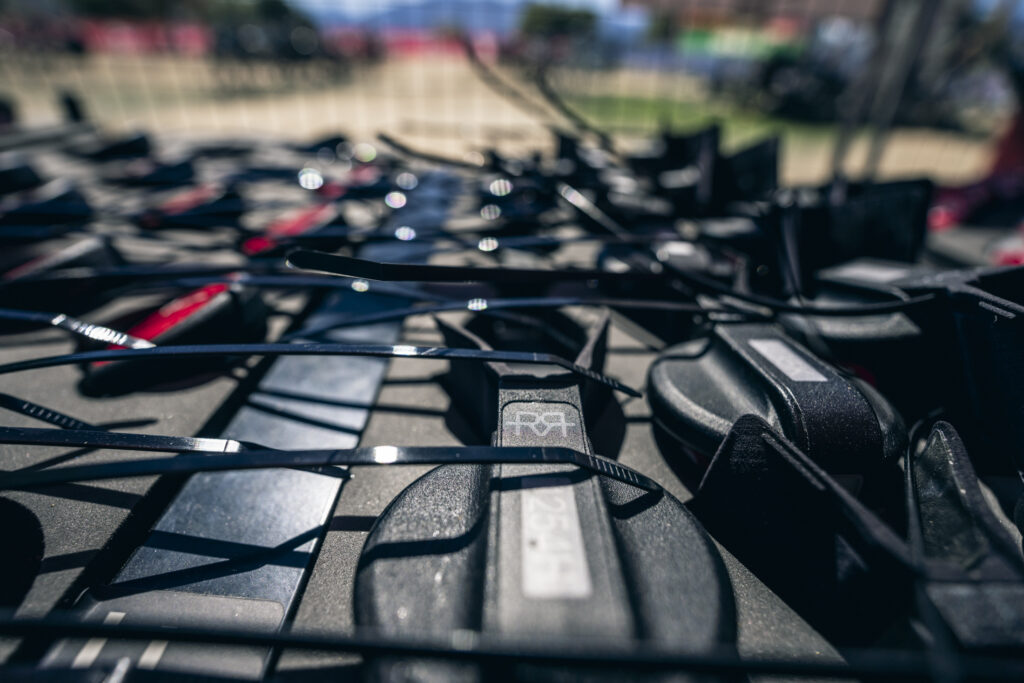
“We’re really pleased to get the ball rolling with age groupers — this is what we’ve been working towards for a long time,” said Elvery. “With experience gained operating at more than 100 pro events now, we’ve learnt a huge amount about what transfers, and what needs to be different to operate at the scale of large age-group fields. We’ve made a lot of background changes to make this possible — moving to a QR-code device management system instead of race-number stickers, rigorous waterproofing so units can be bulk machine-cleaned between events, and simplifying the fitting process so athletes can largely do it themselves.”
The units will be set up to operate as we’re used to seeing at pro races – two devices (front and rear) will be placed on each bike, with the light system letting athletes and officials know when riders have entered the draft zone. A new addition to the system is live tracking, which was one of the reasons the Tauranga event is keen to be part of the program.
“We were the first event in the world to trial RaceRanger back in January 2023, so being the first to use it across the whole field feels like the natural next chapter for us and a really exciting prospect for age groupers to use this technology,” said Lauren Watson, Event Director of the Tauranga Half. “The safety side is just as important to us as the drafting fairness. Knowing where every athlete is on the bike course at all times is a meaningful step forward for any event director.”
Over the last year pros have placed their own RaceRanger devices on their bikes, and that will continue for the age-group athletes at the two races next year. RaceRanger staff will be on hand to help athletes with any issues. The devices will be retrieved from the transition area while racers are on the run course.
“Looking further ahead, RaceRanger’s intention in age group racing is to operate the system slightly differently,” today’s release continued. “The field would be split into two categories: a competitive group, who would use two devices each and be more actively policed, including live remote monitoring by officials; and a participation group, who would be issued a rear unit only. Those rear-unit lights would stay off for most of the race, only activating if the athlete moves in front of a competitive athlete who’s then following them. Every athlete in the field would still get the live tracking and safety benefits. For these first two events, however, everyone will be treated the same for simplicity.”
“There’s strong demand for the drafting detection side of the system, particularly from the competitive end of the field,” Elvery continued. “The live tracking is something that everyone can appreciate, but hasn’t been made widely available in triathlon to date. In everything we’re doing we’re laser focussed on elevating the athlete race experience, and are in conversation with a number of other events and series globally about how to bring whole-field RaceRanger to the sport as soon as possible.”
“I strongly believe the split category model would be a really positive thing for triathlon,” Elvery told us in February. “The event can then better cater to both groups, address the problem of competitive athletes not really getting a fair competition at the moment, and providing something for the ‘one and dones’ to aspire to as a next step, and keep them in the sport.”
Tags:
draftingRaceRangerRulesRelated Articles:

Continue the discussion at forum.slowtwitch.com
3 more replies



There’s a few aspects which are labour intensive: cleaning them and taking them off the bikes.
Seems to me you could just get the age groupers to do the bike removal (plus there’s risk that you could damage the bike if you’re doing 1000s) and then have the volunteer Manning the bike checkout verify that it’s been removed.
For the cleaning, what do they do with timing chips?
1000 seems excessive, in some regard maybe you should have to “qualify” for an elite race ranger wave. Based on age graded time achievements in past 24 months. Roth’s sub 9 elite waves (2 of them) seem good candidates, or AWA ranking another option. But if goal is KQ and it’s you have to be race ranger equipped to qualify that changes things, not sure the solution
Logistically it would seem to be a lot of work. However it would be a huge improvement to level out the field of play.
So many races where groups work together in some sort of silent agreement.
So many profess that drafting is bad and yet lets be honest most are doing it!!
Thank you for the reporting. I hope these trials, next year, go well. I wish Race Ranger, its founders and investors ongoing success.
Allow me to be picky about the article’s title. This offers a potential “big step towards amateur drafting deterrence” (not “detection”).
Neither ‘deter’ not ‘deterrence’ appear in the article. They should.
If you think about the underlying mission of Race Ranger, its technology and application, this is to facilitate fair rule-adhering riding in draft-illegal triathlons.
Race Ranger has several functions (which @ironmandad and @RaceRanger articulate) but the primary effect of the distance detection function on the road is to DETER drafting (entering draft zone without overtaking or failing to drop back after being passed). It gives riders a clear signal that they are close to (blue) or in the rider ahead’s draft zone (red flashing), as opposed to currently that wheel 2 having to estimate 12m (or, harder, 20m). Riders, thus informed, can ride fairer, if they are motivated so to do.
Integrated, the rider location function has a safety benefit as well as. if used, a massive spectator (near real time) and informed commentary advantage - will we need timing mats anymore? As an RD, this is actually the most useful function, frankly. Could rider (ID’d by #) location info be easily be supplied without all this distance sensing stuff at a much reduced cost? idk
As an aside, I hope the entry forms/conditions used specify that Race Ranger data from the race is the property of the organisers and the athlete has no ownership or veto on its use and its publication, anonymised or otherwise. We want the use of this draft deterring equipment to have maximum effect: deterrence particularly of deliberate wheel sucker behaviour - they know who they are, even if in denial! - and we should not exclude the threat of public shaming! I appreciate congestion in the amateur race makes drafting more difficult to avoid, but the data will show up egregious offenders as ‘outliers’.
A huge problem which you don’t mention will be the enforcement of penalties of rule violations. As you write, you often see huge groups, in which it is difficult to not be swallowed.
For the professionals it is doable to penalty “remotely”, on the basis of stored data, because there are maximally some dozens of pros in a race. But what are you going to do with the draft information of > 1000 participants. Will people be penalized afterwards, on the basis of stored data?
Or maybe I do not understand, and the only function for RR I is that an individual agegrouper can see if he is in the draftbox of the person in front of him, instead of estimating the distance.
There’s a few options:
-Name and shame works somewhat. All your have to do is put “time in zone” next to your KQ adjusted time on the age graded results and we can see who did what
-If refs can see real time where the wheel suckers are then they have a better chance to go find them (not sure if this is part of what they’re thinking though)
-Next step would be moving to open cat above a certain amount very generous threshold or time penalties. Can be at the ref’s discretion or auto generated.
(I don’t think we’d ever get to auto time penalties, but I can see moving egregious cases to Open cat or DQ at the ref’s discretion)
All they’ll do is us the tech to alert the refs where to go after the biggest wheel suckers. No way they’ll ever tag your blinky time onto the KQ rank cus that would just make everyone look bad. They wont want to acknowledge how bad some AG blinky time may be. So it’ll probably be a post race “info drop” leak, where we see how much blinky time everyone was like now w the pros. But by that time who cares right? The KQ athletes will just throw dueces at the “haters”.
Which is why this isn’t going to end very well. They don’t have enough officials to actually use the tech properly to get drafting out of the sport. Just too many people on the course and too few of officials even when they know where the drafting is. Newsflash it’s still going to be everywhere within AG racing. There’s no just 1 group that they can find and penalize it.
It’s not easy. More than once a big group passes me. It’s clear that there’s a lot of wheel suckers in there of whom I know I’m stronger and I’ll pass them on the next climb. But the problem is at the moment the group passes me, I’m in that group. You need some heavy AI to determine who are the bad guys in that group (the wheel suckers) and the good guy (me).
Of course there are clearer situations. A group of two persons a couple of minutes directly behind each other.
Yeah, you’re probably right. Though I wouldn’t mind some after the fact enforcement. Punt the egregious offenders down into Open category at the head ref’s discretion
Still waiting for the T100 Singapore race ranger data. Overdue.
That would all have to be written into regulations which means yeah right. Best well get w RR is real time data to alert on course officials of the hot spots. Problem is in a 2-3k person race and 6 officials, yeah math ain’t mathing with those ratios.
Potentially integrating remote notification that as a drafting athlete you have received a penalty. I know when it first came out they were working towards adding this to the front sensor. You would hear a specific beeping and then its up to you to protest after the race if you feel its unfair.
With Race Ranger there wouldn’t be any big packs to get swallowed up by. Because they would all have drafting penalties. So that problem is solved…. common sense
as for professionals yes its a little easier because theres currently bike referees dishing out penalties. However as technology (telemetry/GPS etc) evolves and the data patterns are collected. It would be easy to decipher if someone is drafting or not.
Easy problem to solve. Just a logistical problem to implement.
I agree. Do you think if it was done through Ai analysis and pattern recognition (athletes repeatedly staying within draft zones in areas where theres no technical turns or steep hills) it could work?
As pattern recognition using telemetry and GPS evolves maybe it could be easy to implement. At first it would have a ton of issues for sure. In time it would provide a safe, secure and effective method to stop people actively and intentially cheating.
I do not think it’s so easy. Consider 1.2 kilometer and 100 persons, all 10 m apart. Easy to imagine with 2000+ participants. Impossible to pass. You have a totally blocked traffic jam going as slow as the first one.
The flashing red is an encouragement to pass and will be both an intrinsic and extrinsic motivation to do so. The aim is deterrence through informed athletes and signals, visible to others as well as the athlete, of wrongdoing. Let’s get away from this notion of remote penalties. A secondary benefit might be pack targetting for motorefs - again to deter by presence.