Training for Your First Triathlon on 4 Hours a Week
People can come up with a lot of reasons to not do a triathlon. A big one is that they don’t have time. With work, responsibilities at home and a social life, adding hours and hours of training to your schedule is a big ask. The thing is, you don’t need to rework your whole life to become a triathlete. Slowtwitch spoke with Ian Murray, USAT elite coach and head coach of the LA Tri Club, who says a rookie triathlete can prepare for their first spring triathlon in just four hours of training per week. Here’s how to make minimal training work for you.
Starting Small
While Murray says training for just four hours per week is doable, it should be noted that when he says this, he is referring to a sprint training. If you’re looking to start with an Olympic-distance race or even longer, you’ll need to dedicate more time to swimming, cycling and running each week. However, Murray says that starting with a race longer than a sprint is not the best move.
“I don’t know what it is about our society now, but a lot of people go big for their first triathlon,” he says. “They’re just going to IRONMAN for their first race.”
Murray says “even a half” is too much for your first race, and he notes that he and the other LA Tri Club coaches “absolutely have athletes” do a smaller race in their build to a half- or full-distance race.
“We want them to experience the stuff we just can’t duplicate in training,” he says. “The LA Tri Club has swims ever Friday in the ocean, but we can’t duplicate the anxiety, the intensity, the pomp and the hoopla you’ll feel in a real mass swim start.”
Murray points to “the complexities” of nutrition and pacing and so many other aspects of triathlon that “you can’t replicate” outside of racing. You can certainly prepare for these things and set yourself up for success as best as possible, but you never know how you’ll react in a race until you’re actually doing it. That’s why the sprint is a great distance for rookies.
Long Rides
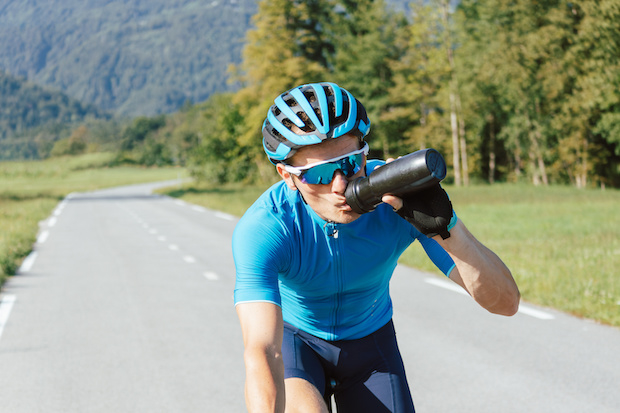
Murray says four hours is probably the lowest a new triathlete can go in weekly training ahead of their first race, and it’s mainly because of one thing: the bike.
“What I’d like is a bike ride on a weekend that gets to be almost as long as the race will be in duration,” he says. To be clear, Murray isn’t saying to go out for as long as you plan to ride on race day, but rather for as long as you expect the entire event to take. This means you’ll need to do some math to determine just how long you’ll be out there on the big day.
As Murray points out, sprint triathlons can vary in distances, but the standard is a 0.5-mile swim, a 12.5-mile bike and a 3.1-mile run. Be sure you know the exact distances you’re set to race and figure things out from there. (When calculating your expected race times, keep in mind that you’ll likely swim anywhere from five to 20 seconds slower per 100 metres in open water compared to in the pool, and your mile pace may be as much as 45 seconds slower than you run on fresh legs in training.)
For now, let’s assume you’re anticipating a finish of somewhere around two hours. Murray says not to jump into this right away, but eventually, you’ll want to work up to riding for that long once a week.
“I would love it if they had an experience of multiple hours of exercising, of heartbeat, of respiratory rate, of perspiration, of digestion,” Murray says.
These longer rides will prepare your body so it knows what it feels like to be moving for the length of time you’ll spend on the course at your first race. This will not only benefit you physically, but also mentally, as you’ll show up to the start line knowing you have what it takes to be on the move for that long.
Swims and Runs
You’ve got your bike schedule set for your four-hour training weeks, but what should you do when it comes to swimming and running? Murray says that if you’re starting as a true newbie in swimming, he recommends formal training.
“Swimming is the one place where you need to invest yourself in professional guidance,” he says. “You need to realize that swimming doesn’t care about if you’re short or tall, young or old, fat or skinny. Swimming doesn’t care. It’s a technique sport.”
Murray says a good coach will help you work on “three skills” that are essential for swimming success: maintaining a level body in the water, swimming with proper rhythm and timing, and breathing the correct way.
“If you can do these, you can get to be a two-minute (per 100 metres) swimmer and be completely unfit,” he says.
Pairing a weekly lesson with another separate training swim each week will take your stroke a long way, Murray says, and it will help you feel confident and ready come race day.
For the run, a key Murray preaches to new athletes patience.
“The run is where injuries happen,” he says. “People who don’t know how to approach it are like, ‘I have to run three miles in the race, so let’s go try to do that tonight.”
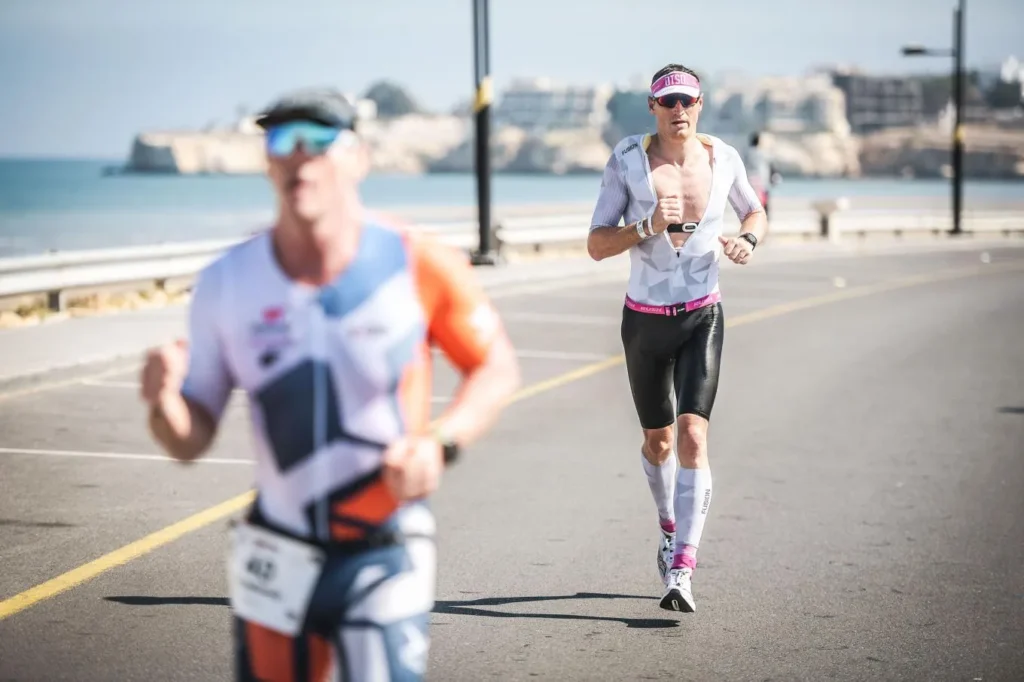
Instead of going all-out and completing the full distance in each of your training sessions, Murray recommends the run-walk method. Your workouts can be as short as 20 minutes featuring one minute of running and one of walking for 10 rounds of each.
“That approach is the safest, smartest way to start running,” he says. From there, you can build your workouts so they’re longer, but still maintaining the run-walk focus. He suggests two of those 20-minute runs in your first week of training. The next week you can run for two minutes, walk for one. Do that for one or two weeks, then build again.
“Even if they arrive at the race after only running five minutes on and then walking a minute in training, that’s still fine,” Murray says. “You’ll still get the 5K done in a respectable way. There’s no shame in taking walk breaks.”
Extra Tips
Another tip from Murray is to set modest goals for yourself. Everyone has dreams of winning races, but odds are you’re not going to do that in your first crack at triathlon. Instead, lower the bar a bit so you can actually reach your goals.
“You want to finish your first sprint in comfort and style,” Murray says. “That means we’re not crawling across the finish line. Maybe you want to run the last half mile with a smile on your face. Like, let’s make the goals real.”
When it comes to gear, Murray says not to get caught up in “the arms race” of triathlon.
“Doing your first sprint triathlon on an inexpensive, crappy, old but safe bike is a beautiful thing,” he says. “Do not spend a ton of money on a bicycle.”
You don’t need to splurge to finish your first race. Big investments in gear can come down the road when you’re more into the sport, but for now, focus on having fun and completing each leg of the race with whatever equipment you’ve got without breaking the bank.
Finally, perhaps the most important note Murray has for new triathletes is that you need to stay consistent in training.
“Frequency is more important than duration,” he says. If you have a workout planned, but then get busy and realize you can’t complete the full session, Murray says it’s worth doing “what you can,” even if that means you’re only swimming, biking or running for 15 or 20 minutes. That’s often not the approach triathletes take in training, however, and they instead skip those sessions and plan to make them up later in the week.
“Then Saturday rolls around and you’re like, ‘Alright, I’m going to do it all in one day,'” Murray says. “It just doesn’t work that way. You should have some sort of activity almost every day so you’re sending the message to your body that, ‘Hey, I’m becoming an athlete now.'”
If you follow these tips, you may not have the fastest race ever, but as Murray says, that’s not what your first triathlon should be about. This is your introduction into the sport. It’s your chance to prove to yourself that you can do it, even if you only have a few hours to spare for training each week. From there, you can work on getting faster and growing as a triathlete season after season.