
Study Shows Running in Carbon Shoes Increases Markers for Certain Bone Stress Injuries
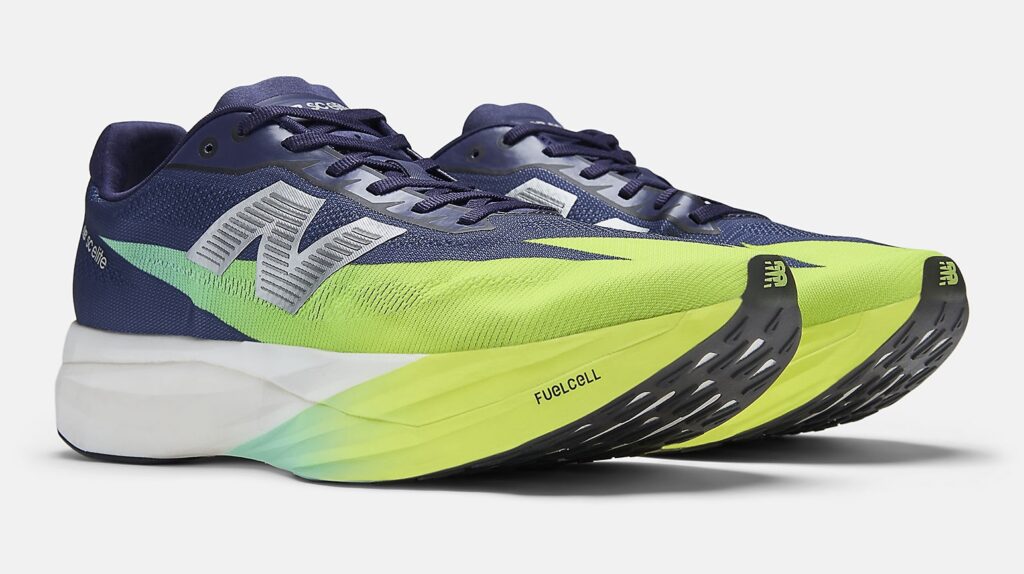
A new study from Massachusetts General Brigham Hospital’s Running Medicine program has documented the potential cost of running in what they call “advanced footwear technology,” otherwise known as carbon-plated running shoes. And that cost may indeed be significant.
The study specifically shows that running in carbon plated shoes increases the biomechanical markers associated with specific bone-stress injuries as compared to running in other footwear. The study, published in PM&R (the official publication of the American Academy of Physical Medicine and Rehabilitation), tested elite athletes and measured various biomechanical factors while running in a variety of shoes.
The research team tested elite, healthy runners who had either qualified for a national championship, met the Olympic standard for their respective distance, or had running performances in the 5000 meters below 15:30 for men or 18:00 for women. Participants had to have prior experience running in carbon-plated shoes, could not have had a running injury in the prior three months before the study, and had to have been running at least 30 miles per week regularly.
Runners were then cycled through a series of runs in three different types of shoes at three different paces. Participants were asked to run at either their “normal” training pace, tempo run pace, or 5 kilometer race pace. For each pace, runners would then wear one of three shoes:
- a traditionally constructed training shoe, with an ethylene vinyl acetate (EVA) midsole foam;
- a lightweight, responsive shoe that featured the same type of midsole as a carbon plated shoe, minus the plate;
- a carbon-plated shoe.
Shoes used in the study, conducted between December 2024 and September 2025, were all donated from New Balance; their headquarters are located nearby Mass General Brigham. The shoes in question were:
- Traditional trainer: New Balance Fresh Foam 880v14
- Responsive Shoe: New Balance Rebel v4
- Carbon racer: New Balance SuperComp Elite v3
All of the shoes tested in the study were under 40 millimeters of stack height, making them eligible for use in all World Athletics sanctioned events. (By extension, it means they all are legal for IRONMAN racing, too). Published weights of the shoes ranged from 213 grams to 251 grams. Heel toe drop was the same for both the traditional trainer and the carbon racer, at 8 millimeters. The responsive shoe had a 6.5 millimeter drop.
Researchers then used 40 reflective markers to collect data and measure specific variables that are known to cause bone-stress related injury.
According to the study, carbon plated footwear showed notable increases in two types of stressors that are linked to bone-stress injuries. The first, rear-foot eversion, showed increased in both excursion angle and the velocity in which the eversion occurred. Rear-foot eversion is when the calcaneus, or heel bone, tilts away from the body’s midline and causes the medial (inner) side of the foot to flatten and arch to lower or collapse. Some of this collapse is normal in the gait cycle, but increases in angle and the velocity in which it occurs is a potential source for injury.
The second was lowered cadence, which increases stride length and reduces ankle plantar flexion moment. Prior studies on recreational runners had also shown increased stride length and reduced cadence while running in carbon shoes; the research now suggests this is a universal truth of these shoes. Also of note was that the study found these increases occurred regardless of the speed run by the athlete.
The study theorizes that together, it may explain the frequency of navicular bone-stress injuries that have been noted recently. The navicular bone is small and boat-shaped, but serves a critical role of the foot in motion, acting as the keystone of the medial arch. It bridges the ankle to the front of the foot, supports weight distribution, and is a crucial attachment point for the tibialis posterior tendon. Injuries to the navicular bone have the longest return-to-sport timeline of foot-related injuries, and are higher risk for non-union and requiring surgical intervention due to the limited blood flow and the mechanics of the foot. These are the types of injuries that are currently at the center of multiple lawsuits against manufacturers Puma and Nike by former elite athletes, including two-time world champion Abby Steiner.
Researchers theorized that due to the increased rear foot eversion and decreased cadence that occurs while running in carbon-plated shoes, it may induce additional specific stressors on the navicular bone. First, these tendencies may have the result of increased dynamic control from the tibialis posterior to prevent medial arch collapse. The navicular then may endure increased shear stress as a result. Second, the increased rear foot eversion is associated with center of pressure shifting to the medial side of the foot while running, potentially increasing the bone stress there.
Researches recommended follow-up testing on additional paces, as well as to see if other running related injury outcomes were increased through the use of different footwear.




“The changes in biomechanics were small; however, cumulative effects to bone and the lower extremity could contribute to injury.”
Perhaps if they used a control group on runners in a more conventional shoe they could have shown if “small” changes in biomechanics occur across all running shoe’s and simply shuffle around where an overuse injury can occur as mentioned at the end of the article.
Fewf I have the supercomp v4, was worried for a second
But in all seriousness..Besides the shoes not lasting as long. Maybe a good reason to use them for race only? Or is that risking injury because you’re not used to them.
What increases injury risk is running 20, 30, 50 miles per week.