
IRONMAN Should Be Commended for Nice, Frankfurt Actions
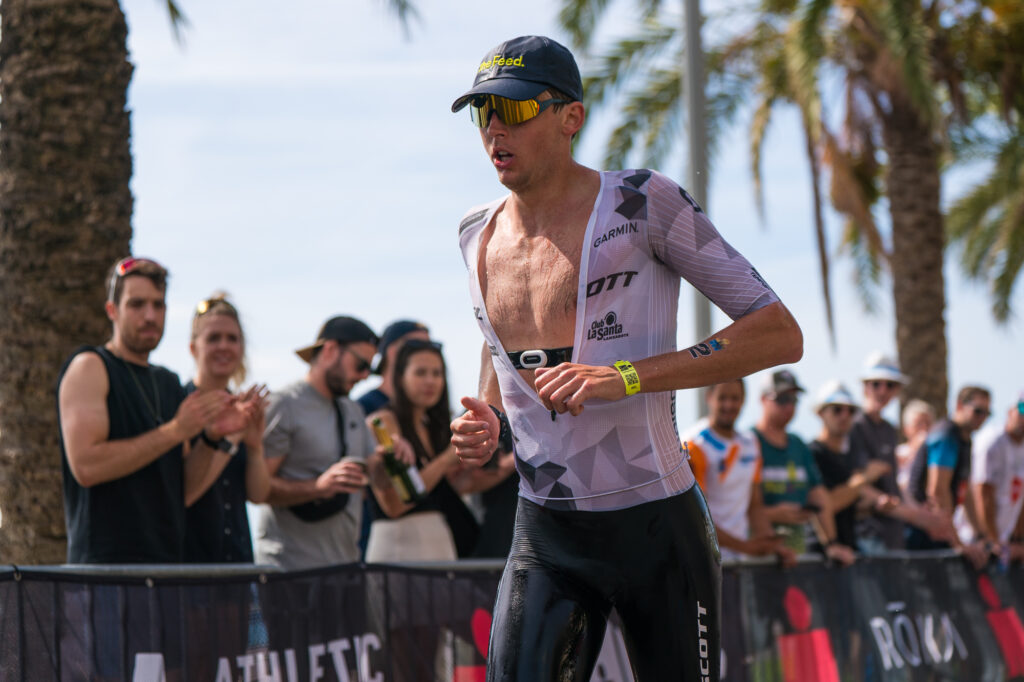
Let’s lead off with a very obvious statement: there is no race producer worth their salt that wants to cancel a race. Us race directors will attempt to move heaven and earth itself to try and not cancel a race, and especially not within 30 days of our event date. By that point, we’ve spent your race registration dollars on just about everything that you’ll experience on race day. From swag to supplies to suppliers, there’s very little wiggle room left for items to cancel when it comes down to those final few days.
But sometimes, you have no other option. Your job as a race producer isn’t just to put on the race; it’s to put on the race safely. And when athlete, volunteer, employee, spectator, or general public safety are in question, you have the obligation and duty to modify your event so as to ensure those in your care’s safety.
That’s exactly the decision that IRONMAN and its team was unfortunately faced this week with events in France and Germany. The so-called Omega Block has seen multiple fatalities, caused the A2 motorway surface to buckle in Germany, and forced extreme action as temperatures soared to above 40 degrees Celsius for many consecutive days. In the wake of that weather pattern and its impact on emergency service resources, IRONMAN was forced into cancelling IRONMAN France altogether and then modifying its race in Frankfurt to include a 125 kilometer long cycling loop and a half-distance run.

Let me be unequivocally clear: this was absolutely the right call in the circumstances.
This isn’t a single day of oppressive conditions. It has been an unrelenting heat wave spanning well more than a week. Emergency resources have been pushed hard as people attempt to find ways to stay cool. France, for instance, has seen at least 40 deaths attributed to the heat wave from drowning. This is a region wholly unaccustomed to these temperatures. Air conditioning, for instance, is only available in 20% of residences. And critical medical infrastructure was even knocked offline as scanners overheated and had to be taken offline.
For what it’s worth, while in Rome earlier this week, we met a woman from Kuwait at one of the activities we scheduled. In her own words: this weather is much worse than it is at home. At home, she said, we at least are prepared for these kinds of conditions. Here, they just aren’t.
It’s why it’s unfair to IRONMAN and to local authorities who helped make these decisions to compare them to other races in other locations. Just because it gets hotter in Southeast Asia or that Kona is a difficult race doesn’t matter. What matters is the field of play that you’re going to be operating in and the environment surrounding you. All races, even be a global giant, are local. And you need to be aware of the communities needs when operating in these types of conditions.
Lest we forget, when things go wrong we tend to also rake race producers over the coals when they instead opt to put on races in the face of this kind of weather. For example, there was significant outcry at IRONMAN following the deaths of two athletes by drowning in challenging seas in Ireland in 2023. We have also seen athletes die from exertional heat stress, in conditions far less extreme than those expected in Europe this forthcoming weekend.
Let’s say that for a moment, IRONMAN decided instead to push forward with their full race in Frankfurt this weekend. And let’s say that unfortunately, an athlete died from a heat-related illness. How quickly would we, collectively, have jumped to blame organizers for continuing in the face of the conditions? IRONMAN would be called out for greed, for being soulless, for not caring about its competitors, its volunteers, its spectators, its community.
IRONMAN instead to put athlete safety in front of all else. And that’s the way that it should be.
Contrast this decisive, pro-active approach with the “wait and see” approach that Life Time had taken this week with Crusher in the Tushar. The Cottonwood Fire in Utah quickly engulfed much of the surrounding region of Beaver and Piute Counties, burning over 71,000 acres since it ignited on Monday. The human lit fire torched much of the Eagle Point ski area, home of the race, by midweek.
Unfortunately, Life Time chose a more tepid approach. On Thursday, Life Time wrote in an event update on Instagram that, “With Crusher in the Tushar still a few weeks away, we know athletes are looking for answers. The situation is active and evolving, and we are working closely with local officials before making any event-related decisions.” It’d take another 24 hours, and much athlete and community outcry, before Life Time was spurred into its cancellation decision.
The reality of being a race director is that you are going to be forced to make extremely difficult decisions, with the best information you can in front of you in that moment, in order to protect the very athletes who will then lambast you on social media in the event that you make the perceived wrong call. But, in my opinion, you can never go wrong when erring on the side of keeping athletes safe from themselves.
Tags:
IRONMANOpinionRelated Articles:



Continue the discussion at forum.slowtwitch.com
67 more replies






“you can never go wrong when erring on the side of keeping athletes safe from themselves”
Final nail on the coffin.
I dont think they had a say in the Nice decision. That could have even been shortened to and olympic or sprint to avoid the climbs that take so much time.
Cancelling Nice is a joke, we run races like that in the US on a routine basis. It’s a high of 88, that’s nothing. Even Frankfurt is doable.
When I raced Ironman Arizona the bike out on the beeline was in the high 90s. The run after that was in the high 80s. They didn’t cancel that race. They haven’t canceled numerous Coeur d’Alene races that were in the 90s and tipped into the 100s.
But hey, they European Commission turned off the A/C to their first three floors of their building so that the those who worked down their would get to suffer but kept the A/C on for everyone else. So I guess Ironman is smarter than European governments.
So, cancelling Nice is a joke, Frankfurt I can understand, but still not really think it’s the best.
ETA: How is LifeTime taking a more approach? Crusher in the Tushar is on July 11th. Unlike with What Ironman just did, those athletes have an ability to pivot their plans. Whereas anyone traveling for Nice and Frankfurt was already there on site.
If I was racing I would be super pissed. I did Vichy in worse heat conditions with more elevation and less cooling wind, and I will never forget that race. Athletes in Nice were robbed.
Frankfurt I somewhat understand more given the situation last year, FFM really heats up due to skyscrapers etc
While I don’t always agree with you…
You nailed it, re: IM cancelation.
I was on the beach at Lake Tahoe in '14 when they canceled. The right choice. The day before the smoke was blowing in a favorable direction. The wind changed for race day.
I was relatively local; felt terrible for those who really traveled.
My understanding is that IM was more of a willing party on Nice than just a bystander.
As for the rest of the discussion on temps: yes, it’s hotter elsewhere. Yes, they still run races. It all boils down to those places being equipped to handle that heat. Europe isn’t. It’d be the same if this race were in LP, for instance.
Reading comprehension
So tri generally isn’t a winter sport, and now moving closer to having issues in summer as well. Means it only squeezes locals + RD’s on race dates yes? I don’t want to get into a weather climate debate, but this isn’t going to be one off occurances is it?
I don’t like canceling or modifying races either. Athletes have prepared for a long time. The infrastructure is set, and many people have worked very hard. But, I have a hard time overly criticizing the folks on the ground who have to make those decisions. As indicated in the article, many of these places do not have air conditioning and infrastructure resources are already being stretched. Perhaps it would be a bit selfish for a recreation competition to overly stretch the resources further in this type of situation. Tough choice for sure, but I have to respect those with more information and In the Heat of the Moment (pun understood).
I will say the heat at Coeur d’Alene ‘15 was something else. Carnage on the run was no joke. I saw a truck take a turn and it literally ripped the pavement like it was taffy.
Course was shortened; not an inch
then again considering the recent politics and that Nice doesnt want to pay IM, perhaps your right. Money decision under the veil of athlete safety
Great song by Asia.
And their healthcare systems are overwhelmed from the previous week’s attendances and admissions.
The fact it’s cool on Sunday doesn’t negate the fact people were being admitted days ago and they need whatever capacity they have for residents
A point seemingly lost on here by others
Wasn’t the Mayor’s decision