
How Road Racing is Welcoming Non-Binary Athletes to the Podium
Despite often being billed as something for everybody, sport is no stranger to exclusion. While the world of athletics is more inclusive than ever before, there is an ever-growing population that is struggling for recognition — the transgender community. That said, the sport of running is consistently improving when it comes to non-binary athletes. There is still a long way to go before running can be called fully inclusive, but more and more running events — including some of the biggest races in the world — are adapting and working to become more welcoming to runners of all gender identities.
Running as a Non-Binary Athlete
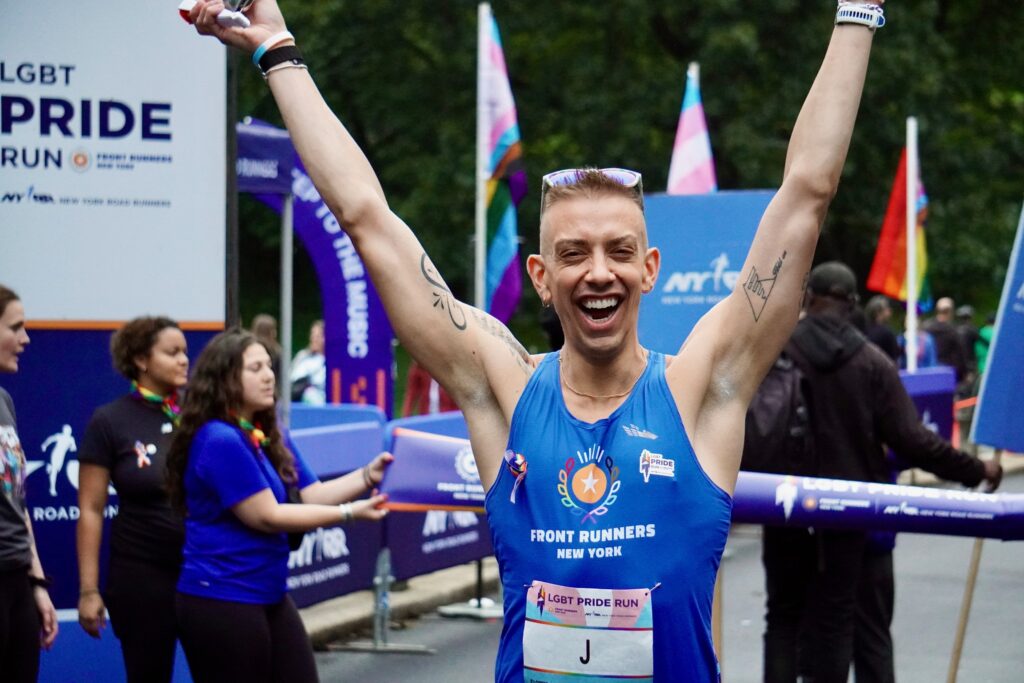
J Solle is a non-binary runner who lives in New York City. They say they have “always run for enjoyment,” but training with a group and racing is a rather recent addition to their life. They moved to New York City six years ago. It was the start of the COVID-19 pandemic and no one could do much of anything, so Solle decided to take the sport a bit more seriously.
“I really caught the running bug when I moved here,” they say. They found Front Runners New York — an LGBTQ+ run club that has been around for more than 45 years and today boasts over 1,100 members — and quickly fell in love with the community, eventually joining the organization’s board of directors and taking the helm as race director of the club’s Pride Run, an annual event held each June since 1982.
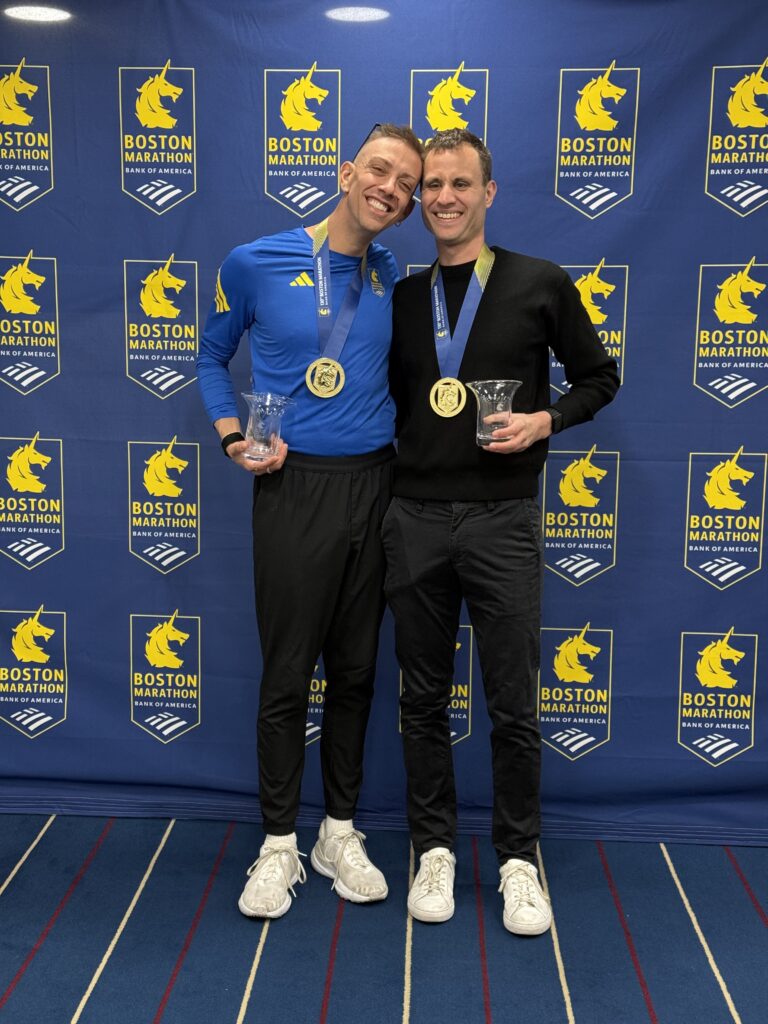
The club is a massive part of their life, they say. It’s where they met all of their friends after moving to the city, as well as their partner, Jacob Caswell, who placed third in the non-binary category at this year’s Boston Marathon. (Solle also raced Boston, finishing eighth among the 103 non-binary runners.)
The club prides itself on its inclusivity and promotes the idea that running is a sport with few prerequisites — as long as you have a decent pair of shoes and keep moving forward, regardless of the pace, you can call yourself a runner.
Front Runners and other LGBTQ+ clubs like it have been around for decades, but the addition of the non-binary race category is a relatively recent development in the world of running. For years, non-binary runners like Solle had no choice but to register under their sex assigned at birth when signing up for a race. While this “sucked,” as Solle says, the only other option was to simply not race at all.
In the mid- to late-2010s, however, some races added that third race category to go along with the male and female options. In 2022, Solle ran the Brooklyn Half Marathon, officially competing as a non-binary athlete for the first time.
“I’ll always remember crossing the finish line and pulling out my phone,” they say. “I looked at the results and saw the X next to my name and I just cried. It was such an affirming thing to see.”
This may not seem like a big deal to many people, but Solle says that is likely because “a lot of people don’t experience their gender in as overt a fashion” as non-binary individuals do. Many people don’t give the M or F next to their name on a results page more than a passing glance, but the X next to Solle’s meant so much to them.
“Seeing that was like this relief,” they say. “There are very few other places in our world where we can see the physical manifestation of what our gender marker is.”
Since that day in Brooklyn, Solle has not signed up for another race that doesn’t feature a non-binary category.
“I’m not willing to sacrifice my authenticity anymore, because we’ve seen that it is possible to have that category,” they say.
Implementing a New Category
One of the race organizations that Solle says was an early leader in this space is the Canada Running Series (CRS). This series features six races in Toronto and Vancouver — all of which offer a non-binary race division.
It was 2019 when CRS races first added the third category, says series CEO Charlotte Brookes. She says it was an easy decision to include the division after it was first brought to the team’s attention.
“We were hearing from our participants and getting some feedback around the gender options we were offering on our registration form,” Brookes says. “That’s where it started.”
CRS uses Race Roster as its registration platform for all events. After conversations with that team, they added the category, which Brookes says really opened the door for all races and series that use Race Roster.
“So many events use that platform in North America,” she says. “So it just kind of became an option for everyone. It was a really cool jump forward.”
Adding the option to race as a non-binary athlete was only the first step, which is something Solle often tells race directors and event organizations. In addition to being the Front Runners Pride Run race director, Solle works with races around the U.S. and Canada to help with the implementation of non-binary-friendly policies.
“I tell people that you can’t just set up the timing system and registration and call it a day,” they say. “There are a lot of other things that go into making sure that the non-binary category is successful.”
These steps include communication around the addition of the non-binary category and making sure to let the race community know about the update through social media, press releases, race ambassadors — really any way to get the word out.
Another step involves prize money. Most bigger races award cash prizes to the top male and female finishers, so it only makes sense to do the same for non-binary runners as well, Solle says. Of course, this is easier said than done, so it takes planning to turn it into a reality.
“We have continued to evolve since 2019,” Brookes says on this note from Solle, whom she met at the 2025 TCS Toronto Waterfront Marathon (CRS’s biggest event). “We’re just constantly learning and listening.”
In 2024, CRS added an open category that features cash prizes for all top finishers. The top male, female and non-binary athletes all earn prize money for their finishes.
“CRS has done a fantastic job of thinking really holistically about the experience,” Solle says. “They’ve done so well with prize money, policy, communications, social media, all of these different facets that go into making sure that everybody has an inclusive and enjoyable experience on race day.”
Unnecessary Backlash
Transgender people competing in sports is an oft-debated topic these days. The decision on whether or not to allow transgender athletes to compete in the category they identify with (rather than the sex they were assigned at birth) is not an easy one to make for policymakers in professional and elite sports. There is a lot to consider on both sides, and regardless of the stance organizations take, they will upset one side of the aisle.
To many people the addition of a non-binary category is a non-issue. Non-binary athletes being permitted to race in their own division doesn’t take away from cisgender athletes competing in theirs, Solle says. In fact, the creation of a separate division is a solution so many opponents to the trans community have suggested in the past. On virtually any social media post regarding transgender and non-binary athletes, there is bound to be a comment about “a third category” or a “they/them division.”
Many running events did just that and, as Solle puts it, gave non-binary athletes a space to race as their authentic selves. Despite that, many people have still found a way to be angry about it. The negative comments got so bad on this year’s Boston Marathon post about the non-binary podium that the race’s social media team turned the option to comment off entirely.
Solle says their partner, Caswell, was the first non-binary runner to win prize money at the New York City Marathon in 2022. This was a big moment, not just for Caswell, but for the non-binary running community as a whole. While many people celebrated it, Solle says Caswell received “a lot of backlash.”
Brookes says that while the response has been “overwhelmingly positive” with the CRS decision to include non-binary runners, there are, of course, detractors online.
“It’s only ever online,” she says. “And that’s the thing, right? People hide behind their phones. It’s easy to do that. But, in person, there’s never been any of that.”
“There are enough slices of the pie to go around for everybody,” Solle says, emphasizing that the inclusion of non-binary runners hurts no one and helps countless athletes. “If I have a slice of the pie, you’ll still get one. By creating an opportunity for me, it’s allowing me to be who I am, to be my authentic self.”
While Solle feels there is still a long way to go before non-binary and other transgender people and athletes can feel like they have been completely accepted in the running world, at least some events are working hard to make that a reality.



I’m sure there are going to be people who would say that creating a non-binary prize purse takes away from the male and female “pie” but in fact, adding space for non-binary entries actually makes “the pie” bigger, as a whole
Maybe?
A lot of the time sponsors are footing the bill for specific prizes. So if you can find a sponsor who wants to put up some cash for a NB category, then why not.
Even if you take a cynical approach, there are lots of companies who are looking to prove they’re LGBT positive during pride month that can add to their bona fides with an “official sponsor of the Boston Marathon NB category"
Was about to say the same thing! I organized a handful of mtb charity events and included a non binary category. It didn’t affect anyone else, the only comment I had as an organizer was from someone that registered for it accidentally. We didn’t have any prize money issues as it was all for charity. Historically in mtb races the prize money has been equal for men/women in the series that I’ve attended in Canada. And they came out of registration fees, even though 10 years ago there was a disproportionate amount of entrants. Fast forward to today, there is a significantly larger group of female entrants and it’s a moot point.
I guess what I’m saying is support all groups, and said groups will come!
Unfortunately and in reality, I think that you will find this category dominated by those born male. It just reality
Two words: Nikki Hiltz


Though they’re not in the “road racing” category, they’re pretty unbeatable
Also, we’re not talking about “domination,” we’re only talking about opportunity - the chance to run, more than anything else
If you want to jump straight to podiums & prizes, maybe you should think a little about what a non-binary person* is looking forward to when a race offers that option, if you can
*. do you know any? Would you like to? How would that interaction go?
Interestingly, on the splash page, this is tagged as RUNNING, but shows up in the TRIATHLON forum