
Isn’t That Saddle Backwards? How Hans Aaseth Earned His Black Shirt at Norseman
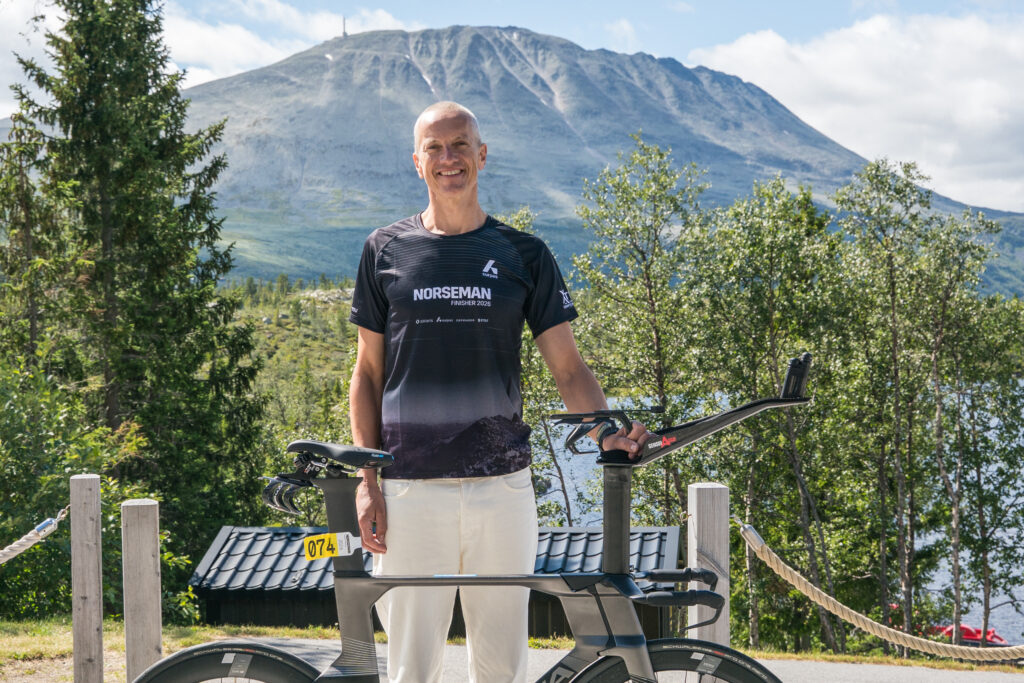
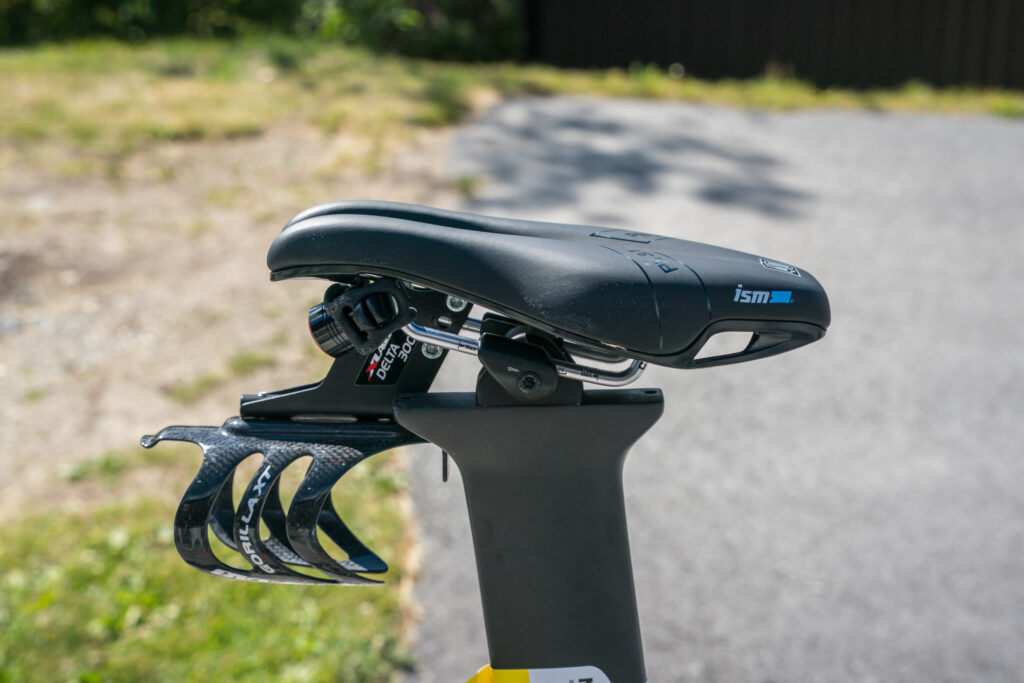
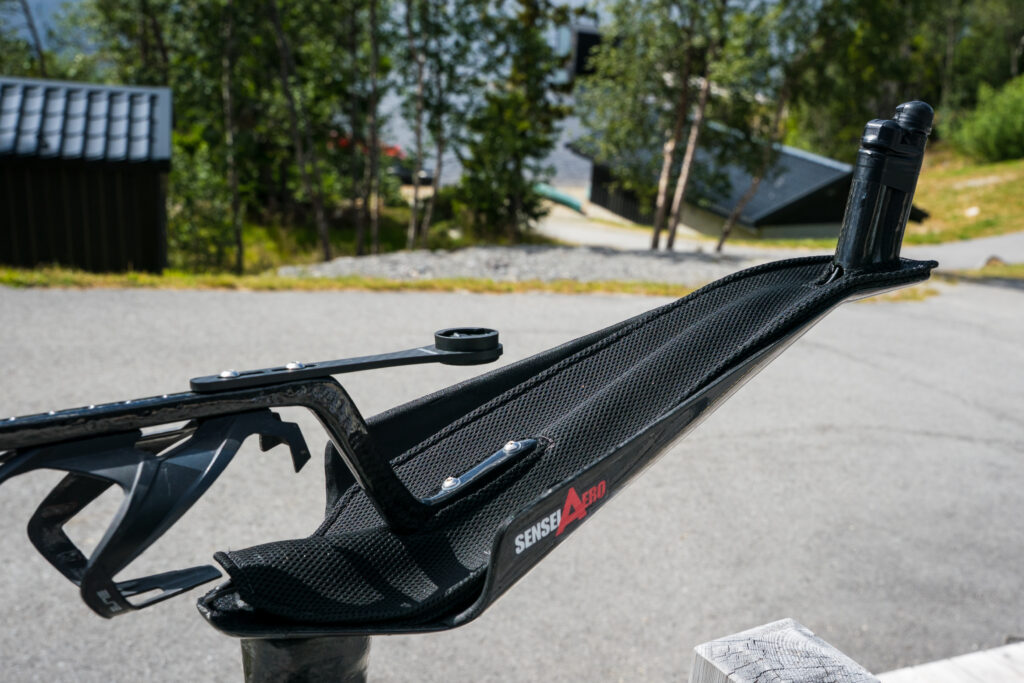
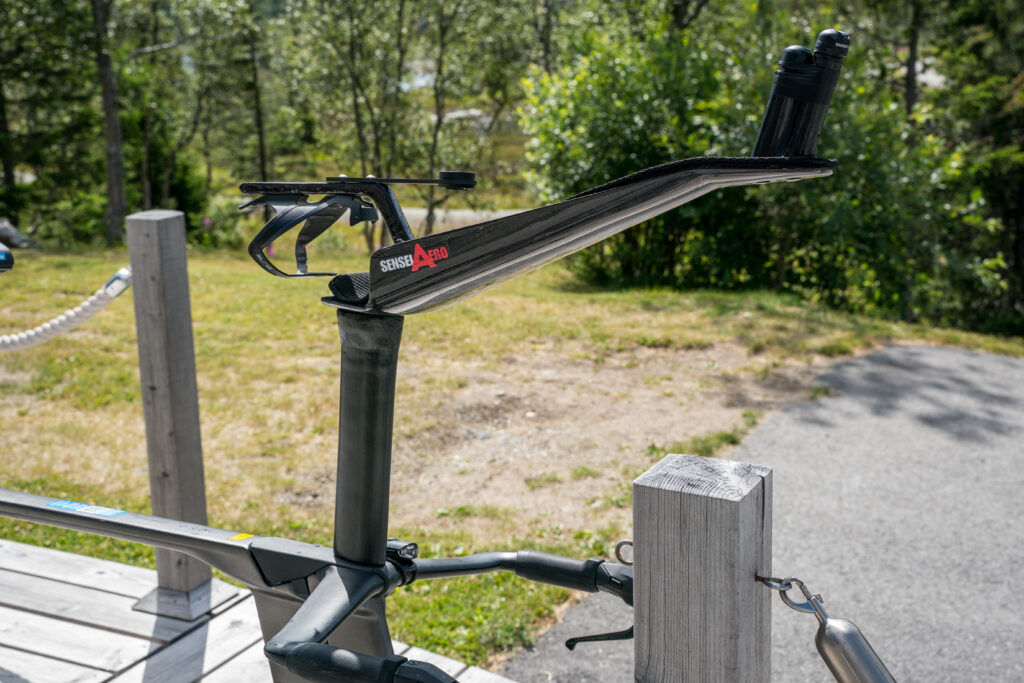
No, you’re not imagining things – that saddle is definitely on backwards. And, yes, that riser is insanely long. We’ll have more on the bike later, but before we get there, let’s introduce you to the man who owns that bike – Hans Aaseth, a professional guitar player who just became a three-time Norseman finisher.
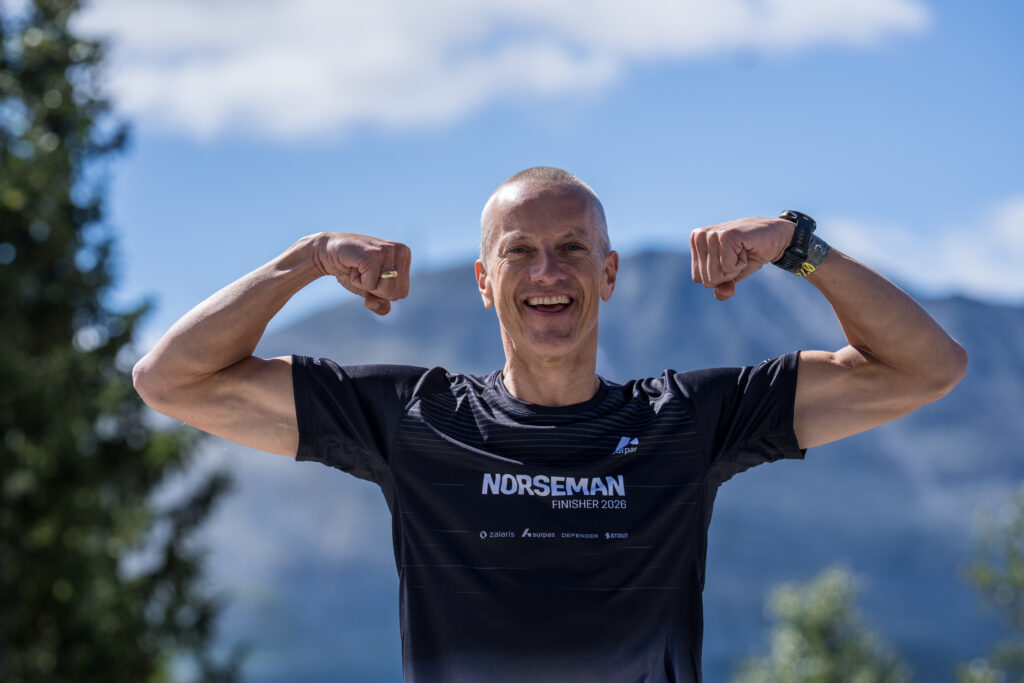
Frozen After the Swim
The water off Eidfjord doesn’t care who you are. It was 1:15 into the swim when Aaseth first felt it — not the cold itself, but the version of cold that arrives after the first version has already worn you down.
“The temperature dropped three, four, five degrees, and I started to freeze,” he recalled.
By the time he reached the shore his body had stopped taking instructions. His support crew met him at T1 and became his hands.
Six minutes in transition. Longer than most — “some guys take two minutes, so that’s four minutes too long” — but six minutes he needed, because a body that can’t remove its own gloves can’t exactly clip into a bike either. Jacket, wool socks, and then the machine that would save his race.
The bike is where Hans lives. “It felt amazing. I was just passing people, bam, bam, bam, bam, bam.” He’d built a plan with his coach, numbers to hit — 290 to 300 watts on the climbs, 260 to 280 on the flats — and mostly he stuck to it, riding conservative on the flats to bank something for the run that was still hours away. The result of all that discipline: sixteenth overall off the bike. “So that was really fun.”
But there was a story underneath the story. Ten days before the race, at fifty kilometers an hour in full aero tuck, a gust had taken him off the road. “I went outside the road and I tumbled around. But I was so lucky because there was grass there, and I landed really soft.” Once he was on the ground, he did a quick inventory of himself — sore muscles, but nothing broken — but his seat hadn’t been so lucky. Damaged. And here is where you learn something about triathletes at Hans’s level: the seat isn’t a seat, it’s a relationship. “As you guys know, it’s really, really important to get used to the position that you’re gonna race in, and have a lot of miles in it.” So he ordered the exact same model, had it shipped express, and it landed the day before the race. He measured the angle with tape to match the old one exactly. “Everything was perfect. I was really happy about that.”
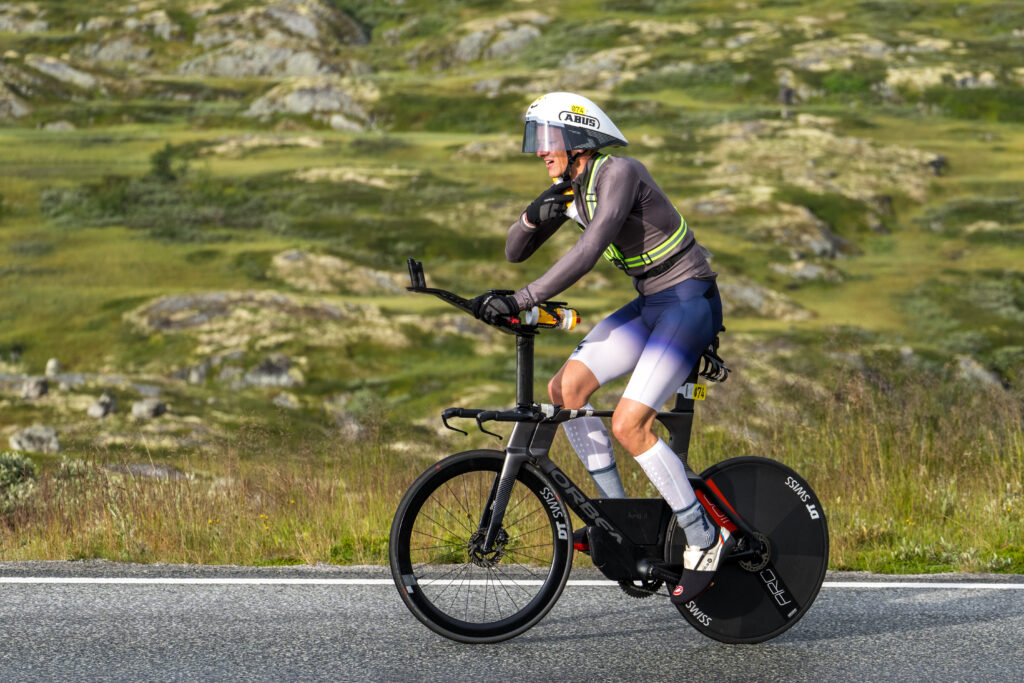
Then he started riding, and the new seat betrayed him anyway. “The old seat was much softer.” Same shape, same position, same everything on paper — and still, somewhere in the difference between an old seat broken in and a new one straight from the box, pain started building on both sides. “It didn’t hurt like crazy, but I started to feel it quite a bit on the bike.”
“I felt it immediately when I started to run,” he said.
The first 25 kilometers of the run were along a river, up and down, up and down, on asphalt that gave no mercy – “I felt every uphill. It hurt.”
Then the terrain tipped upward for real, and Hans started walking, and a decision he never wanted to make became the only sane one left.
“Today, I don’t care what the result is going to be,” he thought to himself. “I hope I can get a black T-shirt. That would be really fun, but I’m just going to finish today.”
His crew came through again. Focus on one step at a time, they told him. On the steepest sections the race stopped resembling running altogether.
“On the mountain it was so slow,” he said. “I had to use my arms on the rocks to get up. On the steepest part I had to use my hands.”
He was dizzy, sick, moving on instinct. And in that state, something clarifying happened — the parts of the sport he loves and the parts he tolerates came into sharp relief. The final stretch was its own kind of cruelty.
“The last 4.8 kilometers, when you arrive on that mountain, it says only 4.8, and you think, ‘Ah, that’s not too long.'” But it was rock, and he was exhausted, and the margin for error kept shrinking. And then he heard it. “You start hear the people screaming, and people are getting excited at the top, and you can feel, ‘Maybe I’m gonna get to the finish line.’ I was so happy that we made it.”
The next morning came a reckoning.
“I woke up before everyone else, like at 7:30 in the morning, and I had one hour on the couch just thinking about race day,” he said.
Not analyzing splits. Not replaying the seat failure or the wrong turns on the final climb up to Gaustatoppen. Something else.
“I really felt that I appreciate life in every way, and I feel like I’m so grateful for the life that I have, and for the friends and the family that I have.” His family had been on that mountain, running alongside him near the end. “We were all crying.”
He’d first finished Norseman in 2019, again in 2021, and even standing on the podium in ’21 after a rough swim, he already knew he wasn’t done. “I thought I had to do it one more time.” Five years of carrying that unfinished business. This year it came, and Aaseth truly appreciates the opportunity.
“If you have the chance to do Norseman, I would really recommend it,” he said, and meant it the way people mean things that changed them. “It’s a unique experience. Everyone want’s to lift each other up.” He wasn’t selling the race. He was just still inside it, a few hours after that realization of just how much the race had changed him.
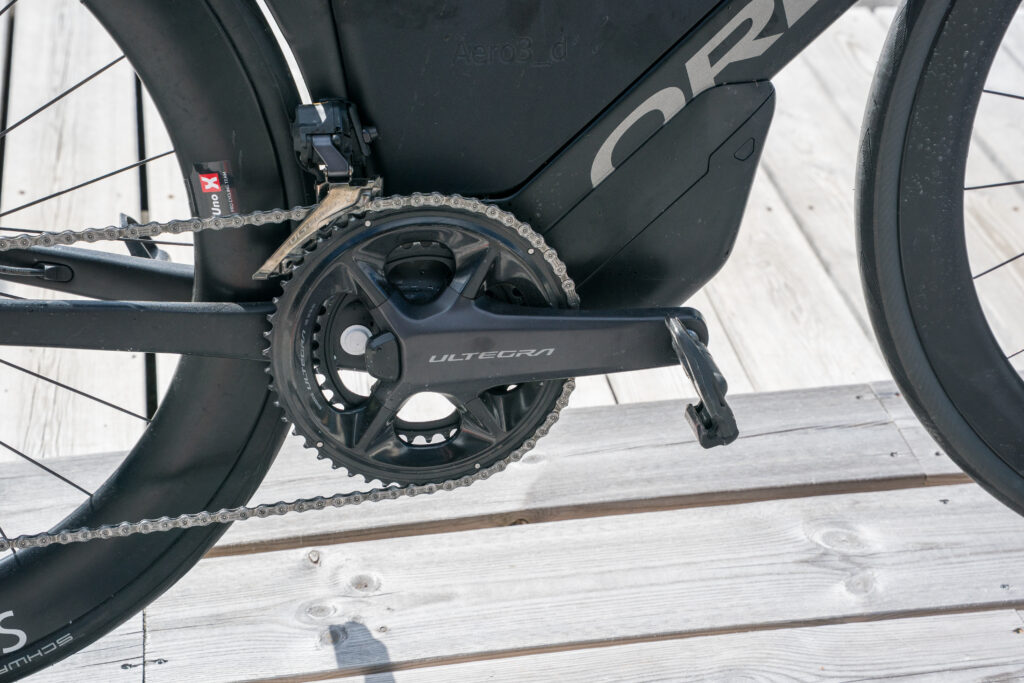
Hans Asset’s Orbea Ordu
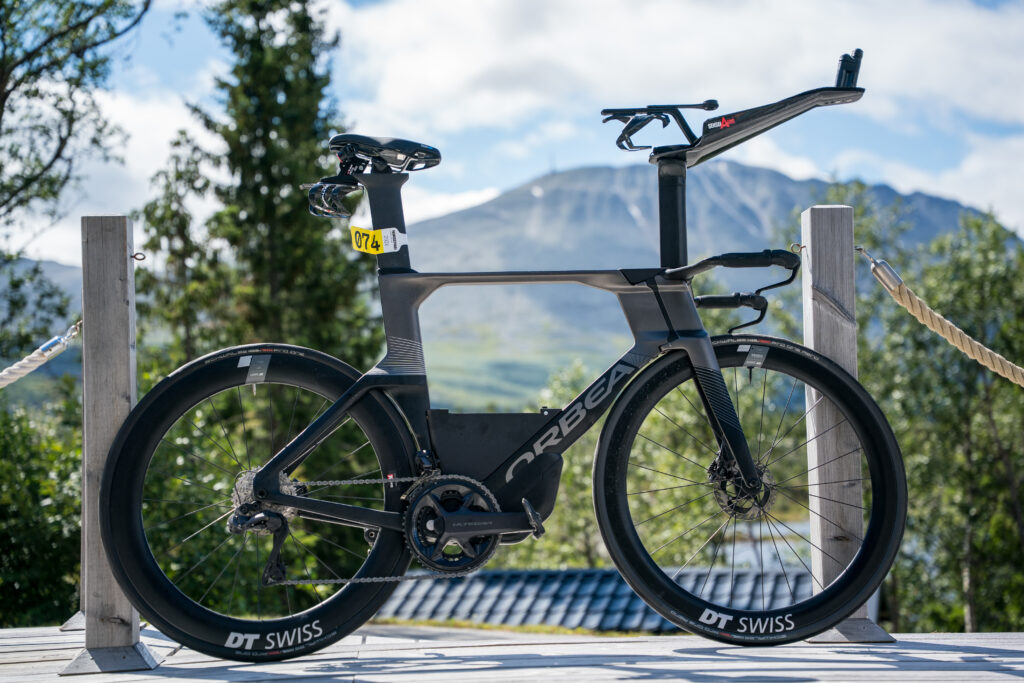
At 197 centimeters tall (just under 6’6″), Aaseth doesn’t fit off-the-shelf triathlon setups.
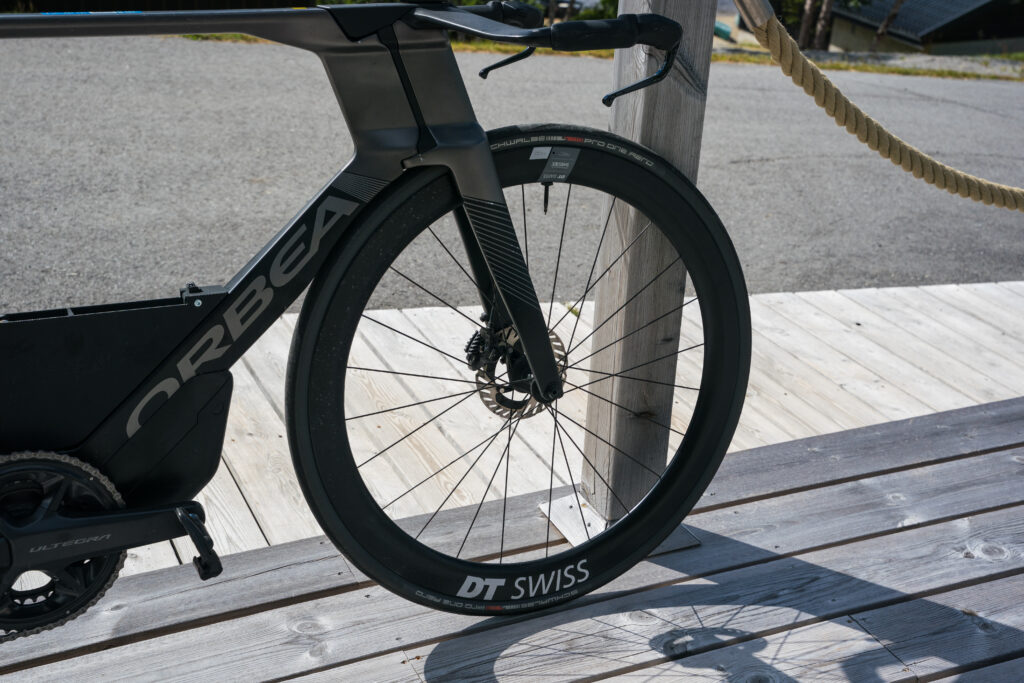
“If you’re a tall rider and you’re going to buy a triathlon bike, the first thing you have to do is make sure you have a long enough frame.” He reached out to Robert Kallin, who set the fastest IRONMAN bike split at Vittoria-Gasteiz in 2024, and who is about the same height (Kallin is 198 cm). Kallin pointed him to two frames — the Scott Plasma and the Orbea Ordu — and Aaseth went with the Ordu.
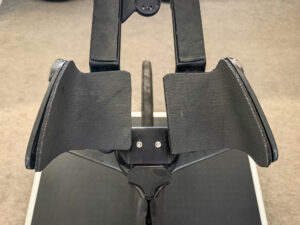
What caught his eye was Kallin’s cockpit: a one-piece carbon design with the arms held close together. Kallin said a friend had built it and it wasn’t for sale — but Hans noticed the friend tagged in a photo, reached out directly, and got a yes. The result is a matching setup from Sensei Aero, along with a 25-centimeter stem reinforced with carbon for stability at speed. “When you’re going down the mountains at 80 kilometers per hour, it’s really important to be safe.”
The saddle fix was harder one. Aaseth had developed a pubic bone stress fracture that specialists blamed on running, but he suspected otherwise. His wife had a theory: the constant back-and-forth motion in the aero position was the real cause. After exhausting every seat, angle, and crank length, Hans tried something unconventional — flipping the saddle backward. “It felt really nice for the first time in my life. I was sitting comfortable on the bike.” His fitters shrugged: “Whatever works for you, works for you.”



That cockpit scares the crap outta me.
Yes, that is even allowed and so many more bikes to chose from with his length then this one. This was quite a bad advice from mr. Kalin….
Jeroen
What size is that bike? It makes me wonder what the results would be if a regular sized person say 180cm, used a 50cm bike with riser gear like that - probably beneficial on hills being lighter?
I just checked with Hans - it’s an XL.
It must be an XL I assume, but still otherwise I would not understand why you would ride something like that. It surprises me even that it passed the bike check in.
Jeroen
Seat is backwards, and his extensions are mounted on a seatpost coming out of the stem.
It’s like if Backrooms imagined a TT bike.
did he use his guitar’s neck to rise the aerobars?
I hate these style sizes. XL can be 58-70. so what is it in cm?
For a second I thought he was riding a Brompton.
I couldn’t help myself when I saw that saddle backwards….so I set that up on my stages sb20 indoor bike and remarkable enough it wasn’t that bad at all. And getting the angle right it was actually pretty good, much much better then you would think.
Massive thigh clearence, nothing on the perineal area, maybe a little weird on the sitbones at first but(t) added an desoto saddle pad and that made a big difference. So forget how crazy it looks, if you have major perineal or soft tissue problems I would say give it a go.
Jeroen
I’m 6’5” with a longer torso than legs proportionally. I ride a size large Canyon Speedmax with only a couple of risers. I rode a 58cm Cervelo P5 for 9 years across 7 IMs and 20+ 70.3s again with very few risers. I wouldn’t trust a riser that long, makes me speed wobble just looking at it. Everyone’s different though.
It would concern me as well. I have a very high aerobar setup. Partly because my bike is at least one size too small, but also because I have back issues and can’t ride in positions most here would find optimal without significant pain. In my case, there are two risers, not one, plus a bridge. It’s incredibly solid despite being made from a cut-up Argon seatpost. I would not trust a mono-riser as long as on Hans’ bike on the roads we have here.
Are you able to ask Hans what sort of bolts/fasteners are holding those two very long levers together?