
Shokbox Pro Review: The Bike Case Built for Superbikes
The Short Version
Travelling with a modern triathlon bike has its challenges. From one-piece or custom integrated cockpits, internally routed hydraulic hoses, frame-integrated hydration, to proprietary aero seatposts, you have a lot of componentry to protect. Every part you remove is a part you have to re-install correctly, often with a torque wrench, sometimes with a bleed kit, and almost always in a tight hotel room. Kudos to all those that travel with their bikes!
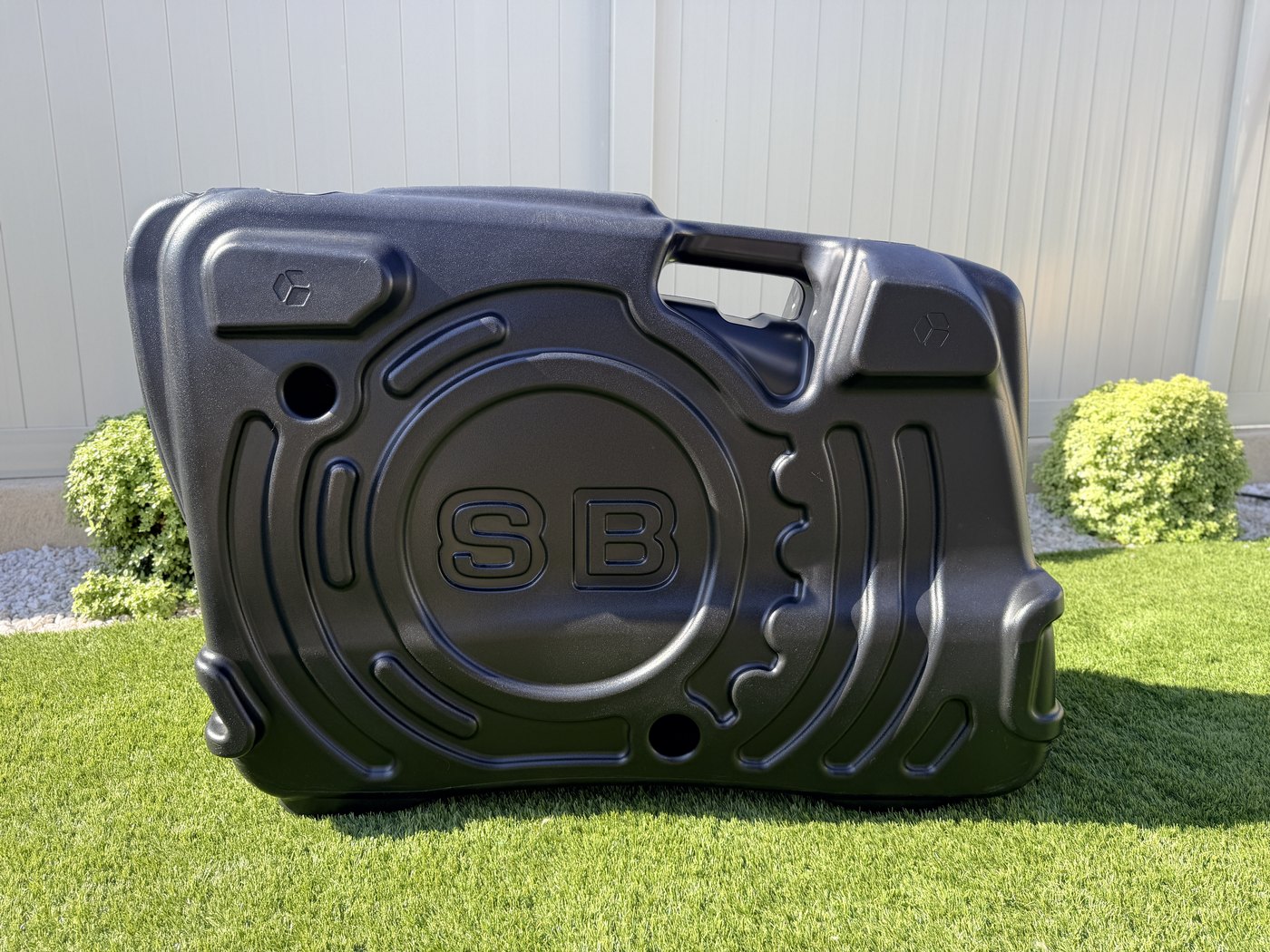
The Shokbox Pro was designed to protect your coveted bike while minimizing the parts you take off. It is a large, heavy, hand-built hard case from a UK company whose entire design premise is take less off your bike. It costs $1,199 USD (£899 in the UK), weighs just around 15.5 kg (or 34 lb) with its soft goods and no bike in it, and measures right at the ceiling of what most airlines will accept as a single checked item.
I flew mine with a Quintana Roo V-PRi from San Diego to Vancouver. Here is everything I learned, plus the specs straight from Shokbox, the airline math nobody publishes, and an honest accounting of the two things about this box that will genuinely annoy you.
Key Takeaways:
- The Shokbox Pro is built so your cockpit stays on. Wheels and pedals come off, and on most tri bikes the aerobars stay put; taller riders still drop the seatpost.
- At 115 linear inches it sits exactly on the standard airline size limit, and at 15.5 kg with no bike inside it eats half a 70 lb allowance before you start packing.
- The advertised lifetime warranty covers the shell for life but every moving part for only 12 months, and you must register the case within 28 days of buying it.
- At $1,199 it is expensive but not an outlier; serious hard cases run $1,000 to $1,250. The real cost is storage, at 139 cm long all year and too big for a sedan.
Shokbox Pro Specifications
| Spec | Figure |
|---|---|
| Price (US) | $1,199.00 USD (Shokbox US store) |
| Price (UK) | £899.00 RRP |
| External dimensions | 139 cm L × 54 cm W × 97 cm H (55 × 22 × 38 in) |
| Linear dimensions | 114–115 linear inches / 290–292 cm |
| Weight | 15.5 kg / 34.2 lb including all accessories |
| Shell | Batch-moulded HDPE with dual anti-crush beams and high-impact zones |
| Interior | 25 mm convoluted foam lining, padded frame rug, padded wheel bags, internal equipment bag |
| Hinge | Integrated hinge spine with steel axles (this is sturdy!) |
| Wheels | Four multi-directional castors |
| Security | 4 x Recessed TSA-approved combination latches |
| Warranty | Lifetime on the shell only; 12 months on latches, wheels, hinges, foam and straps. Registration required. |
Internal Fit Envelope
Shokbox publishes its fit as five clearance axes rather than a single “internal dimension,” which is more useful than it sounds – a bike box is not a rectangle, and neither is your bike. These are the numbers that determine whether your frame goes in:
| Axis | Measurement | Max |
|---|---|---|
| A | Frame length | 120 cm |
| B | Seatpost clearance | 88 cm |
| C | Diagonal clearance | 146 cm |
| D | Fork clearance | 78 cm |
| E | Handlebar width | 54 cm |
Why This Box Exists
Ten years ago a bike box was a box. You took off the wheels, the bars, the pedals, usually the derailleur, sometimes the fork, and crammed the results into a shell with some foam. That model broke the moment cockpits became structural. On a modern superbike, “just take the bars off” can mean disconnecting hydraulic lines, pulling cables through a headset, and re-torquing a stem that is also a spacer stack. On a tri bike it also means disturbing a fit you paid good money to have dialled in. The Pro is oversized on purpose: as large as an airline will accept, so that the bike gets to keep its parts.
Key Design Features
The Shell and the Anti-Crush System
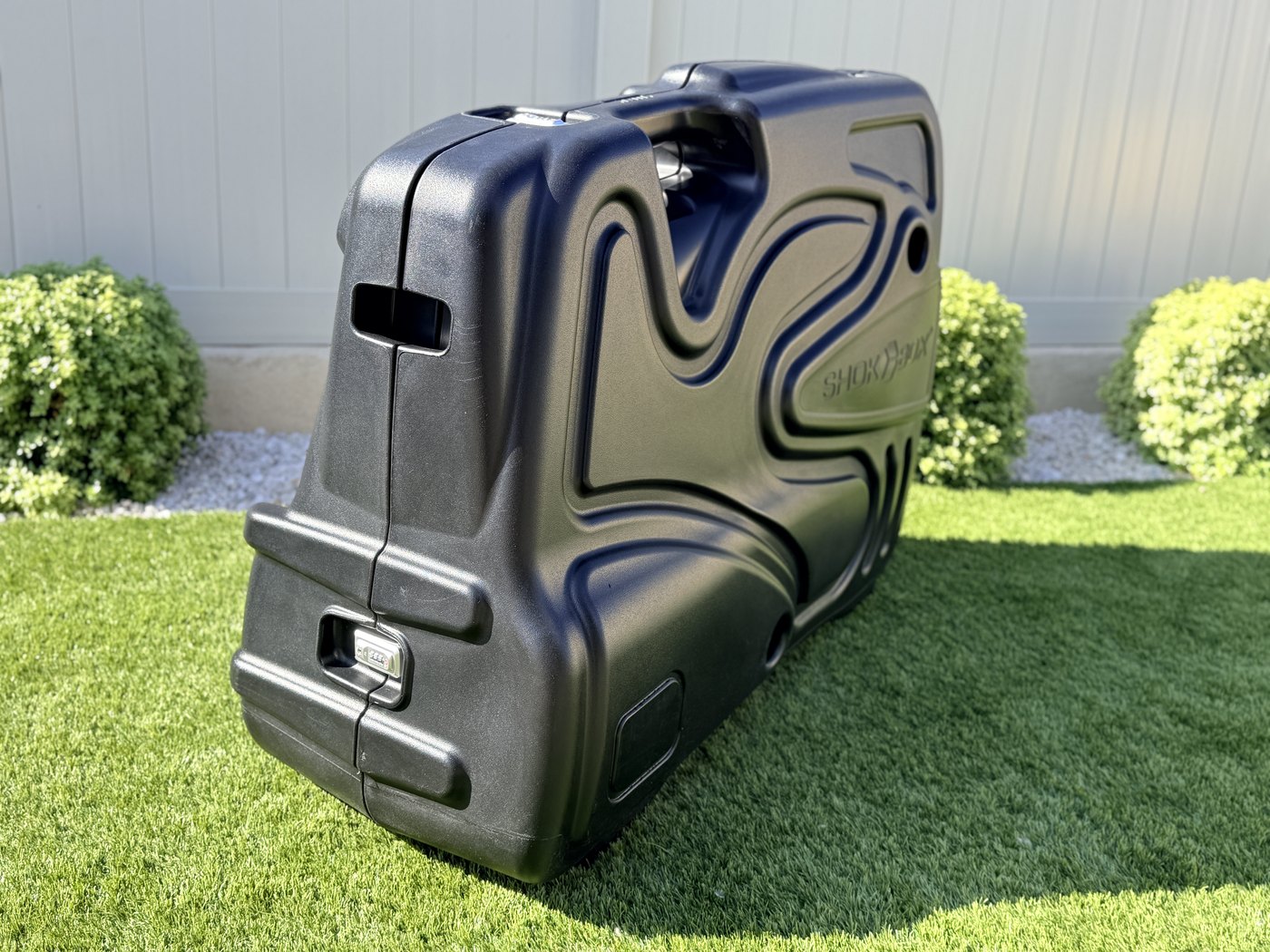
The Pro is batch-moulded from HDPE, a high-impact plastic that deforms and returns rather than cracking. It is the same material family used for industrial shipping cases, and the right call for something that will be dropped from a conveyor belt onto concrete. The more interesting engineering is inside. Shokbox calls it a dual anti-crush system: internal standoffs that span the two halves of the case and carry a vertical load path, so if a heavy suitcase lands on top of your box, that force travels through the structure rather than through your top tube. This is the reason to pay for a hard case at all. A soft bag distributes an impact; a hard case with anti-crush structure refuses it.
Castors, Handles and Locks
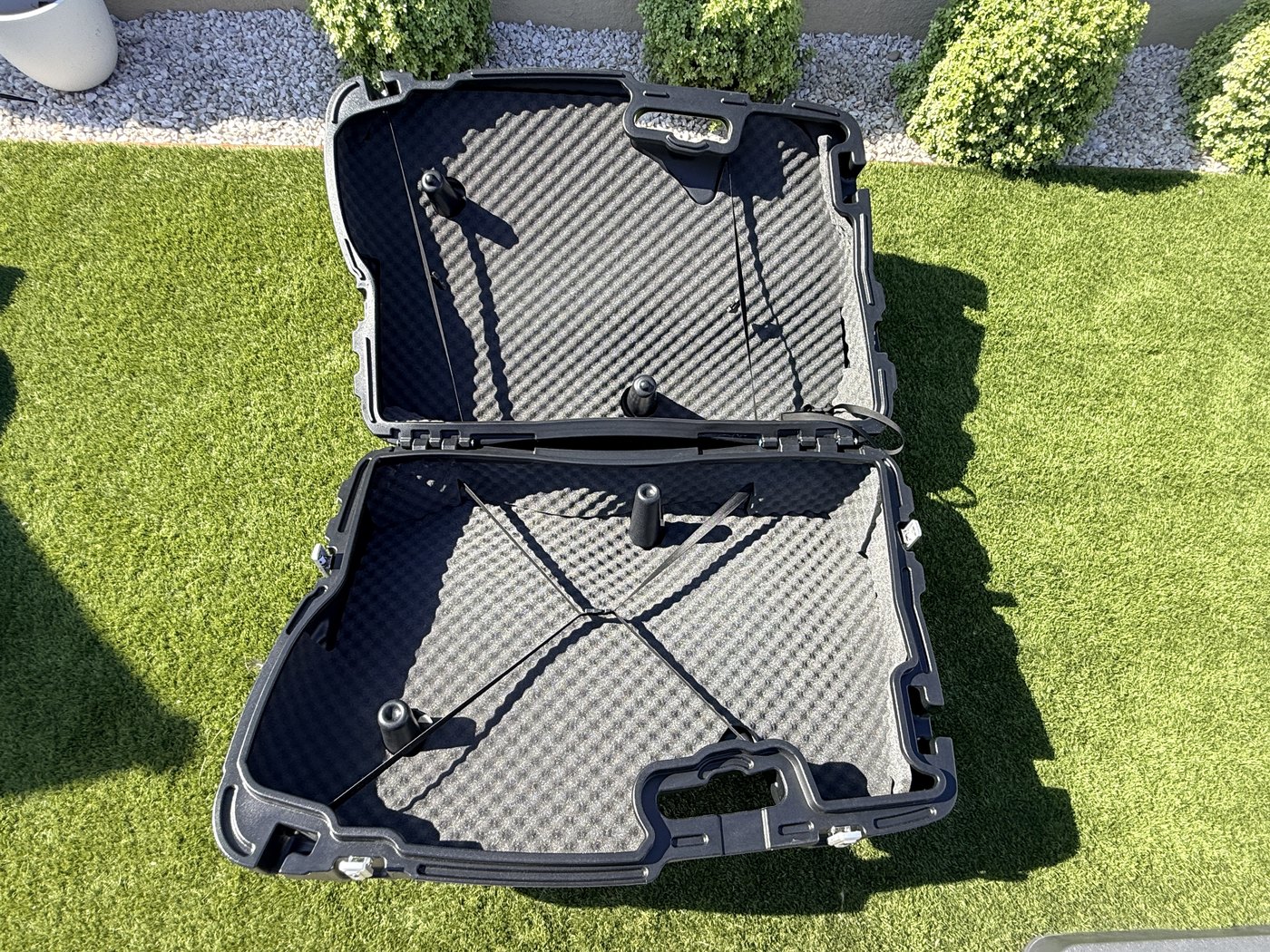
Four multi-directional castors sit recessed into the shell. They are quiet and they roll well, noticeably better than the two-wheel-and-drag arrangement on most hard cases. The trade-off is that four swivel castors under a loaded box have a mind of their own on a cambered pavement. The pull handles are moulded into the shell rather than bolted on, which removes the most common hard-case failure point, and a recessed channel lets you wrap a baggage tag so it does not get torn off on the first transfer.
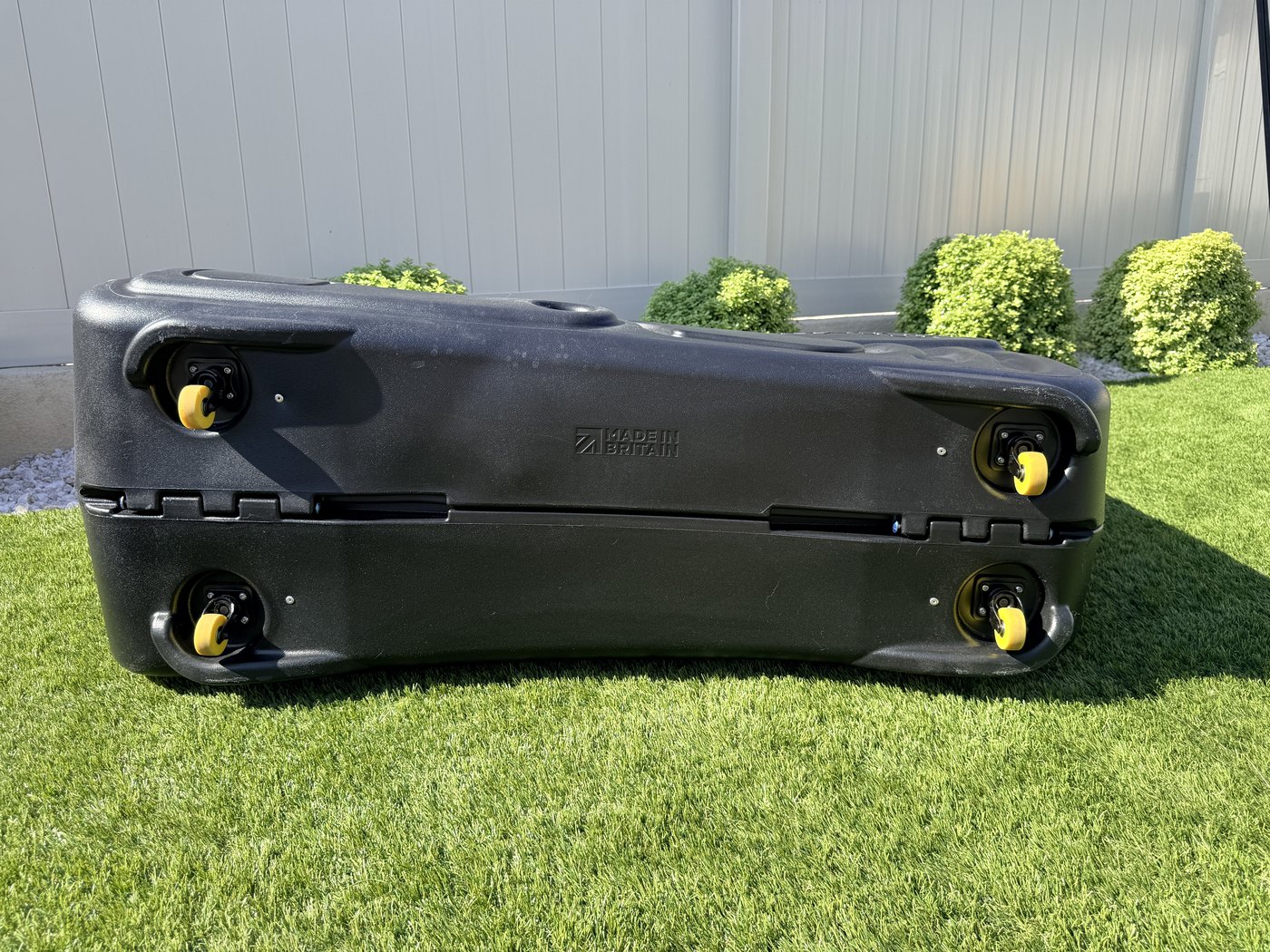
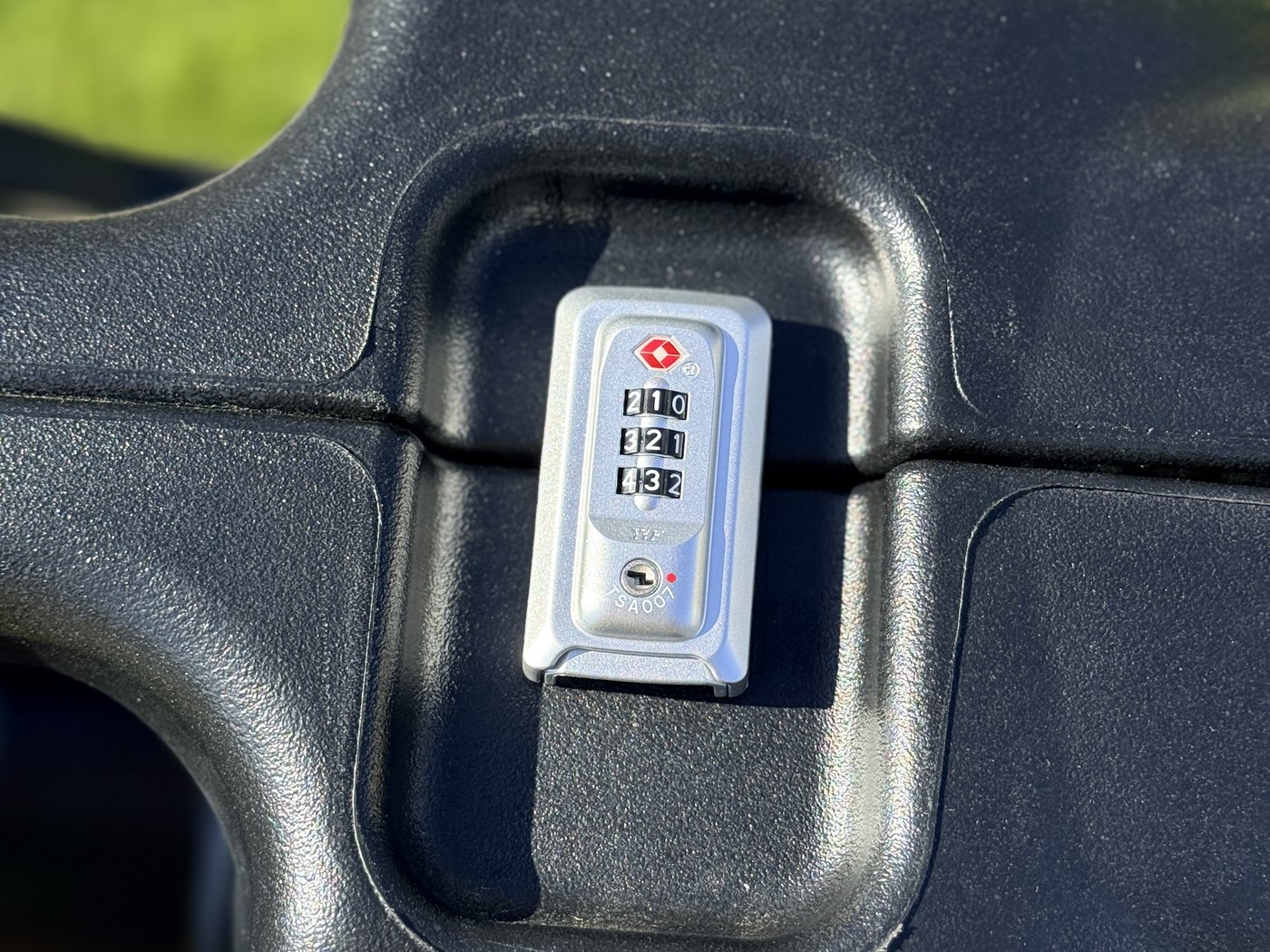
The combination latches are recessed and TSA-approved, which matters more than the spec sheet suggests. Flying into or within the US, your bike box will occasionally be opened for inspection. With TSA locks, an agent opens it, looks, and closes it. Without them, an agent cuts your lock and you find out at baggage claim. You set your own codes on each latch, and GPS tracking is offered as an option.
What Comes In The Box
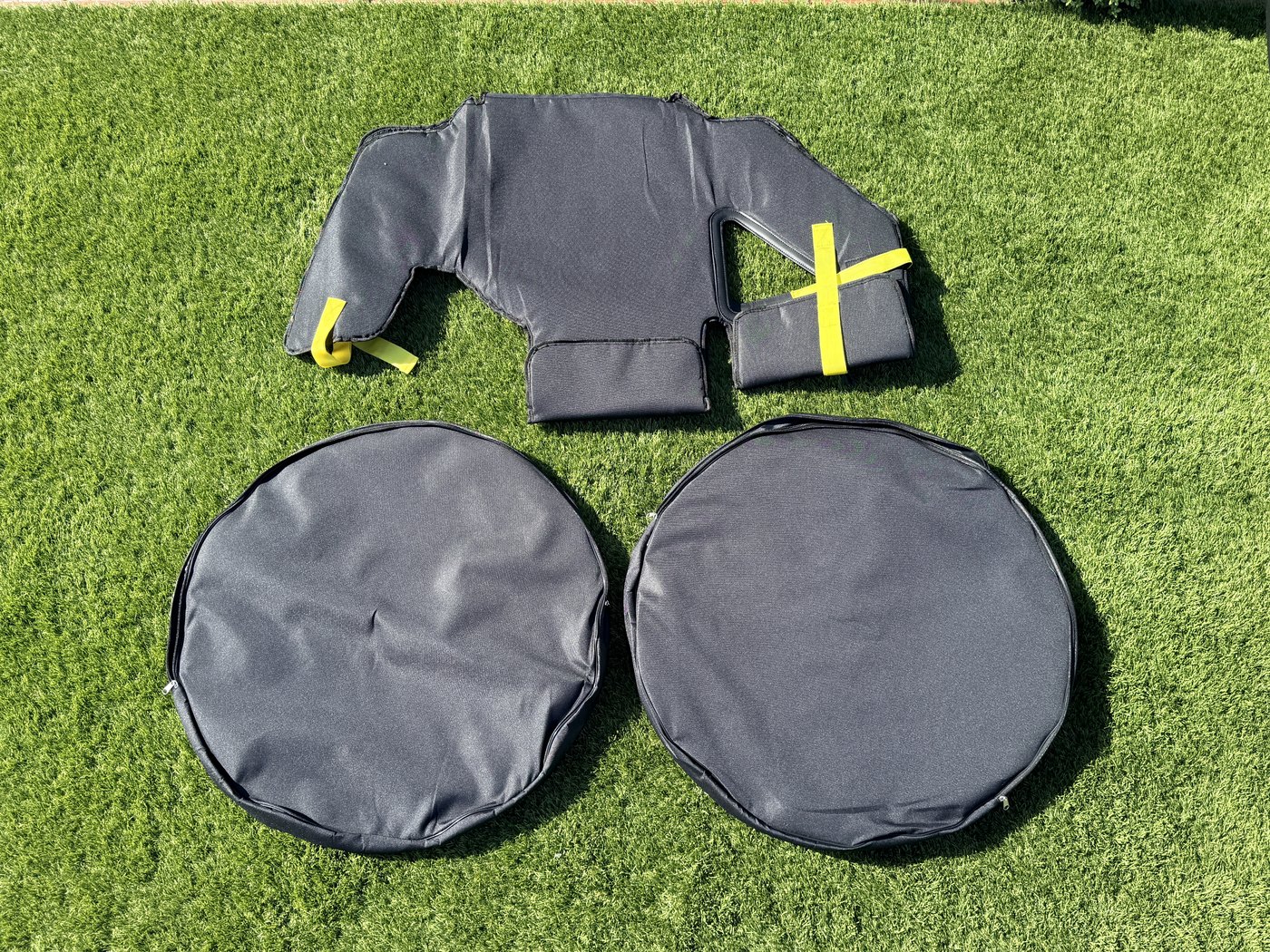
Frame padding, a pair of padded wheel bags and an internal equipment bag. The wheel bags are what let you pack deep-section carbon wheels alongside a frame without either one damaging the other. Worth knowing: the 15.5 kg quoted weight includes these, so leaving them at home buys back a little baggage allowance at the cost of the protection you paid for.
About That “Lifetime Warranty”
Every listing for this case, and every review we found, reports a flat “lifetime warranty.” The policy itself is considerably more qualified.
- Lifetime cover applies to the PE shell lid and base only.
- Latches, wheels, internal straps, GPS cover, foam and hinges are covered for 12 months – every moving part on the case.
- You must register within 28 days of purchase or you have no warranty at all.
- Cover is limited to the original purchaser, and the remedy is replacement parts without labour.
- Exclusions include overpacking, failing to follow the packing instructions, and “excessive force used by handlers during transportation.”
To be fair to Shokbox, this is a warranty against manufacturing defects rather than an insurance policy, and no manufacturer underwrites baggage handlers. Lifetime cover on the shell is a real commitment and the shell is the expensive part. But “lifetime warranty” as a headline does more work than the policy beneath it supports. Register your case in the first four weeks. That deadline will catch people out.
Does a Triathlon Bike Actually Fit?
This is the section that matters most to Slowtwitch readers, and the one most reviews skip, because most reviewers are packing road bikes.
Shokbox publishes five clearance axes rather than a single internal dimension, which is more useful than it sounds – a bike box is not a rectangle and neither is your bike. Axis A, frame length, is measured dropout to dropout, which is exactly what wheelbase measures, so it is a true like-for-like check. Even an XL Quintana Roo V-PRi has a 1,080 mm wheelbase against a 1,200 mm limit: 12 cm to spare. Frame length is a non-issue.
Seatpost height is where it gets tight. Axis B is defined as total height including the seatpost, so the standover figure in a geometry table is not the number that matters. Measure your actual packed height against 88 cm. On a size L or XL with a tall rider’s saddle height, expect to drop or pull the aero post. That is not a Shokbox failing, it is what 115 linear inches physically permits.
Bar width is where tri bikes win. The Pro allows up to 54 cm and a typical tri base bar is 40 to 42 cm, which is why the cockpit can usually stay assembled where a wide flared gravel bar could not. (We have put QR’s aero claims on the tunnel before.) But do not take the marketing at face value: Shokbox’s own size guide is more candid than its product page, conceding that while most triathlon bikes fit comfortably, you “may need to adjust or remove the aerobars” depending on your setup. Extensions and a tall pad stack add height against the 78 cm fork-clearance axis rather than width. If your extensions sit high, measure Axis D before you buy.
Packing It: Step by Step
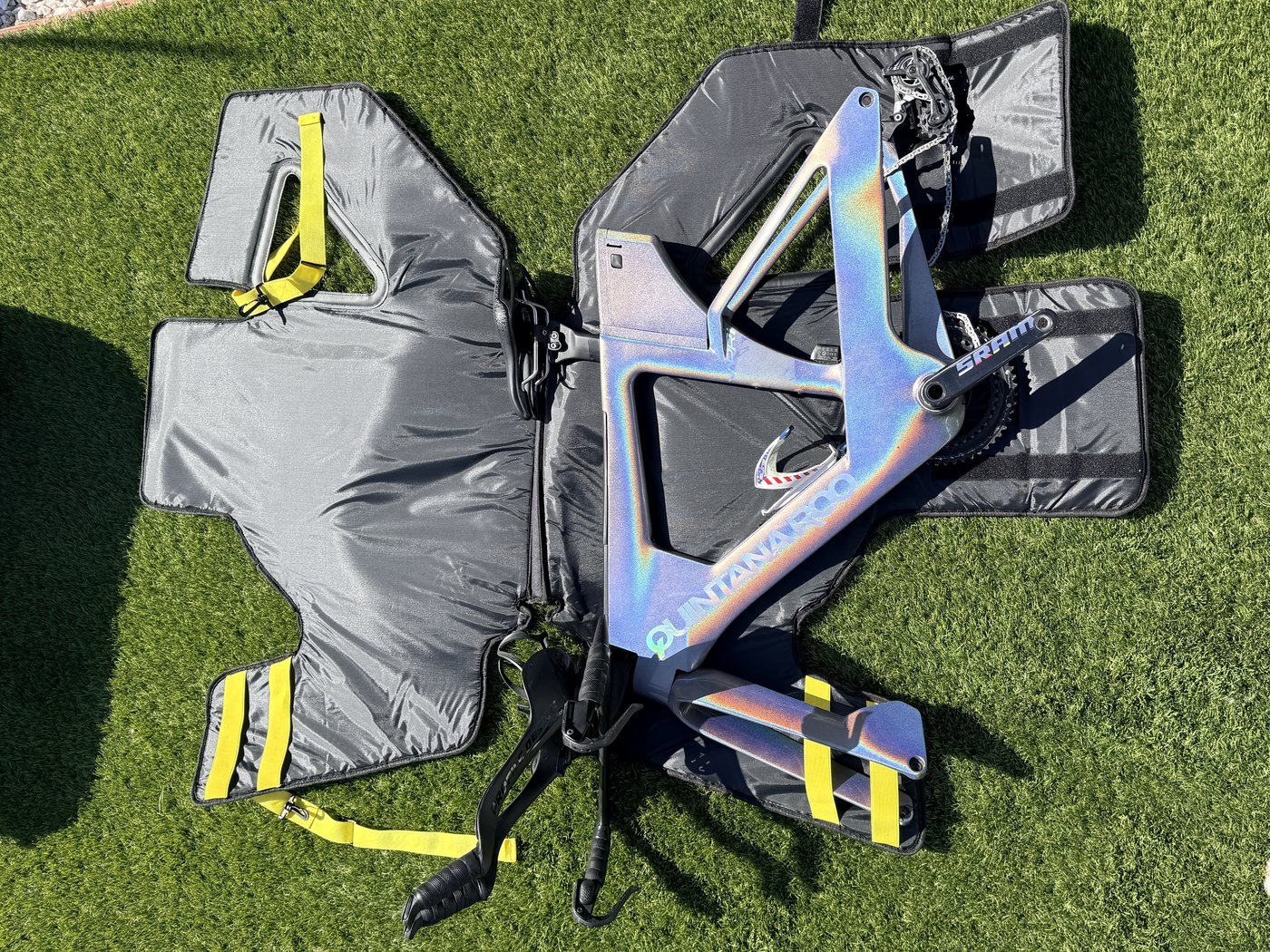
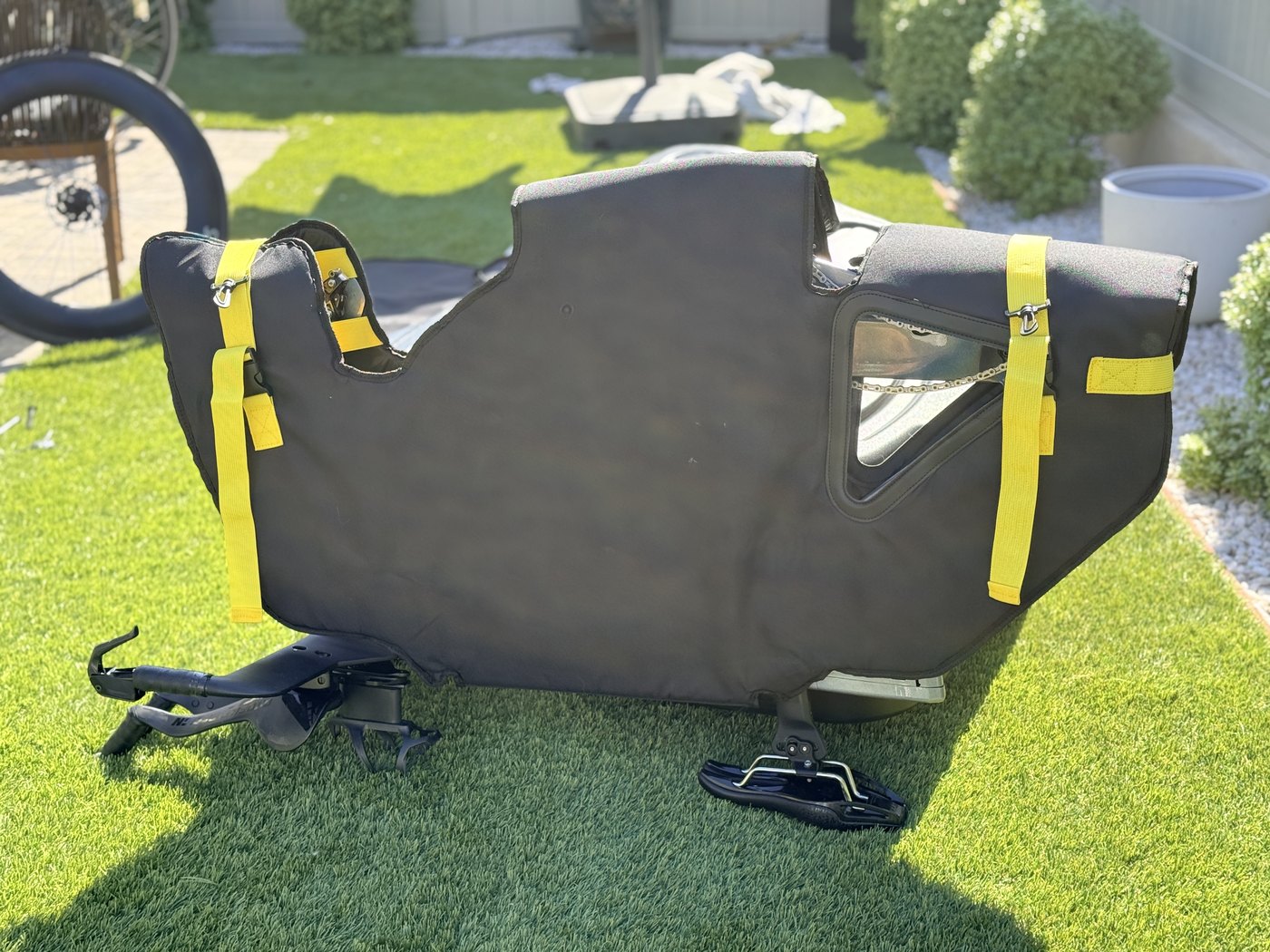
The bike goes in upside down – this is the part that surprises first-time users. The frame rests inverted on foam, with a wheel tucked into a padded bag on either side of it. Shokbox provides a walkthrough video, and it is worth watching once before your first attempt.
- Remove the pedals. Do this first, while the wheels are still on and the bike stands up on its own. Two minutes with a pedal wrench or an 8 mm hex, and far easier than wrestling with a frame that will not stay upright.
- Remove both wheels and let some air out of the tires. Partial deflation is good practice on any flight, and airlines will sometimes check. A few PSI is enough to satisfy anyone asking without unseating a tubeless bead, so you are not re-seating a tire in a hotel parking lot at the other end.
- Drop or remove the seatpost, but only if you need to. With a 65 cm inseam I did not have to touch mine. Taller riders will, and if you do, mark your height with tape or a marker before the post moves.
- Wrap the frame in the supplied frame padding.
- Lower the frame into the case inverted and settle it onto the foam.
- Bag the wheels and set one on each side of the frame.
- Load small items such as shoes, helmet, tools and a pump into the internal equipment bag, keeping an eye on total weight.
- Close it, latch it, and set your codes.
The Airline Reality Check
Shokbox lists the Pro at 55 x 22 x 38 inches. Add those up and you get 115 linear inches – which is exactly the standard checked-baggage size limit at Air Canada, United, Alaska and most other carriers. Read that again: the box is not comfortably under the limit, it is at it. In practice it is an accepted item and it travels, but that is why oversize-belt handling can be fussy and why you should never assume a gate agent’s tape measure agrees with the spec sheet.
Weight is the constraint that actually bites. At 15.5 kg / 34 lb with its soft goods and no bike inside, the case eats a large share of an allowance before your bike is anywhere near it. A complete carbon tri bike with disc wheels runs 9 to 9.5 kg, which puts a loaded Pro at roughly 25 kg / 55 lb before you add a single tool.
I flew mine on Air Canada and United with a 70 lb allowance on both, and the box cleared on size and on weight without drama. Two different reasons for that 70 lb, worth separating: it is Air Canada’s standard checked limit, while on United it comes from Premier status. If you are booking economy on United without status, the standard allowance is 50 lb – and a loaded Pro runs around 55 lb, which drops you into the $100 band that covers 51 to 70 lb. On this box, status is worth real money.
| Air Canada | $50-60 handling fee each way, waived on Latitude, Premium Economy and Business fares. 70 lb / 32 kg. 115 linear inches / 292 cm. |
| United | Counts as a standard checked bag under 50 lb and 115 linear inches. $100 for 51-70 lb, $200 for 71-100 lb. 70 lb allowance in premium cabins and for Premier members. |
| Packing rules | Both carriers formally require partially deflated tires and handlebars fixed sideways for checked bicycles. |
Living With It
Two things about this box will test your patience, and they are the reasons someone should not buy it.
It is enormous, and it is enormous all year. The Pro is 139 cm long and 97 cm tall, and when you are not travelling – which is most of the year – that footprint has to live somewhere. It is not a closet item. It is a garage item, or a leaning-against-the-wall-behind-the-trainer item. If you live in an apartment without a garage, this is a genuine cost of ownership and it does not appear on any spec sheet.
The car problem is more acute. It will not fit in a compact car, and it will not fit in a lot of mid-size sedans with the trunk closed. You want an SUV, a wagon with the seats folded, a truck bed or a roof rack. And if you are flying to a race and renting at the far end, think about the rental class before you book rather than at the counter – a “midsize” will not take a Shokbox plus your luggage plus your travel partner.
The second thing is that it eats your baggage allowance. At 15.5 kg before the bike goes in, the case takes a large bite out of any limit. On carriers with 23 kg allowances, which covers most European and budget airlines, you are left about 7.5 kg for a 9 kg bike and you will pay overweight on every single flight. The Pro really wants a 70 lb allowance, which fortunately describes most North American travel.
How It Compares
Serious hard cases cluster more tightly than you would expect. Checked against manufacturer and US retailer listings on 21 August 2026, the Thule RoundTrip Road sits at $999.95, the Bike Box Alan Triathlon Aero Easyfit at roughly $1,097, the EVOC Road Bike Bag Pro at $1,100, the Shokbox at $1,199 and the Topeak PakGo X at $1,249.95. The Pro is an expensive object but it is not an outlier – it lands mid-pack, and the only genuinely cheap alternative is a discounted Scicon AeroComfort, which is a soft bag and a different product. What the Shokbox wins is the combination of maximum protection and minimum disassembly, and nothing else on that list delivers both at once.
Who This Box Is For – And Who It Isn’t
There is no universal bike case, and any review implying otherwise is doing you a disservice. The Pro makes a very specific set of trade-offs.
Buy it if you are
- Riding an integrated superbike. One-piece cockpit, hoses through the headset, a fit you would rather not disturb. The premium buys you the right not to touch the front end.
- Flying to races more than twice a year. The per-trip cost collapses while the per-trip value of a 20-minute build compounds.
- Carrying an expensive bike and no appetite for risk. Hard-shell crush protection plus a stronger position on airline liability is insurance you buy once.
Buy something else if you are
- Flying budget or European carriers. On a 23 kg limit you will pay overweight every flight.
- Short on storage. The EVOC collapses and this does not. That is the difference between a case you own and a case you resent.
- An occasional traveller. One trip a year does not amortise $1,199 – rent a case, ship the bike, or take the Thule at $999.95.
- Riding a conventional cockpit. If your bars come off with two bolts and no hydraulics, you are paying a premium for a convenience you do not need.
Verdict
The Shokbox Pro is an expensive, heavy, physically enormous piece of equipment that solves one problem better than anything else on the market: it lets a modern, integrated triathlon bike travel with most of itself still attached, inside a shell engineered to refuse a crush load. If you fly to races more than twice a year, on carriers with a 70 lb allowance, and you own a bike whose cockpit you would rather not touch, the value case closes.
If you fly once a year on a 23 kg allowance, live in an apartment and drive a sedan, buy the EVOC – it weighs 5.5 kg less and folds flat when you are not using it. The $99 you save is beside the point; the storage and the allowance are the point.
Pros
- Minimal disassembly – wheels and pedals off, cockpit usually stays put
- Genuine crush protection from the dual anti-crush structure
- 54 cm bar-width allowance suits tri cockpits
- The box itself never requires deflating your tires
- Recessed TSA locks, optional GPS, excellent castors and moulded handles
- Preserves your airline damage claim in a way soft bags may not
Cons
- 15.5 kg before the bike goes in – the heaviest case in its class
- 115 linear inches – right at the airline limit, effectively zero margin
- Storage footprint is a year-round household problem, and it constrains your car
- “Lifetime warranty” is shell-only; moving parts get 12 months and you must register within 28 days
- Shokbox’s own published specs contradict each other, which is not what you want at $1,199
- Taller riders will still need to drop the seatpost
Frequently Asked Questions
Does a triathlon or TT bike fit in the Shokbox Pro?
Yes. Shokbox rates the Pro for road, gravel and TT bikes, and its 54 cm handlebar allowance clears a typical 40-42 cm tri base bar, so the aero cockpit can usually stay assembled. Shokbox’s own size guide notes you may need to adjust or remove the aerobars depending on your setup, and riders on size L and XL frames should expect to drop the seatpost.
How much does the Shokbox Pro weigh, and what does it cost?
15.5 kg / 34.2 lb including its supplied soft goods, with no bike inside. It is $1,199.00 from Shokbox’s US store, or £899 in the UK.
Is the Shokbox Pro airline legal?
It measures 115 linear inches against a 115-inch standard checked-baggage limit at Air Canada, United and most other carriers. It is an accepted item, but there is effectively no margin – confirm your carrier’s sports equipment policy, including its weight ceiling, before you fly.
Does it really have a lifetime warranty?
Partly. The PE shell lid and base are covered for life. Latches, wheels, hinges, straps, foam and the GPS cover are covered for 12 months. You must register the case within 28 days of purchase, cover is limited to the original purchaser, and the remedy is replacement parts without labour.
Disclosure: Shokbox provided this case for review. The opinions here are our own.





So the bike goes in upside down? That’s kinda novel - makes sense to have the width at the “base”
yes! Handlebar side down.
BBA is the same.
Monstrous boxes! But protection is !
!
I’m a big fan of my Scion hard case. Pretty easy to pack, not the monstrous size of this case or BBA, and you can actually keep it just under 50lbs if you need to. I’m sure it’s not as armored as this box, but so far it has held up well through about 8 trips across the US, Mexico, and Canada with various connections. I had also tried the Premier Bike Case, which I really wanted to love, but it didn’t even hold up during shipping.
Hard case under 50lbs is worth a salute!
We never got around to Scicon but will be reaching out to them soon. Their soft case bags, if we did a bike case count at Kona airport, would surely take the top count. It’s like walking around JFK airport with a Away roller
Oddly, my Triall3 case from 2001 still works for my yearly euro trips and I have never paid a dime for extra bags. Under 50 pounds (Yes, I am not on a disc brake bike model) and my Argon18 tri bike is ready to ride in 15 minutes. I’m so glad I kept the warhorse and going through airports it’s my luggage cart. One of the best purchases I’ve ever made for sure.
With a BBA triathlon easyfit you have more weight to spare so it should be easier. I’ve done it a couple of times with a Cube Aerium C68X which is not a light bike