
It’s Time to Choose: Either Allow Disc Wheels in Kona or Regulate Wheel Depth
We are in the middle of IRONMAN’s return to a single day World Championship Week in Hawaii. We here at Slowtwitch are slowly but surely getting ourselves ready for our busiest two days of the year. The first is obvious: Saturday’s race day. The second will be obvious to long-time Slowtwitch readers: Friday’s all important bike count during the bike check.
We’ve watched as brands rise and fall through the counts, like Canyon rising from fewer than 100 bikes on the pier to leading all of last year’s count. We’ve been able to keep track as athletes pivoted from tubular to clincher to tubeless tires. We’ve seen some brands nearly disappear entirely from the counts; when’s the last time you’ve seen, for instance, a Campagnolo drivetrain on a triathlon bike?
But one thing is a certainty for Friday’s bike count: we will not see any disc wheels.
No, the return to Kona means a return to many traditions. Bob Babbitt at On The Rocks with Breakfast with Bob (with music by PonchoMan, of course). The singular Kona Underpants Run as a fundraiser for the IRONMAN Foundation. Swims to the coffee boat. The Thank God I’m Not Racing Party. The certainty of a non-wetsuit swim in Kailua Bay.
And, of course, the ban on riding disc wheels during the race. So after a couple of years of getting to track disc wheels at half of the IRONMAN World Championship, we’re back to “normal.”
In the 2026 version of the IRONMAN Rulebook, Section 5.02 specifically defines legal equipment during races. Subsection (a) is dedicated to wheels. The first two sections are relevant to our discussion today, and they read (emphasis added):
(i) The front wheel must be of spoke construction (aero rim with spokes is permitted) and must not be solid; (DSQ)
(ii) The rear wheel may be either spoke or solid construction (disc wheel). Wheel covers are permitted only on the rear wheel. For reasons of safety, solid (disc) rear wheels are prohibited at a select number of Events, including the IRONMAN World Championship – Kona; (DSQ). Athletes should consult the Event-specific Athlete Information Guide for applicable wheel restrictions.
That ban on disc wheels on Kona, under the guise of the blanket term “reasons of safety,” has been in Rule 5.02(a) as written since the rules harmonization effort with World Triathlon nearly two decades ago. But the ban itself stretches back to the origins of the race itself.
When IRONMAN moved to Kona in 1982, the course has largely remained the same over the years. In particular, the bike course has done much the same thing: a small loop in town, and then a trip out to Hawi with the bulk of it through the lava fields of the Queen Ka`ahumanu Highway. Those lava fields are simply exposed to the elements; namely, heat and wind. The Highway runs roughly perpendicular to the typical Tradewinds, making for a typical 10 to 25 MPH crosswind for much of the bike course. And it’s that crosswind that is typically cited as why disc wheels aren’t allowed here.
There’s just one problem: the rule doesn’t do what it thinks it should be doing. So it’s time to either get out our collective pens and strike it from the rulebook, or we need to get out those same pens and write a rule that actually makes sense.
We Practically Allow Discs Anyways
The bike industry has long attempted to come up with attempts to provide athletes with disc-like performance in Kona without running afoul of the disc wheel prohibition. One of the first of those options was brought to us by Steve Hed. As Dan Empfield wrote back in 2014, Hed took over from Specialized on a project first put together by DuPont in the late 1980s, “generating what may well have been the world’s finest aero wheel:” the HED3 tri spoke.

That wheel was remarkably consistent in most yaw angles and very fast at low ones, and it enjoyed a lengthy life span; really only retiring once disc brakes became ubiquitous (and another option came along in the HED line-up). And it soon inspired similar shapes from other brands.
The more modern chase for very deep rear wheels can probably be traced back to Zipp’s 1080 wheelset, introduced in October 2007 and launched in 2008. As was common for Zipp’s naming convention at the time, the 1080 was 108 millimeters deep. With a similar shape to the then-current 808 and Zipp’s dimple pattern, it sold somewhat well in its short three year lifespan. It was discontinued in 2011, when Zipp updated the 404 and 808 to the Firecrest series.
That’s where things stood for the next decade on depth, anyways; the deepest non-disc wheels would sit somewhere between 80 and 100mm in shape. Instead, innovation went elsewhere; we went from aluminum to carbon rim brake tracks to discs. Tubular tires were still somewhat popular in 2011, and we’ve blown right through clinchers and over to tubeless.
And then, well, HED blew it all up with the Jet 180.
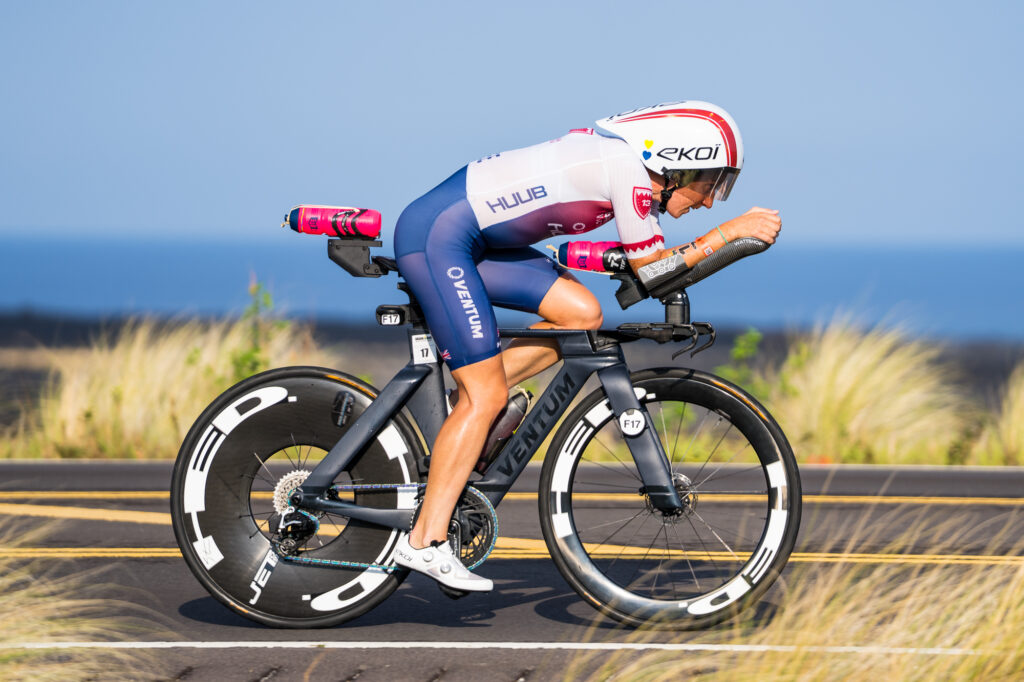
Introduced for the 2022 IRONMAN World Championship, the Jet 180 took wheel depth to a new extreme. The wheel is 180mm deep. Heck, it might be better to measure the open area of the wheel than the depth of it — but I digress. Much like HED’s other Jet wheels, it uses an aluminum rim with a shaped carbon fairing, and traditional spoke construction. According to HED’s own materials, the Jet 180 was created for one purpose: “built for race day, long-course speed, and the demands of Kona.”
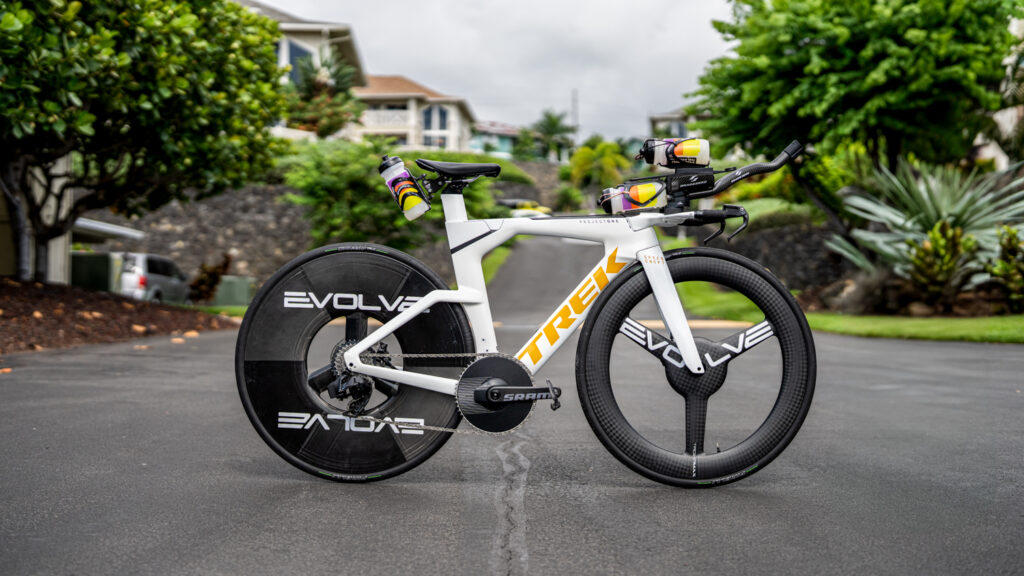
Much like with the HED3, the Jet 180 was resulted in an industry crush towards deeper and deeper wheels that effectively act like discs, but with the tiniest of openings. We saw this last year with Penny Slater’s bike, with a massive Evolve tri spoke.
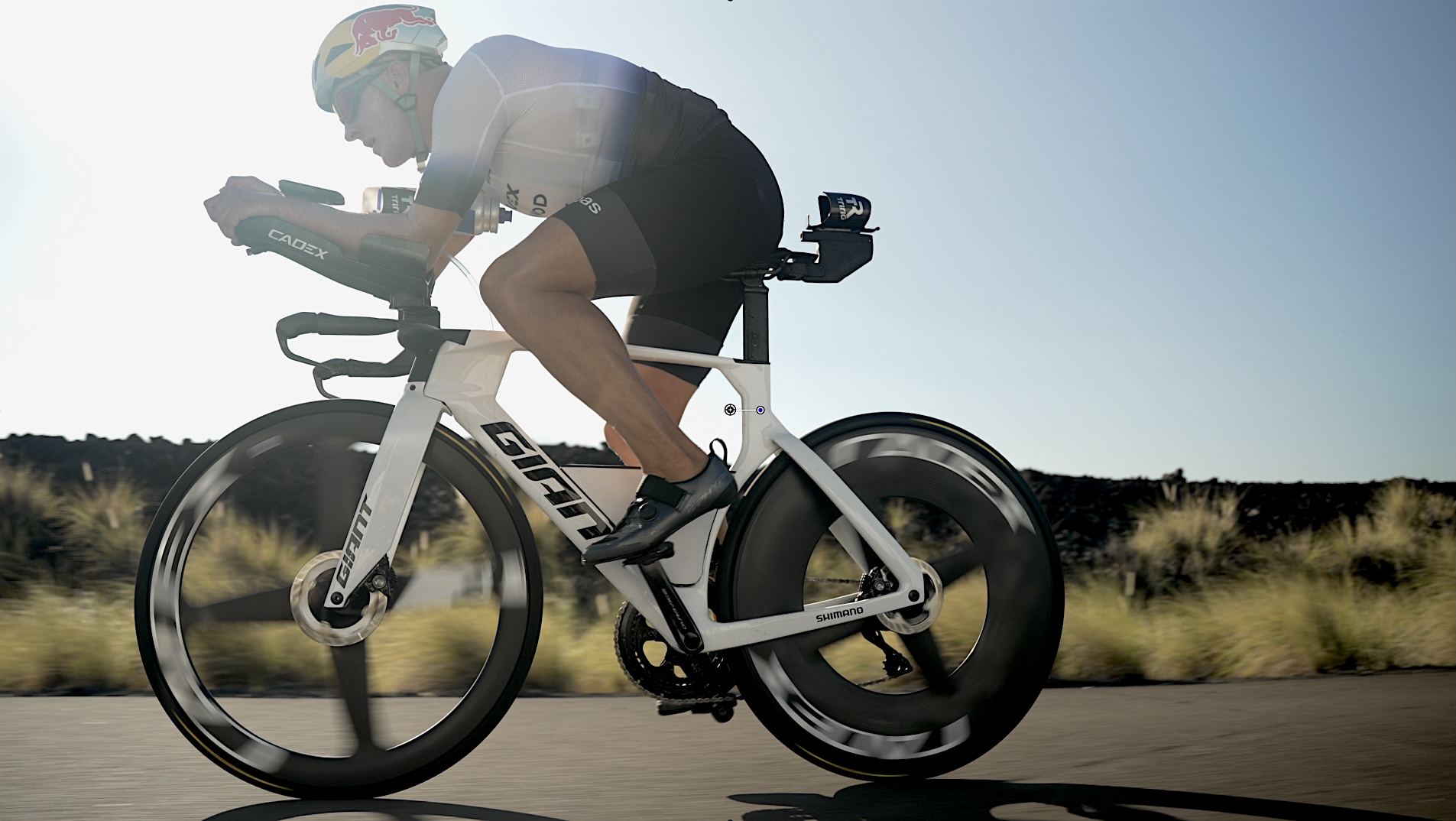
And then this year we have a whole host of additional brands joining the fun: CADEX (as shown on Mr. Blummenfelt’s bike towards the start of this article), Princeton Carbonworks, and Parcours all have extreme depth version of wheels here. ENVE and Shimano sponsored athletes all look to run the 100 millimeter rear depth.
If the point of the rule is athlete safety, are we really protecting athletes if all of these wheels are showing nearly the same surface area to those crosswinds we’re worried about?
The Issue Is Up Front, Anyways
Disc wheels themselves are not the safety concern that the rulebook makes them out to be. In fact, every wheel manufacturer speaks of how rear discs can add stability to a bike in crosswinds, due to the shift in center of pressure backwards. Parcours, meanwhile, also cites the consistent surface of a disc wheel as an added benefit, as it does not have spokes to introduce another surface to catch the wind on.
No, the main problem is the front wheel. Because of its direct attachment to steering, wheels act as a lever. Catching the wrong draft at the wrong time on the front wheel can violently pitch a bike off course. And you don’t have to look far for an example of this phenomenon: the training crash of Casper Stornes that took him out of the World Championship happened this way. As described in a video after the fact, Stornes went to move when a gust of wind came up and took his front wheel out.
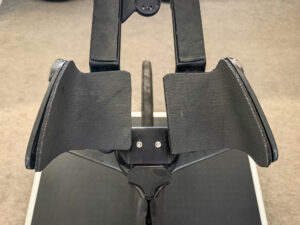
Perhaps the elephant in the room on this is that we’ve also let aerobars run wild. These new monobars and hydration mounts have created far more surface area attached to the steering on these bikes. And while yes, we’ve got rules around the imaginary box that all of these attachments must now fit into, there’s to date no restriction on the depth or shape of these bars beyond the extensions not protruding beyond the front tire.
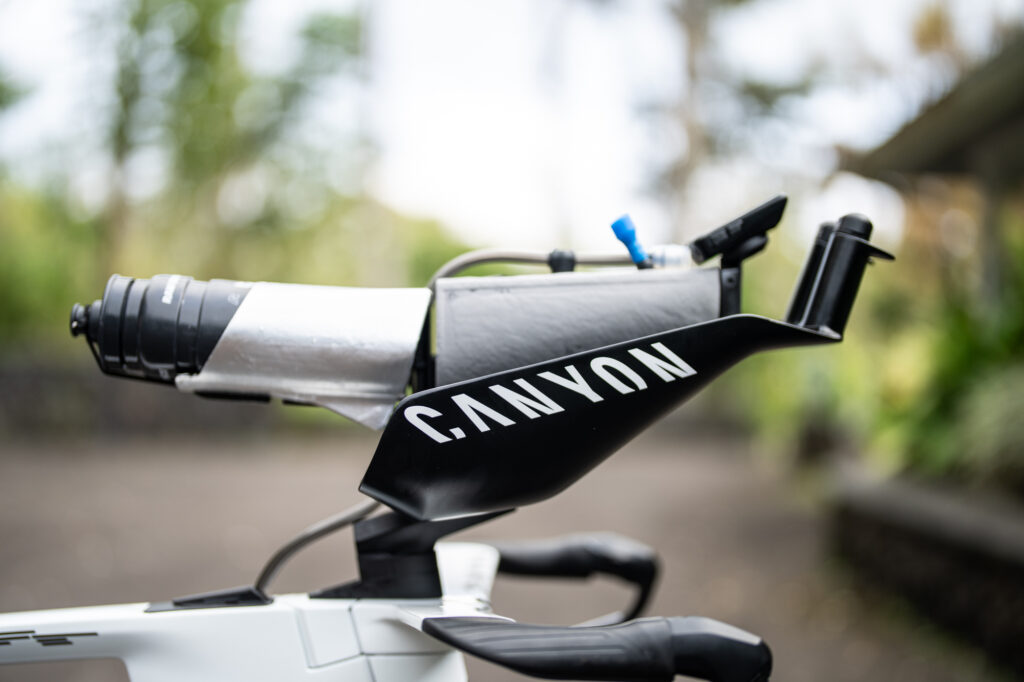
If athlete safety were the real concern, would we not see restrictions on items that literally control the direction a bike is traveling in? Yet the rulebook has remained silent.
What We Should Be Doing
The time has come for the IRONMAN Rules team to truly evaluate the purpose behind banning disc wheels in Kona. Ultimately, that comes down to two potential courses of action, in my book.
The first is simplest: kill off the disc wheel restriction. It is frankly silly to allow wheels that leave the tiniest sliver of open wheel that are effectively discs under this “athlete safety” language. Knowing that the bike industry will chase itself to logical ends (see: the aerobars we’re now working with), we’ll soon have a wheel that is only open for the diameter of the largest teeth on a cassette. Where do we actually draw the line on what is and is not a disc? Just don’t attempt to draw the line at all.
The second is less elegant. Instead, it would add specific teeth to the language on what wheels are allowed when disc wheels are prohibited. For that, IRONMAN could take two tactics. First, it could arbitrarily decide a reasonable depth maximum that allows most modern wheels (e.g., a maximum 100 millimeter depth). The second, and the one I think that IRONMAN would likely take given their recent work on professional draft distances, would be to actually test rear wheels and their impact on handling in crosswinds in order to determine the maximum allowable depth.
But if we’re going to do that testing…let’s also test those front bars and hydration mounts.





Ryan…this conversation always feels like “should we do away with daylight savings?” Everyone knows the answer but nothing changes, and the people that can change it “have bigger more important things” to waste their time on. So, I’ll cast my vote(s)…allow disc wheels in Kona, and get rid of daylight savings!
I need morning light. I’d go with permanent standard time before I went savings.
Agree completely and this fight has been going on since about 1985..Small correction though, the race moved to the big island in 1981, not 82. And funny note, they had 2 races in 1982 there, it was the year they changed the date from February to October, and they didnt want to wait more than a year to get on track for the new date..
And you can blame this rule on a guy named Dennis Hasserat, he was in charge of the bike that first year that discs were around, and “he” decided they were not safe. And since then no one wants to be the one to reverse that decision form the old days, probably get blamed for the first casualty from getting blown over or something like that..
This is a good piece–well written, well reasoned, and informative. Allow discs to increase bike stability, limit front wheel depth to 60mm, and get rid of the large luggage racks masquerading as aerobars and hydration systems. We’ll all be the better for it.