
What Road Racing Can Teach Triathletes—and Why You Should Try It
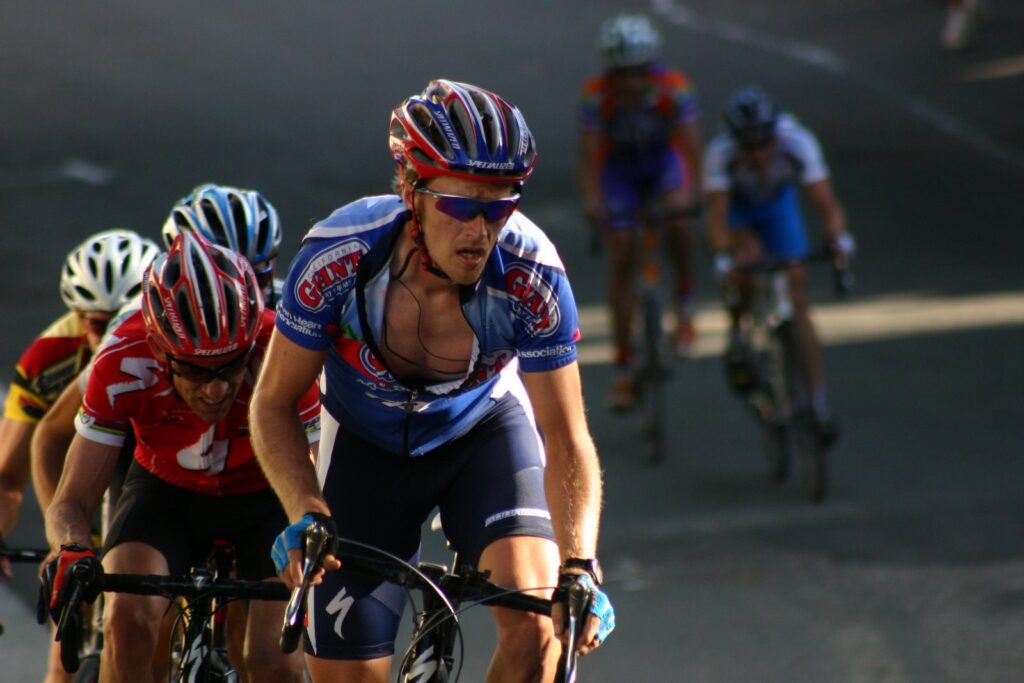
Feeling inspired by the Tour de France? Maybe it’s time you pinned on a number and joined the bunch.
Road cycling is a big part of triathlon but, despite spending hundreds of hours riding a bike, most triathletes never venture into road racing. It is, by most accounts, especially compared to the controlled environment of non-drafting triathlon, a completely different sport. Riding elbow-to-elbow, fighting for position in the bunch, responding to attacks, and sprinting out of corners, road racing is higher-stakes, more tactical, and more adrenaline-packed—which just might be rocket fuel for some triathletes.
From sharper bike handling and higher-intensity fitness to race craft and tactical awareness, road racing can make you a stronger all-round athlete. It isn’t without a learning curve, but that’s exactly where coach Jesse Moore says the fun and opportunity lie.
Swim in a Deeper Pond
A former professional cyclist turned pro triathlete who still races on dirt, gravel, and tarmac, Moore believes road racing has a lot to offer triathletes. Not because everyone should become a cyclist (although in his fifteen-plus years of coaching, he’s helped many convert), but because it can be one of the fastest ways to improve your cycling.
“I think swimming in a deep pond is often a really good way to get growth,” Moore says. “So you swim in the deepest thing you can, especially if cycling is the weakest of your three sports or even in the bottom two and it’s a place you really want to improve.”
Road racing, or fast group rides, put you in situations that structured solo training rarely does. Instead of riding to a perfectly planned power target, you’re constantly responding to what other riders are doing. You accelerate, recover, reposition, sprint, and repeat.
“A lot of triathletes have really good engines, and they don’t always get pushed,” he continues. “It doesn’t necessarily have to be bike racing, it could also be a group ride, but get in over your head with people that are better than you and really push you.”
Even experienced cyclists, Moore says, still have something to gain from road racing.
“If you’re training by yourself all the time and super structured, you may not take that last little 10% dig that could take you to the next level,” he says.
Bike Handling and Bunch Skills
The good news is that most triathletes already have the fitness to be competitive in an entry-level road race. The challenge lies elsewhere—and it can be a steep and terrifying, albeit exciting, learning curve.
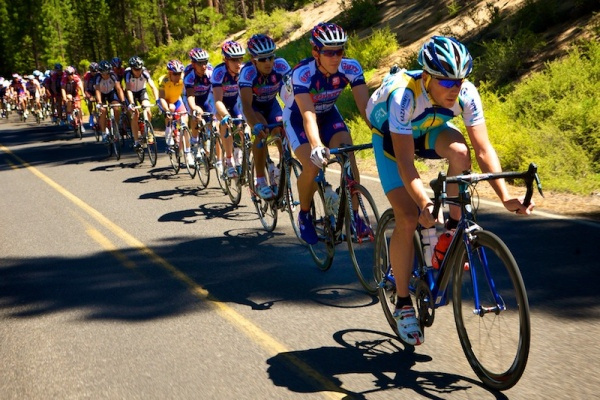
One of the biggest opportunities road racing can offer a triathlete is bike-handling confidence. Technical descents, tight corners, crosswinds, and changing road surfaces become far less intimidating when you’ve learned to navigate them comfortably in a bunch.
“Racing bikes is just a phenomenal way to increase your skills,” Moore says.
Moore sees the benefits for every triathlete, but especially for those racing hillier or more technical events, like Nice, where descending and cornering can significantly influence bike splits.
“It’s the same reason I have my bike racers also race on dirt. They’ll do gravel or mountain bike because then when they get back on the road, taking a hard corner on a road bike feels very easy,” he explains.
Beyond the more obvious technical skills like cornering and descending, there are countless more sublte skills necessary when riding in a peloton or bunch.
“It’s not Zwift,” Moore warns. “You can’t just move right or left all of a sudden, unpredictably. You need to be aware of the people around you and learn how to make yourself predictable with things like pointing out objects and holes and all those sorts of things. There are a lot of group dynamics and etiquette stuff, too. But people are willing to teach you so you just have to be willing to put your hand up and say, ‘I don’t know. Somebody tell me what to do here.’ So just come at it very humble and ask a lot of questions.”
The more situations you experience on two wheels, the more comfortable and proficient you’ll become, building confidence that can ultimately translate into faster triathlon bike splits.
Racing Skills
Road races aren’t always won by the strongest or fastest—and that’s another area where triathletes can gain valuable experience.
Learning when to move up, when to conserve energy, how to shelter from the wind, and when to follow an attack introduces an entirely new dimension to endurance sport.
“You don’t have to be the person with the biggest VO2 max at the start line to have success,” Moore says. Raw fitness matters, of course, but tactics can influence results just as much, and playing in those scenarios, whether you win or lose, makes you a smarter competitor.
The tactical side of the sport is less influential in triathlon so in a road race it can be a fun new challenge for triathletes to explore.
It Does Carry Some Risk–And You Might Love It
There is one pretty big caveat to racing on the road: risk.
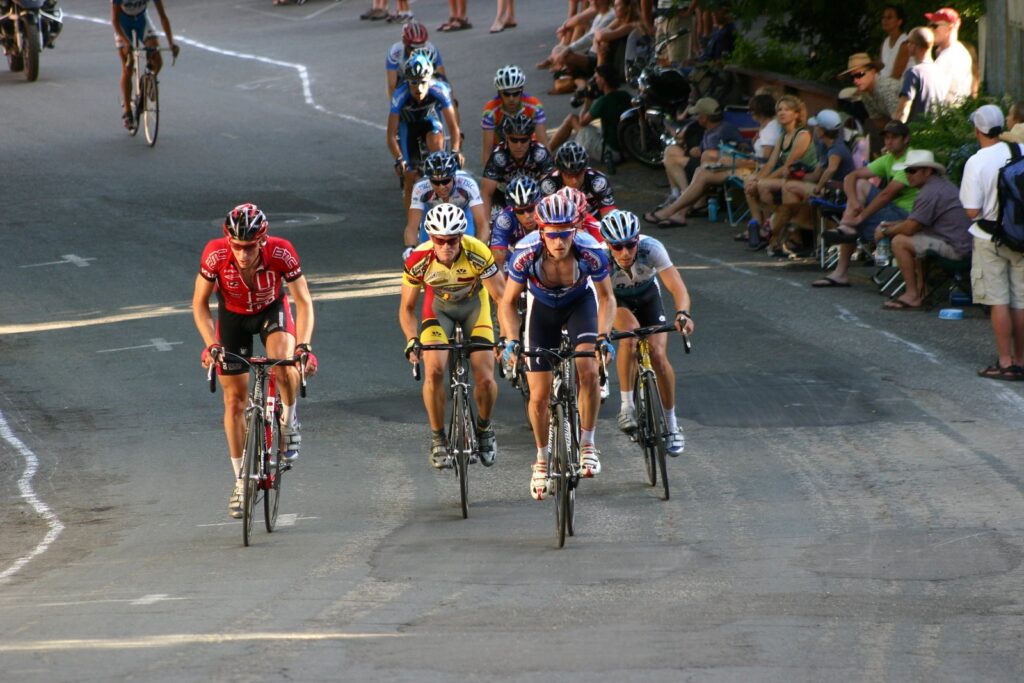
At the mercy of other athletes and their mistakes (and yours), hitting the ground at high speed is just part of the game. If you’ve ever watched a pro bike race, you’ve seen crashes and their aftermath. Of course, that’s not every race, but it does happen.
“One thing that always sticks with me from grad school is when we studied the physiological profile of different athletes. When we looked at triathletes versus runners versus bike racers, physiologically they all looked the same. They all had very similar VO2 maxes and thresholds and all those things. But the psychological profile of the bike racer was so much more risk-tolerant. Triathletes and runners were much less risk-tolerant, especially the runners,” Moore explains.
Moore has seen time and time again that, for some athletes, the high-risk, high-speed environment can bring out the best in them. It goes beyond the physical risk and into the psychology of racing: Can you position yourself at the front of the bunch? Will you follow an early attack and risk blowing up? How long can you suffer in the gutter? Will you fight elbows in the finishing sprint?
If you’re risk-avoidant, maybe that’s exactly why you should play in that environment. If you’re more of an adrenaline junkie, perhaps you’ll become addicted and shine under the pressure.
So Where Does It Fit into a Triathlon Season?
Adding a road race to a triathlon program is easier than it might seem.
“Bike racing can supplement your triathlon training really well,” Moore explains. “The intensities with road racing are very high intensity, but with short rests. It’s similar to the direction that triathlon training has been taking as of late, where you see a lot more high-intensity interval training, a lot more stochastic stuff and tabata-style intervals.”
Moore says that means there are ample opportunities to add bike racing or a hard group ride to a triathlon program as a substitute for the hard bike workout of the week during the regular race season.
Unlike triathlon, bike racing also has the benefit of frequency. Long-distance triathletes can only race a handful of times each year, but cyclists can race nearly every weekend during the season.
“You don’t have to taper. You don’t have to have that recovery period,” Moore says. “You just get a lot more shots on goal.”
Ample opportunities give athletes the ability to experiment, make mistakes, and improve without investing months into every start line. For athletes who enjoy learning through experience, Moore has seen firsthand how that accelerated feedback loop can be hugely rewarding.
Something New Might Be Better
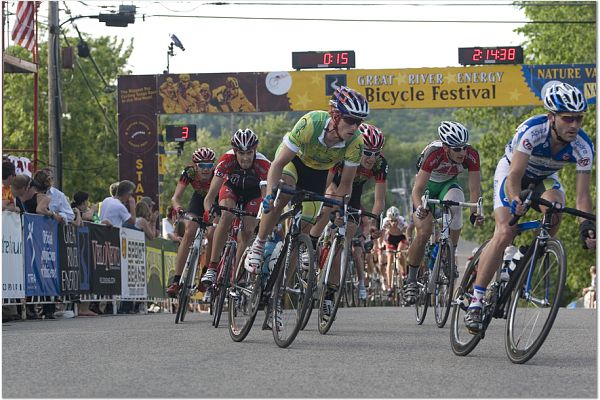
At the heart of it all, Moore suggests the greatest benefit for a triathlete may simply be: freshness. A new goal, a new challenge, something outside triathlon to reignite your motivation and offer something different.
“Psychologically, with any of this sort of going across sports, for me, it’s about freshness and just doing new things,” Moore says.
Many triathletes spend years following the same rhythm—swim, bike, run, repeat—and chasing the same goal like qualifying for Kona. Adding a handful of road races or hard group rides can introduce a completely different expereince while still improving your cycling for your primary triathlon goals.
Along the way, you may discover you enjoy the tactical side of racing, the camaraderie of a local cycling club, or simply the satisfaction of mastering a new skill. Moore has even seen athletes realise cycling was the sport they truly loved all along.
“I’ve had a lot of people who have ended up just going to bike racing,” he says.
That won’t be everyone’s path, but whether you pin on one race number or twenty, stepping outside the familiar world of triathlon could bring you to your next race fitter, more skilful, and maybe even with a bit of renewed love for the sport.




You’re really trying to sell people on bike racing the week Finlay Tarling loses his life in a bike race? You couldn’t have run this one next week?
i believe there is a much stronger case for the value of cyclocross for triathletes (or even track or mtb), than road.
cx is safe, fun, can be practised anywhere, tends to have great community, forces you to do real bike intervals at truly high intensity, and learn better bike handling. its an ideal corrective to the sorts of things triathletes tend end up doing.
training for amateur road racing is just not that different from the sort of training triathletes usually do, shares a lot of the same downsides, and doesn’t really do that much to shake things up and add colour and contrast to a sport that can come with a lot of drudgery.
+1 on CX and MTB.
My first sport was road bike racing in the mid 90s. But then I was out of sports for a while and didn’t start riding a bike again until maybe 2009 and then later did my first triathlon in 2014. It’s great to have that background even if it was so long ago and only for a few years. But not necessary for triathlon. I would recommend bike club rides - road and or gravel. Do a little mountain biking in the offseason for improved bike handling skills. I never did CX but only heard great things and if I could go back in time, I would try it!
I did have a really bad bike crash in 1996 during a group ride when some big cracks in the pavement were not visible due to shade and being in the late afternoon in a club ride where my front wheel landed and got stuck in a big crack (no one pointed them out). I went head over first and woke up in an ambulance. I survived. But to this day I am never going to be a fast descender. That kind of crash changes you! (but it was a freak thing and normally doesn’t happen in club rides!)
I watch the Tour and the Tour Femmes every year and all the bike crashes in both the men’s and women’s races make me glad I don’t ride in pelotons anymore. If the pros can’t manage not to crash in every single race, then I’d rather not go back to racing on the local or regional level. Thankfully I have never crashed on any of my tri bikes (knock on wood).
Super cool article
It would be awesome to have more triathletes racing bikes
You can be an extremely high caliber triathlete without every doing a single road race in your life.
Much better to invest time in a proper masters swimming program or join a track club. Road racing has high risk and limited crossover to triathlon. And as @Lagoon said, suggesting this path the week Finlay Tarling dies in a bike race, well it’s a harder sale.
Road bike racing by definition is a front of pack sport. If you don’t make the main group, may as well not show up. Rather grand fondo type mass participation events are more interesting to the bulk of triathletes who are out for their own enjoyment.