


Zwift Ride with KICKR CORE 2: A Smart & Practical Indoor Setup
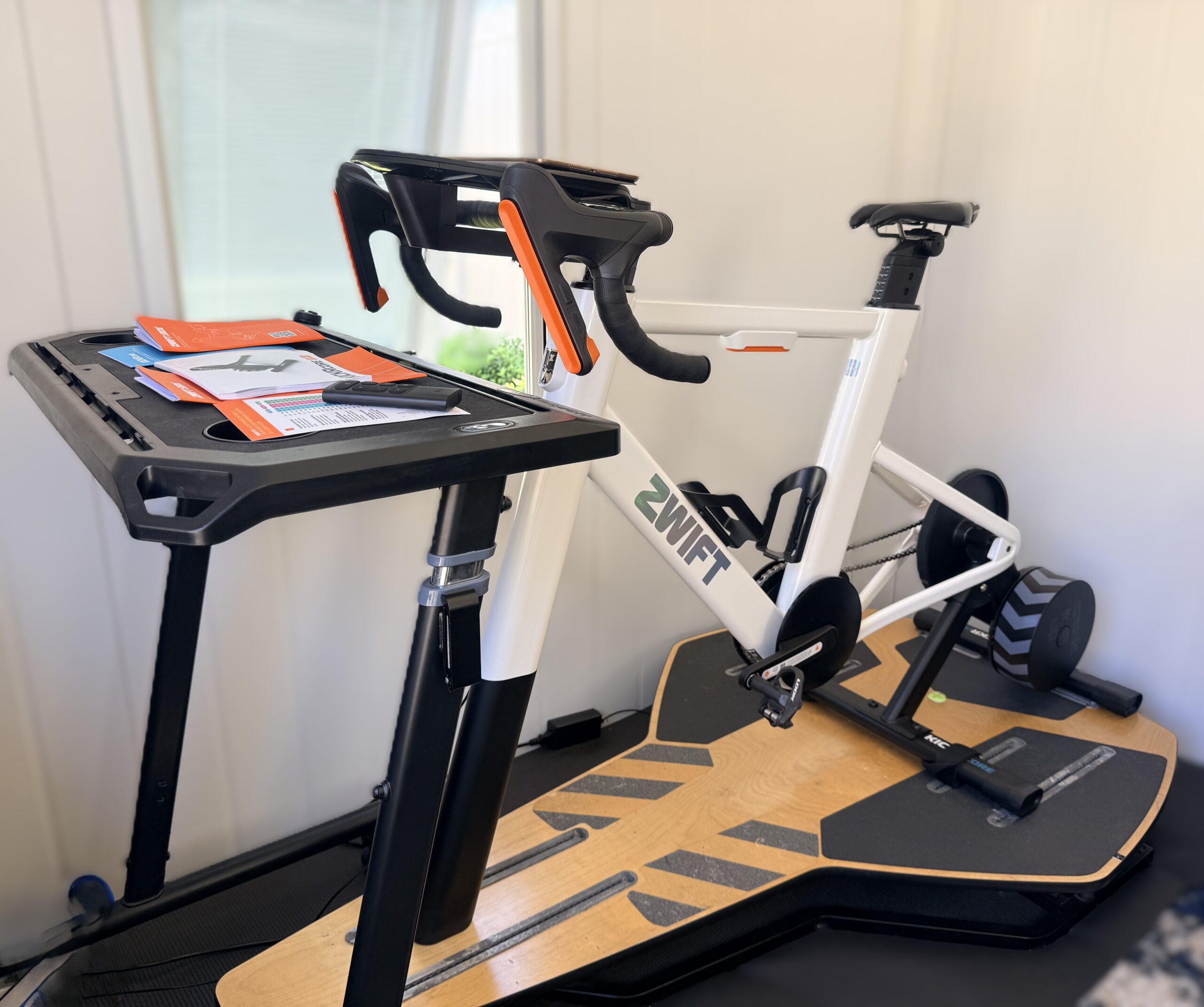
A few years ago, when Slowtwitch asked me about training after moving from New York City to San Diego, my answer was pretty simple: I was doing essentially all of my riding outdoors. That made sense then. Fantastic weather, wide California bike lanes, and the simple fact that outdoor riding still gives you something indoor riding never fully can. But life changes and the margin for error gets smaller. And at some point, the best training setup is not always the one that feels the most idealistic, but rather a setup that is ready when you are.
That is what makes the Zwift Ride with Wahoo KICKR CORE 2 so appealing. This indoor bike and smart trainer combo is not trying to replace the feeling of riding your favorite bike outside. It is trying to make indoor training easier, cleaner, and more consistent. In that respect, it does a lot right.
A No Drama, Relatively Simple Set-up
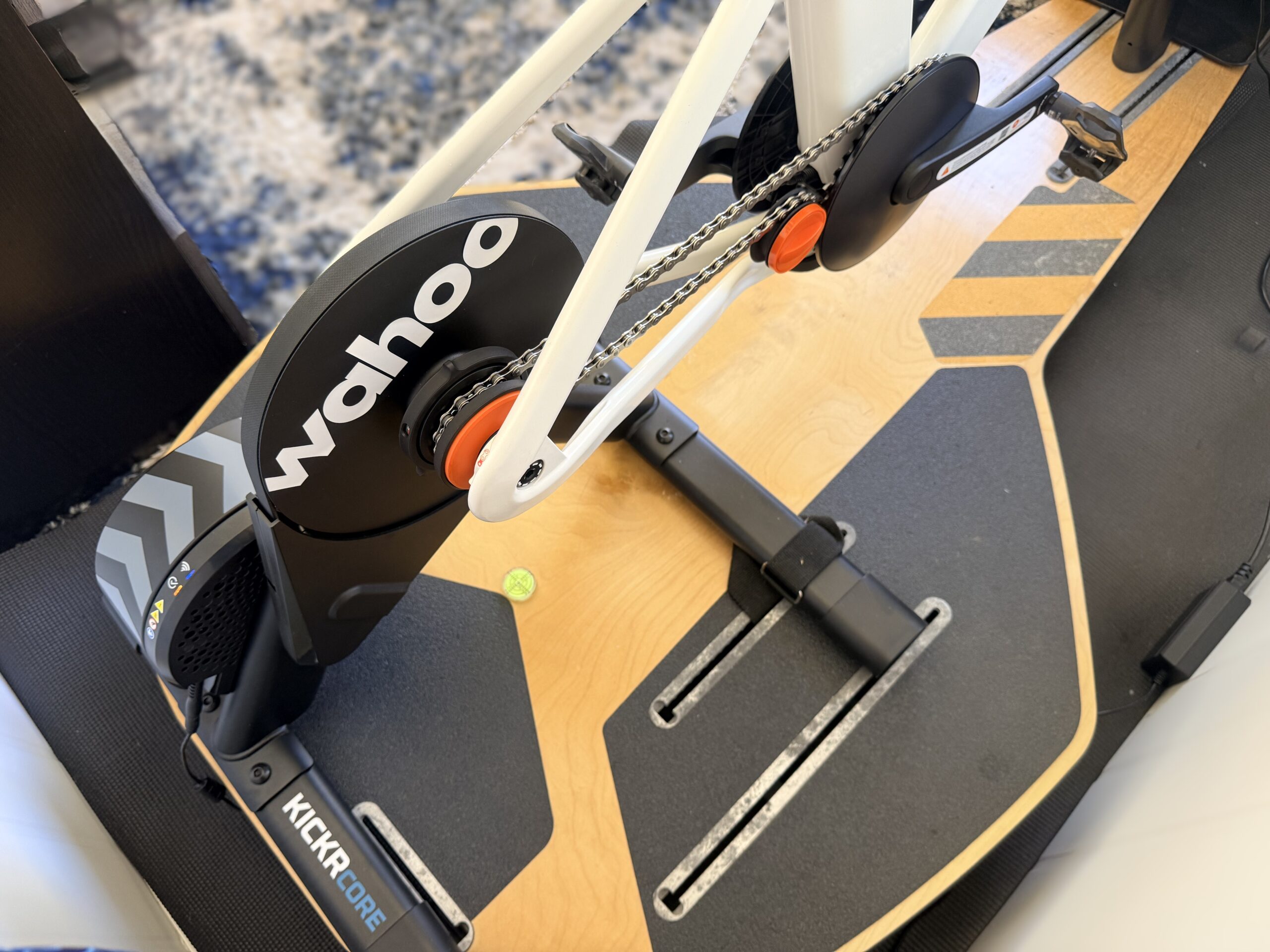
One of the best things about the Zwift Ride is how easy it is to get going, from initial setup to daily use. It comes in a few boxes, the setup is straightforward, and the process from assembling the trainer to pairing everything with Zwift is very intuitive. The quick start guides included were sufficient for anyone new to this product to get setup. Zwift also includes the basics to get rolling right away, including a flat pedals, though the setup shown here uses my own preferred saddle and pedals. Nothing about it felt overly technical. It feels like a product built for someone who wants to get up and riding without turning the process into a project.
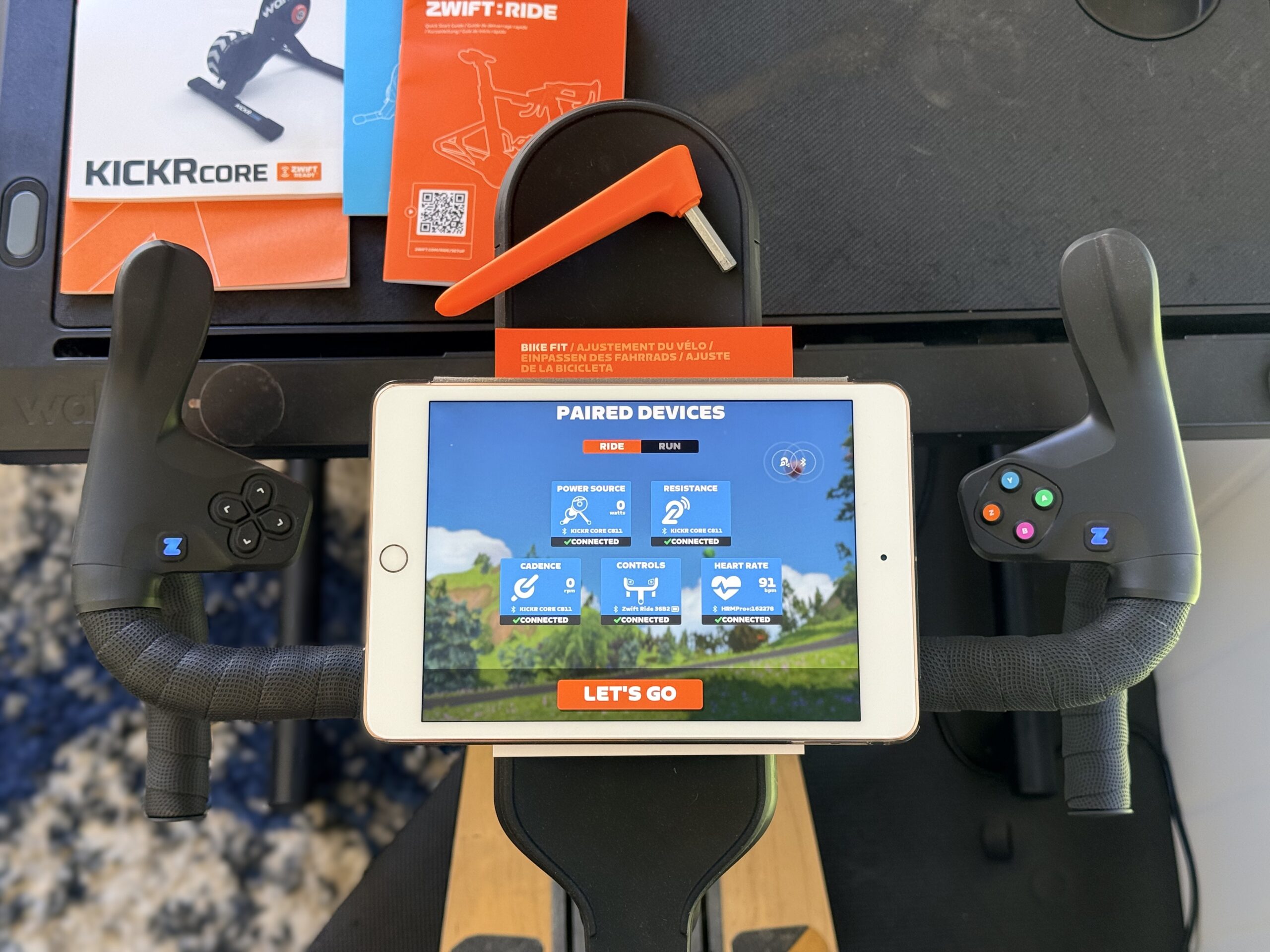
A lot of indoor setups are manageable, but they still carry enough hassle that they become one more excuse not to train, like finding the right thru-axle adapter to marry your bike frame to a direct drive trainer. The Zwift Ride Wahoo Core 2 combo removes a lot of that friction…once I got it together, it was ready to power on and cycle on (pun intended). For many of our readers, if you are trying to train around busy schedules, minimizing the barriers to starting a ride goes a long way.
The Real Strength is Adjustability
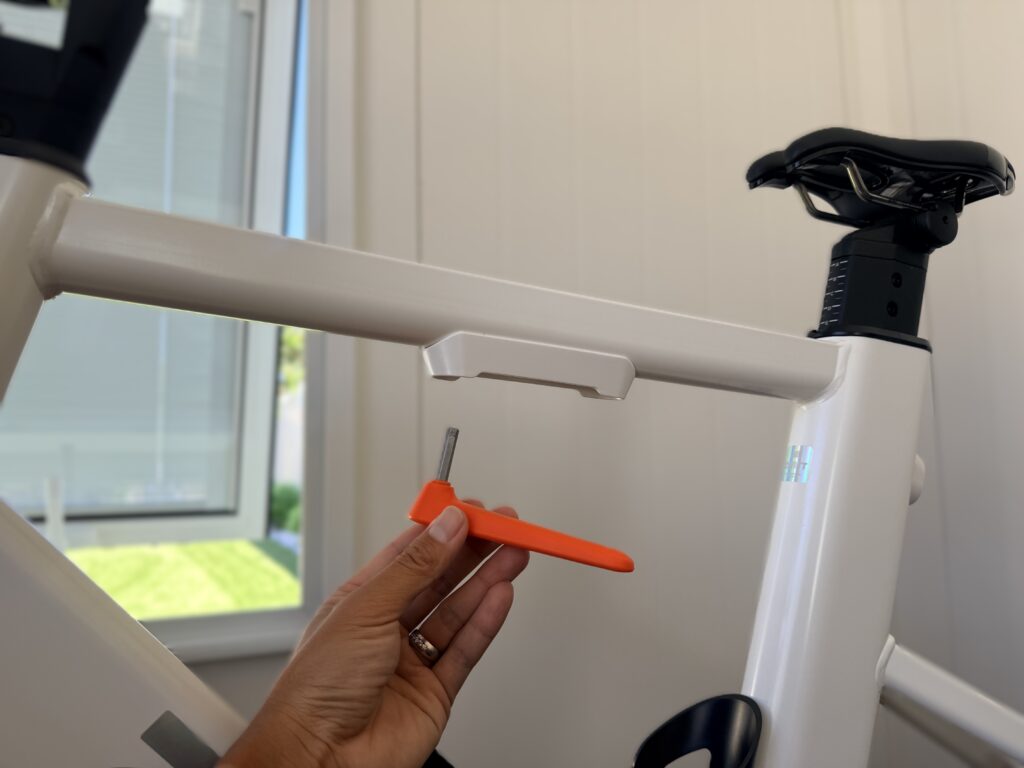
The biggest selling point here may be just how easy it is to adjust. Seat height, reach, and handlebar stack can all be changed with the included tool, which conveniently sits under the top tube. Without hesitation, you can adjust on the fly, which I found myself doing during my first couple of rides to dial in the reach of the handlebar. Additionally, if two people are riding regularly, there is real value in having one dedicated indoor bike with power and full functionality rather than constantly taking a bike on and off the trainer or trying to justify multiple setups.
It also solves another problem which many Slowtwitch readers will resonate with – protecting your race bike! If you have a carbon road bike or tri bike that you would rather keep clean and ready for outside riding, a dedicated indoor setup is a very practical answer. No sweat all over your race bike which minimizes corrosion. No repeated mounting and unmounting. And also no wear on the drivetrain, extending the life of your components that wear with use.
Does it Fit? A Sizable Limitation
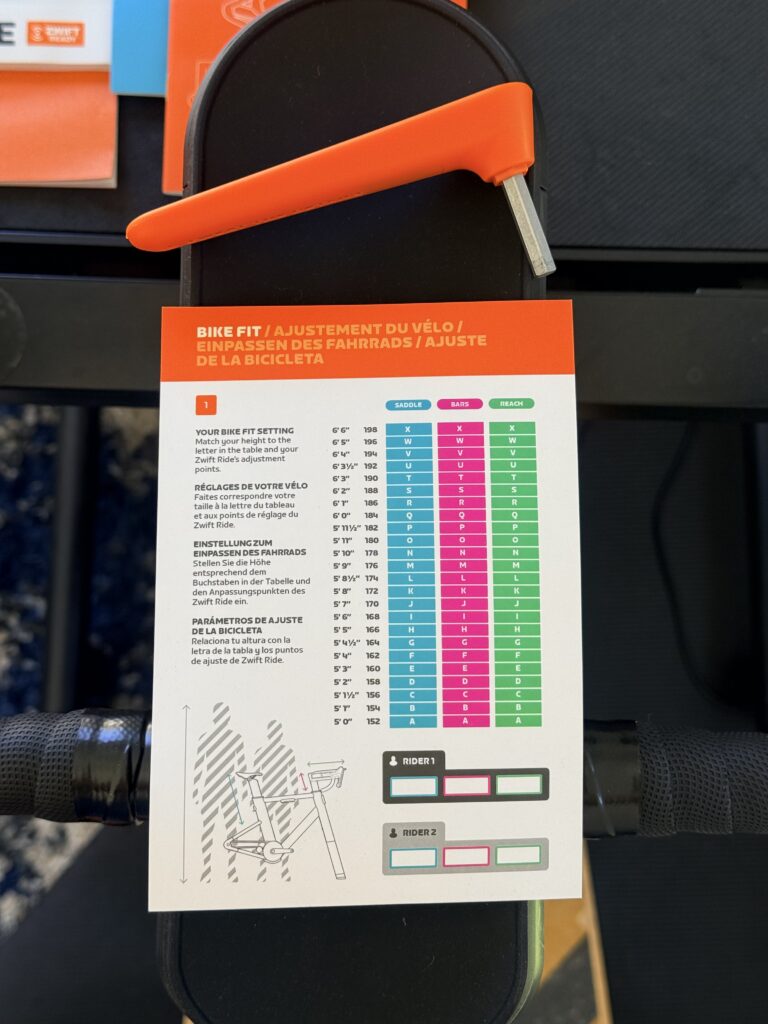
The fit range of the bike is not perfect, but it is a great estimate. I had my wife hop on the bike, and at 5 feet 1 inch tall coupled with a relatively short inseam, at the lowest seat-height setting, we could not quite get her into a position that felt truly dialed. Some cleat spacers would bridge the gap, but still not optimal. Zwift notes that the fit range starts around 5 feet, but as always, there is a difference between technically fitting and actually fitting well, especially if you consider the leg/torso ratios of some bodies.
I do not think this will be a problem for most riders, as I think the adjustability is still one of the product’s strengths. But if you are at the smaller or larger end of the bell curve of the fit range, double check your measurements against the fit chart to ensure you’ll be able to dial in your fit and comfort.
Quiet, Stable, and Easy to Keep Running
Once it is set up, the ride experience is exactly what most people probably want indoors. It is quiet, stable, and low hassle. It feels like a product built for repeated use, not something that is going to ask for constant attention. I wouldn’t say that this setup is maintenance-free, because there is still a chain that would need the occasional wipe down and grease.
But after a few rides, I found myself noticing that everything still works like the first ride, smooth and quiet.
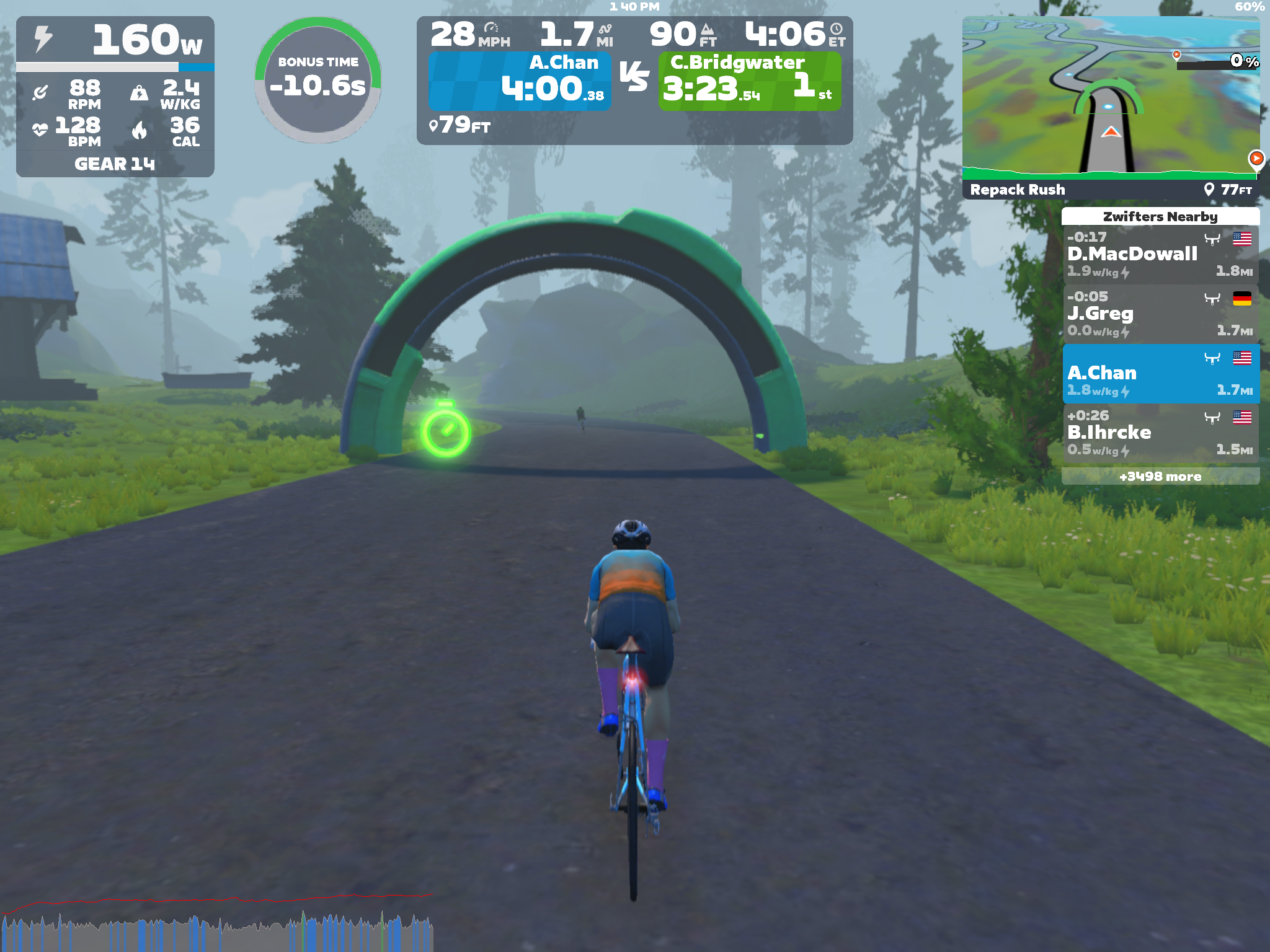
One other thing the Zwift Ride does well is make the Zwift experience feel more interactive. The controls are right at your fingertips, so virtual braking, turning, and other in-game functions are easy to use without breaking your rhythm. That extra layer of interaction helps keep indoor riding from feeling flat and gives longer sessions a little more life.
One limitation worth noting is that the Zwift Ride + KICKR CORE 2 combo does not fully carry over its Zwift exclusive features (yet) to other platforms like TrainingPeaks Virtual, Rouvy, etc. The trainer itself can still function for the core smart-trainer duties, but the Zwift Ride controllers are effectively locked to Zwift only. For example, while riding TrainingPeaks Virtual, you won’t be able to ‘shift’ up and down using the controllers, so the resistance of the KICKR Core 2 would need to be adjusted by other methods, whether it’s through the software or mobile app. Ultimately, the Zwift virtual shifting is still a Zwift-only protocol rather than something that works across other apps.
Why it Makes Sense
For me, the appeal of the Zwift Ride and Wahoo Core 2 combo is not that it replaces outdoor riding, but what it does offer is ultra consistency. It lets you get in a quality workout without having to deal with traffic, weather, fading daylight, or the simple reality that sometimes getting outside is not the easiest or smartest option. It also removes a lot of the everyday friction that comes with a traditional trainer setup…you are not dragging outdoor grime inside, you are not taking a bike on and off, and you are not turning your outdoor bike into your indoor workhorse just because it is the only option. For a lot of riders, including myself, removing barriers to get in a ride is always worth it.




Start the discussion at forum.slowtwitch.com