
Canyon Rewrites the Rules of Gravel Race Bikes with New Grail
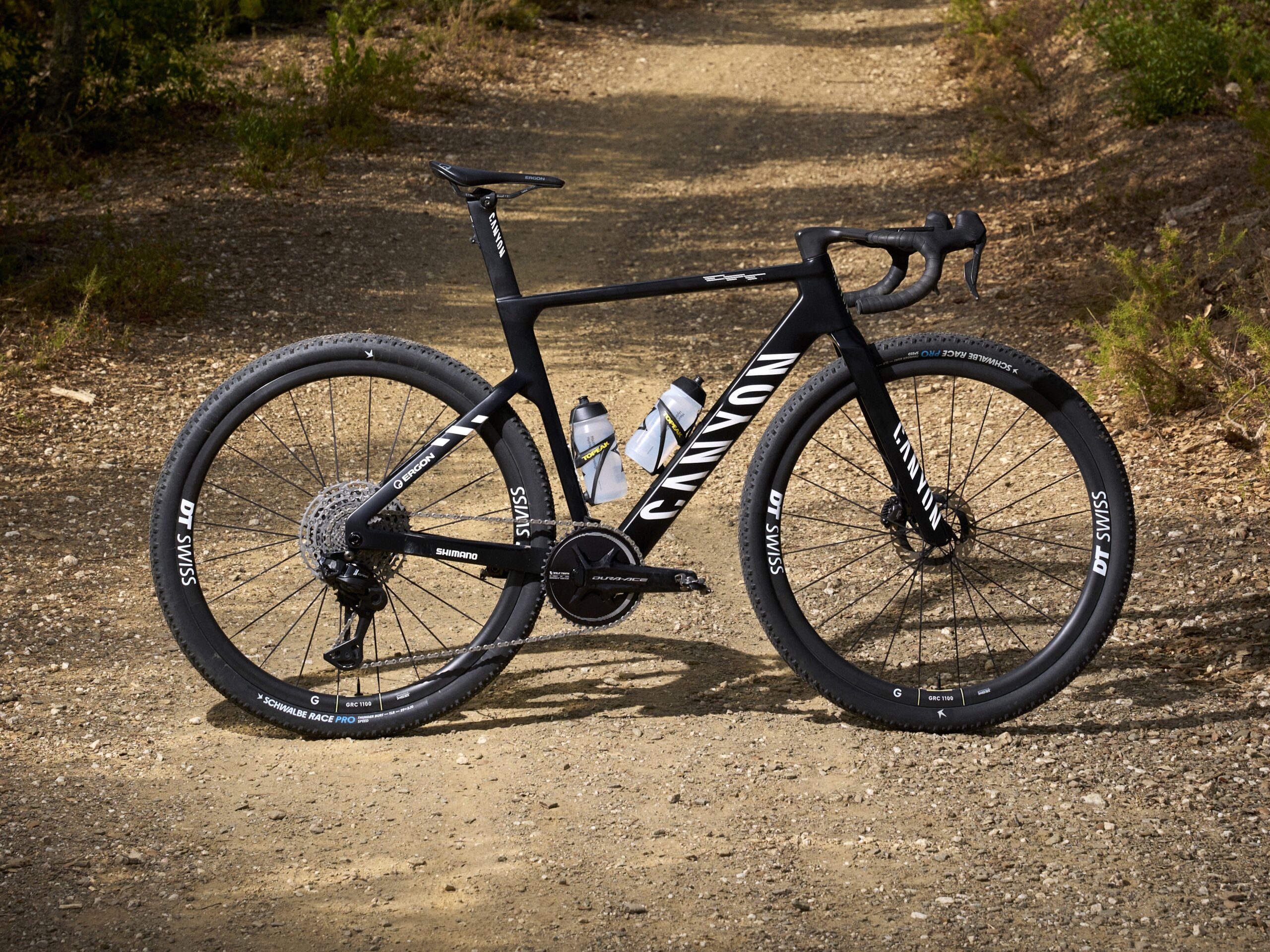
Gravel racing has continued to grow, both at the professional and recreational level. And bikes are largely continuing to evolve. When we first started covering gravel before the pandemic, it was monumental if a bike could receive a tire greater than 38mm in width. When Canyon started on the engineering task of the bike series we’re talking about today back in 2024, the debate of just how wide tires should go was really taking off.
According to Canyon, it was during the course of negotiating sponsorship with 2024 Unbound winner Rosa Klöser that drove some of the decisions you find on the new Grail line-up today. Quoting Canyon’s release, Klöser “made one thing crystal clear: her future gravel race bike would have to be big on tire clearance. This was to be a dealmaker or dealbreaker.”
With that imperative, Canyon went really wide. We’re talking having to switch to freedom units (aka imperial measurements) to measure tire width capability. The new Grail series bikes can accept tires up to 2.25 inches (aka 57mm) at both frame and fork, and still has another 4mm worth of ISO clearance to spare. New Grails don’t actually ship with tires that wide from the factory; instead, they are equipped with 45mm standard. But it means you can easily put on something like, say, Challenge’s Getaway Pro in 50mm with plenty of room to spare.
But all of that tire width compatibility comes with a compromise. And that compromise is this: you can’t get a Grail with a front derailleur.
That’s right. You can get yourself whatever Shimano or SRAM drivetrain your heart desires, so long as it is 1X. For all but the entry-level Grail CF 7, all of those drivetrains will also be some form of electronic shifting.
Aero and Handing Were Keys in Development, Too
Gravel has done nothing but get faster, even with limitations on aerobars in certain events. But, according to Canyon, aero matters no matter where you are in the race. In fact, they specifically call out that “the longer you’re out there, the more it matters too.”
The bike industry traditionally uses 45 kilometers per hour (roughly 28 MPH) as the benchmark speed for aero performance claims. Canyon uses that metric for their road racing product. But as Canyon studied gravel race paces as part of the development of these new models, they realized that winning gravel race paces were significantly slower than that — 10 kilometers an hour slower, in fact. That 35 kilometers an hour (21.75 MPH) figure is what Canyon used to develop the Grail’s new shapes.
Canyon tested the new Grail against a subset of competitors from Rose, Factor, and Cervelo at that speed, equipping them all with the same control wheels and tires and their mobile dummy. The wheels were 50mm deep, with 27mm internal width and 38.5mm internal width and 45mm tires mounted to them. Here’s what they found:
| Bike | Drag (in watts) |
|---|---|
| New Generation Grail | 109.5 |
| Rose Backroad FF | 112.3 |
| Factor Ostro Gravel | 110.3 |
| Cervelo Aspero 5 | 109.9 |
Canyon then also tested the new Grail against the old one, putting a variety of tires on board. The new bike is faster, regardless of how wide of a tire you put on it.
| Bike | Tire | Drag (in watts) |
|---|---|---|
| Prior Generation Grail | 40mm | 115.7 |
| New Generation Grail | 40mm | 110.0 |
| New Generation Grail | 45mm | 109.4 |
| New Generation Grail | 55mm | 113.6 |
In summary, then, the Grail should be quick. Speed on gravel, though, is also about how the bike handles the terrain underneath you. The Grail has been known as one of the better handling gravel bikes from all types of riders, thanks in part to a longer wheelbase, a 71.5 degree head tube angle, and 69mm worth of trail in the swath of bike sizes that most riders will fit into (the three t-shirt sizes small, medium, and large).
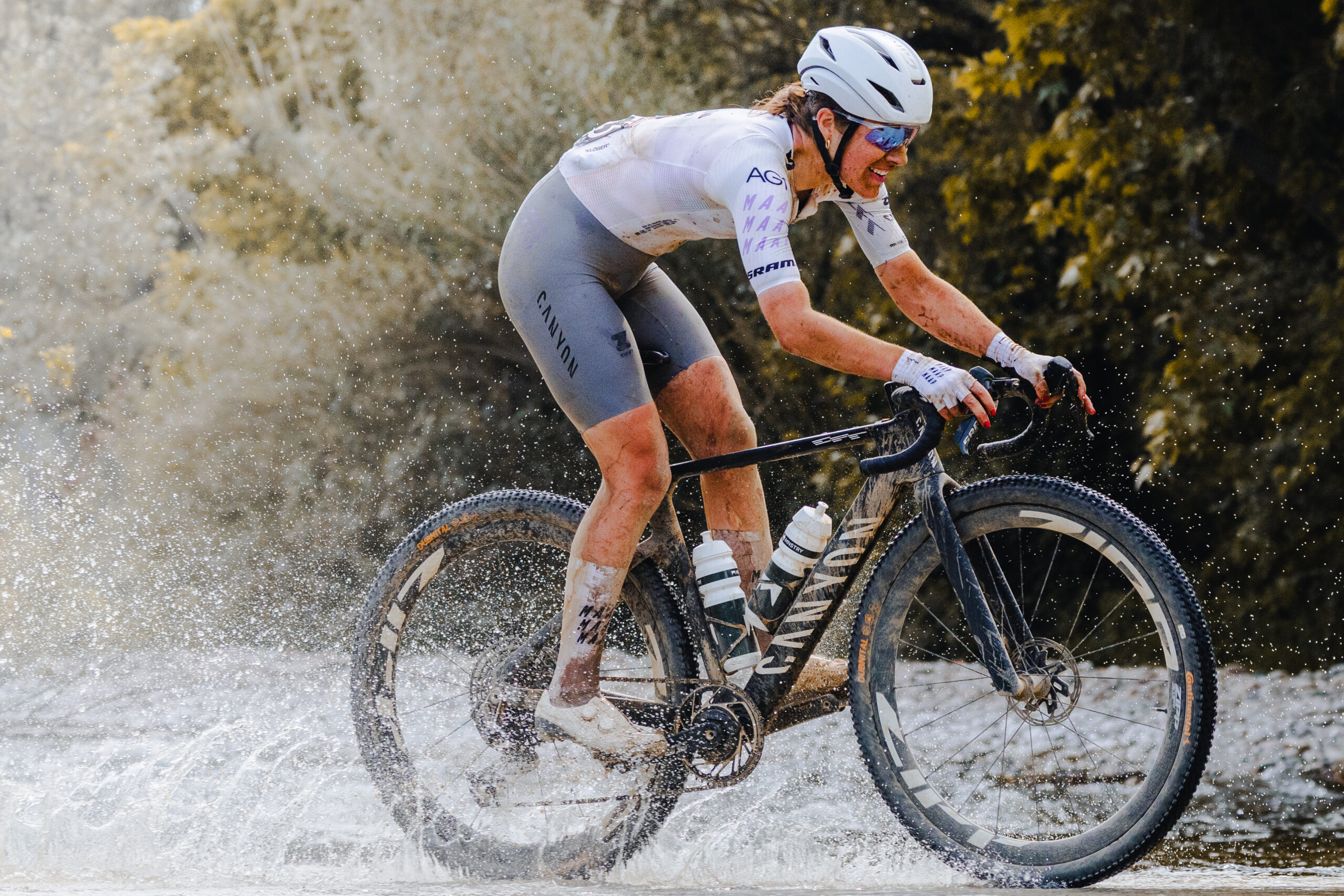
The mandate, then: don’t muck it up. Yet in order to accommodate the 57mm tires, the wheelbase had to be extended out another 10 millimeters. Canyon says that in their testing, this change didn’t have a negative impact on handling.
Frame Geometry Changes: Less Stack
It’s not just the wheelbase that changed here. It’s that positioning on board bikes is evolving for gravel, too. As gravel gets faster, people are going lower on the front end.
In response, Canyon’s gone with less stack on the new models: 15mm lower per size. All of the bikes maintain their reach numbers from before, which was on the longer side. Canyon does this to be able to then pair the extra reach with a shorter than average stem; we’re talking the longest stem that comes stock on Grail is 90mm for the 2XL frame size.
Here’s the geometry, shared across all three Grail lines, in seven(!!!) different t-shirt sizes.
| 2XS | XS | S | M | L | XL | 2XL | |
|---|---|---|---|---|---|---|---|
| Seat tube length | 432 mm | 462 mm | 492 mm | 522 mm | 552 mm | 582 mm | 612 mm |
| Top tube length | 528 mm | 544 mm | 559 mm | 581 mm | 604 mm | 618 mm | 643 mm |
| Stack | 525 mm | 537 mm | 558 mm | 575 mm | 598 mm | 618 mm | 640 mm |
| Reach | 372 mm | 385 mm | 394 mm | 411 mm | 427 mm | 435 mm | 454 mm |
| Effective Reach | 508 mm | 521 mm | 541 mm | 558 mm | 574 mm | 592 mm | 611 mm |
| Effective Stack | 617 mm | 624 mm | 643 mm | 660 mm | 683 mm | 703 mm | 725 mm |
| Head Tube Length | 98 mm | 103 mm | 120 mm | 138 mm | 162 mm | 182 mm | 205 mm |
| Chainstay Length | 435 mm | 435 mm | 435 mm | 435 mm | 435 mm | 435 mm | 435 mm |
| Effective Seat Tube | 73.5° | 73.5° | 73.5° | 73.5° | 73.5° | 73.5° | 73.5° |
| Wheelbase | 1034 mm | 1037 mm | 1039 mm | 1062 mm | 1085 mm | 1097 mm | 1123 mm |
| Head tube angle | 68.5° | 70° | 71.5° | 71.5° | 71.5° | 71.8° | 71.8° |
| Trail | 90 mm | 79 mm | 69 mm | 69 mm | 69 mm | 67 mm | 67 mm |
| Crank Length | 160 mm | 160 mm | 165 mm | 165 mm | 170 mm | 170 mm | 170 mm |
Looking through this chart, and I’d pretty squarely sit on either a medium or a large. I typically like a bike to feel a little on the smaller side underneath me, as it feels a touch more nimble. That being said, I might appreciate having that slightly longer wheelbase of the large.
Stem lengths for the CFR and CF SLX range from 70 to 90 millimeters. Those on the CF, meanwhile, are 10mm shorter. The two smallest sizes get 70mm; the small through large run gets 80mm and the two big sizes get 90mm. Same spread on the CF, just subtract 10mm from it.
PACE Technology comes to the top Grail CFR and CF SLX. A single TX25 tool allows you to manipulate the cockpit with 15 different possible configurations without cutting the steerer or having to re-bleed the brakes. (Editor’s Note: thank Jesus, because if there is one modern cycling thing I hate it is messing with hydraulics.) There’s upwards of 50 millimeters worth of width and 20 millimeters worth of height adjustment available. These bars come in three widths: 370mm, 395mm, and 420mm, with 17 degrees of flare and 120mm worth of drop.
All models share an aero seat post that debuted on the Endurance CFR. The VCLS (vertical comfort, lateral stiffness) Aero post is meant to give 25% more deflection compared to a fully rigid carbon post. According to Canyon, regardless of the amount of seat post exposed, it is meant to deflect the same amount for all riders. That I’ll be particularly interested in putting to the test.
Three Levels, Six Models: CFR, CF SLX, and CF
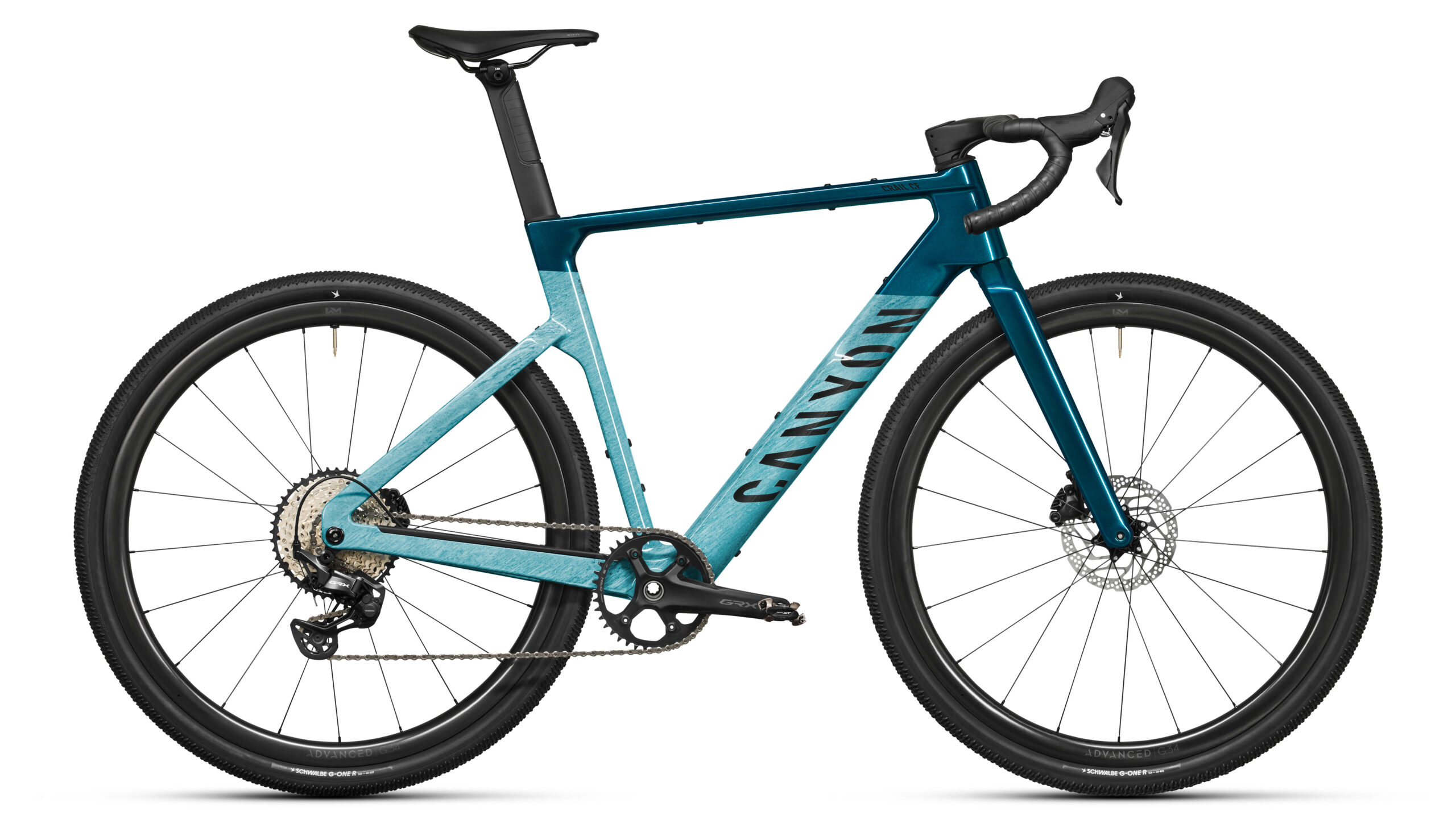
The new Grail starts at $3,499 USD and ranges up to $8,999 USD for the top of the line CFR AXS. There’s essentially two bikes at each product tier: a Shimano build and a SRAM build. Within each tier, the Shimano build is the less expensive of the two.
Starting with the top-end CFR, the SRAM Red AXS serves as the flagship.
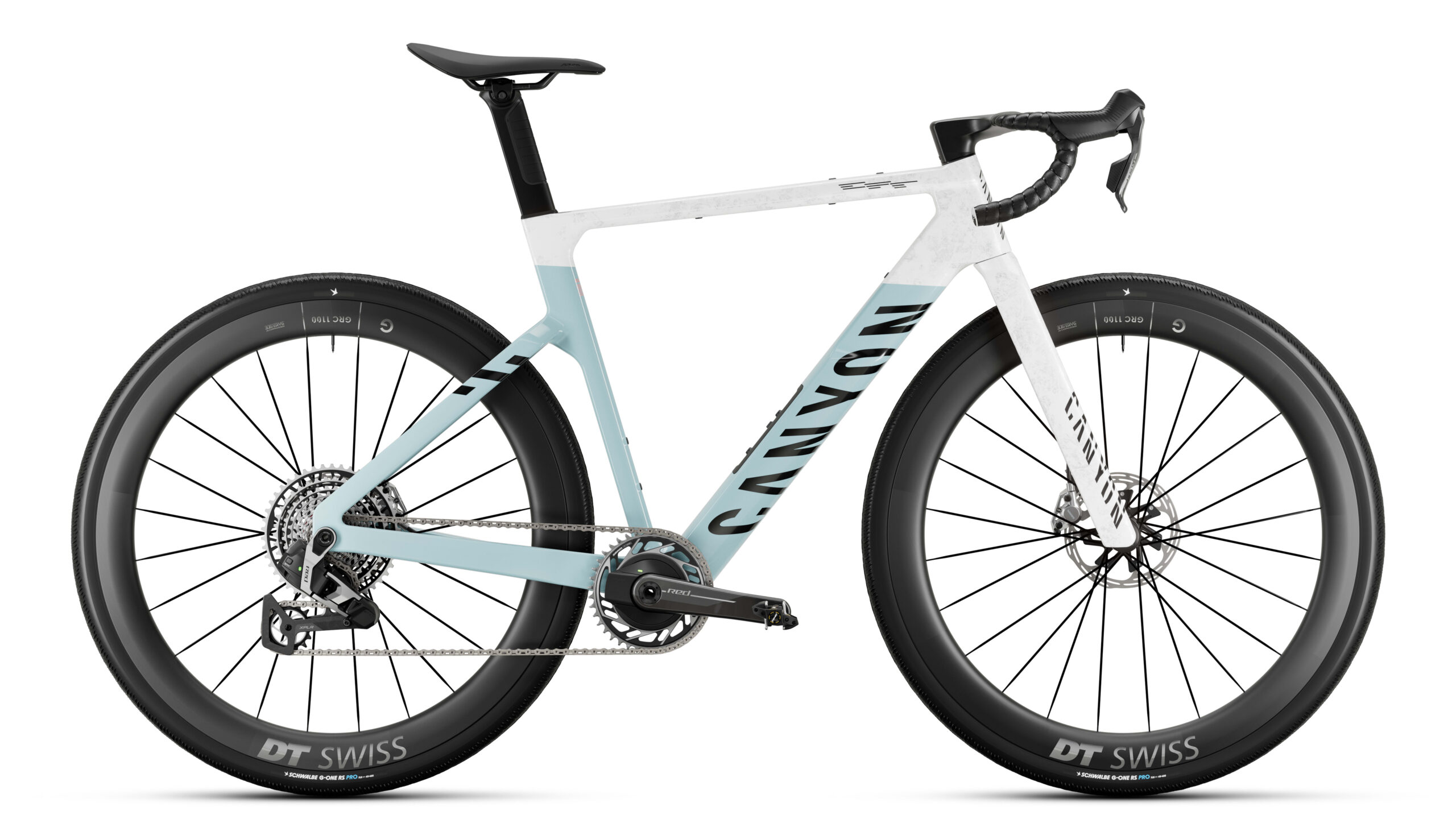
Perhaps the biggest differentiator is in the power meter; the SRAM equipped bike comes with a dual-sided power meter, whereas the Shimano model is single-sided power from 4iii. There’s also a minor weight penalty for choosing Shimano over SRAM. And you’ll have to wait on the Shimano model, at least if you’re in the United States, as it’s still showing as “coming soon” whereas you can get a SRAM model shipped to you now.
| Grail CFR AXS | Grail CFR Di2 | |
|---|---|---|
| Groupset | SRAM RED XPLR AXS w/ Quarq dual-sided power meter | Shimano RX825 GRX Di2 w/ 4iiii single-sided power meter |
| Wheelset | DT Swiss GRC 1100 50 mm | DT Swiss GRC 1100 50 mm |
| Tyres | Schwalbe G-One RS PRO 45 mm | Schwalbe G-One RS PRO 45 mm |
| Cockpit | Canyon CP0048 PACE Bar w/ Control Drops | Canyon CP0048 PACE Bar w/ Control Drops |
| Seatpost | Canyon SP0093 VCLS Aero | Canyon SP0093 VCLS Aero |
| Saddle | Fizik Vento Argo X1 | Fizik Vento Argo X1 |
| Sizes | 7 (2XS–2XL) | 7 (2XS–2XL) |
| Weight | 7.9 kg | 8.4 kg |
| Price | $8,999 USD | $7,999 USD |
| Artworks | Mercury Burst, Sonic Marble | Mercury Burst, Sonic Marble |
It’s much the same story when you go to the CF SLX. There’s a bit more component spec changes between the two bikes, which accounts for the $1,000 USD price difference between them. With SRAM you’re still getting a power meter, and you’re getting the dependable and racy DT Swiss GRC 1400 wheelset. If you opt for the Shimano model, you’re not getting power, and you also get Canyon’s in-house 50mm wheelset instead of the DT Swiss. That said, those Canyon wheels were specifically developed for the Grail, and feature wider internal and external rim measurements compared to the DT Swiss.
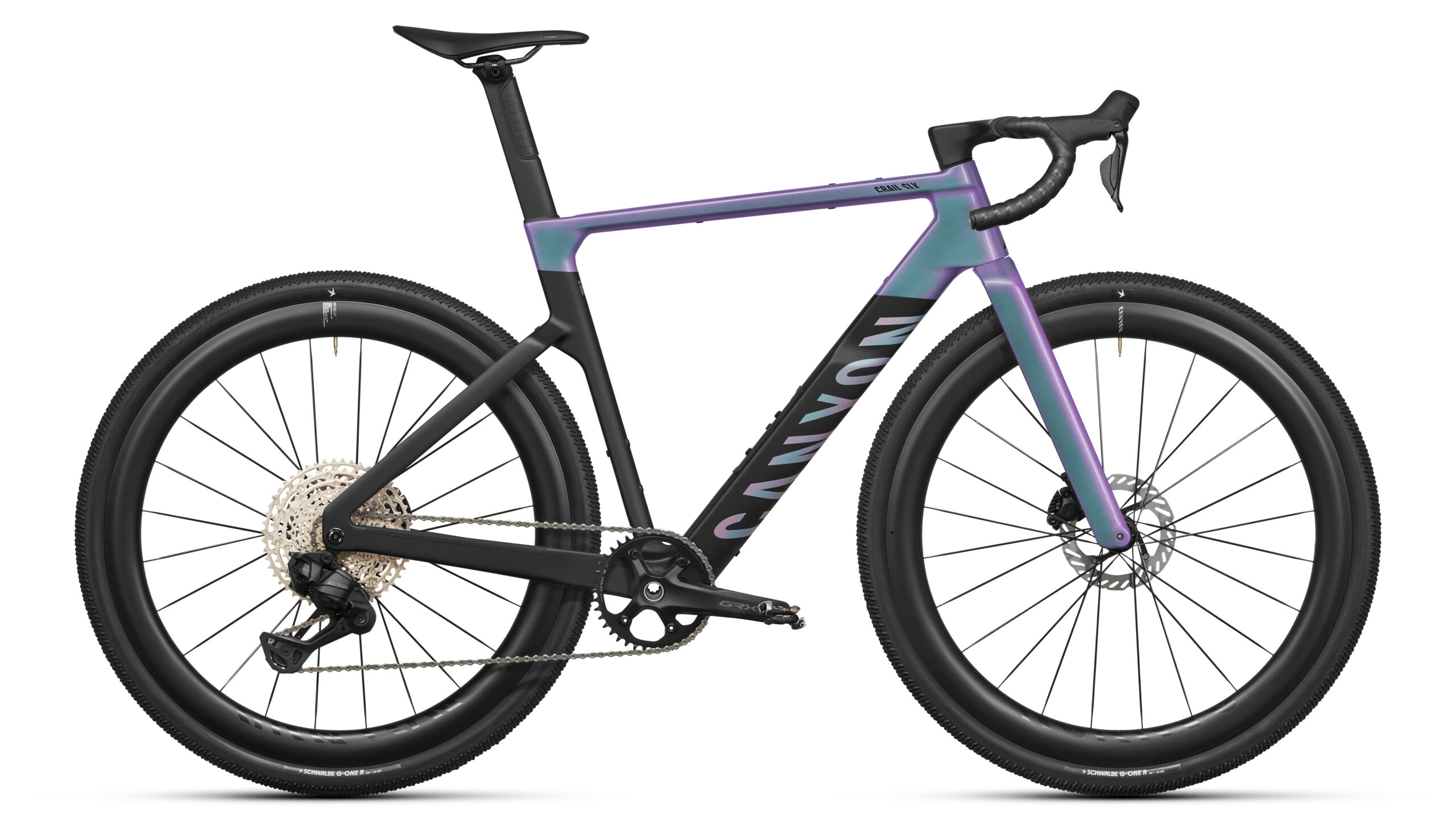
But, again, you’ll have to wait a little longer if you want the Shimano bike.
| Grail CF SLX 8 AXS | Grail CF SLX 7 Di2 | |
|---|---|---|
| Groupset | SRAM Force AXS w/ Quarq single-sided power meter | Shimano RX715 GRX Di2 |
| Wheelset | DT Swiss GRC 1400 50 mm | Canyon GR 50 CF 50 mm |
| Tyres | Schwalbe G-One R 45 mm | Schwalbe G-One R 45 mm |
| Cockpit | Canyon CP0048 PACE Bar w/ Control Drops | Canyon CP0048 PACE Bar w/ Control Drops |
| Seatpost | Canyon SP0093 VCLS Aero | Canyon SP0093 VCLS Aero |
| Saddle | Fizik Vento Argo X3 | Fizik Vento Argo X3 |
| Sizes | 7 (2XS–2XL) | 7 (2XS–2XL) |
| Weight | 8.9 kg | 9.5 kg |
| Price | $5,999 USD | $4,999 USD |
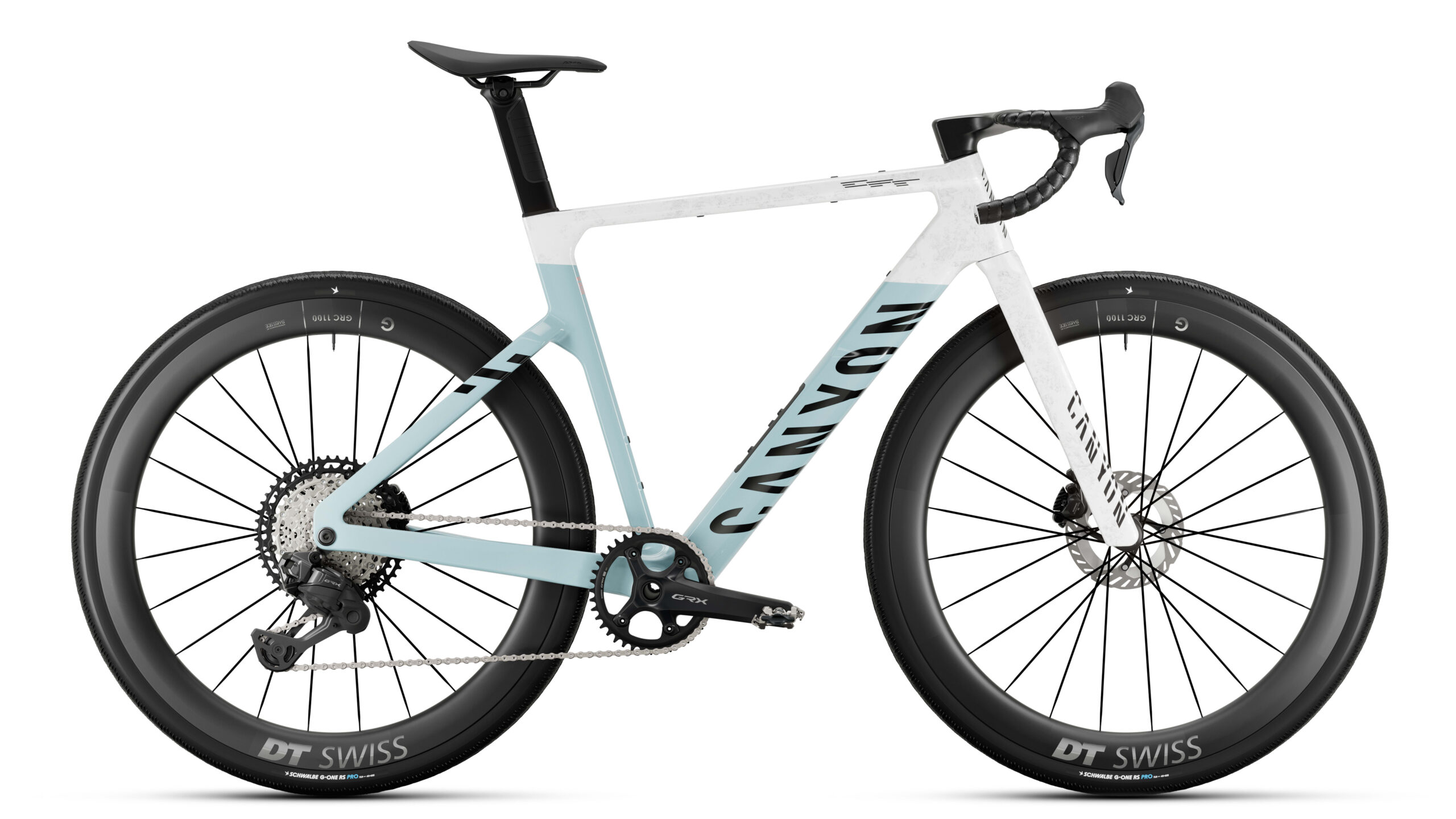
| Artworks | Monochrome, Metallic Acid, Strawberry Shake | Monochrome, Metallic Acid, Strawberry Shake |
When you get down to the entry-level CF, a couple of notes. First, the bars are wider and don’t come with that cockpit innovation. Small sizes get 40cm wide bars, the middle of the road 42cm, and the two largest sizes are on 44cm with. For me, that would automatically be a reason to step up to the SLX.
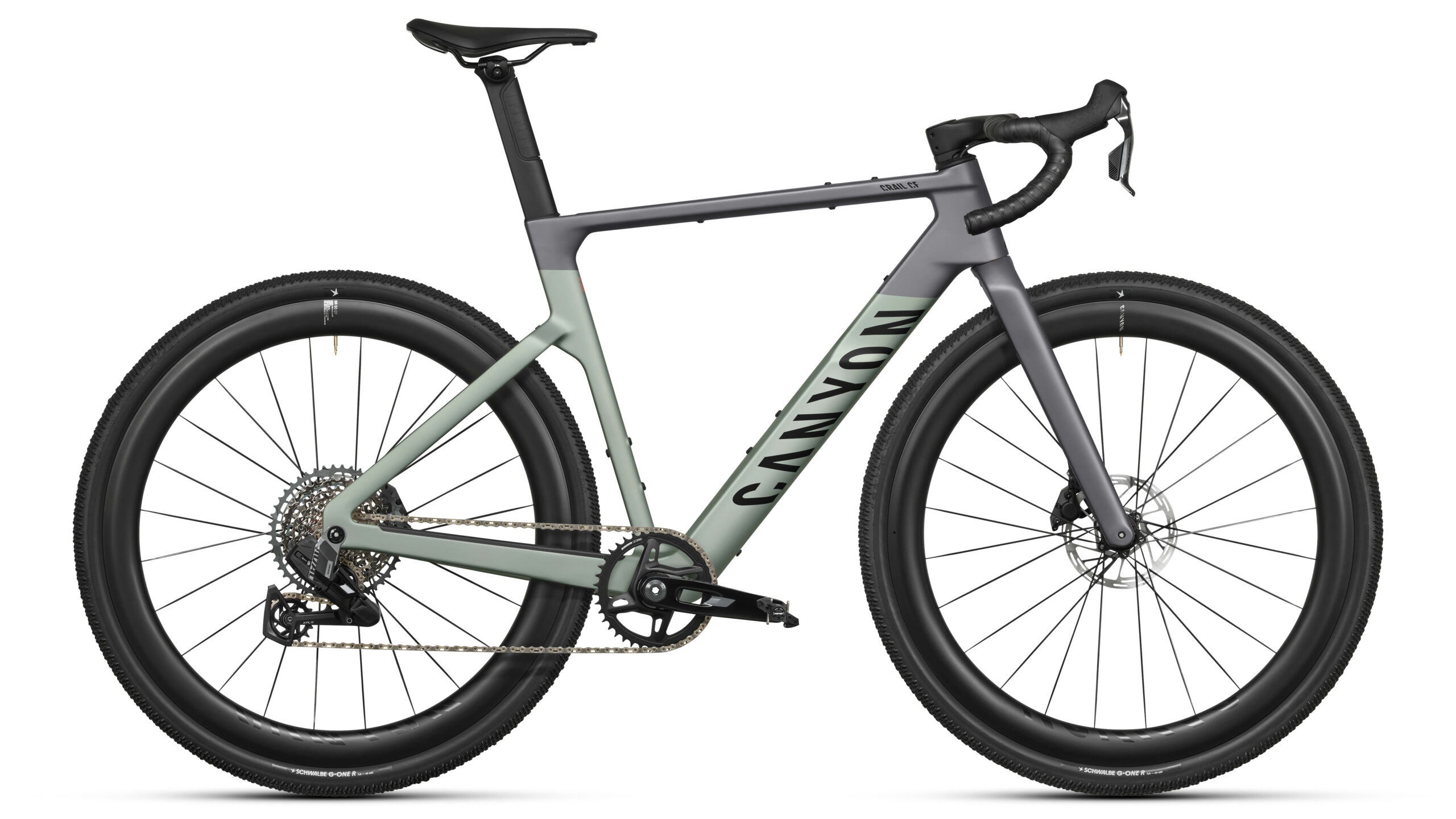
With the CF, you can choose to go with mechanical shifting with Shimano. I personally really like GRX mechanical. That being said, I also think the Canyon wheels on the SRAM equipped bike might be worth the extra money alone — those will be available as an aftermarket purchase, with US pricing to be determined.
| Grail CF 7 AXS | Grail CF 7 | |
|---|---|---|
| Groupset | SRAM Rival XPLR AXS E1 | Shimano RX610 GRX mechanical |
| Wheelset | Canyon GR 50 CF 50 mm | Newmen Advanced G.34 28” CL |
| Tyres | Schwalbe G-One R 45 mm | Schwalbe G-One R 45 mm |
| Cockpit | Canyon CP0039 | Canyon CP0039 |
| Seatpost | Canyon SP0093 VCLS Aero | Canyon SP0093 VCLS Aero |
| Saddle | Selle Royal SRX | Selle Royal SRX |
| Sizes | 7 (2XS–2XL) | 7 (2XS–2XL) |
| Weight | 9.1 kg | 9.2 kg |
| Price* | $4,299 | $3,499 |
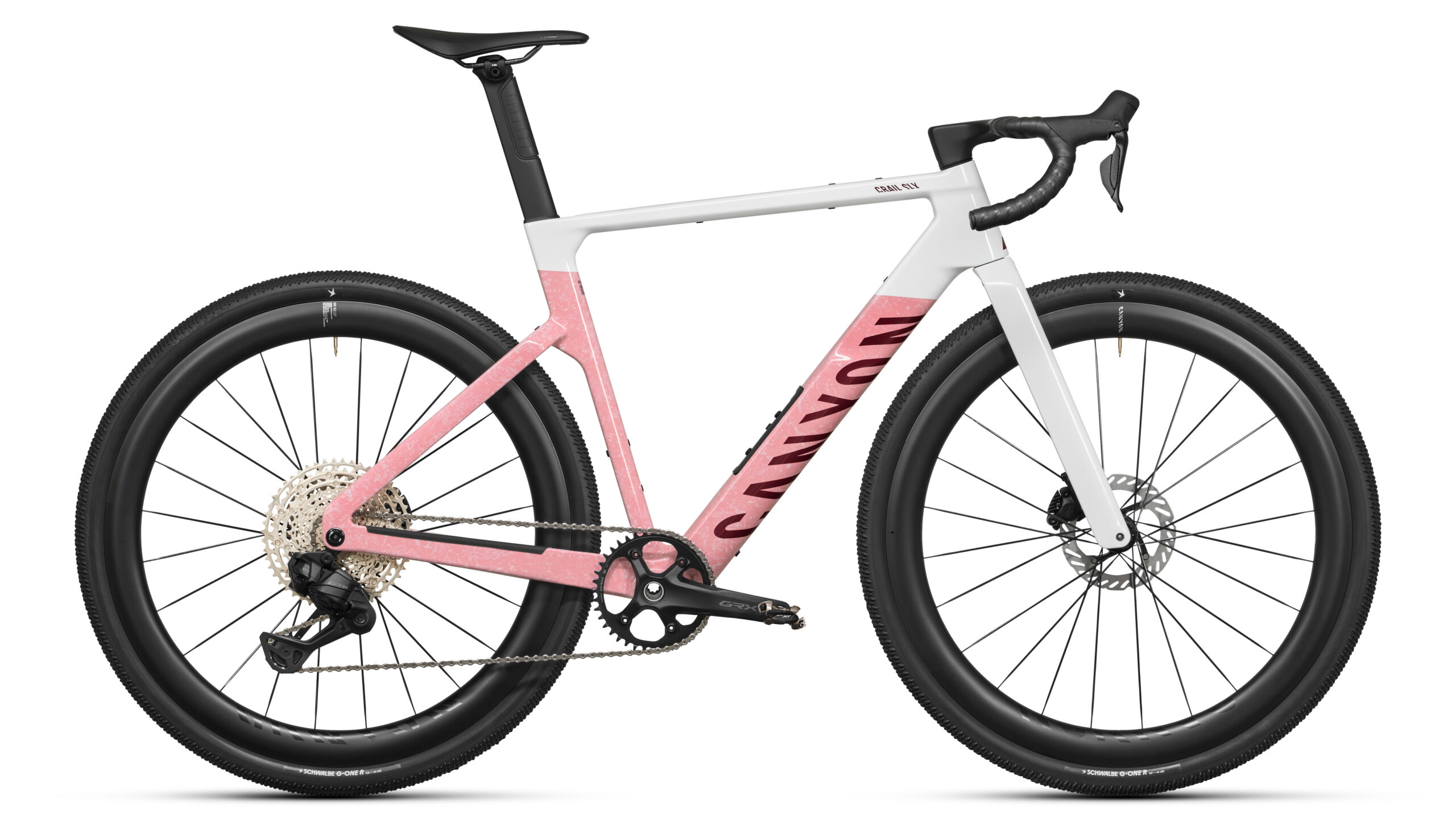
| Artworks | Clean Slate, Sandstone, Blue Copper | Clean Slate, Sandstone, Blue Copper |
It Wouldn’t Be a Gravel Bike Without Accessories
Gravel bikes don’t just get used for racing and training. They’re also big for adventuring. According to Matthias Hensolt, a Canyon design engineer, “Speed was key, but we didn’t want to lose any of the adaptability that makes the Grail so accomplished.”
That meant going back to the drawing board for how to integrate storage on the frame. Canyon partnered with Cyclite to develop the Midloader for the new Grail. These packs sit flush to the frame and are easy to install, with a push-to-release mechanism at the rear of the pack. According to Canyon, there’s no impact on aero performance while using the pack. Each pack is frame-size dependent to ensure flush fit, and empty weigh approximately 100 grams.
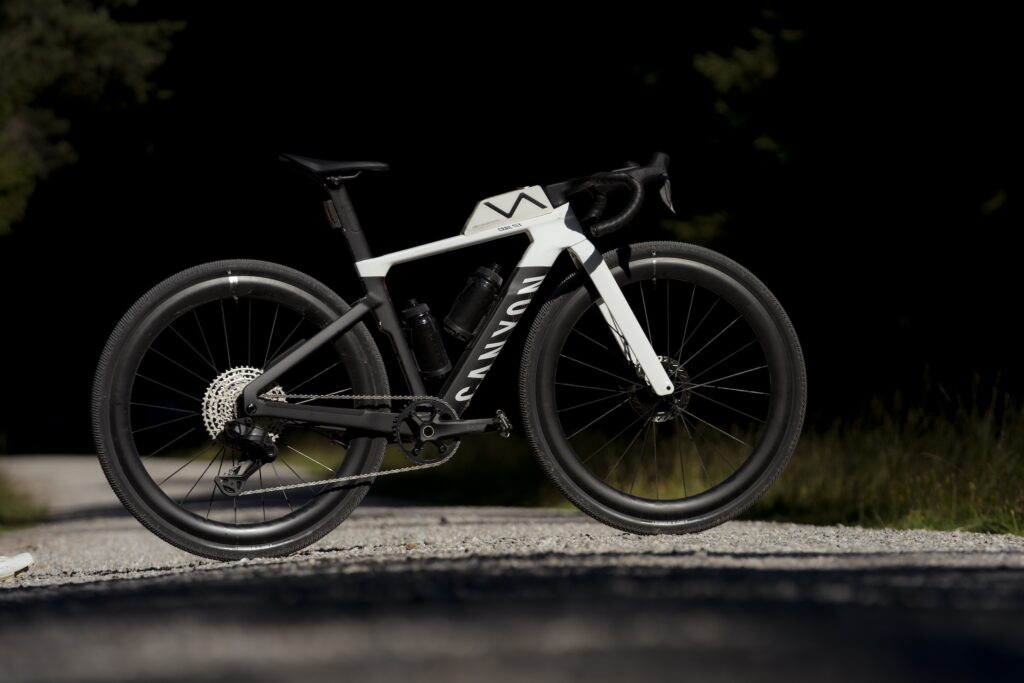
All of the models also come with Gear Groove, which is Canyon’s interface for lights, computers, and other accessories. The CF SLX and CF can also be equipped with Canyon’s Fast Fenders, which can be installed or removed in a similarly short period of time. The CFR, as it’s meant as a fully fledged race bike, doesn’t have fender mounts.
Concluding Thoughts
The new Grail seems to have left no stone unturned in its development. I think the additional tire width is an ongoing concession to the deepest of mud that we’ve seen at some races. I don’t know whether I’d ever get out into imperial unit measurements for bike tires, but I guess it’s nice to let people have that option.
For me, the sweet spot of the line is the SLX.
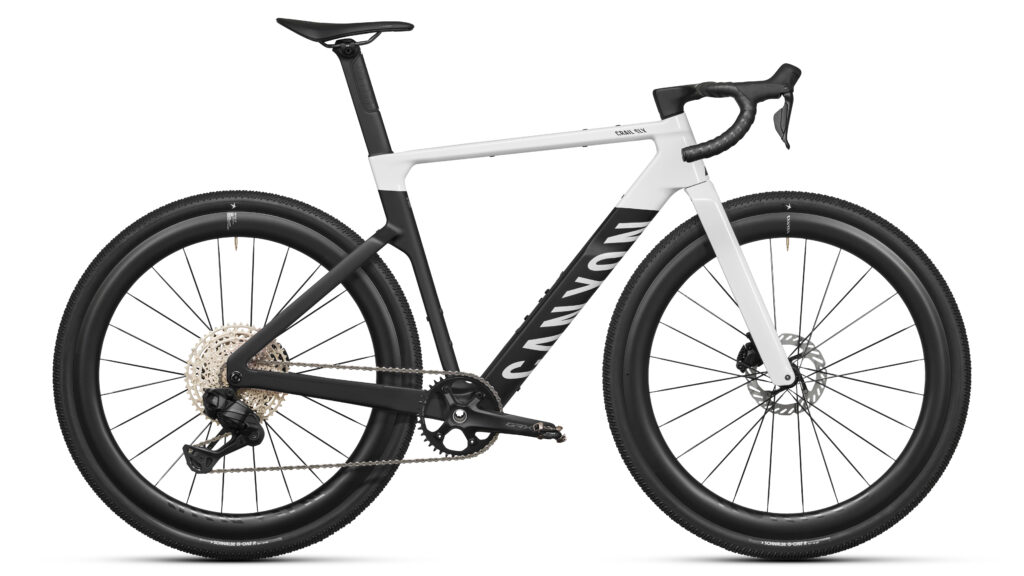
I want the narrower bar width and the adjustment capability without having to re-bleed brakes. I also get the best color ways out of the line-up (I’m partial to the Strawberry Shake, but any of them would work, including the above monochrome). The bike also comes with one of my favorite saddles, so that doesn’t need to get swapped out. Given all that, I’d probably go for the Shimano equipped bike. I already have a single-arm GRX 4iii pwoermeter that I could swap over onto this arm, and I’m simply not going to sweat an extra 600 grams when I could just drink an extra cup of coffee on race morning and visit the port-o-john one more time for my own weight savings.
We’ll look forward to putting one through the paces soon.
All Images Courtesy of Canyon.




The bikes look killer. There are some colors not listed on the Canyon website. Are these Euro only colors?
My hunch is that the US didn’t get a full assortment at launch, given that certain sizes are sold out -and- you could only order one of the Shimano equipped bikes as of yesterday.
But I want an SLX in either Strawberry Shake or Metallic Acid.
count me in for the strawberry shake!
seems modern gravel bikes move farther and farther away from the n=1 bike. I’ll stick with my OG Aspero
" he’s already got one"
Same. I want the Force equipped SLX in strawberry shake. I was this ][ close to getting a Crux 5 with Force. Glad I didn’t pull the trigger a week ago (I would have … but the close medium was in California).
Lower stack was certainly a choice. Not a good one either.
Otherwise looks like a pretty great bike.
There’s still plenty of stack on this thing. I’m 6’3", long legged and with mediocre flexibility. As mentioned, I could probably ride anything from a medium to the XL pretty comfortably, with the medium or the large being the best of those fits.
You’re also a weirdo when it comes to your fit
Ive been ridding their Endurance bike the last couple of weeks and the stack height on that is noticeability higher then what I have been riding for road bikes.. Like very noticeable. And this is only 7mm lower than that ( effective stack reach ). So I’m not really sure it its that big a deal. I think the other thing we need to keep in mind and Im sure this was one of the reasons is with a 57mm tire clearance.. you can bet LOTS of people are going to put suspension forks on this bad boy and those alone jack it up.
I have a Rudy XPLR front fork on my ENVE MOG right now and it almost make the bike have too much stack. Just something to consider