
Why Women (Still) Need Their Own Start in Gravel Racing
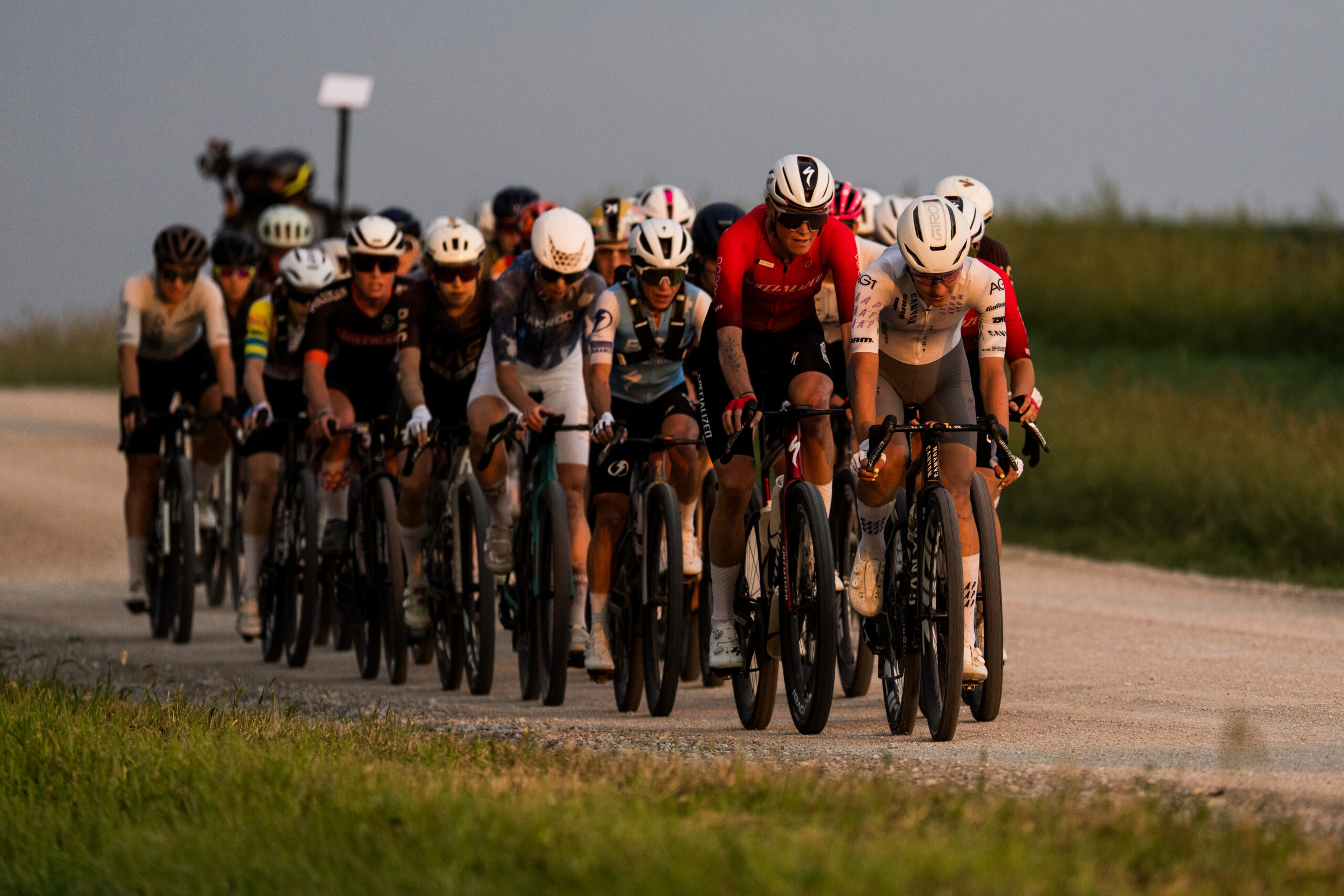
Gravel has changed. Popularity, prestige, and money have driven the professionalization of the sport and, whether you think that’s good or bad, the change has created a problem. Professional women are still racing among the amateur men, and it’s compromising the integrity of the women’s race. Often, without a separate start, the women’s race can be about who can sit with the men the longest, who can navigate through the traffic of the amateur men, or who can use male racers to their advantage. Sure, that can all be part of racing, but is that the way professional women’s gravel racing should be? No. No. No.
American gravel racer Emily Joy Newsom recently posted a video to her social media calling for change after being involved in a crash during a race where the women’s start was integrated with the men’s. With stitches over her eye and her elbow bleeding through a bandage, her emotional video put a very real and injured face to the cause.
”As is the case whenever we’re with men, it’s not about the women anymore,” Newsom begins. “It’s not about our race, it’s about who can stay with the fastest men for the longest.”
Newsom admits she didn’t realize there was an integrated start, but wishes she spoke up during the race briefing. It was only after her trip to the hospital that she spoke to the race director, who agreed to give women a separate start in future events (something the race had done in previous years).
“ As far as us being put with, with the men’s race, it’s one thing to choose to race with the men, and I’ve done that for practice, and it’s good practice. It’s another thing that you’re not–you don’t have a choice,” she says.
“ We need our own race,” she continues. “If you want to race the men P1-2, great, go for it, but that should be a choice. And if you want to race the women’s race, we need to have our own race. We need to have our own start. Women need a place that’s safe, where they can grow, not a place where they’re on the defensive hoping they’re not gonna get taken out. And same for the men. It’s not fair for the men either.”
Gravel has outgrown its grassroots origins, so it’s time–and only just and appropriate–to guarantee women their own fair playing field with a mandated separate pro/elite start.
Growing Pains
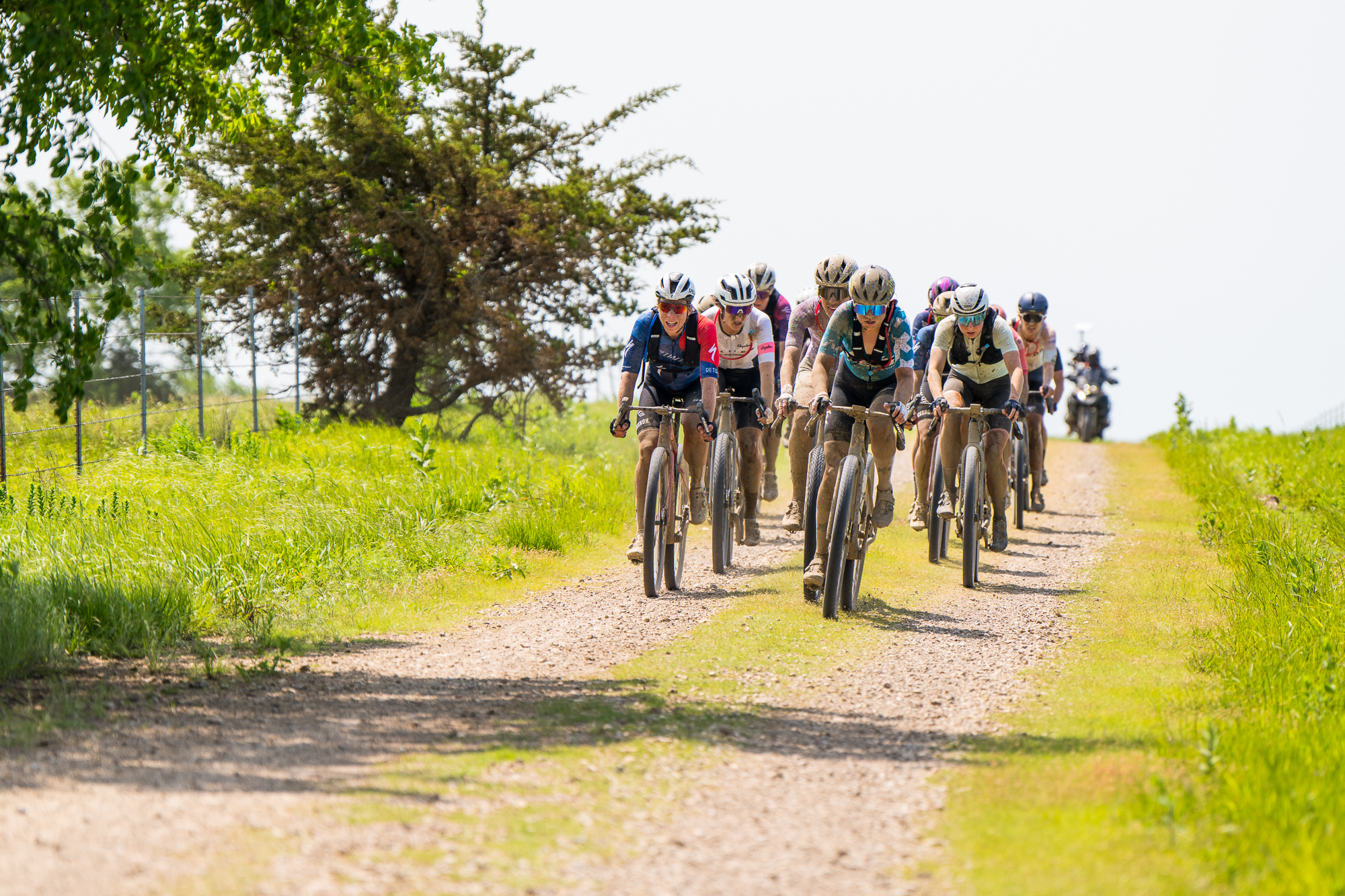
Gravel has always been anchored by its spirit, and a big part of that is the mass start. Having everyone start together builds bonds, amps up the energy and creates a vibe like no other. The mass start should stay, but not for everyone. When there is prize money, qualifying points, sponsorship and elite women ready to race, “vibe” isn’t the point.
At the professional level, a mass start that mixes elite women among all amateurs simply isn’t appropriate. The core issue is simple: when men and women start together, men become a variable in the women’s race. That can mean men pacing pro women back after they have been dropped or it can mean amateur riders unsafely clogging the course. All of which sees the final result determined not by who was the strongest, but who is best able to navigate the challenges of having men on the course.
Sports with mass starts, like running and triathlon, have already recognized this and a separate pro women’s start is not a debate, but a given. Many gravel events have evolved to this norm, too. The Gravel Earth Series, The Traka and Unbound offer separate starts.
Unbound first had a separate elite women’s (and men’s) start in 2023. The elite men started first with the elite women two minutes later, followed by the amateur mass start ten minutes after the elite men. In 2024, the elite women started fifteen minutes after the elite men and 25 minutes before the mass start. In 2025, Unbound progressed their protocols even further to prohibit elite riders from drafting other categories. (The Traka has similar rules as well).
Importantly, the UCL Gravel World Series is moving in the same direction. Current regulations require men and women to start separately with a time gap as large as possible to help prevent overlapping on the course. The World Championships and, uniquely, Graean Cymru, a UCI gravel series qualifier in Wales, UK, have completely separate days of racing for men and women.
With the standard starting to change, what is needed is consistency across the professional racing landscape.
In its grassroots form, a separate start wasn’t an issue–and that still applies to small backyard races and isn’t the subject here. However, given the state of gravel as it is today, it’s imperative to give professional women a safe, fair playing field and equal opportunity to protect the integrity of their race.
Why It Matters: Fairness, Safety
Flávia Oliveira Parks, who transitioned from the road to gravel after finishing seventh at the Rio Olympics, is the Brazilian national gravel champion and a three-time Belgian Waffle Ride series winner. Racing primarily in the US, she also recently also won the Big Horn Gravel Series. Oliveira Parks is outspoken about the need for elite women to have a separate start.
“It’s baffling to me that we still have to deal with this,” she says.
“At my first UCI race in Fayetteville [before the new regulations], we started with the elite men and I made the selection with the front men and managed to drop two girls. But then the amateur guys brought them back to me. I was thinking I was just racing the women, but they were able to use the amateur men so it was frustrating,” she recalls. “You’re going to a race thinking it’s one way, but then there are other factors interfering with the outcome of the race. I got totally discouraged from doing any UCI racing because I didn’t see the point.”
Her experience is widespread and not new. Back in 2022 before Unbound introduced separate elite starts, American Lea Davison, a multiple mountain bike world champion medalist who transitioned to gravel, posted on social media how her Unbound experience was completely determined by amateur men.
“It’s a completely different dynamic than having a womens [sic] only start. I can go a whole race without even seeing the women I compete against. It removed most of the fun tactics of racing, and it’s a game of how long you can hang onto the lead men or how good of a group of men you end up with,” Davison wrote.
Some riders even mention female pros specifically bringing men to help them in races, using them as domestiques. But fairness isn’t the only issue in the mix.
“Plus, it’s dangerous. In a pro mtb race, I know which wheels I can trust,” Davison continued. “There’s a high level of bike handling skills. In gravel, the skill level is varied. So a lot of the women’s races at [Unbound] were determined by crashes. My race was affected by a crash at mile 20. I realized I can finish on pure adrenaline after a crash in a XCO Mtb race, but I started to feel it after five hours. This adds in a lot of factors outside of just pure racing.”
The safety issues, and the corresponding frustration, are echoed by many riders, including Oliveira Parks:
“It’s unsafe for everybody. It’s unpleasant for everybody,” she emphasizes. “ I’ve had races where they started all of the men, like not just the pro men, all of the men, including those amateurs that are just there to finish the race, in front of the women. Then, by the time we enter the sector, we’re trying to overtake these guys and they’re not moving… Nobody likes to get yelled at or having to yell that we’re passing at speed.”
American Lauren De Crescenzo, who notes the USA is ahead of Europe in this particular area, is on the record about her concern for safety after so much interference at The Traka. While the Traka has separate starts, a bunch of amateur men were sent ahead of the pro women and, while the organizers even stopped the race to send the amateurs back, not all riders complied. What resulted was exactly what the separate starts alleviate.
“With amateurs everywhere, I was like ‘this is not safe. It felt a bit like a death wish,” she told Cycling News.
Why Now
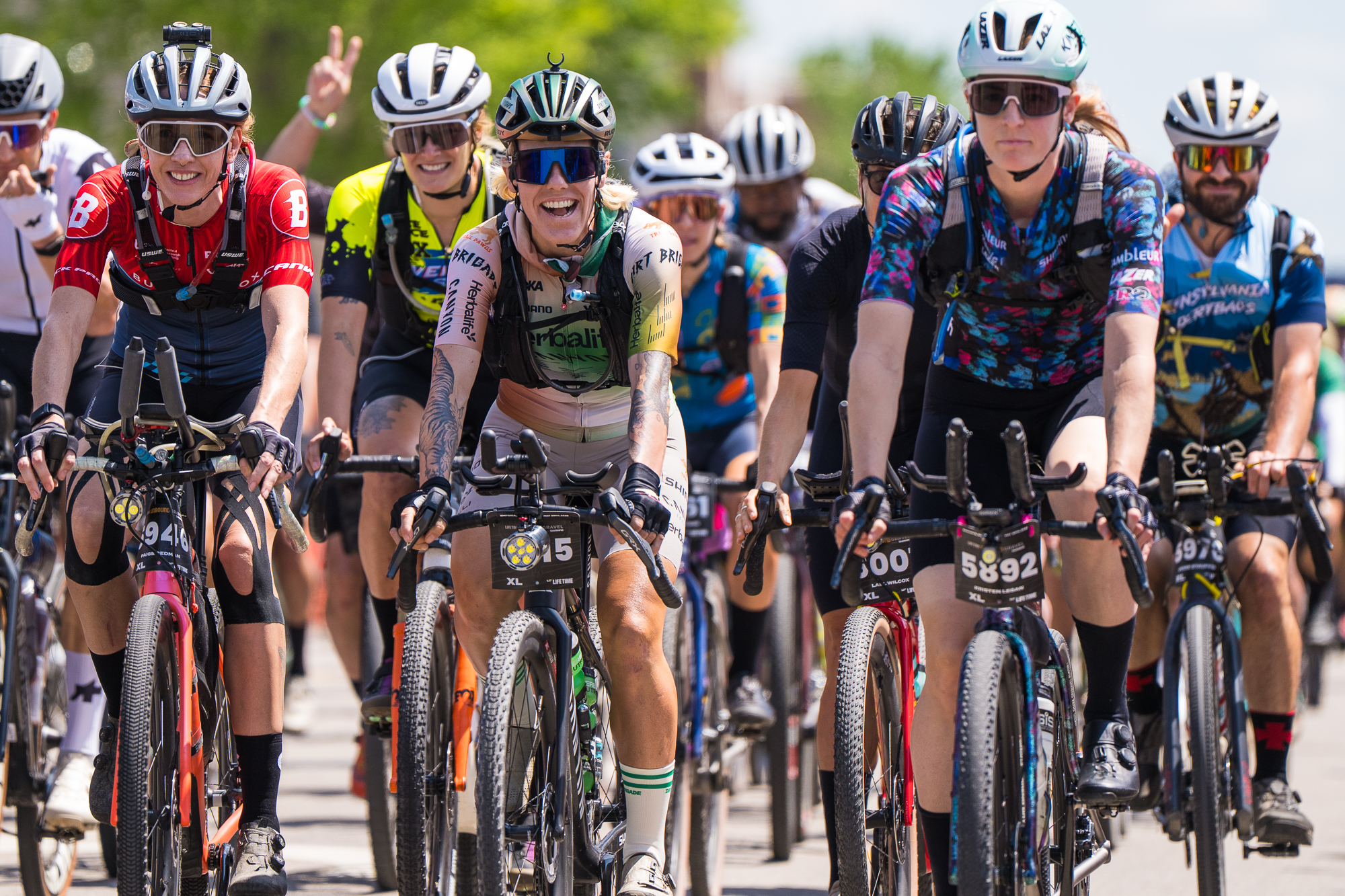
The argument for separate starts isn’t new, but there is a growing sense of urgency for the rule to become universal. The rapid growth of the sport has created a gap between what professional riders are racing for and how races are organized. Qualification and prize money are on the line. Sponsors and teams are watching. Careers are being forged.
“This is not your backyard grassroots thing anymore,” Oliveira Parks says. “In the beginning, I thought maybe gravel was just like a big group ride that I go do with the guys and try to hang on for as long as I can. I never brought anybody to help me. I never expected anyone to help me. It was self-sufficient—you hang with the fast guys for as long as you can before you blow up, and then let the cookie crumble the way it does.”
That worked when the stakes were low. At the professional level, change–in the format of a clear, concise, and consistently applied ruling–is still long overdue.
“Gravel has changed…and so I think you have to move with the growth,” Oliveira Parks says.
The growth and need is exactly why the UCI now requires separate starts for men and women in their Gravel World Series and why The Traka and Unbound have done the same. The growing rules against cross-category drafting demonstrates the need even further. But those advances make the remaining inconsistencies more visible.
Oliveira Parks and many of her peers aren’t calling to change the spirit of the sport. Small events and amateur starts should maintain the mass start. Having a separate start protocol specifically for professional women (and even the prohibition of cross-category drafting for pros) is what is needed.
“If you’re going to award a jersey to this category, we should be racing our peers,” she said. “We should be racing the women, not the masses.”
The Norm Not the Exception
It almost seems silly that in this day and age a debate like this is happening. A separate pro women’s start is now established and accepted in several leading gravel series as well as other cycling disciplines and sports (including those that share the same course with a mass start, like triathlon and running). There is no debate that it can be done. The timing of those changes is understandable given the rapid emergence of the sport but exactly as those changes go to prove, gavel has grown up, and the rules and respect for women’s racing across the sport need to catch up.
It’s great news to see the UCI and other big gravel events are putting in regulations for separate pro/elite women’s start procedures and even measures to protect the fairness, safety, and integrity of women’s racing. The next step is making that the norm rather than the exception.
“It seems like the women’s race is the only one that doesn’t get a fair shot of having a straightforward race when it comes to gravel,” Oliveria Parks says. “We deserve our own clean race without interference and it’s nuts that they still haven’t done that.”




Start the discussion at forum.slowtwitch.com