


New Era, New Look: Team Bianchi
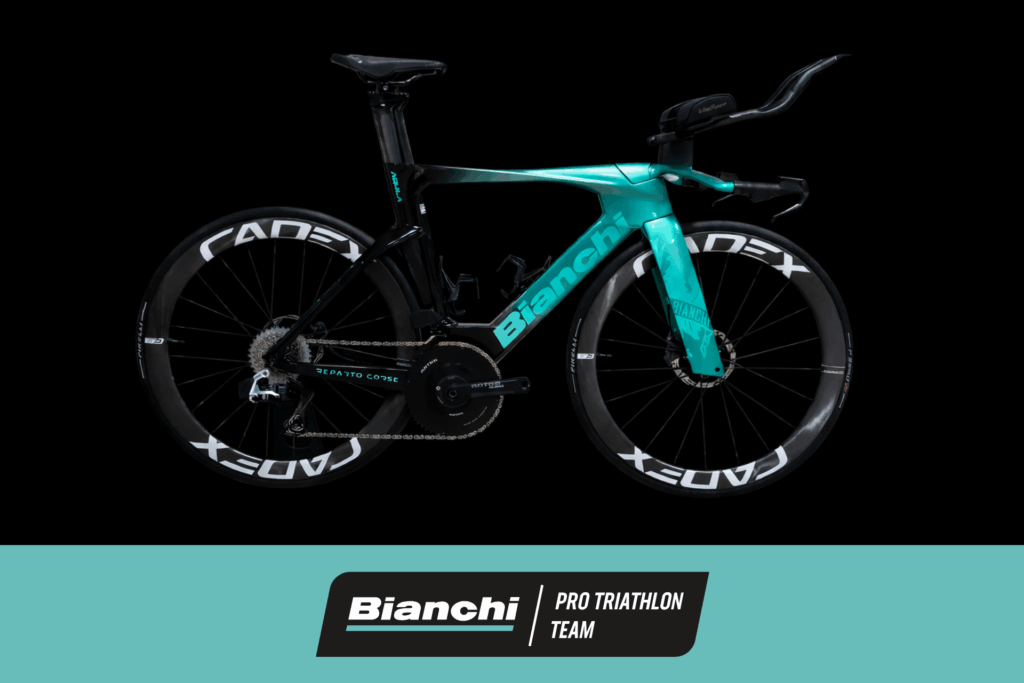
After more than a decade defined by continuity, results and a very particular shade of red, one of triathlon’s most successful professional teams is entering a new phase—in celeste. From 2026 through the end of the 2028 season, Bianchi steps in as the new title sponsor and bike partner, marking the end of the team’s 12-year partnership with BMC. For team general manager, Bob de Wolf, the change is less about reinvention and more about evolution.
“It’s the end of a chapter but the start of a new era,” de Wolf says. “Everything felt right with Bianchi and for them to come on board and enable us with a three year window immediately, we feel it’s a commitment (with which) we can build something together, build on the legacy, but (also) start a new era.”
The End of a Long Partnership—and the Start of Another
BMC’s involvement dates back to 2013, when the team was still Belgian-based. With the partnership of BMC, the team grew to field an international roster and compete globally amassing over 150 victories, 300 podiums and world titles including the Ironman World Championship in 2022 (Chelsea Sodaro).
“The journey [with BMC] has been immense, it’s been incredible, but it comes to a close–that can happen after 12 years,” de Wolf says. “It’s amazing to look back with only gratitude for what we have done together.”
Still, that meant finding a new title sponsor and bike sponsor in what de Wolf calls a “challenging climate,” but the Belgian manager is nothing if not passionate about the team. Thankfully, BMC indicated things would be changing, which gave the team time and de Wolf delivered.
“The opportunity with Bianchi felt right in every way,” he says. “It wasn’t rushed. It was convincing. And it came with a three-year commitment, which matters enormously if you want to build something properly.”
The team will race on Bianchi’s flagship offerings: the Aquila RC time trial bike and the Oltre Aero road bike. From the team’s perspective, the technical alignment was paramount—but not sufficient on its own.
“This partnership represents far more than a bike sponsorship,” de Wolf says. “Bianchi brings unrivalled expertise, in-house innovation and a relentless pursuit of performance. With access to the new Bianchi Aquila RC, we firmly believe our athletes will be riding one of the fastest bikes on the planet. The aerodynamic and performance gains this collaboration delivers will allow our athletes to perform stronger and race faster. As one of the world’s most premium bicycle manufacturers, Bianchi perfectly aligns with our ambition.”
The Team Model
De Wolf isn’t just the manager of the team, he’s the visionary–or, more accurately, half of it. It was his brother, Ben, who started the team back in 2009 with one athlete. In 2013, along with a few more athletes, de Wolf joined his brother.
“I was probably naïve,” he admits with a smile. “I thought teams were the future. Ten teams, rivalries, fan bases. It hasn’t happened.”
The brothers brought triathlon a team that hadn’t quite seen before: matching bikes, matching helmets, and matching kit. Underneath the visual unity was comprehensive support made up of bike mechanics, medical staff and performance assistance.
“A real team in look and feel,” de Wolf says. “ We are not reinventing the wheel, but we are providing a structure and support in a way we feel is needed for an athlete to feel professional.”
Other teams, like Erdinger or Bahrain Endurance, have a bit of a different set up, but that’s not where the brothers look for inspiration. At his first Kona experience, de Wolf remembers seeing one of the best in the sport assembling his own bike in the grass. It struck him as bizarre.
“So this is one of the best in the world?” he asks. “You will never see that in cycling … We felt like there were important factors (we need) to provide to give our athletes as much support as possible. Of course, there will always be budget restrictions–and for over a decade we’ve been able to do more from one season to another–but the key principle is always the same: try to do as much as possible for the athletes in order to provide them with the feeling that we are real professionals.”
The industry hasn’t followed suit to the team model, but de Wolf remains steadfast in his goals.
A Team Built for Kona—Still
Since the first iteration of the team, that number one goal has been Kona. But, given the roster additions of short course athletes like Brazilian super star Miguel Hidalgo and the emergence of T100 series, does it make sense to have such a solitary focus?
“Kona is still the pinnacle,” he says vehemently. “When men and women are back racing on the same day, it defines the sport again. Our ambition for 2026 is very clear.”
De Wolf doesn’t deny the landscape has changed and that they have had to change along with it. They have embraced T100, along with the global exposure and performance opportunities it has brought, and they have even opened their doors to chase the WTCS title.
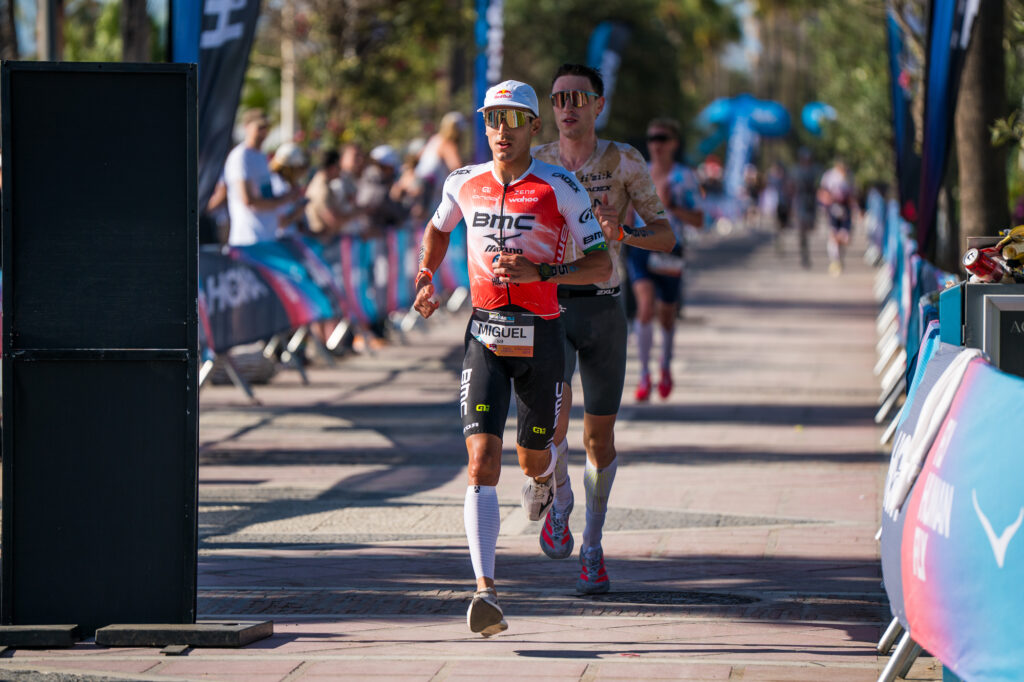
“Having Miguel has been an incredible experience,” he shares of their first short-course athlete. “Becoming vice world champion, winning his first WTCS, a second place, two thirds and an overall ranking of second in the world–it’s been an incredible experience and we love the fact we can continue with Miguel–and we have the ambition to strive for the world title there as well.”
“But we won’t have an athlete who is solely dedicated to T100,” he says.
While he continues to praise the T100 and encourage his athletes to find opportunity there, you just have to look at the rest of their roster to see the team is still very much focused on Kona.
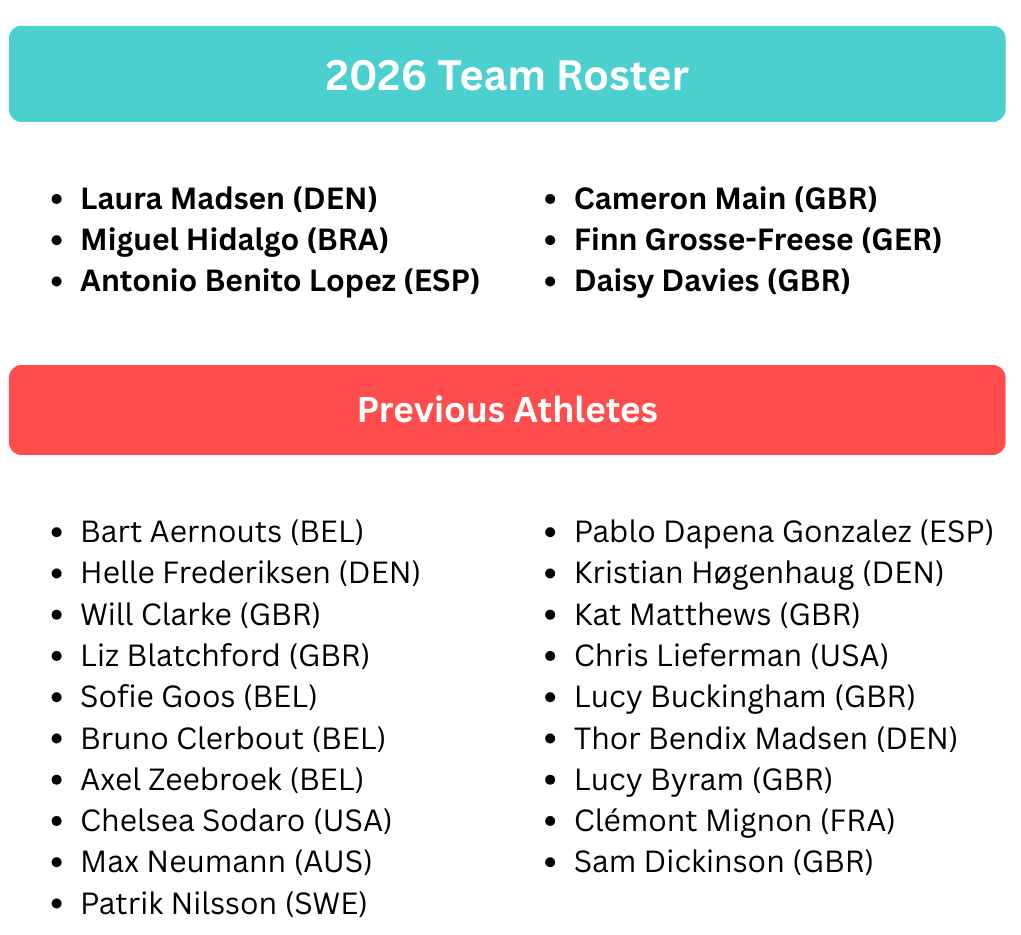
On the men’s side, newly signed Finn Grosse-Freese joins as both reigning Ironman Austria and Copenhagen champion. Brit Cameron Main joins having already qualified for Kona, earning his slot by winning Ironman Western Australia on his full-distance debut. Plus, Antonio Benito López arrives as the current two-time World Triathlon long-distance world champion, with his sights firmly set on Hawaii.
“If you win two IRONMANs at that age, it tells you something,” De Wolf says of 24-year-old Grosse-Freese, adding on the accomplishments and belief he has in the other men. “These are athletes who are not experimenting. They are targeting the top.”
On the women’s side, the headline addition is Daisy Davies, whose first long-distance start resulted in a European title by an impressive 15-minute margin. Her trajectory evokes familiar memories for de Wolf.
“When Kat Matthews joined us, she was at the very start of her journey and with Daisy, I get a similar gut feeling,” he says. “Nothing is guaranteed, but the potential is undeniable.”
Laura Madsen remains with the team after an injury-affected season, a decision de Wolf frames as consistent with the team’s long-held philosophy: backing athletes through cycles, not just results.
“At 21, Laura won three 70.3 races in a single year,” he says. “One difficult season doesn’t erase that belief.”
Left and Leaving
Despite so much success and the new momentum that Bianchi brings to the team, de Wolf’s plan seems to fall short in one area: keeping the champions they build.
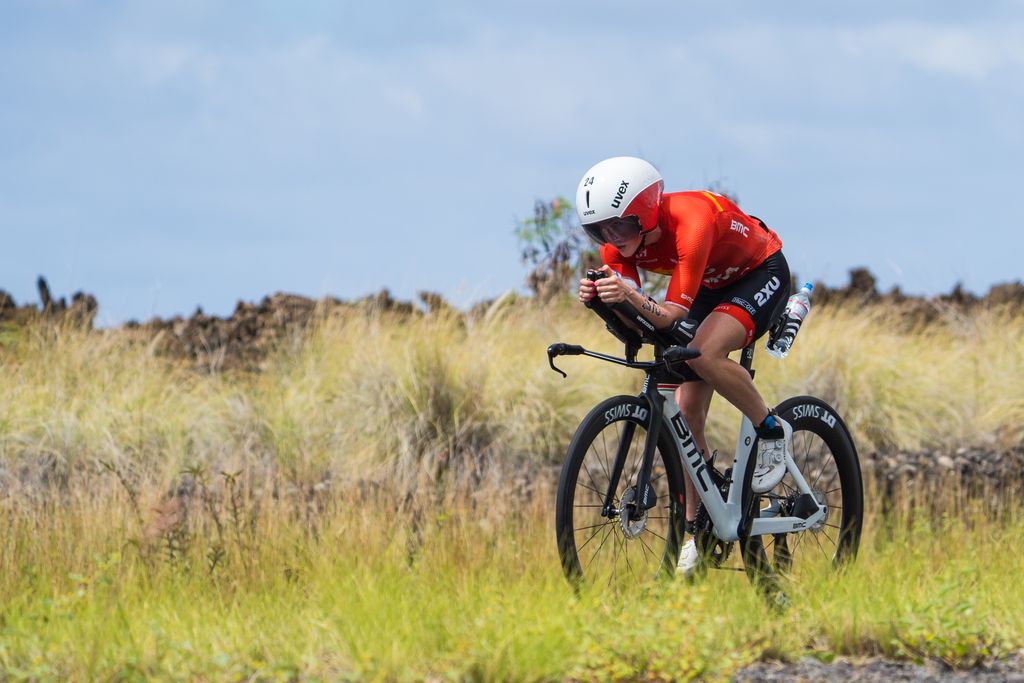
No sooner had Sodaro crossed the line in Kona than she announced her new partnership with Canyon among others. Matthews was similar after her stellar 2022 season, as was Bart Aernouts, who first joined the team in 2011 and finally left after his runner-up finish in Kona in 2018. Others, like Kristian Høgenhaug, have developed and struck out on their own. Plenty have also stayed for major parts of their career, but the athletes who truly strike it big inevitably leave.
“ It was our utmost ambition to keep them,” de Wolf says, regarding Sodaro and Matthews. “Sometimes it’s just a reality and sometimes opportunities are there for athletes and we try to come as close as possible, but it’s not only purely financial. If they feel they are in the next phase of their careers, that could also be a reason why they want to go. The longer our journeys with athletes, the longer we can work together–that’s the vision.”
De Wolf refers to athletes like Aernouts or Chris Leiferman, who was part of the squad for five years, just a few of the athletes they worked with for a long time.
“ What I really appreciate is that you feel like we still have a place in their hearts, in a sport heart,” he says. “They know what role we played in their careers and I sometimes see athletes who were part of the team in 2014 to 2016, and you feel there’s still a connection.”
Change For Good, For Better, For World Titles
Building athletes to the top of the sport and seeing them leave is a reality, much like the team’s transition away from BMC. Akin to the drive of the athletes on his roster, de Wolf has an evergreen drive and passion to push the team towards even more success.
“It’s the never give up mentality,” he says. “To even consider change, it’s not always easy. Looking now at what we have, we feel emboldened.”
“This is a world-class team, a world-class set up with world-class sponsors, and we will deliver support to our athletes to the best of our ability, offer the right return to our sponsors, and I have absolutely no doubt we will be really competitive,” he concludes.






Bob de Wolf is a great guy. One of the athletes (not listed above) he landed toward the beginning of his time was Dirk Bockel who had some massive performances before beset with some injuries.
That bike is hot. But I’m slightly interested in what the team salaries are, obviously you get equipment, but the athletes I assume don’t get to have many sponsorships of their own.
Because I’m guessing Canyon threw down an offer they couldn’t compete against.
Why is it necessary to embed a full article in the discussion feeds? Is it because readers ignore the home page?
This is off topic, but i wonder this too; It effectively discourages me from going to the front page. I dont think ive been to the front since the migration because all of the articles are now here.
It would be nice if the (some) authors were better about responding after the article though, this is a forum after all.
Gorgeous looking bike. Guessing there isn’t enough money in the team to keep the top talent once they are the top. Which it too bad.
This may be a dumb question, but what is the teams name? I thought it was Team BMC? But now they’re sponsored by Bianchi? I thought they were a BMC factory team, hence riding BMC bikes.
I would guess Team Bianchi. I was wondering the same thing as i was reading it.
Bianchi Pro Triathlon Team
Having a salary and support and structure is always going to be appealing to pros at the beginning of their career or on the rise. But once they have success and especially if they contend for world titles, the way triathlon is set up they’re always going to have much more opportunities/$$ as a privateer. That’s a good angle for the team to market to sponsors though, partnering with on the rise pros and getting to contend for wins at a lesser pricepoint than sponsor Kat or Chelsea or others directly. And that’ll give the team a good pipeline of athletes if other pros see their athletes win, and go on to have success and bigger $$ on their own.
Ok so they used to be the BMC factory team, now they’re Bianchi.
That’s what the title and article says mi hombre.
I does, but it wasn’t obvious to me. Perhaps my brain is a bit smoother than yours.