
The NYC Marathon Celebrates 50 Years of Taking to the Streets
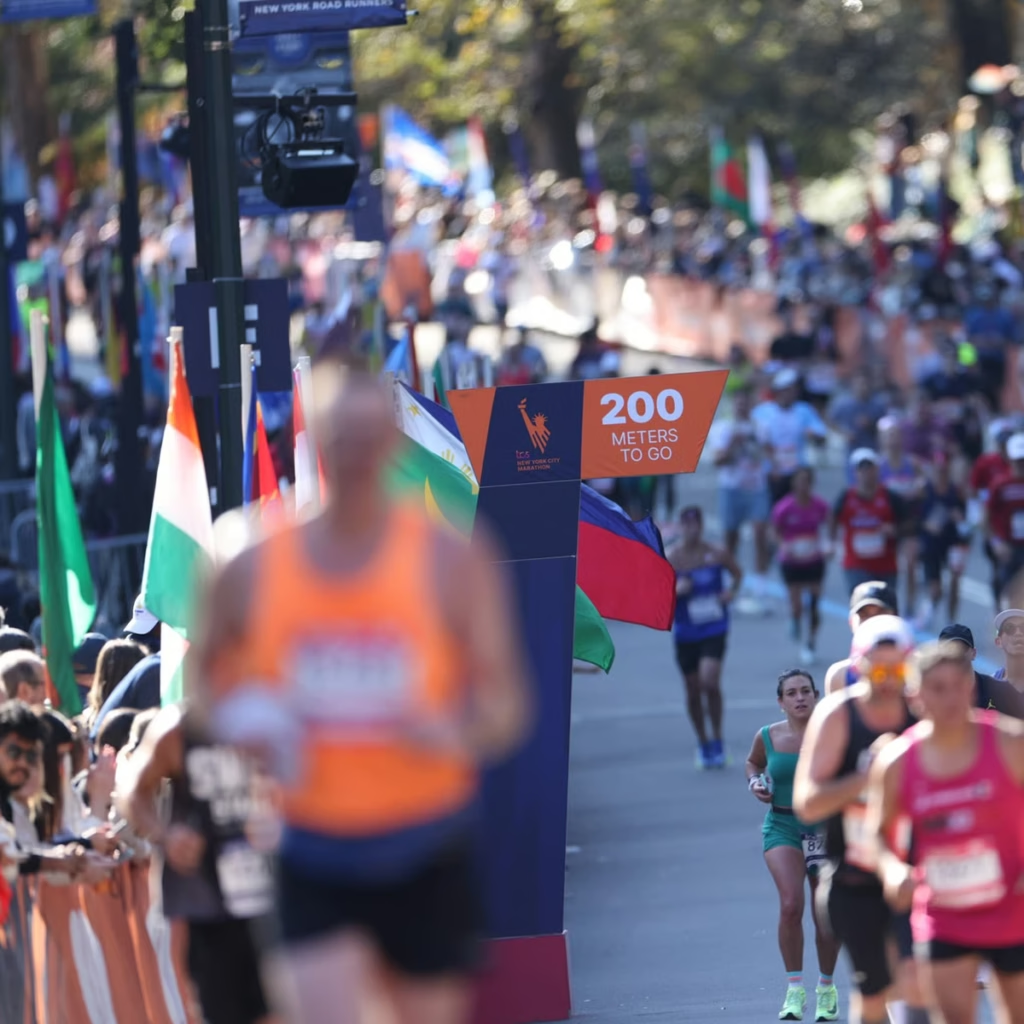
The New York City Marathon will see its 50th running through the city’s five boroughs of Staten Island, Brooklyn, Queens, the Bronx and Manhattan on Sunday. The five-borough race was first held in November 1976, welcoming close to 2,100 runners to the start line. This was an enormous event that paved the way for road racing across the globe — and it’s a big reason why marathons are as celebrated as they are today. Today, we will take a look back at the historic race, ask what continues to make it so special and find out who the favourites are for Sunday.
Humble Beginnings
The NYC Marathon is celebrating 50 years of its five-borough race, but the event actually debuted in 1970. From that inaugural running (which cost just $1 to enter) until 1975, it was a much smaller affair that saw runners loop around Central Park. The 1975 edition of the marathon had a little over 500 participants, which prompted organizers to consider whether the race was “outgrowing Central Park,” as noted on the New York Road Runners website.
The call was made to move to a course that could accommodate the pubic’s growing interest in the race. A year later, in 1976, that decision paid off, as the race welcome more than 2,000 runners to toe the start line on the Staten Island side of the the Verrazzano-Narrows Bridge (which, five decades on, is still where the race kicks off). Americans Bill Rodgers and Miki Gorman won the men’s and women’s races, respectively.
The 1976 NYC Marathon wasn’t the first race to eclipse the 2,000-runner mark (the Boston Marathon accomplished that a year prior in 1975), but it still altered the running landscape as it was known at the time. Outside of Boston, few races were attracting more than a hundred participants. Pulling over 1,000 runners was unheard of around the world.
Now-popular races like the Berlin and Amsterdam marathons got their starts in the mid-1970s, but they both only brought in about 300 runners apiece in those early years. Japan has deep running roots, but its races struggled to draw more than a couple hundred athletes. Because of the low participation, it didn’t make sense for any of these races to design citywide courses that would disrupt the flow of traffic and get in the public’s way for a day.
That is where the NYC Marathon changed things. With its sizeable start list, the decision to tour the entire city was justifiable. As reported by The New York Times the day after the first-ever five-borough race, an estimated 500,000 spectators lined the 26.2-mile course, showing the world that a marathon could not only attract runners, but also fans. The race tied the city together for a day, taking the event from its quaint, niche beginnings and turning it into something new. It may not have been iconic just then, but after the 1976 running, it was already well on its way to that status.
The Running Boom
The first big running boom was underway before the NYC Marathon switched to its five-borough race, but that day in 1976 took things to the next level. Pre-1976, there were several big moments that contributed to the sport’s growing popularity around the U.S. and the rest of the world. Legendary track coach Bill Bowerman preached the act of running for fitness in America (he wrote a book called Jogging: A Physical Fitness Program for All Ages in 1967 that sold over a million copies) and began hosting a jogging program at Hayward Field in Eugene, Ore. (Bowerman’s friend Arthur Lydiard, an athletics coach from New Zealand, introduced him to this idea. Bowerman then popularized it through his writing and coaching.)
In 1967, Kathrine Switzer became the first woman to run the Boston Marathon (despite almost being dragged off the course by the race organizer). Five years later, the U.S. government enacted Title IX, prohibiting sex-based discrimination in schools and opening the door for girls to compete in sports.
That same year, American Frank Shorter won Olympic gold in the marathon in Munich, Germany. Shorter’s win was broadcast across the U.S., introducing many people to the 26.2-mile event. Also in 1972, Phil Knight (and Bowerman, who co-founded the brand) released the first Nike running shoe.
All of these events led to the NYC Marathon needing a bigger course than the one in Central Park. That bigger course introduced the marathon to half a million spectators. A year later, in 1977, the Chicago Marathon followed in the footsteps of NYC. The race saw a little over 2,100 finishers. A month after the first-ever Chicago race, the second five-borough marathon in New York City welcomed 3,600 runners across the finish line.
Only three years down the line, the NYC Marathon recorded an incredible 12,500 finishers. The London Marathon got its start in 1981, with a reported 20,000 applicants for the race and almost 8,000 runners accepted to toe the line. Also in 1981, Berlin Marathon finisher count jumped by close to a factor of 10 from the year before, climbing from 294 in 1980 to over 2,500 just 12 months later. By 1985, Berlin saw almost 10,000 runners cross the line, while London had more than 15,000 (almost an identical stat to that year’s NYC Marathon count).
As the years passed, more and more marathons cropped up in cities around the world. Fifty years later, you would be hard-pressed to find a major city without at least one marathon. Whether you’re in Chile or Latvia, Australia or Mongolia, the North Pole or Antarctica, or anywhere in between all of these places, you will be able to find a marathon at some point throughout the year. It’s not all due to that race in New York City five decades ago, but that marathon certainly played a big role in the event’s popularization.
What Makes NYC So Special?
To find out why the NYC Marathon is so special, you have to ask someone who has done a lot of races. San Diego’s Anthony Chan fits that bill. He will be running his 33rd marathon on Sunday as he hits the NYC Marathon course for the 13th time (including his 12th appearance as a pacer at the race). He has completed the six main stops on the World Marathon Major (WMM) calendar (there will soon be eight WMM events, as officials added Sydney in 2025 and approved Cape Town for 2027) and has run all around the world. And still, with races under his belt from multiple states, many countries and various continents, he says NYC stands out from the rest.
“If I had to pick my favourite [marathon], it’s NYC every time,” he says. The first reason he lists is “the people,” both on and off the course.
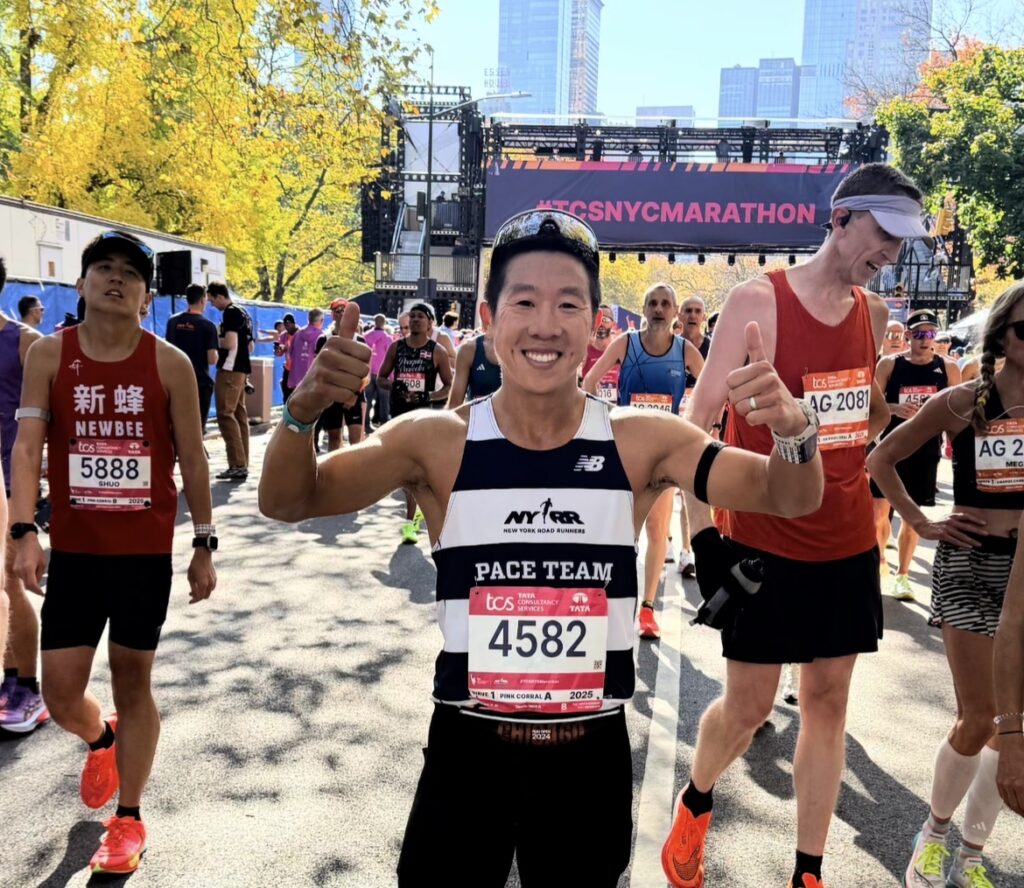
“The cheering from the moment you arrive in Brooklyn off the Verrazzano Bridge is electrifying,” says Chan, who was born and raised in Queens and hasn’t missed the race since 2014. “You carry that energy all the way to Queens, Manhattan, a sliver of the Bronx and then all the way home to Central Park.”
Another reason he says he loves the race is its course. While he notes it may be “logistically more challenging” than other marathons, he still finds it “so special,” even after a dozen times racing it.
“[The course] showcases the beauty of New York City,” he says. “All the different neighborhoods, endless rows of cheers, the epic views of downtown Manhattan on the Verrazano Bridge.”
One of the final reasons Chan says the race stands above so many others that he has done is the accessibility of the Big Apple.
“It’s a major city with so many options,” he says. “You can subway everywhere or, if you want, grab a Citi Bike pass and pedal your way around.”
Chan may live on the complete opposite side of the country now, but he says the NYC Marathon is a must-do event on his calendar every year.
“It is something I will not miss, whether I am pacing, racing or spectating,” he says. “I love going back.”
NYC 2026
While Chan is busy pacing the 2:55 group on Sunday, the field of elite athletes will be up the road battling for the win and a pair of course records. The women’s record in New York is the newest, having been set by Kenya’s Hellen Obiri just last year when she broke the tape in 2:19:51 to become the first woman to run under 2:20 in the race’s history. Obiri will be back on the start line this weekend as she looks to win her third title in New York City (she also won in 2023).
Challenging Obiri for the win will be her compatriot (and the 2024 race winner) Sheila Chepkirui. Another woman to watch for is American half-marathon record holder Weini Kelati. Kelati has never raced a marathon before, but she ran her 13.1-mile national record of 1:06:04 in Barcelona earlier this year and could shock the field with a big result on home soil on Sunday.
The favourite in the men’s race is defending champion Benson Kipruto of Kenya. He won last year’s race in 2:08:09, well off the course record of 2:04:58 (which Ethiopia’s Tamirat Tola set in 2023), but his lifetime best of 2:02:16 suggests that he could challenge that mark if there are favourable conditions on Sunday.
Another runner to watch is Sweden’s Andreas Almgren. Like Kelati, Almgren is a half-marathon record holder who has yet to tackle the full 26.2 miles in a race. He is coming off of a European half-marathon record of 58:06, a time that won him the world half-marathon title in Denmark. A marathon is a lot different from a half, but the Swede could very well do something special on the weekend.


Start the discussion at forum.slowtwitch.com