
Learn How to Train by Feel This Winter
Triathlon is a tech-heavy sport. There are goggles that can tell you how quickly you’re swimming, bike computers and power meters that will give you every bit of data you could ever wish for, and running watches that keep you updated on just how fast you’re going and how hard you’re working every step of the way. These are all incredibly useful and helpful tools, but it can be detrimental for you to become too reliant on them. If you only practice pushing based on what these tracking devices tell you, you may find that you don’t know how hard you can, or should, go when one of them conks out on race day. How can you avoid this? Toss some tech-free mileage into your training schedule this winter and swim, bike and run solely based on perceived effort.
Calibrate Your Exertion
It’s easy enough to leave your tech behind for a training session and to go work out based on feel, but as Toronto-based triathlon coach Nigel Gray says, you have to “calibrate your exertion” first.
“Most athletes’ perceived exertion is poor,” says Gray, who runs the coaching service NRG Performance Training. “Once it’s been calibrated, then you can start to move away from it.”
How do you do this? It may seem a bit counterintuitive, but you’re going to need to train with the tech in order to ditch it. If you have no idea what running a seven-minute mile feels like without a watch to tell you you’ve hit that pace, then you can’t expect to go out for a run and to nail it. Instead, take your watch or power meter or any other tech and do your workouts as planned, but only check in on your pace every so often.
This may take some practice — you could be way off in your pacing at first. Over time, though, you will get more dialled in and get a better feel for what different speeds and paces feel like. After you become a competent feel-based triathlete, you don’t need to ever get rid of your computer or power meter or watch on any given workout, but you can pick certain sessions in which you won’t look at them so frequently. There is nothing wrong with checking them (again, they’re very useful training aids), but using them sparingly from time to time will help you to keep that feel for speed and pacing locked in.
Making Adjustments
Gray says that once an athlete is able to accurately push based on perceived exertion, they can begin to “self-regulate” in training and racing.
“On days where you’re feeling bad, you just go slower and you’re not getting caught kind of chasing a pace time,” he says. “Or maybe there’s a heat wave and you shouldn’t try to hit the pace that you did when it was cooler.”

Gray says there are many more ways pace can be impacted: a hilly route or course, off-road or uneven terrain, wind — all of these conditions will affect your speed and pacing. If you encounter any of these scenarios in a race, and all you have trained with is the data, then you’re going to be somewhat clueless as to how hard you can push.
“I find people default to this one pace thing all the time,” he says. “But then they show up to a race that’s hot or hilly or whatever and they don’t know what to do.”
An Ongoing Struggle
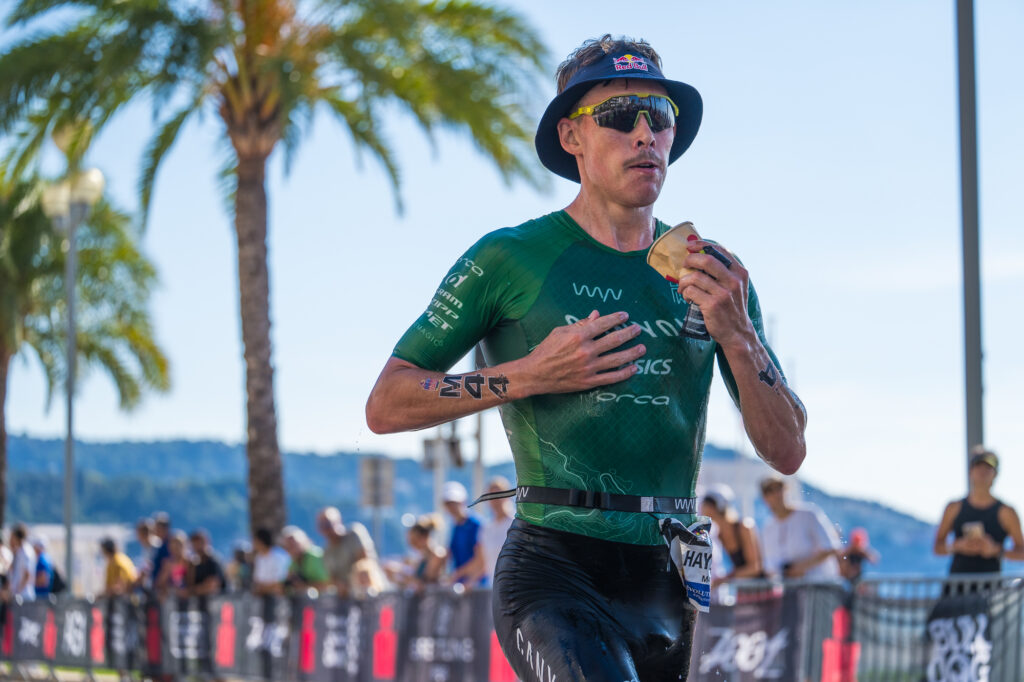
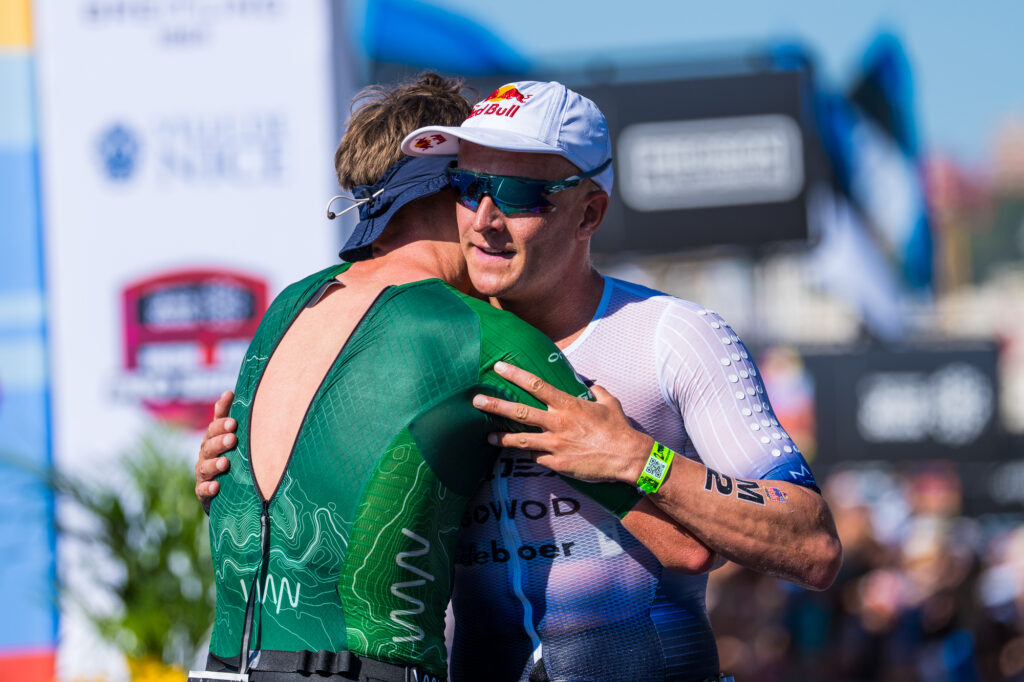
At the 2026 IRONMAN 70.3 World Championship in Nice, France, New Zealand’s Hayden Wilde ran his way to the win without a watch. As he said after the race, going tech-free was not in the plan — he dropped his watch off of the bridge in T2 and had to go without it. He may have won the world title, but he admitted afterward that he struggled with pacing a bit, laughing in post-race interviews about a conversation he had with Germany’s Lasse Nygaard Priester on the run course.
“Lasse came through and […] I was like, ‘Hey, I don’t have a watch, do you want to work together,'” Wilde recalled at the post-race press conference in Nice. “And he said, ‘We’ve been running for 10 minutes.'”
He continued, saying, “I got a few comments on course saying, ‘You’re running too easy,’ because I didn’t know what pace I was running.”
Wilde, of course, got things together and stayed clear of a charging Kristian Blummenfelt to hold on for the win, but running without his watch added a bit of a challenge to an already difficult race.
Wilde is one of the sport’s best runners. So is Blummenfelt, who checks his watch religiously in races. If you asked either man to run a specific pace for a one-mile time trial, they could probably nail it to within a few seconds. With that said, when they are in the heat of racing, even the world’s best athletes can have a tough time gauging how hard to push without in-the-moment data.
This is not a skill you can learn once and never practice again. You are going to have to continually work in some feel-based, perceived exertion training sessions throughout your triathlon career. It may seem tedious at times, but it will be well worth it if you ever pull a Wilde and toss your watch into a river mid-race.
A Freeing Experience
One last note on training without tech is that it can be fun and freeing. It’s easy to get bogged down by all of the numbers that you’re trying to hit in training. It’s especially tiresome if you’re failing to hit those prescribed numbers. That is why it can be a good idea to forget the data and swim, bike and run for the sake of swimming, biking and running.
In these instances, it really can be the right move to leave the tech at home (rather than simply not looking at it and checking in mid-workout). Doing so will allow you to enjoy yourself more. You can still push hard, but you’ll get to push for the fun of it instead of doing it with the goal of impressing your Strava followers.
Don’t ditch your power meter or watch or any other tech for good, just forget about them from time to time. You’ll be happy you did.
To learn more about Gray and his work at NRG Performance Training, click here.



Start the discussion at forum.slowtwitch.com