
My 4 Keys to Making Indoor Riding More Enjoyable
Even though we are entering peak outdoor riding season for those of us in the Northern Hemisphere, there are increasing numbers of us still staying on the trainer year round. Some of that may be chalked up to road safety, as we see incidents daily between cyclists and drivers. But some of that is also by choice, whether due to thinking that training will be better, or other circumstances.
For me, still only being in the Pacific Northwest for just under a year, there’s three key factors driving that decision. First, it’s a time mechanism. I often am trying to figure out how to make a ride work between work obligations, family obligations, driving between those said obligations, or other hobbies or interests. It’s easy to hop on the trainer for a session; it’s hard to gear up and get out the door in an equivalent amount of time. Second, the terrain here is somehow even more challenging than that in southwestern New Hampshire — it’s a 10%+ grade to get back to my house in any direction I head in. And lastly, I just don’t know the roads well enough to be able to sneak out yet; I need a whole series of weekend mornings to be able to start figuring it out.
So it’s to the newish garage-based trainer cave with me. Some things have changed from my old basement set-up from New Hampshire; namely, I don’t need a window-based air conditioning unit to help bring temperature down from there, and there’s a different bike hooked up to the Wahoo KICKR Core that I know and love. But for the most part, it’s the same environment that I’ve used to log about 30,000 miles on over the last few years.
Long way of saying: I’ve gotten pretty good at figuring out what really makes a difference in your riding experience inside. These are my top four most important elements to having an enjoyable indoor ride.
The Right Indoor Cycling Platform
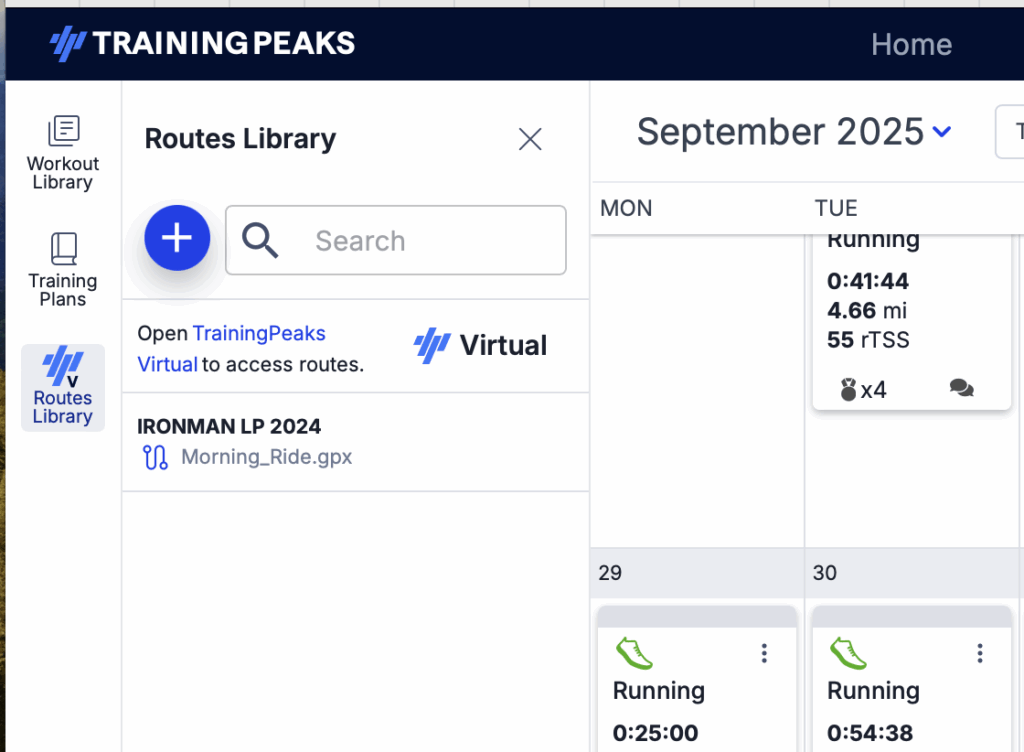
The various virtual indoor platforms: Zwift, TrainingPeaks Virtual, Rouvy, et al have been the biggest revolution in my time in the sport. They unlocked the power of the smart trainers and turned them into tools that nearly every athlete could piece together. Before that, indoor training was either incredibly boring or incredibly expensive. No more.
For my money, there are two indoor platforms that stand above the rest, and for different reasons. If you are someone who is motivated by either full-on gamification or by virtual racing, Zwift is your preferred platform. There are so many badges, levels, and points to earn that I, nearly a decade long subscriber to Zwift, are nowhere near close to having earned all of them. Want to go racing? There’s at least four races an hour, and usually more. It’s an entire world in and of itself.
If that’s not really your jam, and you have any touchpoint to TrainingPeaks, then TrainingPeaks Virtual should be your indoor platform. You can upload real world routes. The individual rider physics, including wind, are more akin to riding outside than anywhere else. ERG mode on TPV is more controllable, with less soul-sucking cadence death spirals popping up, than on other platforms. And, best of all, it’s already included in a subscription to TrainingPeaks Premium.
Creating Your Own Wind: Fans
When you’re riding indoors, you generate a lot of heat. In my old basement riding area, I could single-handedly change the temperature of the entire room by 5-6 degrees by the time I was done with an hour long race on Zwift. It’s enough to result in plenty of puddles at the bottom of a bike without some good towels (and more on those in a minute).
Air movement is critical. And to channel my inner Jeremy Clarkson for a minute, there’s two elements to be on the watch for: speed and power. I like to opt for a sizable floor box fan that has a couple of options for speed. It’s not anything special, but it gets the job done for all but the hardest of rides. I’ll set it to a lower setting if I’m doing any type of heat acclimation work, but otherwise, it’s on full tilt. On the worst of rides, I might have a second one going from a side angle just to increase total air movement; my normal one is placed behind me as it gives me the most feel of getting wind.
I go relatively inexpensive on my fans because, well, I like to spend more money on…
Some High Quality Towels
As much as I love re-using old race shirts or Gatorade Endurance towels, there’s some things in life worth spending a little extra on. Towels are one of them.
There’s two things you’re trying to do with your indoor towel: you’re preventing sweat from corroding out key pieces of your bike, and you’re trying to just get some sweat off of your brow. Absorbency is key. And although a basic towel from Fred Meyer or Target might get the job done, something that is purpose built can help protect both you and your equipment, and equally important, cut down on some of the stink.
I’ve grown to really like these microfiber options from Acteon that are anti-microbial, fast absorbing, and thankfully for me, come in multipacks so I can burn use a couple of them at a time. I’ve usually got one of these covering most of my bike, and then a second one over the handlebars that I can quickly wipe my forehead with, and also acts as a convenient hammock for my phone to use my power-ups mid race (or take a phone call from Kevin or Eric, who I swear both have a bat-signal to almost always call me while I’m on a ride).
Last, But Not Least: The Saddle
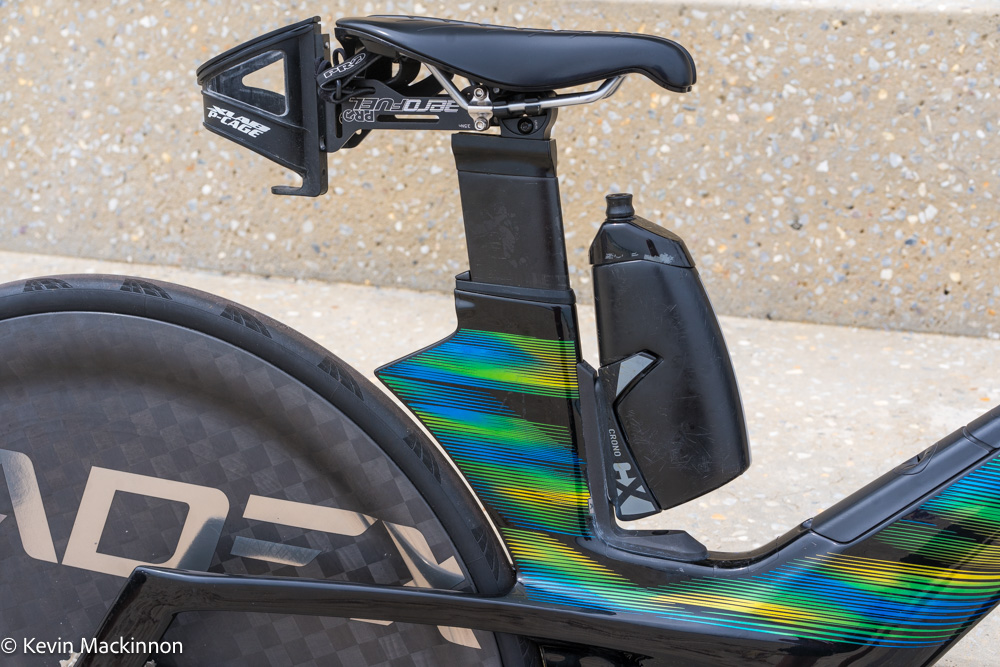
Yes, I know: rich coming from a guy who managed to put a stress fracture in his pelvis from ignoring pain while riding inside.
But, take it from the guy who put a stress fracture in his pelvis that turned into a full fracture of his pelvis because he was also stupid enough to run on it during an IRONMAN marathon: if you’re having saddle problems I feel bad for you son, you’ve got 99 problems and buying a new saddle is one.
I’ll be about as emphatic as I can be: anything that is recurring saddle pain is something that needs to be addressed, and it’s usually going to be a combination of both bike fit and saddle selection. Don’t try to power through it, don’t try to ignore it, suck it up and invest in it. Because the couple hundred bucks on bike equipment is a lot cheaper than the MRI, multiple doctor’s visits, and physical therapy.
My current weapons of choice include the Fizik Tempo Argo R3 and ISM PN1.1, though I’d love to try a Wove Mags for my endurance road / gravel riding.
Tags:
TrainingPeaks VirtualwahooZwiftRelated Articles:

Continue the discussion at forum.slowtwitch.com
9 more replies






Love this mate. Think all 4 points are so good. I also think there’s some mentality/purpose based shifts that can make it go from being survival to enjoyable. For example:
Will read this later, but BRO…we are entering peak indoor season.
I will not be taking questions.
Hey @rrheisler one thing that almost everyone overlooks indoors is there is no retarding force of wind between 25-45 kph pushing you back into the saddle and putting less weight on aero cups (if in aero position) or hands on hoods.
As such my 40 year finding is it is pointless trying to replicating outdoor riding position indoors. Rather just get some old bike frame off ebay for $200, and get some second hand cranks, bars and shifters for the indoor set up, and leave your outdoor bike in your outdoor setup. With the indoor bike, move saddle back and handle bars up so you have the the same hip angle as outdoors at the most compressed position. Keep the rides short and hard enough so there is less pressure on the saddle, then saddle discomfort is less of a “thing” and it makes indoor riding way better.
I use high absorbency towels as well but to add a layer of protection I like to put a plastic layer under the towel to prevent any sweat from getting through. I use a high quality tarp but I bet that a plastic garbage bag would work just as well.
I would add a third category to the training platforms:
Then, you can layer some of them, for example, linking TR to Zwift will let you do a structured program with the gamification UX.
One of my tips is duplicate your tri bike fit as much as possible. I cannot hold aero long on a trainer, but that time still benefits outdoor training position endurance.
My fifth tip is entertainment. Some people are entertained by the training program UI. Others, like me, need an external distraction. I have another device configured for streaming movies and shows with a good set of over-the-ear noise canceling headphones.
@TheStroBro yes, I know…but for the bulk of the Northern Hemisphere it’s peak outdoor season. Apologies for the ant under a magnifying glass treatment you’re about to experience for, oh, the next three months.
@devashish_paul I’ve literally done full on IM training inside; I think it’s way easier to do effectively on a proper tri bike than a road bike, though. But I’m also weird.
@exxxviii I think both for virtualization and structured training, that package is hit pretty well in TP these days. Perfect? no. And the maximum amount of overlay I can support is paying for both TP Premium (and Virtual for that matter) and Zwift.
I also am the kind of person who always felt that either music or entertainment in the background made the ride feel longer, and that includes the days of me staring at a graph from a CompuTrainer. And we wonder why I am the way I am…
Heh, I mean, you kinda just said everything there. No TT in zone 1 though?
And isn’t the definition of zone 5 something you pretty much CAN’T spend and extended amount of time in? Unless extended means everything from 1-30 minutes…
Ok back to my tips:
Chammy cream down below. Unless you’re a freaking crazy euro stay the hell away from the menthol crap. Look at the bib before you put it on and rub a little cream around the seams as often there are terrible designs with seams and serged edges right where everything converges.
Make sure you use a clean bike bib every ride. Should go without saying, but I’m sure many don’t.
Take note of the bibs you use used when you’re uncomfortable or start developing those saddle sore bumps and never wear it again on the trainer.
Get a cheap bidet for your toilet seat. Some basic ones can connect right to your toilet plumbing. Life safer. Get used to it if you never used one. Use it before and after the ride. https://www.amazon.com/Ultra-Slim-Attachment-Retractable-Non-Electric-Adjustable/
This one might be controversial, but variety is important. If you’re still struggling try it. Every so often do one of these: Put some planks under your front wheel. Maybe like 3-5cm. Change up the feel on the saddle. Change the height (lower) on the saddle. Maybe even change to another saddle. It doesn’t need to be permanent, but I’m a believer in not stressing the exact same sensitive parts exactly same way for hours and days and weeks on end. Rotate around. The small changes can often be a godsend in how different it feels. I don’t buy for a second you’re going to ruin your race or your fit if you do this. Just make sure you know how and what to switch back before race day. As an aside I also almost never run in the same pair/model shoes within at least 3 days of previously doing so… That’s probably extreme for the saddle, but honestly if it wasn’t a pain I’d be happy to change my saddle every trainer ride.
Don’t know what is so hard to understand what he is saying here, basically zone 1 u are soft peddling warming up, but for the work portion which can range from 2-5 get in the aero bars.
Zwift/Wahoo just gamified that for you:
On the plank you mentioned, I have an old Computrainer block I use under my front wheel, and also on changing saddles, I ride my road bike on rollers for my warmup and cooldown before I get on my trainer bike with a TT set up (that has a different saddle than outdoors and is way more upright than outdoors, but with a tighter hip angle than outdoors due to saddle being more rearward and bars being higher (the old CT block actually makes that even more as it rotates the entire contraption backwards)
If someone is uncofmy in the TT position indoors but fine in it outside it’s a fit problem…indoors, not a fit problem outside. Asking someone to suffer can cause a resistant to riding indoors and no riding = no increased performance.
Easiest solution(s) are like Dev said buying a cheap 2nd hand bike and/or adding stack, steepening the STA, changing saddles. You can still ride indoors yet there is nothing that says you need to 100% replicate your indoor & outdoor positions.
Riding a bike in any position > not riding a bike due to discomfort.
I think it’s fine to setup the TT indoor bike more relaxed than the outdoor bike. That way you ride it more, and as Dev said, outdoors you get air pushback on your chest the faster you go which makes it easier.
I actually think that if you ride a lot indoors as well, you probably don’t need to ride in the TT position at all. That seems to be what a lot of pros have been doing apparently on the Triathlon Hour pod - they just ride on the hoods indoors and have no problems outdoors. However, these guys/girls are doing like 12-15hrs cycling per week, so I wouldnt expect it to be so easy for an AGer who’s riding like 3-5 hrs/wk, for that AGer, yeah, better get some aero training in there especially for Halfs and fulls.
Riding indoors is pretty easy for me in general, I’m typically on a Trainingpeaks plan so it makes it super easy to just follow the plan and follow the progression. I’d def recommend it over just randomly riding and being unsure if you’re getting a progressive stimulus.
Like I’ve always said, it’s more important to ride a bike, any bike than it is to worry about riding in the TT position.
Meet the specific demands of the event(s) you’re preparing for and don’t worry if it’s in the TT position or on the hoods.
If someone is really worried about it , for some weird reason, use WKO and run separate indoor and outdoor power duration curve
So as I got myself ready for my first turbo trainer ride in over two years yesterday, I’m gonna push back on the “amount of time it takes to ride outside”. I think it easily took me 15 minutes to “get ready”. Now, does that mean I’ll be riding outside anytime soon? No, I’m only looking to add 60 minutes of cycling into my training per week for a bit, then get up to 120 minutes.
There is a convenience factor to…if you all of a sudden have to use the restroom it’s down the hall.
BUT…getting ready for outdoor riding during peak outdoor season doesn’t take much more than riding indoors.
Trust me, you’ve got it backwards. Once you have your indoor setup ready to go, it’s wayyy faster than riding outdoors to set up. No weather checks. No mixing of liquid nutrition (just use whatever food you have on hand). No pumping tires or lubing chains. No worry about flats (big one!) No hooking up all your electronic varia, computer, etc. No booties and jackets during cold weather spells.
It’s super efficient. The first time or even the first few times might take longer but once you’re good to go, it’s faster than preparing to ride outdoors.