


13 Essential Race-Day Tips Every Beginner Triathlete Should Know
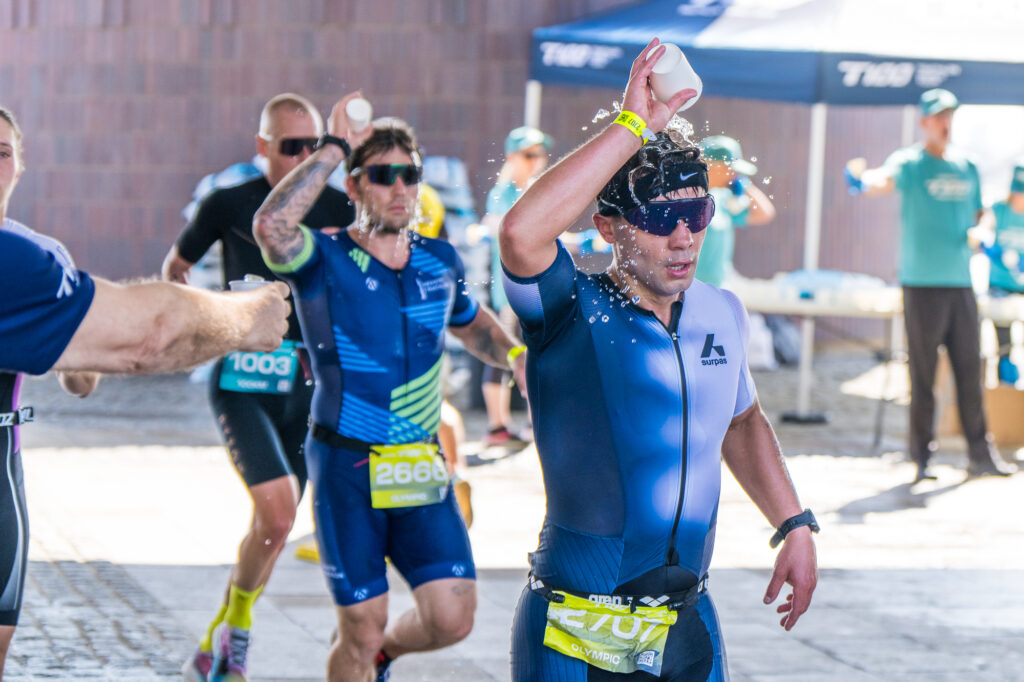
We recently reported on the new initiative from CLASH Endurance, “Zero to Tri” beginner program. CLASH is partnering beginners with seasoned triathletes to ensure they have the best first-time experience and it got us thinking. What are all the details we would share with a first-timer before race day to make sure they have as much fun as possible?
1. Prepare your Bike Properly
“A clean bike is a fast bike” – you’ve likely heard that before and for good reason. If you’ve done all the hard training to prepare for a race, don’t have your equipment let you down. Clean and wash your bike or, better yet, take it into your local bike shop for a short service. Next, make sure you test it out a day or two before the event, clicking through every gear to ensure it’s shifting smoothly. Before bike check-in, do a last minute wipe down, lube your chain, pump your tires and rack your bike in the gear you’ll need rolling out of transition. Finally, on race day, bring a cloth to wipe down your bike if it was left overnight, check your tires (you might need to pump them again), and make sure it’s racked properly with the handle bars facing outward.
2. Check Out the Course
There’s a reason why the pros go early to events so they can train on the course. Having knowledge of the course will help relax any nerves, give you confidence for race day and even a competitive advantage. No matter how small or how big your race is, go check out the course. That might mean doing your final training sessions on the course, driving the bike lap, going to the swim practice to figure out your sighting landmarks in the water, trying some beach run-ins, walking around the transition area to understand where you come in and go out–or all of the above. At the very least, ensure you know the flow of transition so you’re not dependent on following other competitors or volunteers for directions.
3. Landmarks in Transition
When you rack your bike, or on race day, find some landmarks in transition to help you locate your bike. Choose objects or markers you can see running upon entry to transition–things like trees or telephone poles, or distinctive lines on the ground. Pay attention to your rack too–they are typically numbered or labelled.
4. Extra Shoes
Take an extra pair of shoes on race day. You’ll be leaving your running shoes in transition, so having an extra pair for walking around, or doing your warm up, will be needed. Just make sure you have someone to give them to before the start.
5. Don’t Tie Transition Bags
It can be tempting to tie a knot in your transition bags, especially if you have to leave them overnight and it might rain. But, hang a tied bag on the rack and the knot only gets tighter and absolutely impossible to open during an adrenaline-fuelled transition during the race. If you’re worried about rain, put your shoes in an additional plastic bag inside your transition bag.
6. The Right Goggles
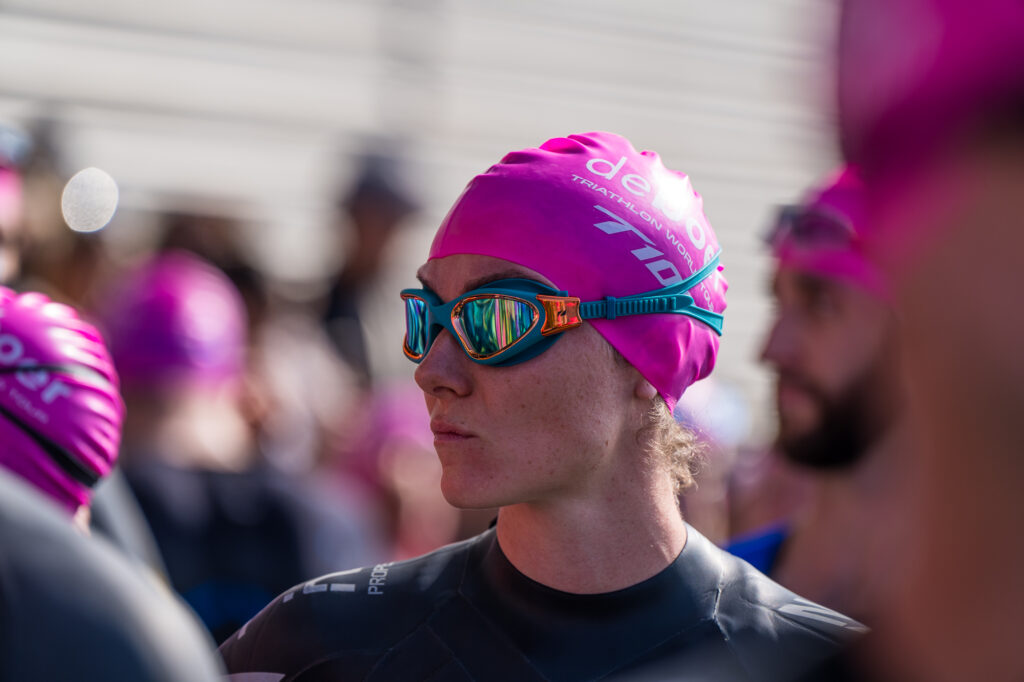
Seeing during the swim is half the battle. With elbows and waves everywhere, it’s hard enough to navigate, but if you’re wearing the wrong goggles, it can make it even harder. Check what the weather is going to be like on race day when you’ll be swimming. Starting in the dark? A clear lens might be your best bet. Sunrise or during the day? A mirrored lens, or maybe even a blue or dark tinted one for bright midday sun can help. Overcast or raining? A coloured lens might brighten up your vision. Not sure? A light-tinted mirror is a great catch-all.
7. Double Cap or Under Cap
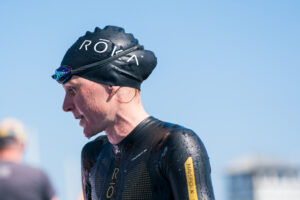
Again, seeing during the swim is truly a battle. Eliminate any chances of your goggles falling off by putting them on underneath your swim cap or by double-capping. Put one of your own caps on first, then your goggles, and then the race swim cap to sandwich your goggles with protection.
8. Sunscreen and Vaseline
Don’t be the newbie covered in chafe and sunburn–not fun or cool. Even though you’re going in the water right away, or it might be dark, use sunscreen. It might not last the whole day, but a water-resistant sport sunscreen will give you some protection. Likewise, use vaseline to protect any potential chafing spots, like around the neck your wetsuit and your timing chip band.
9. Elastic Laces
Cheap, easy, and saves you time–elastic laces are a no-brainer. Practice with them before to get the tension correct.
10. Have a Nutrition Plan
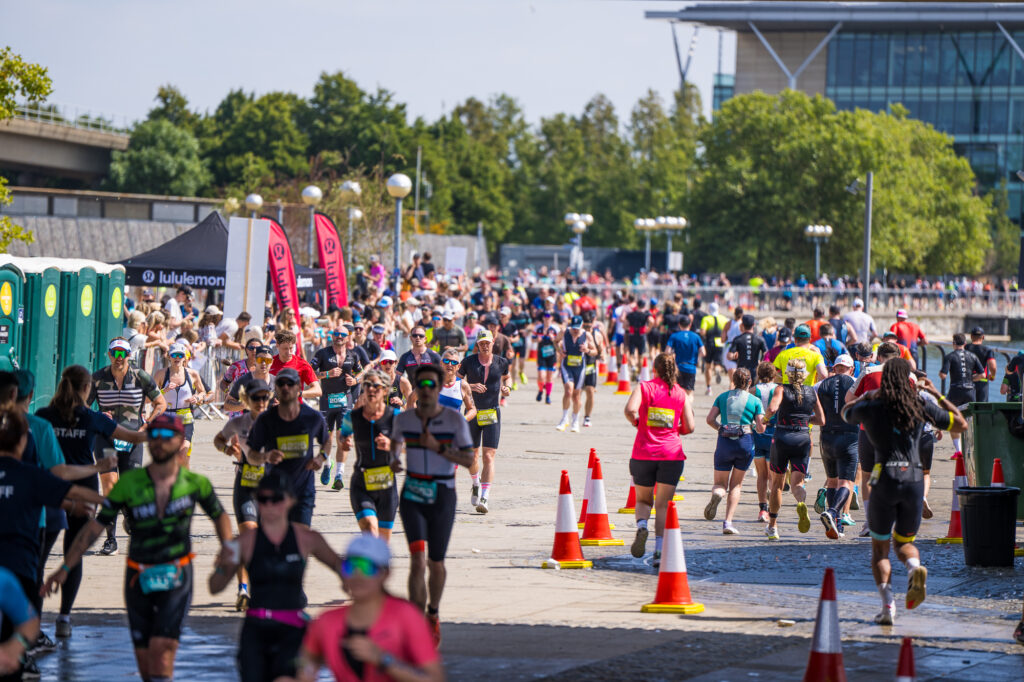
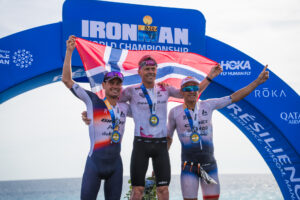
You don’t need a Norwegian-level detailed nutrition plan for your first races, but you do need an idea. Plan what you need, how you’re going to carry it, how you’ll use the aid stations, and what you’ll do if you drop or miss something. It can be as simple as “eat breakfast, put a bottle on the bike, take stuff at every aid station, and have a beer after,” but have somewhat of an idea.
11. No Underwear
Yep, we still have to mention this one. Do not wear underwear underneath your trisuit or cycling bibs. They are designed that way and everyone wears them that way too. Wearing underwear will only make you uncomfortable (even if it feels weird the first few times), lead to chafing, and—eww, they will just get all sweaty and gross.
12. The Golden Rule
The race day golden rule: nothing new. No bike set-up changes, no fancy new kit, no trying different nutrition, no attempting a flying mount, no changing the plan because someone else is doing something different. Trust what you know, what you’ve practiced and, if you see something you’re curious about, note it and test it in training ahead of your next race. Last minute changes on race day might go well,a but if they go wrong, everything you’ve practiced and worked for can be compromised.
13. The Actual Golden Rule
It’s an eye-roll cliche, but having fun is really the most important thing on race day. Triathlon has a lot of grit and grind culture but, at the end of the day, you most likely started the sport because you enjoyed it, so keep it that way during the race. Time splits and power outputs might seem important in the moment, but you’ll remember the effort you gave, the people you met, and the fun you had more than anything–and that’s exactly why you’ll sign up for your next race.
What else would you recommend to a beginner?



Side note: that looks like one hell of a crowded course at T100 London…