
Big Money is Flowing Back Into Endurance Sport. Is That a Good Thing?
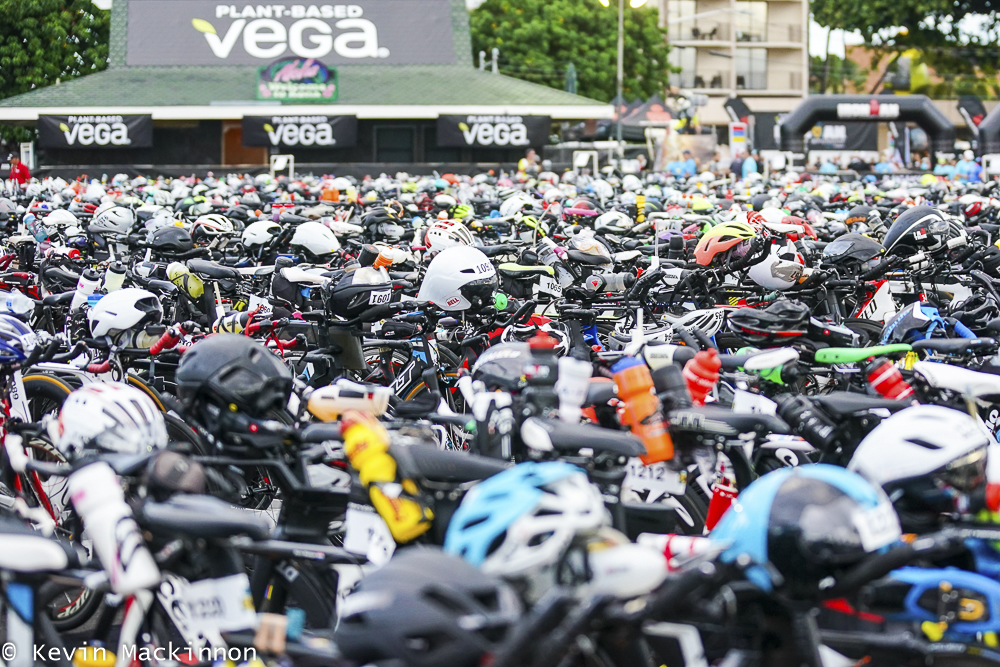
Every October, we here at Slowtwitch stand on the pier in Kona and count bikes. It’s the best snapshot we have of where the industry is putting its chips. There’s no equivalent count for the money behind the races themselves, but if there were, 2026 would be the year the numbers jumped off the page.
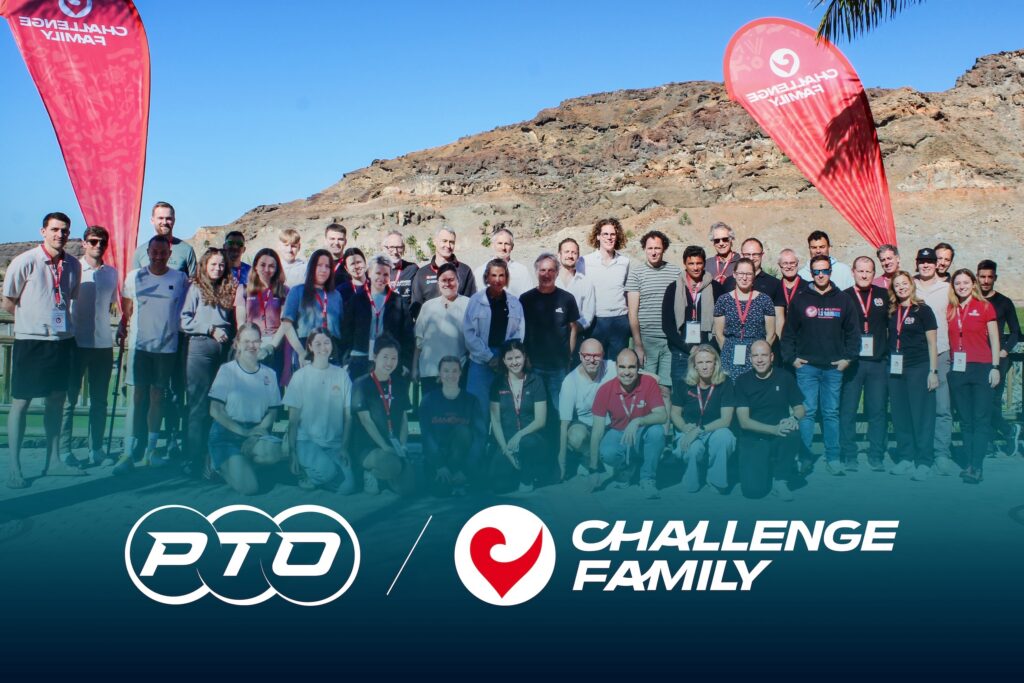
In February, the PTO — flush with Saudi money — bought a majority stake in Challenge Family. Supertri has spent the past two years buying up short-course races from Chicago to Brighton. And then in September, a private equity-backed consortium bought out Infront’s majority stake in Hyrox, returning control to its founders at a valuation reported around $600 million. That’s all before you factor in Hyrox, under the guise of “hybrid racing,” now falling under World Triathlon umbrella. There’s big money being tossed about our sport.
The question, of course, is this: is that a good thing? If you’re an athlete, the honest answer is: it depends on when you ask. The early years of new ownership tend to be great for the people on the start line. It’s what comes after that we need to keep an eye on.
We’ve Seen This Movie Before
Our long-time readers will remember the last time big money rolled into triathlon. Providence Equity Partners bought World Triathlon Corporation in 2008, when the company put on or licensed 53 full- and half-distance races. Under Providence, IRONMAN fully realized the transition from mostly licensing its brand model to owning and operating races, growing to more than 200 events.
For athletes, that meant more races in more places than ever before. It also meant a bigger bill. The typical entry fee for those races climbed from $475 in 2008 to $650 by 2015. And in 2014, IRONMAN closed a $240 million financing round to pay Providence a dividend, earning a junk bond rating in the process. Then-CEO Andrew Messick said at the time the company was constrained more by supply than demand.
Then came Wanda, which bought IRONMAN in 2015. The race count kept climbing — 232 events in 2016, 266 in 2017 and 326 in 2018 — while revenue stayed essentially flat at around $91 million. More races, same money. If you remember half-full start lists and races disappearing from the calendar a year or two after launch…that’s why.
Which brings us to the current owners. In March 2020, with the pandemic shutting down racing worldwide, Advance agreed to buy IRONMAN from Wanda in an all-cash deal at an enterprise value of $730 million. The sale closed that July. Wanda netted roughly $380 million after debt and used $240 million of it to repay a loan. It also kept a license to keep running IRONMAN, 70.3, Rock ’n’ Roll and Epic Series events in China.
Advance is a different kind of owner than Providence or Wanda. It’s the privately held Newhouse family company behind Condé Nast, with stakes in Reddit, Charter and Warner Bros. Discovery. It didn’t come alone, though. Orkila Capital, a growth equity firm that has also backed MMA promotion Bellator and Belgian soccer club Club Brugge, came in as co-investor, and managing partner Jesse Du Bey rejoined the IRONMAN board. Du Bey was part of the original Providence acquisition back in 2008.
The Advance years have been busy. IRONMAN took a minority stake in UTMB in 2021 and launched the UTMB World Series together with the Polettis. It bought the Haute Route cycling series, then sold it two years later to a joint venture between the French Cycling Federation and Hopscotch. When the PTO started paying pros real money, IRONMAN answered with the IRONMAN Pro Series in 2024, adding a $1.7 million year-end bonus pool and pushing total pro money to nearly $6 million. And after 12 years, Andrew Messick handed the CEO job to Scott DeRue, formerly president of Equinox, in January 2024. Messick stayed on the board.
Who’s Writing the Checks This Time
This wave of money coming into the sport looks a little different. Classic buyout private equity is actually a small slice of it; the bigger checks are coming from sovereign wealth, family offices and billionaire founders. But the money is all chasing the same thing: owning the start line.
- Hyrox: The highest-profile private equity deal of the bunch. The founders bought back majority control from Infront, with L Catterton leading the consortium as their minority partner and Jeffrey Katzenberg’s WndrCo along for the ride.
- IRONMAN: Owned by Advance, with Orkila Capital as co-investor, and holding a minority stake in UTMB, whose founding Poletti family still owns 55%.
- PTO and Challenge Family: Saudi Arabia’s SURJ Sports Investment led the PTO’s $40 million Series C in 2025. In February, the PTO used its war chest to buy a majority stake in Challenge Family and fold it into a unified Triathlon World Tour starting in 2027.
- Supertri: Billionaire money, plain and simple, via co-founder Leonid Boguslavsky. Its roll-up of short-course races runs from Chicago and New York in 2023 through Brighton & Hove in 2026, and it has been trying to raise $65 million to keep going.
- Life Time: The owner of Unbound and Leadville is the one place where private equity is heading for the exit. Leonard Green, TPG and Partners Group have been selling down their stakes all year.
One thing to keep in mind is that these investors want different things. A private equity fund like L Catterton is on a clock; the typical playbook is to grow the business and sell it within a handful of years. A family company like Advance can afford to be more patient. And sovereign money comes with its own agenda. SURJ’s CEO Danny Townsend told City AM the fund is focused on leagues and series with IP it can move around, and on events that can be brought to Saudi Arabia to build facilities and encourage participation there. None of those motives are bad, necessarily. But they shape which races get investment, where they end up on the map and how long the money sticks around.
The Honeymoon: Why Athletes Win Early
Here’s the thing nobody likes to admit: the first few years of new money are usually great for athletes. Investors are buying growth, and growth means more races, more start lines and more reasons to sign up.
Hyrox is the clearest example. It went from roughly 175,000 competitors in 2022/23 to more than 1.5 million in 2025/26, and it’s projecting more than 2 million across 107 race weekends for the coming season. That’s a lot of new races in a lot of new cities. And it isn’t just the existing crowd racing more often; Infront says around 70 percent of participants are first-time Hyrox athletes.
Triathlon is seeing the same pattern. Supertri’s acquisitions have kept historic city races like Chicago and Long Beach alive, and in 2025, 41% of its race entrants were doing their first triathlon. That’s the kind of on-ramp the sport has been begging for coming out of the pandemic era.
Long course is riding the same wave. When IRONMAN Hamburg opened 2026 entries, it reportedly saw an 85% jump in registrations over the same point the year before, and more than half of those athletes were signing up for their first full-distance race. CEO Scott DeRue told City AM that IRONMAN would sell out every European race in 2025, with 2026 races filling even faster, with UK participation up roughly 13%. Meanwhile, a five-year partnership with Oman’s tourism board, thought to be worth more than $40 million, is bringing a new full-distance race and the 2029 IRONMAN 70.3 World Championship to the Gulf. That’s new money building new start lines, which is exactly what athletes want to see in the early years.
The pros benefited, too. When the PTO launched the T100, it contracted its athletes, giving long-distance professionals a guaranteed income from a race organizer for the first time in the sport’s history. Those contracts are gone for 2026, but each T100 race still offers $275,000 in prize money. Heck, a decade ago the idea of a pro triathlete drawing a salary from a race organizer would have sounded like a joke.
More races, more first-timers, more money for the pros. If the story ended here, we wouldn’t need to ask the question.
The Bill Comes Due
Investors don’t buy race companies to break even. Once the expansion phase slows, the playbook shifts from adding start lines to squeezing more out of each one. For athletes, that tends to show up in three places.
You’ll pay more for registrations. We’ve already seen the Providence-era jump. Fast forward to today and our own forum has a thread titled, simply, “The Elephant In The Room: Ironman Pricing Is Out of Control,” and one reader watched an IRONMAN California entry go from $920 on the event page to $949 at checkout. Hyrox, fresh off its ownership shake-up, is adding a new line item of its own: starting with the 2026/27 season, competitors will need a mandatory €197 annual license covering anti-doping, priority entry and ranking points. That’s a membership fee on top of the entry fee.
Your favorite race may start to look like everyone else’s. Consolidation tends to sand down the quirks that made individual races special. Challenge Family built its brand on being the independent alternative, from Roth to races like Almere-Amsterdam, Taiwan and Wanaka, each doing its own thing. Now that the PTO holds a majority stake, Challenge Wanaka is moving to a 100 km distance in 2027 to fit the T100 framework. Standard formats are great for rankings and TV. They’re less great if you signed up for a race because it was unlike anything else on the calendar.
The local race that got you into the sport may not survive. When the big platforms own the qualifying pathways, the series points and the marketing budget, the little guys get squeezed. The Michigan Titanium Triathlon drew 126 iron-distance athletes in 2022 and just 64 in 2025; 2026 is its final year hosting a full. Cheaper entry fees didn’t save it.
And the money doesn’t always stick around. Just a year after its Series C, the PTO removed season-long athlete contracts for 2026, and we’ve reported on delayed prize money and bonus payments from the previous season. The honeymoon can end quickly.
Enjoy the Honeymoon. Watch the Exit.
Let’s give the new money its due. More races, more first-timers and bigger paychecks for the pros are wins by any measure. But every dollar in this wave comes with an expiration date. L Catterton will eventually want to sell its stake. SURJ will want its events landing in Saudi Arabia. Even a patient owner like Advance has now held IRONMAN for six years.
History tells us what happens as those clocks run down. Under Providence, entry fees climbed and a dividend got paid. Under Wanda, the race count ballooned while revenue sat still. The question isn’t whether the bill comes due. It’s how much of it lands on athletes.
What’s different this time is competition. IRONMAN, the PTO and Supertri are all funded and all chasing the same age-grouper, and Hyrox has ATHX and DEKA nipping at its heels. As long as that holds, organizers have to keep earning our entry fees. The moment one platform swallows another, that leverage disappears.
So use it while we have it. Every investor in this wave is betting that athletes will pay more, race more and stay loyal to their brand. Spend deliberately. If an entry fee climbs faster than the race experience improves, that’s margin, not service. Pay attention when a race you love gets reshaped to fit somebody else’s series. And every so often, sign up for the small local race that taught you the sport, because those are the ones the big platforms can squeeze out.
We’ll keep counting bikes on the pier every October. Maybe it’s time we started counting dollars at the registration page, too.

Start the discussion at forum.slowtwitch.com