


Ceepo’s Latest Edition of the Katana Provides All-Around Aero Performance
The first time I met Nobuyuki “Joe” Tanaka was in December, 2008. I was still working for IRONMAN at the time, and during a trip to the Tampa office I met Tanaka while he was finalizing the deal for his relatively new company, Ceepo, to become IRONMAN’s official bike. The reason I remember Tanaka’s positive energy and enthusiasm for everything triathlon is because that hasn’t changed one iota ever since. Every time I see Tanaka at a race he displays that same demeanour – you can’t help but walk away from a conversation with the Japanese triathlon addict with a smile on your face. (You want proof of any of that? Just check out Tanaka’s Facebook page – his descriptor is “Forever Happy Triathlon Life.”)
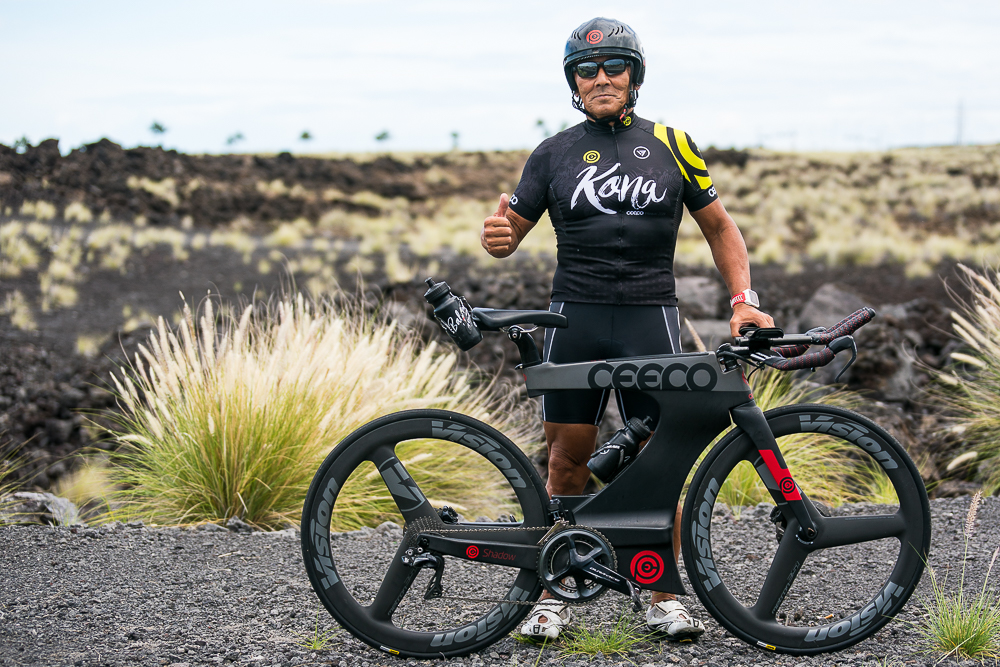
Tanaka started racing triathlons in 1990. He was unhappy with the road bikes he was using for his multi-sport races, and custom-built his own tri-specific bike. Working for Japanese sporting goods distributor Osawa Shokai and then for Reebok, Tanaka was very familiar with the athletic equipment and, in 2002, he connected with a Taiwanese factory and launched Ceepo in Aichi, Japan in 2003. Five years later he was in Tampa, Florida looking to nail a deal with IRONMAN.
Shortly after the Ceepo/ IRONMAN deal was announced, Tanaka sent me a frame to review for the IRONMAN site – it was my first introduction to the Ceepo Katana. A “Katana” is a samurai sword renowned for its sharpness, and the frame was so tapered at the front end that a few people I rode with joked I could cut a steak with the frame if I was ever in a lurch. I loved everything about that iteration of the bike other than high-speed descending – something the rest of the Florida-based IRONMAN folks at IRONMAN could never understand. I tried to explain to them that when I took the bike down Alpe D’Huez I really struggled holding things together at speed and around the switchbacks. They replied by saying 1) what on earth was I doing riding a tri bike up and down mountains in the French Alps, 2) the bike was designed for triathlons and, 3) they had no idea what I was talking about complaining about 50 mph descents – it just wasn’t something they ever dealt with in Florida.
Fast forward, gulp, 16 years and I find myself reviewing another Katana. Over the years I’ve checked out a number of the different Ceepo models, and I’m happy to report that the days of unstable descending are long gone. To be honest, and as full disclosure, I’m impressed enough with the bikes and company that I’ve happily done photo shoots for them in Kona and other world championship events for years. My wife rode a Katana to her Kona win in 2022, and moved to a newer model a few years ago.
Katana Overhaul
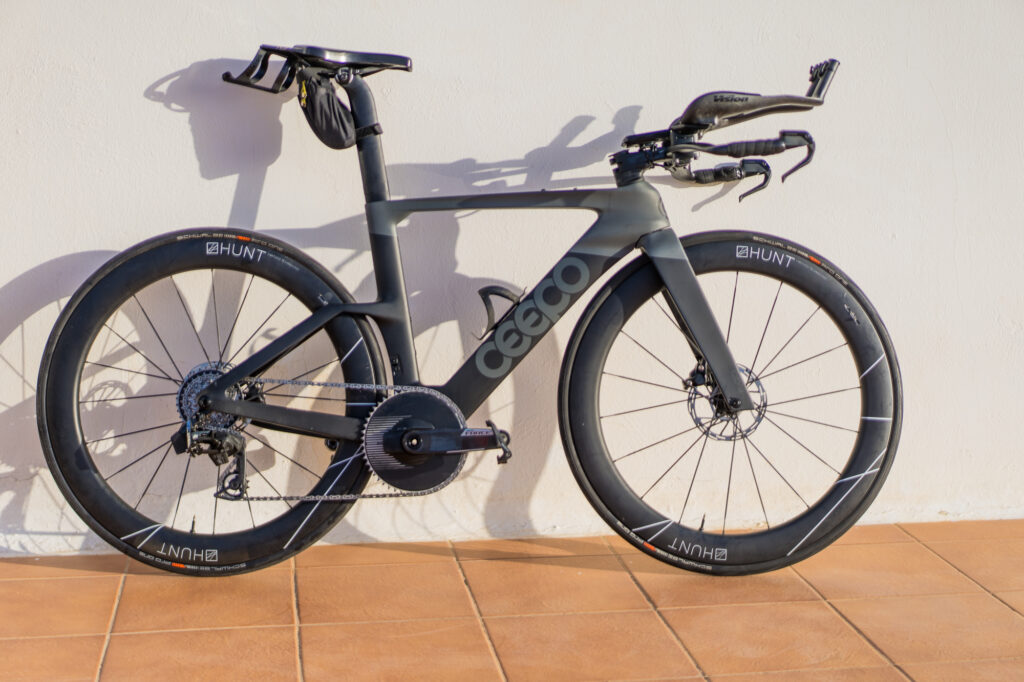
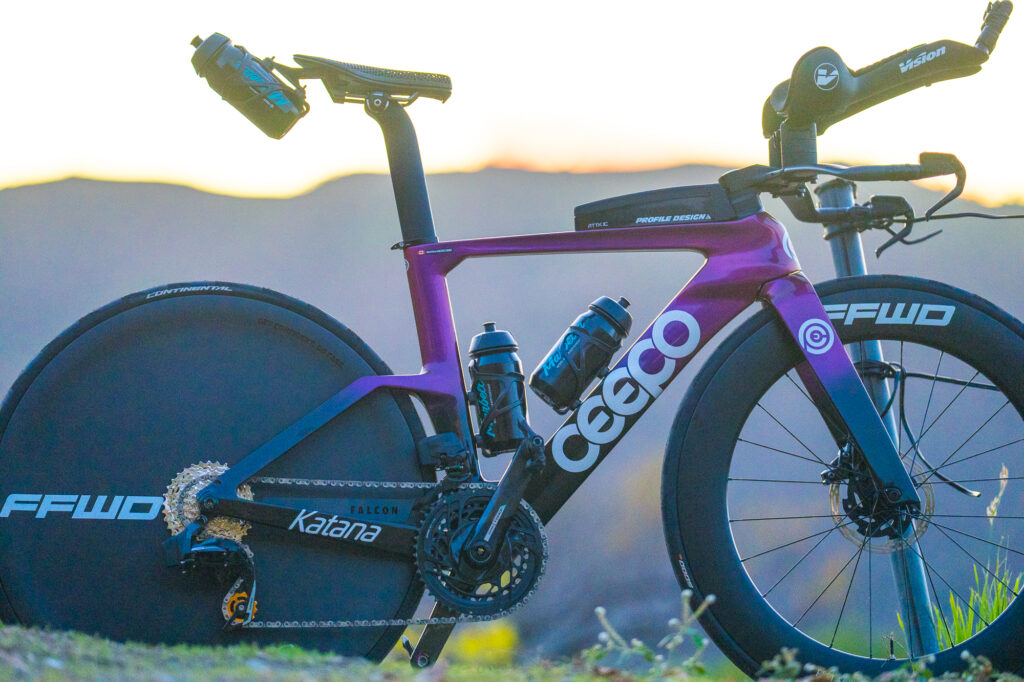
The 2025 Katana I received last year (yes, I know this review has taken a while to finally get posted – between equipment snafus and various injuries on my part, it’s been a struggle) featured an overhaul on the previous models. One thing I really appreciated about packing my wife’s Katana over the years was the simplicity of the design – there’s nothing complicated about the front end or any other parts of the bike, so it’s easy to both maintain and get ready for a bike case. The latest Katana maintains that “system” approach and specifically combines each aspect of the riding system to provide optimal aerodynamics. The rider’s position, the frame design and accessories like the 3D printed ToolBox all create an aerodynamic system. (Unfortunately my ToolBox got destroyed on my flight home from Marbella, so the photos here don’t feature that. I did love it as an aero option to carry my spare tube and pump!) Those aerodynamics are enhanced through full cable integration, a new bladed fork and increased tire width capability – you can now ride with up to 32 mm tires.
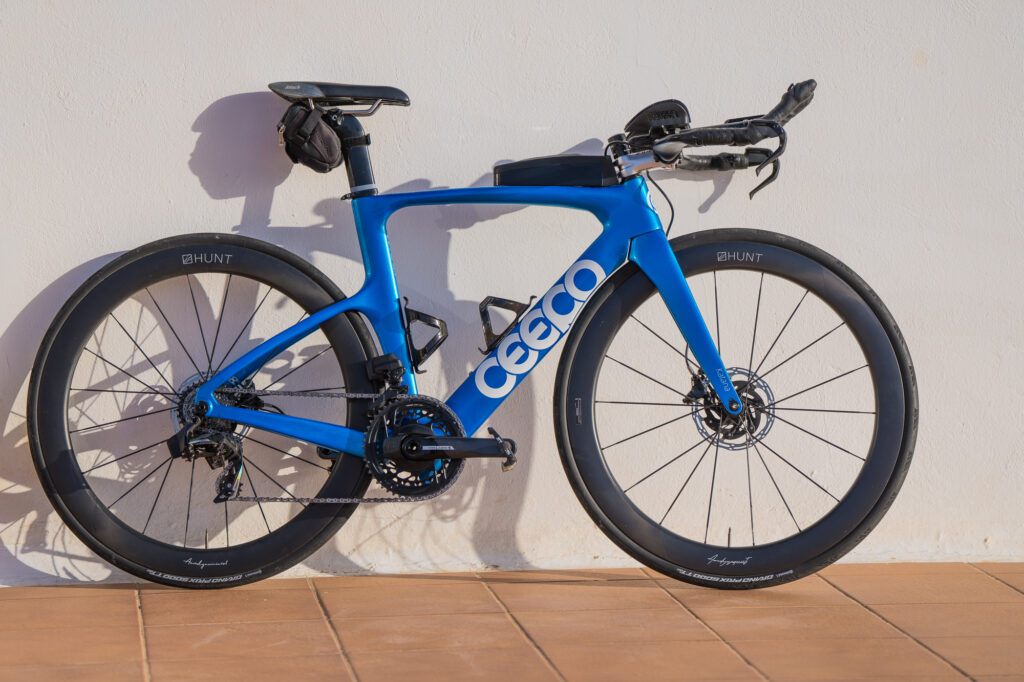
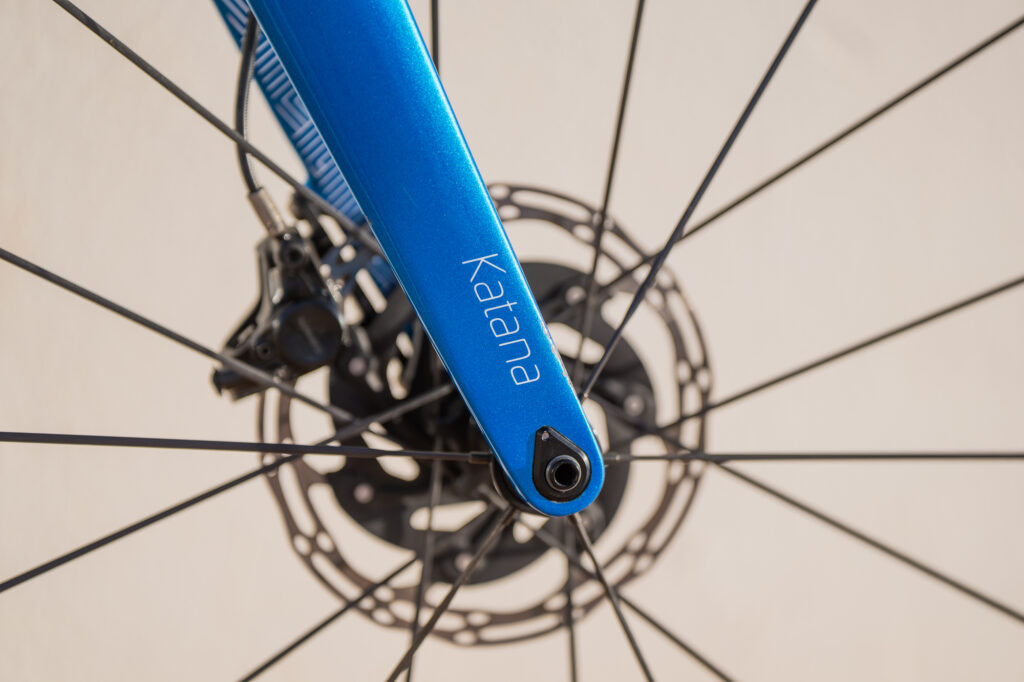
Ceepo’s frames use Optimal Strength and Modulus Carbon (OSMC) from Japan’s Toray Industries, utilizing a solid inner moulding process to create the aero tube shapes. This ensures the internal surfaces of the frame are smoothed out, so there aren’t any weak spots and ensuring each and every frame offers the performance, stiffness and compliance the company’s bikes are known for.
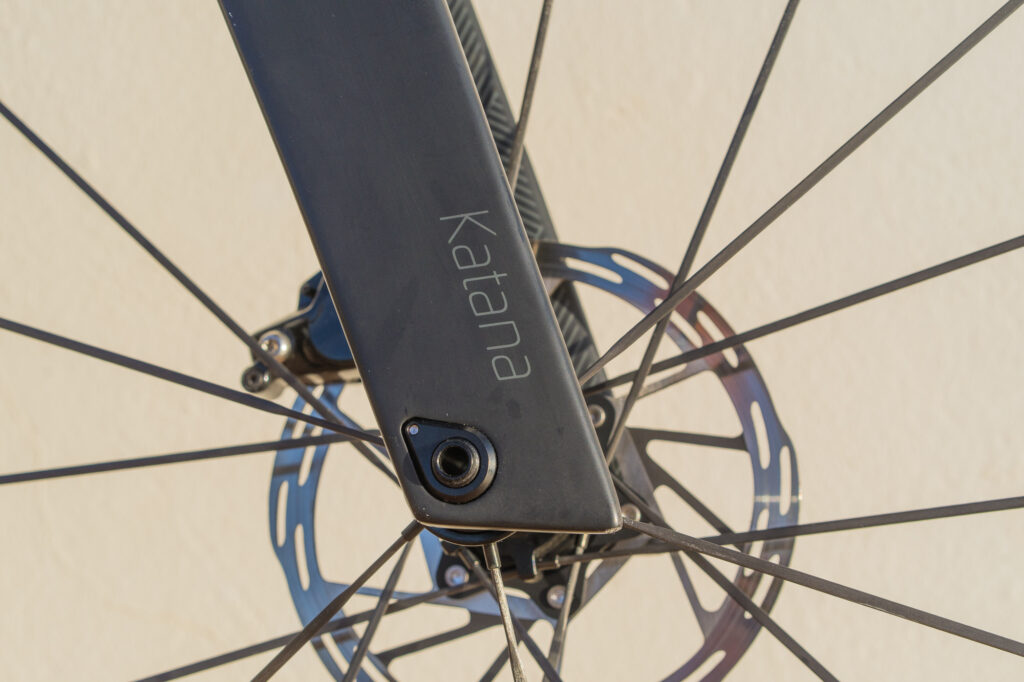
According to Ceepo’s engineers, the new asymmetric fork is a game changer. The new design makes for a cleaner space for air to flow between the wheel and fork, with the flat outer blade acting like a wing to provide smooth air flow. The angle of the blades is designed to deflect air around the legs and calves to reduce drag.
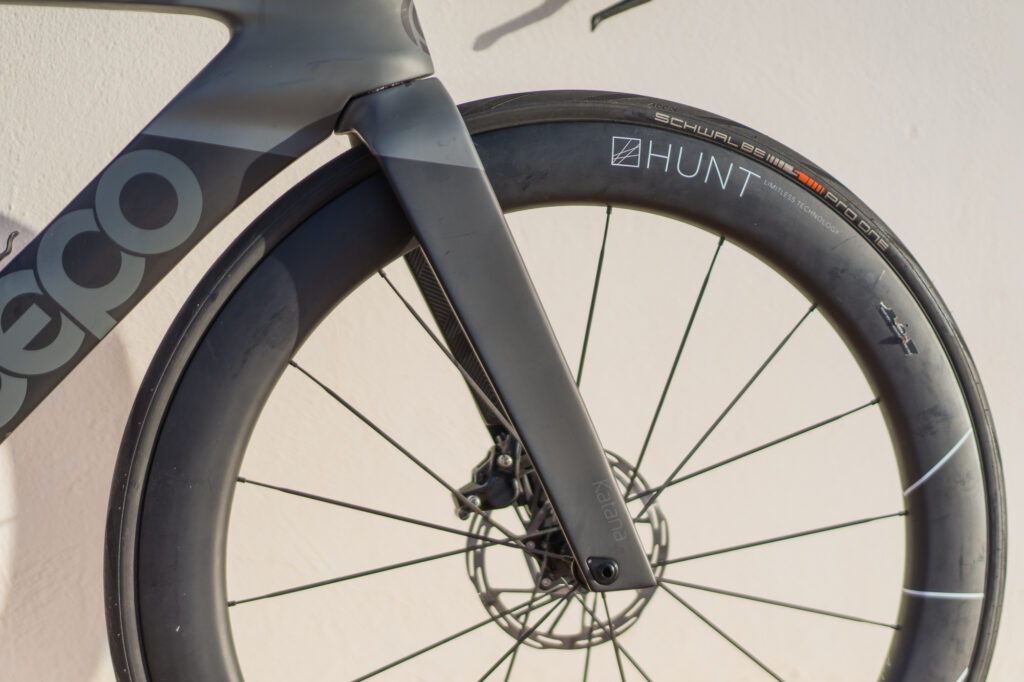
The geometry has also been modified, with the seat tube angle coming in a couple of degrees steeper to allow for a forward, low-profile position for those looking for an aggressive set up. This also optimizes weight distribution to provide more stability at speed – once again, I can assure you that the bike handles well on fast descents. The reversible seat post remains, which allows for lots of options on the position side – everything from long and low to a more upright position is easy to dial in. This latest version of the Katana allows you to get the best of both worlds in many ways – the aggressive aero position of the company’s Viper in a the lightweight package that has always been the hallmark of the Katana.
What I’ve always loved about the Katana is that, at 1,080 g, it’s one of the lightest triathlon frames on the market. One thing to be aware of, though, on the simplicity of design front, while the Katana is compatible with all mechanical and Di2 and eTap group sets, mechanical options are limited to 1x.
I kitted my Katana up with SRAM Force 1x components (that review is coming soon, I promise), along with a Hunt wheel set (yes, another review I need to get done) and got myself out on the road.
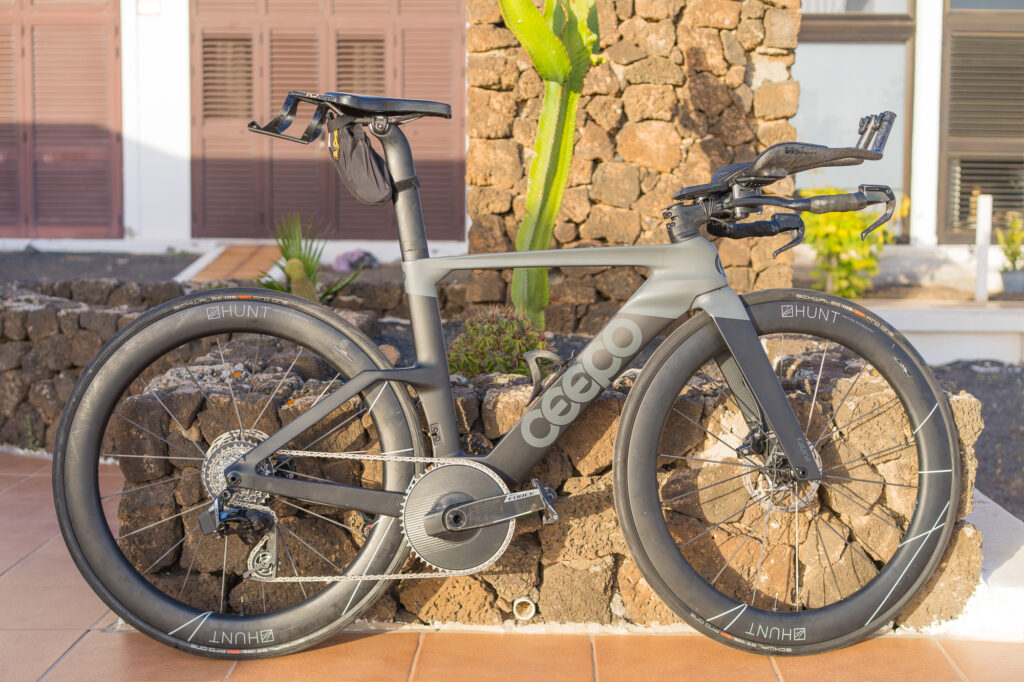
The Ride
One of the reasons I pushed my wife to ride the Katana versus, say, Ceepo’s Viper model, is that the Katana is a bit more of an all-rounder. Thanks to the light weight and (previously) more relaxed seat tube angle, the Katana can get away with a bit more climbing and sitting-up-in-a-group riding than you’d maybe want to do on a more aggressive triathlon ride. The latest edition of the Katana, with its steeper seat tube angle, takes a bit of tweaking to create that kind of feel. I loved the aggressive position I was able to create on the bike, but it did take a while moving the saddle back and forth before I was able to dial in a position that fit my kind of riding. (Suffice it to say my favourite place to ride on the planet is Lanzarote – so lots of climbing and lots of wind.)
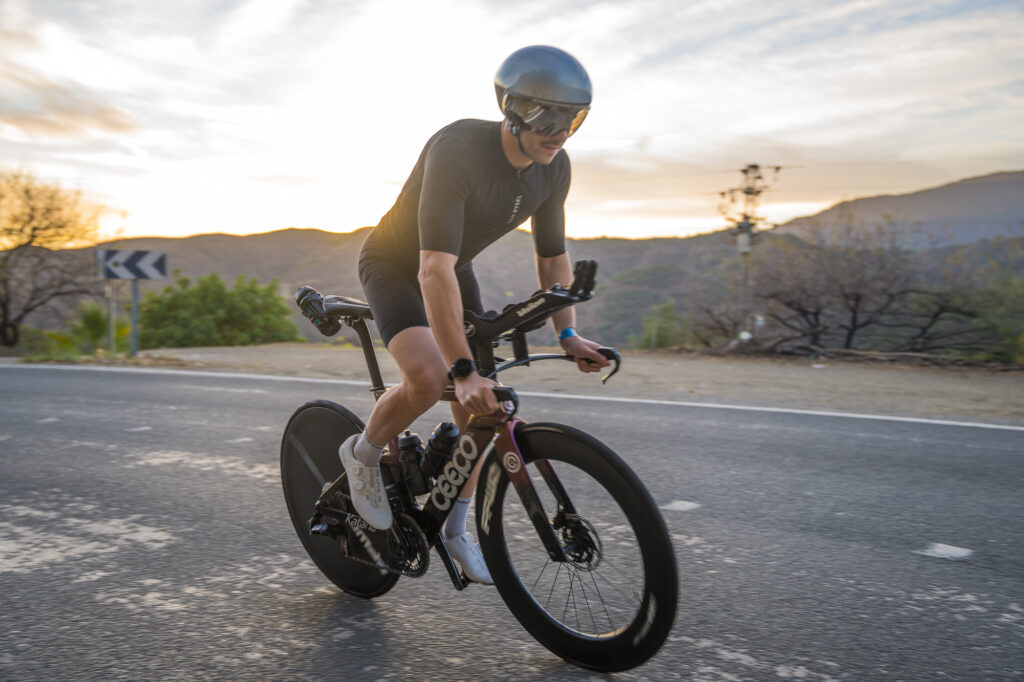
Once I figured out that optimal seat position, the Katana felt great, whether I was down on the drops trying to push into a heavy wind, or climbing some of the long, gradual climbs. I appreciated the lighter weight on some of the steeper, switch-back climbing I did, too, and the bike responds really well when you get out of the saddle and apply power to get yourself up a steep pitch. We had a few days of really high, gusty winds during our February training camp in Lanzarote, and it was definitely a struggle to hold things together on descents with any cross winds, but since even the folks on road bikes with shallow rims were struggling, I don’t think I can blame the Ceepo for any of that.
As you will no-doubt guess based on my riding preference, I’m always looking for a frame that offers lots of lateral stiffness, which is a must for decent climbing performance and decent power transfer. The Katana felt great on that front – you won’t feel like any of the effort you’re putting into the pedals is being wasted.
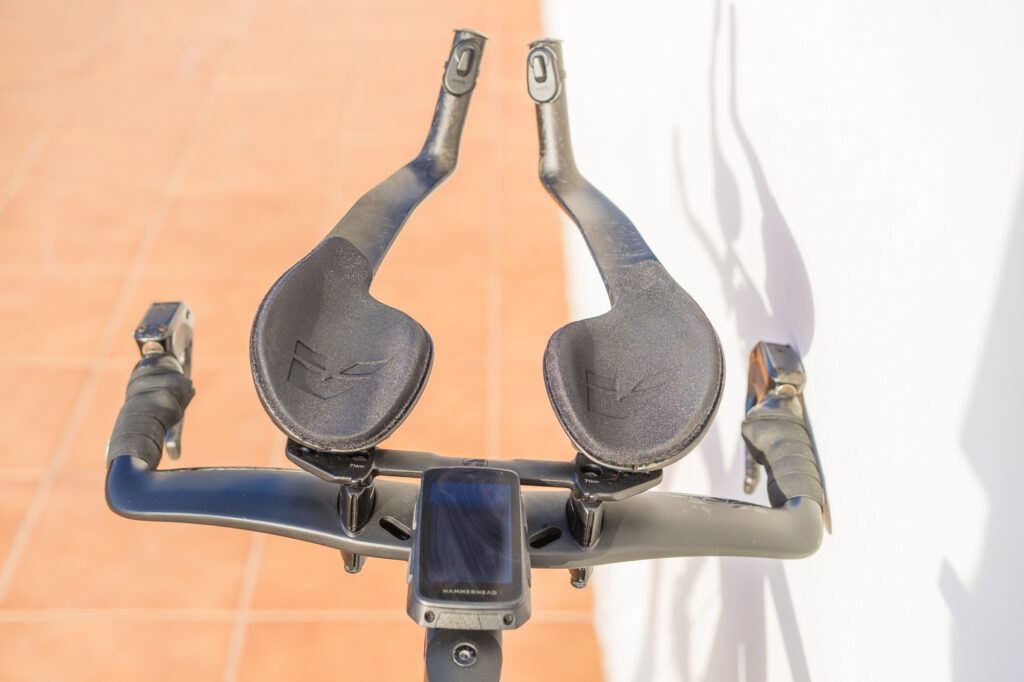
As I mentioned, I’m planning separate reviews of the components and wheels, so I won’t go into too much detail on that front, but I will mention the Vision handlebars I set the bike up with. First off, I was attracted to the Metron TFE Pro extensions because they are very light (360 g). On top of that, I found them to be extremely comfortable, providing a solid base for my arms while down in the aero position. After years of riding with straight extensions, the more upright wrist position these provide was a game changer – riding in the aero position truly is the most comfortable way to ride.
Ceepo Katana vs …
At US$4,500 for the frameset, and with fully equipped bikes starting at $7,000, the Katana isn’t in any way a “budget” tri bike, but it will set you back a bit less than some of its similarly equipped competition. The brand remains much more popular and well known in Asia, so if brand recognition is important to you, you’re going to be drawn to a Cervelo P-Series (which starts at US$5,300) or P5 (starting at US$10,650 with Ultegra Di2). The “system” approach means you can easily pick your own cockpit, and maintenance and travel is really easy – for those who like to tinker with their own bikes and travel a lot, this can be a real plus.
The other thing that Ceepo bikes are renowned for is the smaller sizing – the small version of the Katana features a 43 cm seat tube. The Katana is available all the way up to an XL, so there’s lots of options for taller folks, too.
If you’re looking to be on a bike that’s different to what the rest of the gang might be on, all while providing all-around performance and some aero chops, I’m happy to argue that the Ceepo Katana is well worth a look. This latest version can be set up in a really aggressive position, or can be modified slightly to provide a more all-around ride.


Start the discussion at forum.slowtwitch.com