

How To Schedule Your 2026 Race Season as a Beginner Triathlete
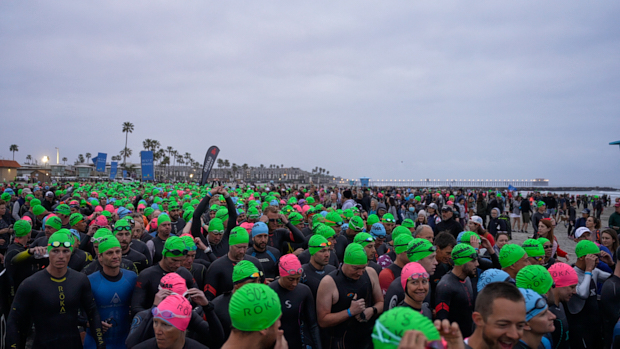
If 2026 is going to be your first year racing triathlon, you probably have a lot of questions. One of those might be surrounding races. How many should you sign up for? When should your first be? How far apart should you space them? You might be wondering these even if this isn’t your first season of racing. Well, wonder no more, because Slowtwitch got the chance to speak with Kyle Jones, a retired Canadian Olympian, who offers tips to help you shape your 2026 triathlon season.
Planning for the Year
After retiring from professional triathlon in 2018, Jones turned to coaching. He is co-owner of Edge Sport in St. Catharines, Ont., and although the business is much more than just a triathlon training group, Jones still works with triathletes on a regular basis.
A big part of working with, and coaching, triathletes comes in setting goals and figuring out a path to reaching them. While Jones says every person is different and there isn’t a cookie-cutter way to plan a season, he does suggest a general outline for rookie, or newer, triathletes.
“Usually we recommend probably one race per month of the season for beginners,” he says. “If you targeted races in June, July and August, that would give you three races throughout the summer to focus on.”
Two of those events, Jones says, would be “B-level races,” and the third is your A-race. (Your A-race would be the main focus of your race calendar, whereas the B-races would be events to help you prepare or build to that main event of your season.) If you truly are brand new to the sport, he recommends “getting your feet wet” with a shorter race to start your triathlon career, and from there you can build up if you’re looking to tackle something longer later in the summer or beyond.
“Don’t be afraid to take a couple seasons to build up in distance,” Jones says. “I know everyone wants to do the longer races, especially the half-IRONMAN distance, which is very popular. People want to get there really quickly, but there’s definitely something to be said about building up slowly.”
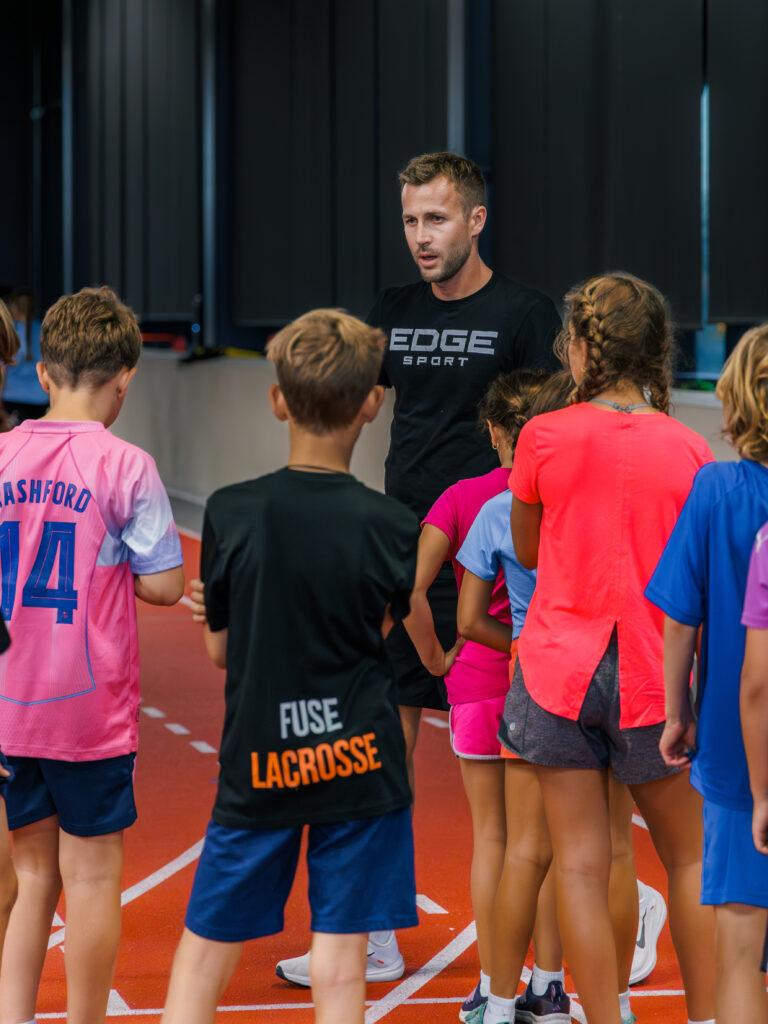
Jones works with a group of young athletes from Edge Sport. Photo: Edge Sport
Training for, and racing, shorter events will help you develop your speed, no matter what age you are when you’re getting started in triathlon, Jones says. That’s why it’s beneficial to practice a little bit of patience and stick to super-sprints, sprints and Olympic-distance races for a year or two before making the jump to middle-distance and long-course racing.
“Taking time to develop that top-end speed is important, and then adding the volume afterwards is a lot easier to build it up,” Jones says.
Pre-Season Events
While Jones says this is by no means necessary to find success in triathlon, he notes that adding races to your schedule in the winter can help you prepare for the spring and summer racing seasons.
“Depending on where you live, different opportunities exist,” he says. “You know, if you can get into kind of an indoor triathlon, those are good.”
Indoor triathlons usually involve a timed swim in a pool, a ride on a stationary bike and a run on either an indoor track or a treadmill. These can’t compare to a real outdoor race, but they will certainly challenge you and put your early-season fitness to the test and help you gauge where you’re at in your training journey.
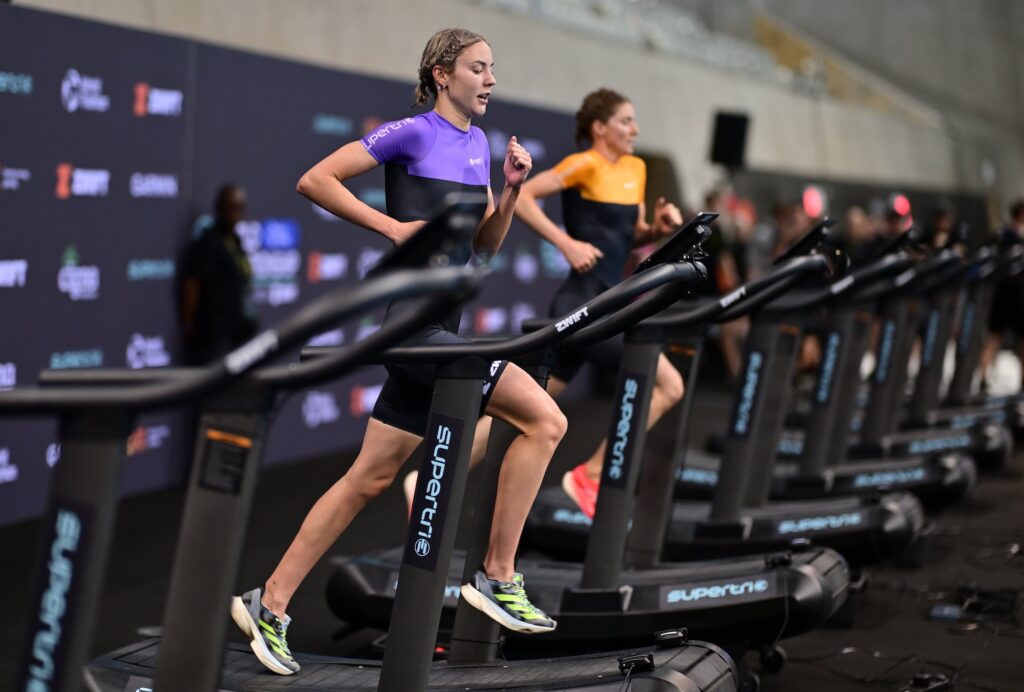
Even the pros race indoor triathlons in the winter. Photo: Petko Beier/Supertri
“Road running races are great, too,” Jones says. “Everything from a 5K, 10K and up. That stuff can kind of help break up your training a little bit and give you something to work towards.”
Finding Motivation
Maybe you’re new to the sport and thinking you might not race. It is completely fine to solely train as a triathlete and never compete, but Jones does say racing can help give you extra motivation in your daily workouts.
“Anyone who’s been to a triathlon weekend, you know, it’s an infectious energy and it can be an inspiring atmosphere to be a part of,” he says. “I think it’s a really great way, if you’re doing all the training, to kind of remind yourself what you’re gearing up towards and just kind of immerse yourself in those environments.”
Jones says you should look at your first race (or perhaps even your entire first season of racing) as a “learning opportunity.” You’ll find out what you like and what you dislike, where you’re stronger than other athletes and areas where you can improve, and whether or not you want to do more races in the future. If the answer to this last bit is yes, you would like to race more, Jones says you can build up from this season moving forward.
“The same with your training progression, if you do two or three races this summer, maybe you’ll try to do four or five the next summer,” he says. “Before you know it, you’re doing six to eight, or maybe you’re moving up in distance.”



Start the discussion at forum.slowtwitch.com