
Inside MediaMotos: The Key to Endurance Sports’ Best Camera Shots
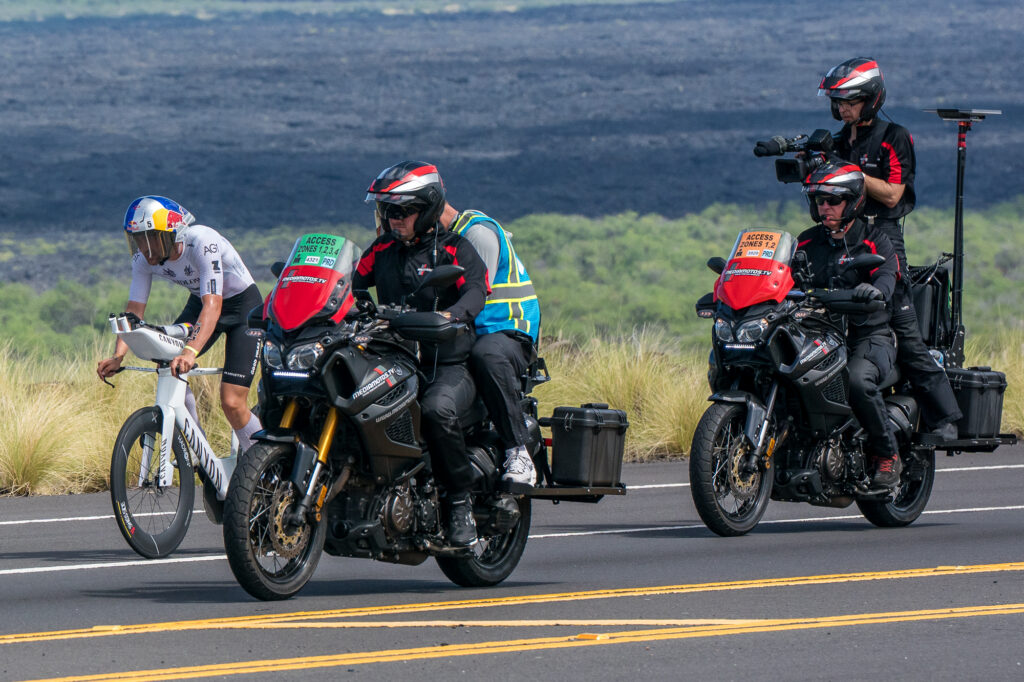
If you’ve watched a triathlon, marathon or bike race on TV in the last decade, you’ve seen them, but probably didn’t realize who they are. That motorcycle you see beside the race leader, a camera operator on the back, a red windscreen catching the light. They do their best to stay in the background, ensuring the attention is always on the athletes, and that their race isn’t affected. All the while keeping the cameras focused on the action.
That’s the point – that fine line between being in the background, and bringing the camera in close to capture the drama of race day. At all the major triathlon, cycling and marathon events these days, the company assigned to pilot those motorcycles is MediaMotos. The two men behind the company, Jason Jenkins and Scott Schaffrick, have built a global business hoping that you won’t notice them or any of their other drivers. Invisibility is part of their product.
Two Continents, Different Approach
The roots of MediaMotos sit with Jenkins – he started the company in 2009 in the UK. After years of working in banking and car manufacturing, he started to take his weekend gig of marshalling races and carrying photographers more seriously. He had a vision to change what his clients were buying.
“It’s no longer Jason Jenkins as a motorbike pilot,” he said. The goal was to have “a bit of a club,” although he’s not a fan of that description. The pitch was simple: “When people were hiring a motorbike pilot, they weren’t hiring Jason or Scott, they were hiring a MediaMotos pilot and MediaMotos motorcycle.”
It wasn’t long before clients were calling asking for “three of your MediaMotos pilots” rather than three individuals.
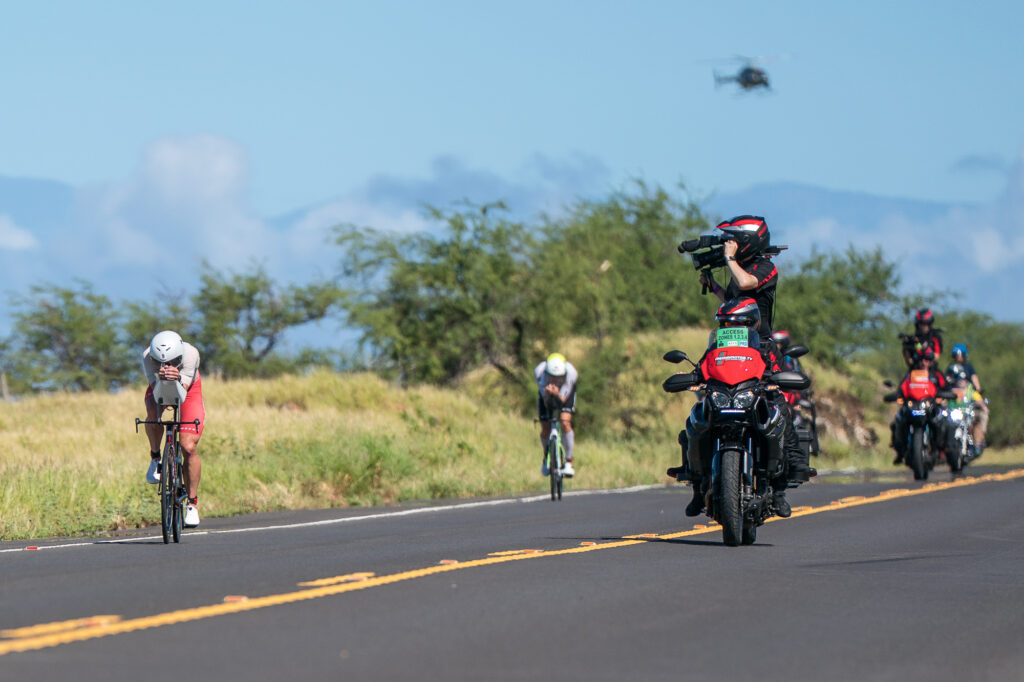
“One bike turned to two bikes, two bikes turned to four bikes, and in the blink of an eye we have, I don’t even know – 58 or so,” Jenkins laughed. Now they buy motorcycles in “groups of 10,” along with pickup trucks, Land Rovers, quad bikes and trailers.
Schaffrick arrived from the other side of the Atlantic. A professional photographer on the US Pro Cycling Tour for many years, he was also a law enforcement officer and motorcycle instructor. TV crews he travelled with asked if he’d be interested in becoming a moto pilot. His first event was IRONMAN Lake Placid in the early 2000s.
Schaffrick and Jenkins met at the Tour of California bike race and hit it off immediately. While in the US moto pilots were all freelancers, in the UK Jenkins has been building something more organized.
“One thing led to another, and we were like, why don’t we launch MediaMotos in the US and try to professionalize what is happening here?” Schaffrick said.
They launched the new endeavour in 2015.
The MediaMotos Philosophy: The Three S’s
The MediaMotos philosophy is easy to remember – it fits on three fingers: safety, sport and show. Schaffrick drives his pilots nuts by reciting it before every single event. As far as he and Jenkins are concerned, that’s why they get rehired.
“Safety is in capital letters across the board,” Jenkins said. “We take no risks. We want everybody to go home at the end of the day.”
Both Schaffrick and Jenkins say they were “thrown into the deep end” early in their careers, with no structure and no playbook.
“We made the mistakes on the job, and we don’t want anybody to make the same mistakes that we made,” Schaffrick said.
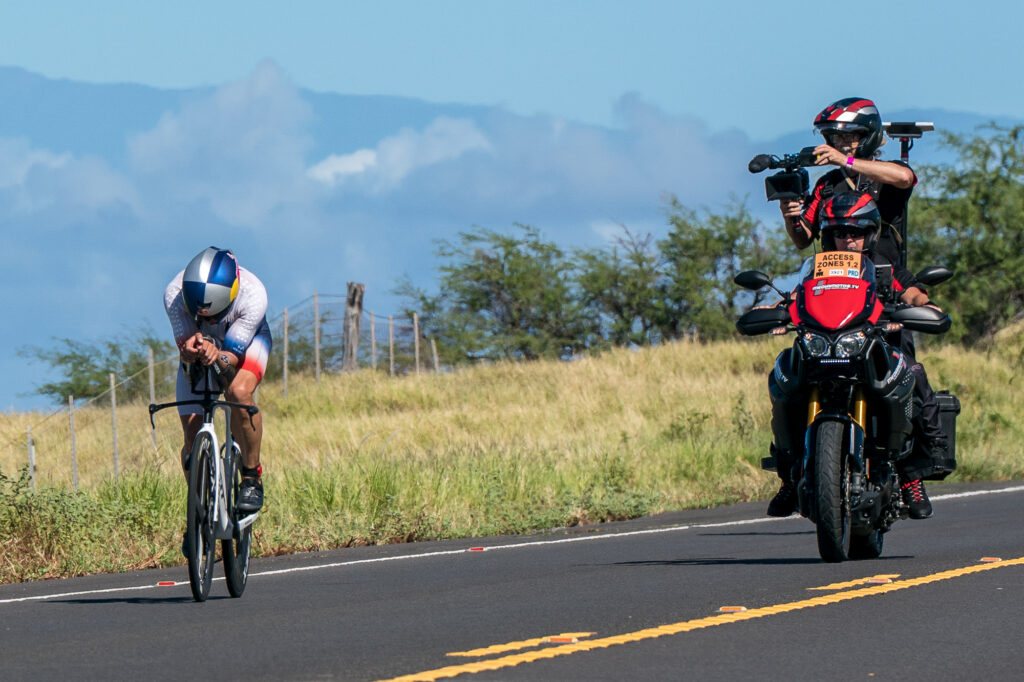
The second of the fingers points to the integrity of the sport, of particular concern in triathlon, where drafting makes the motorcycle a huge potential issue.
“We don’t want to be there any more than an athlete wants us to be there,” Schaffrick said. “As soon as we get the opportunity, and the key to that is ‘when it is safe,’ you get out of the way.”
The MediaMotos pilots take into consideration everything from wind direction to the huge pack of riders that might form out of T1. This year’s men’s race in Nice (IRONMAN 70.3 World Championship) was a perfect example – with so much of the field coming out of the water together, they staged a motorcycle well out onto the course and picked up the pack once things had spread out, shooting the opening section from behind.
Third on the list is the show, and Jenkins and Schaffrick are clear to directors and producers on that front.
“We know how important your show is,” Jenkins said he tells them. “But it comes after these other two things, which are ultimately more important.”
Sometimes that means backing out of a shot a director is shouting for.
“We sit on the bike and say, ‘You know the reason we’re backing out?'” Jenkins added. “Because of the safety.”
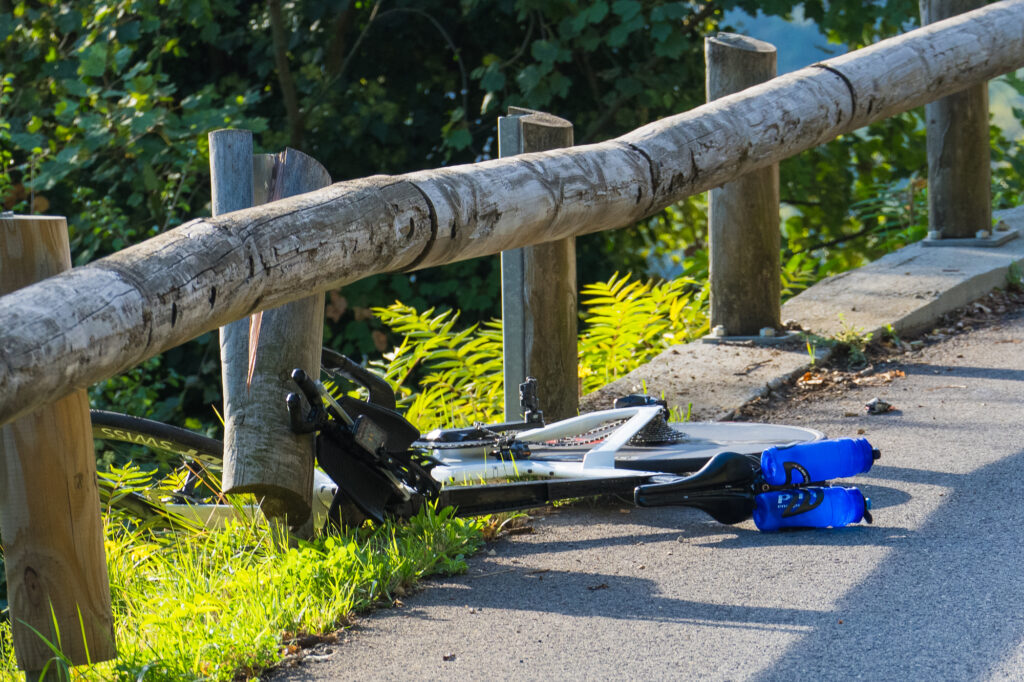
All that doesn’t mean that the MediaMotos pilots aren’t keen to do everything they can to help their camera operators to get the shot. This year in Nice my driver, Hayden Pryor, whipped over to the side of the road after we came around a corner and saw a bike up against the railing.
“Get off, get off, get off,” Pryor yelled at me. As I scrambled off the bike to try and find the rider, Pryor immediately moved his bike to a safe spot and helped signal athletes to the accident ahead.
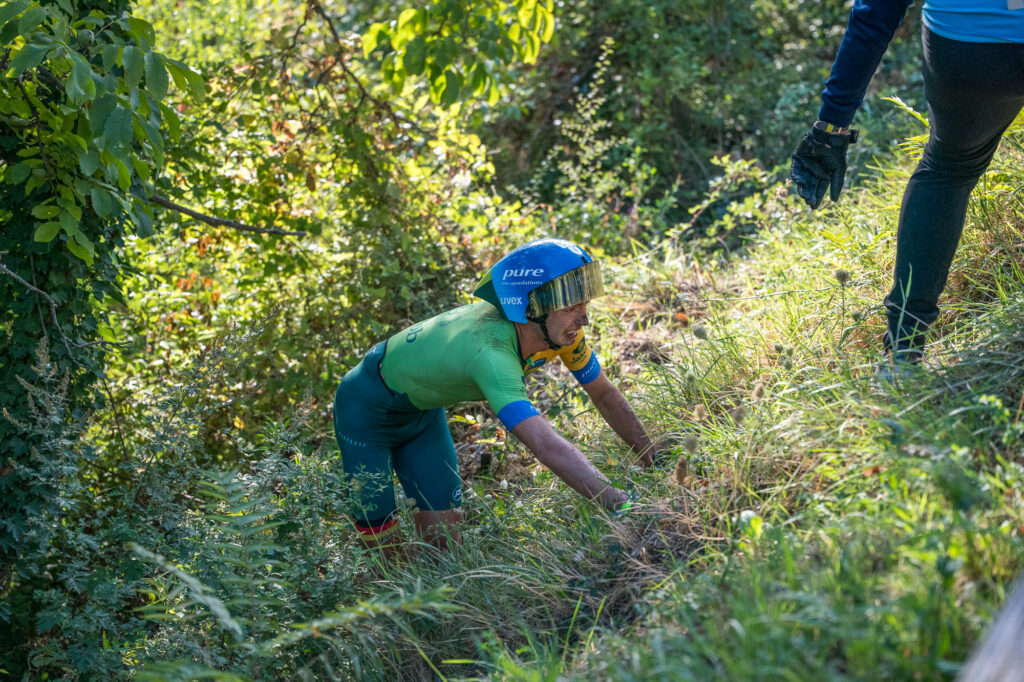
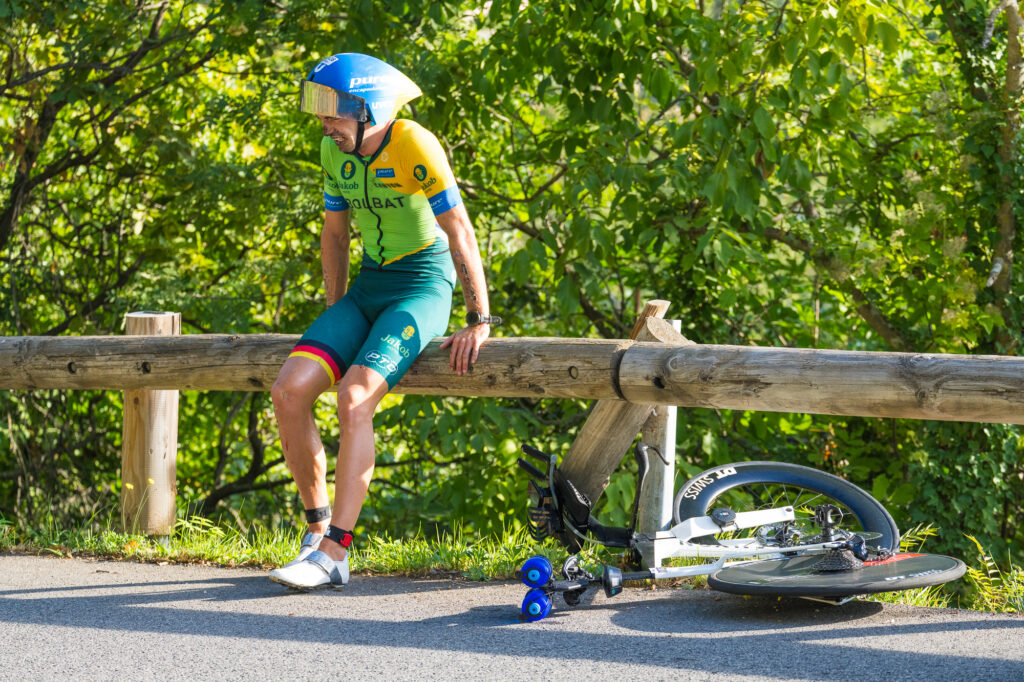
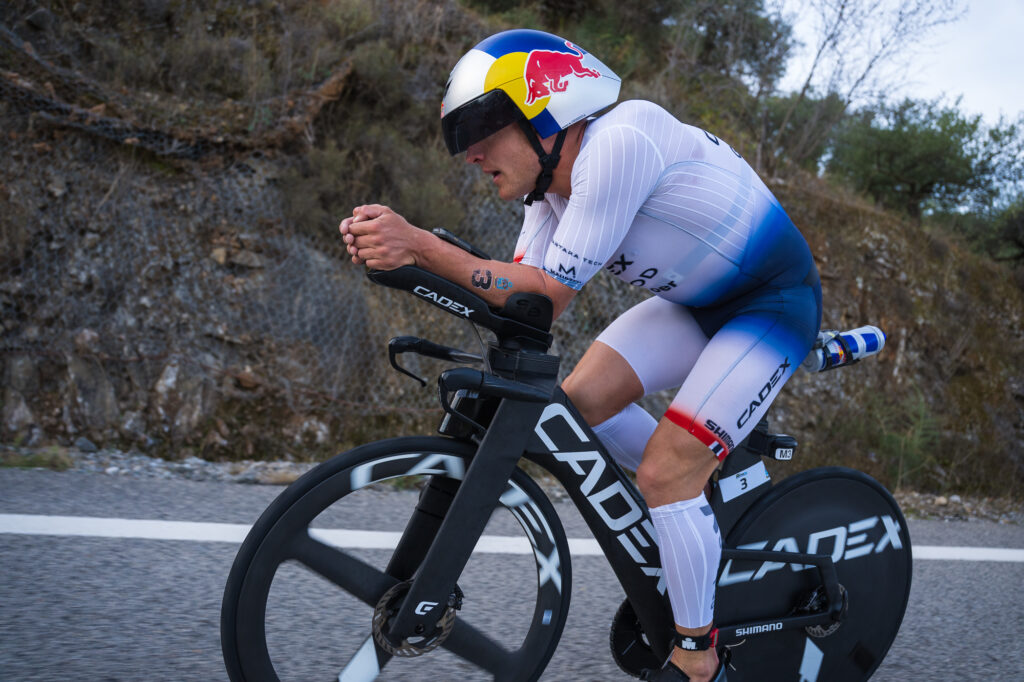
Working with Pryor in Nice wasn’t my first opportunity to work with MediaMotos. I was on a bike with Bradley Bailey at IRONMAN 70.3 Marbella in 2025. As with working with Pryor, Bailey constantly put me in excellent positions to get great shots, all while ensuring that we both safe and not affecting the racing.
Mirrors, Mirrors, Mirrors
Jenkins’s training mantra involves an 80/20 rule. Eighty percent of the work is invisible: prep, training, maintenance. On the bike, “80% of the time you’re looking in your mirrors. Mirrors, mirrors, mirrors – you’re only looking ahead 20% of the time.” Pilots are watching for passing athletes, other motos, ensuring athletes aren’t drafting, all while anticipating where athletes will situate based on the wind.
While many might envision the job is all about flying down the road in chase of athletes, nothing could be further from the truth.
“There’s a distinct difference between a motorcycle rider and a television camera pilot,” Schaffrick points out. “It is the same as the difference between driving a car and driving NASCAR.”
New pilots work their way through a hierarchy of coverage. They start with regional running events, graduate to marathons, then triathlon, then photo moto, digital content and finally broadcast, considered the top tier because of the weight, the close proximity and the slow speed. Cycling follows the same path from Pro Tour to Continental to WorldTour, where “the speeds just increase.”
Bike handling skills aren’t nearly enough – understanding the sport is critical. Pilots need to anticipate a pass, read the race like a chess game and recognize when an athlete is struggling.
The Red Screen Effect
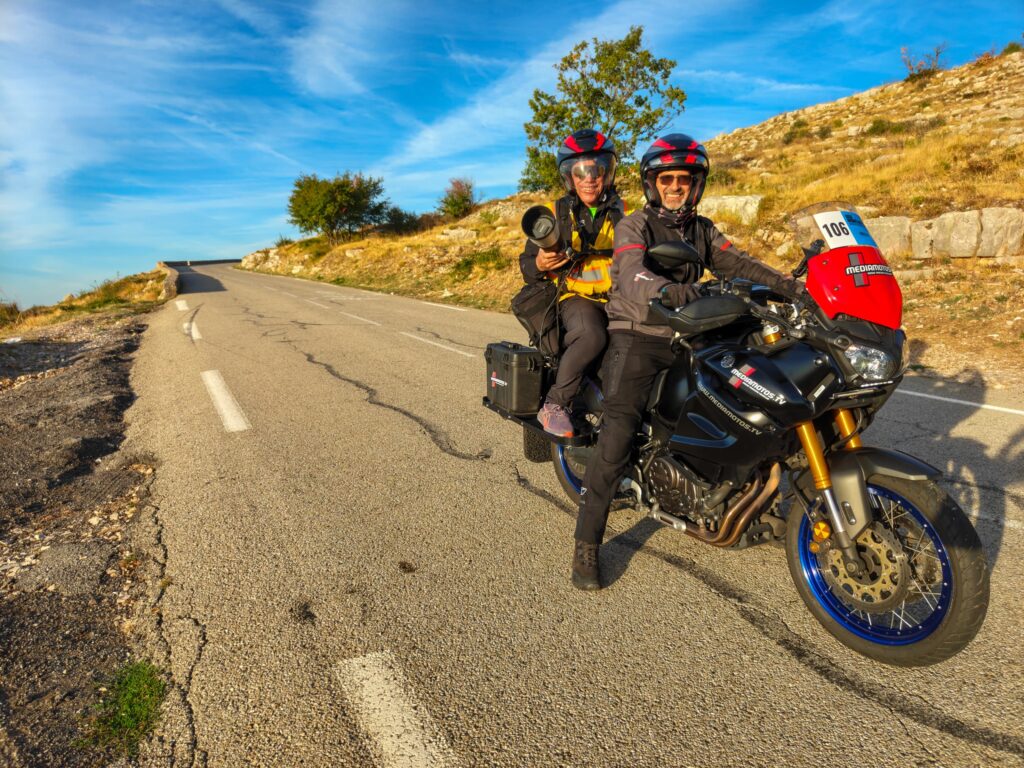
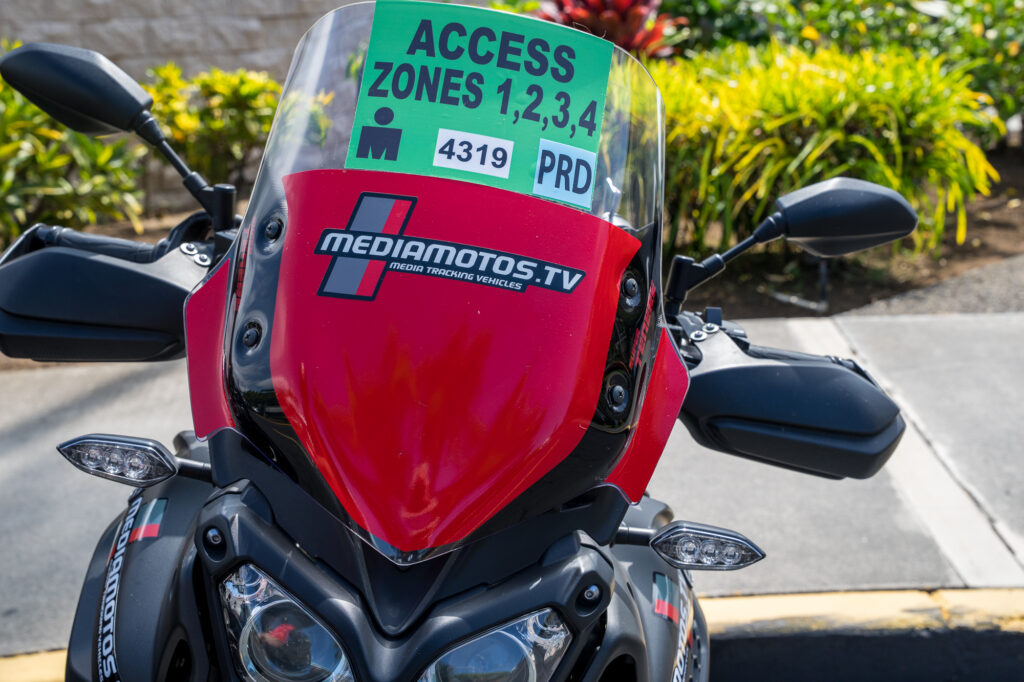
The red windscreens started as brand identity and it’s worked, even with athletes.
“We’ve heard from athletes around the world that they’ll hear a motorcycle, look over their shoulder, and see that red screen and know its us,” Jenkins said. “They say it’s odd, but it’s a calming effect.”
Another bit of brand identity? Parking. Wherever you see them, MediaMotos bikes line up in precise rows.
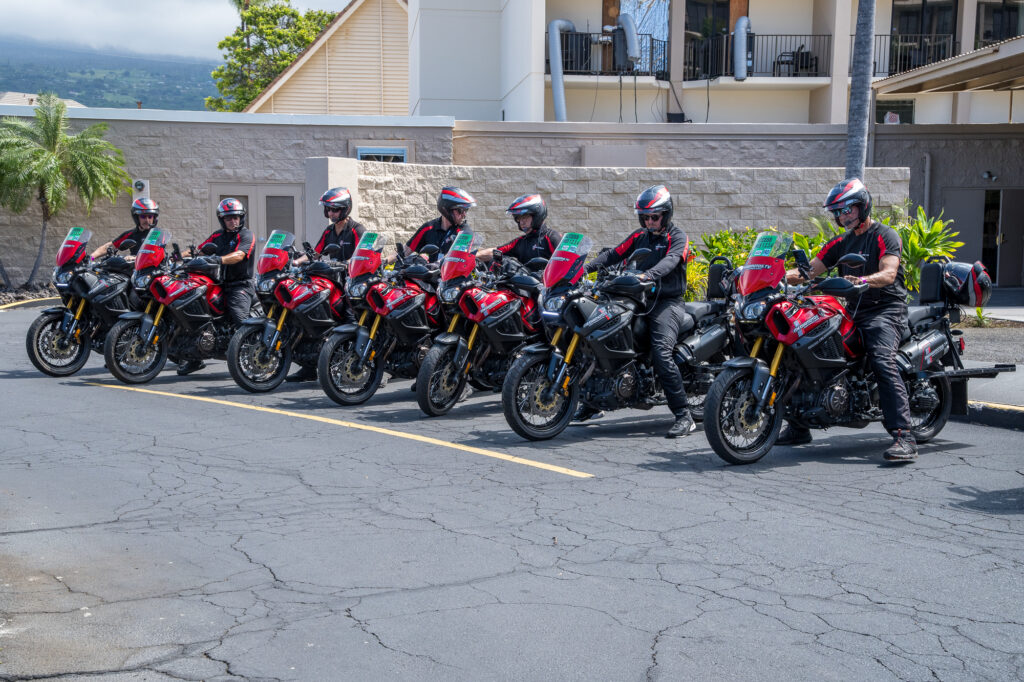
“Scott makes sure they all park the same, I make sure they’re all dressed the same,” Jenkins joked.
It all helps add an aura to their services – athletes know that things are serious things are getting once the MediaMotos crew arrives.
As serious as the riding is, the culture of the group matters every bit as much. Back in the days when Jenkins and Schaffrick worked as freelance riders, they were hired by individual camera operators. Race day was a competition as each outlet tried to get the best and most exclusive shots. That’s not even remotely a factor with the MediaMotos crew.
“They’re not competing with each other,” Schaffrick said. “We’re a big family.”
The riders all stay in touch through various WhatsApp groups – there is one for every event, another for an annual fitness contest, and another serves as a photo page.
Building for the Long Run
What started as fleet of motorcycles and pilots has become much larger. Now the company also supplies camera operators, along with much of the equipment required for them. For a while they were the largest supplier of stabilized lenses in the world – they started buying them because their clients were in need. This year they bought eight Sony PMW-500 shoulder-mounted broadcast cameras for the same reason.
The safety mantra extends to equipment, too. Maintenance is an ongoing process, and there’s a 50% policy – “if a tire is at 50%, throwit it away and go fresh.”
“I can’t be having a tire that’s 40% and expect our guys to give me 100%,” Schaffrick said.
Sport only accounts for about 40% of the company’s work – the rest is television commercials, documentaries and parades. (Yes, those were MediaMotos bikes at the Super Bowl and World Series celebrations.) There are only two full-time employees – Jenkins and Schaffrick – but the crew can expand in a hurry when needed. On one day this year there were 36 people deployed across five events.
The long-term approach is what keeps the company successful. Others have tried to break in to the industry, but most drop out of the picture after a year or two. While MediaMotos services are anything but cheap, their clients appreciate what they offer.
“It’s not just the service,” Jenkins said. “It’s the assets we bring to the party.”
The phone just keeps ringing, too. There are plans to expand to the Middle East once the situation there calms down, and MediaMotos is also primed to expand to Australia and the Asia-Pacific region.
“I’d love to say there’s some kind of really clever, high-level strategy working here,” Jenkins said. “There really isn’t.”
According to Schaffrick, the rule they live by is “the answer is always yes – what’s the question?”
“We’re going to keep saying yes until one of us loses our mind,” Jenkins added.
Neither appeared worried that will happen any time soon. Next up is the New York City Marathon, Then T100 Dubai. Then … well, at pretty much any televised triathlon, running or cycling event, you’re likely to see those distinctive red-screened motos.

Start the discussion at forum.slowtwitch.com