


IRONMAN’s New Drafting Rules are a Poor Answer to a Non-Existent Problem
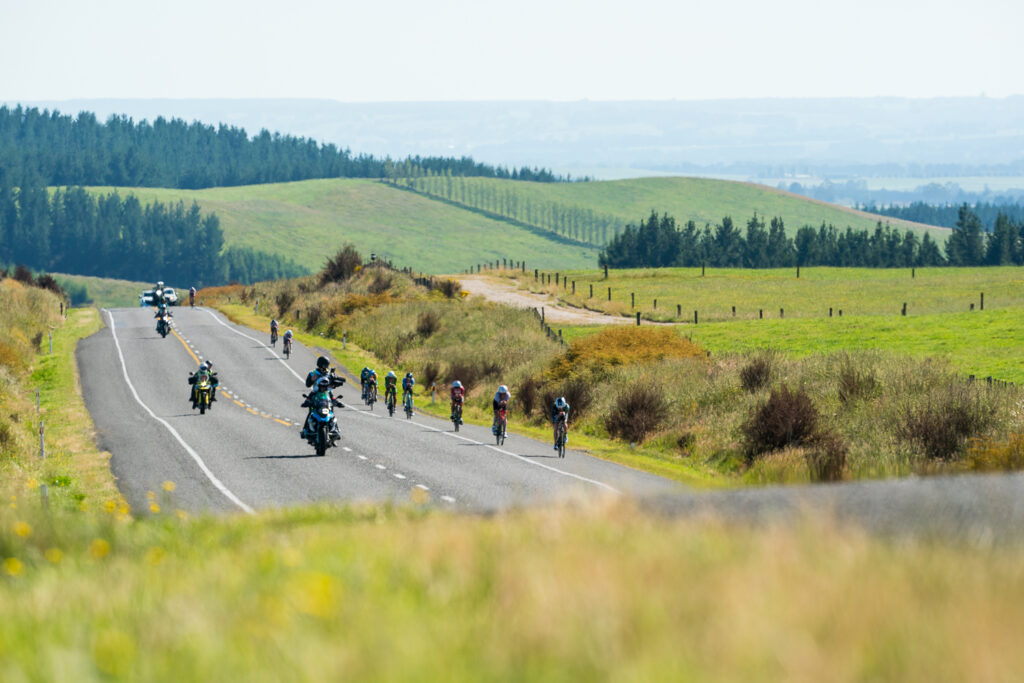
IRONMAN has released its 2026 Competition Rule set. There’s a few interesting nuggets in there. First, all video or imagery taken by an athlete during the race is now grounds for disqualification. We also — of course — have an updated storage rule, with items attached to the top tube of a bike now not allowed to be more than 10 cm tall, and an athlete may not rest their body on it. The much-maligned zipper rule no longer can result in disqualification; instead, you face a time penalty for not complying. And, perhaps in answer to Magnus Ditlev’s tremendous disqualification (and reinstatement) at Frankfurt, “Athletes notified of a red card or disqualification may complete the Event unless otherwise instructed by the Race Referee.” They’re then able to appeal.
I use the word tremendous because, well, it’s exactly how I would react in this situation.
The most eagerly anticipated change, though, was the official language surrounding the previously announced move for professional athletes and their 20 meter draft zone. That announcement, which came following some data analysis on how much draft benefit there was for male professional athletes at certain distances, was championed by some, and questioned by others, and some pondered whether we should care at all.
I decided to put down the Freezing Cold Take machine for a minute, and decided to wait until the published rule set came out. Because, in that initial announcement from IRONMAN, was language that, frankly, made me question whether or not IRONMAN knew what rabbit hole they were wandering down. “Operational details related to the 20-meter draft zone (e.g., time allowed to pass) will be communicated through the 2026 IRONMAN Competition Rules in advance of implementation to ensure clarity for athletes, officials, and event teams.”
Well, the Competition Rules are here. And there’s some critical “operational details” for the professional 20-meter draft zone that will impact you as an age group participant (and might impact a lot more of you than you think).
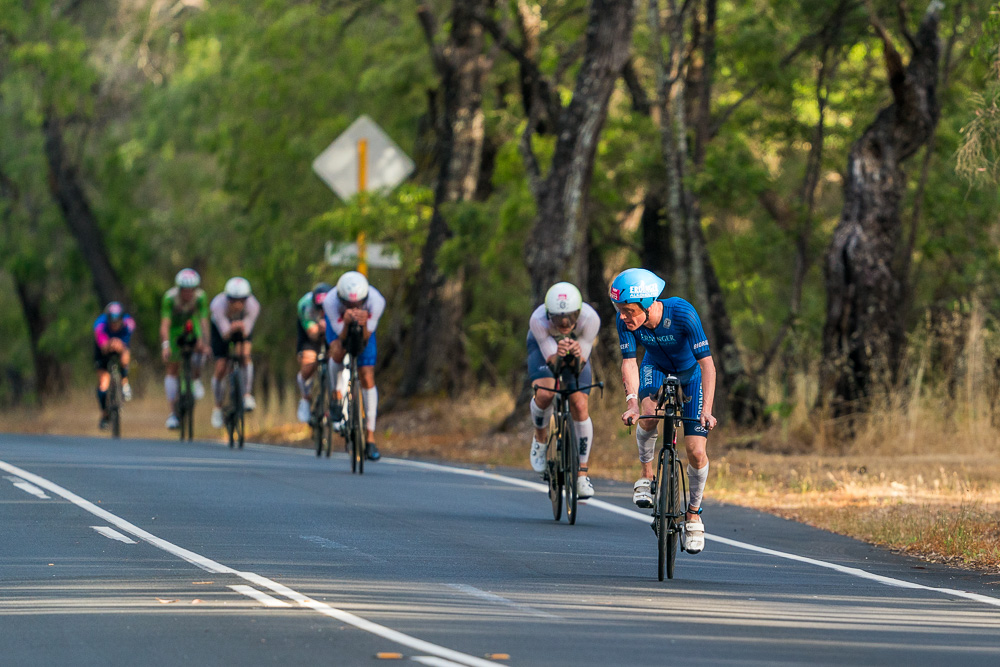
Let’s start with the basic framework: professional athletes have a 20-meter draft zone, roughly spaced out to mean 11 bike lengths between riders. Age-group athletes have a 12-meter draft zone, roughly spaced out to mean six bike lengths between riders. Age-group athletes have 25 seconds to complete a pass on another athlete in order to avoid a positional foul. Professional athletes, meanwhile, must do the same in 45 seconds. Additionally, professional athletes may not use a slipstream to initiate a pass; instead, they must move to the left (or right, depending on country that they are riding in) when entering the draft zone to begin their time clock on the move.
So, let’s take a potential real world example: pro athlete X is riding legally along with 10 other riders in a train in Kona. Athlete X is in the last position of that train and decides to move up; because of the legal spacing between all of the other riders, he’s got to move all the way to the front of the train. He’s got 45 seconds per rider in the train to overcome, meaning a total maximum time of 450 seconds — over seven minutes — to complete that move.
The basics are simple. It’s when these two groups mix that is the operational thorn, and most likely to impact IRONMAN’s core customer negatively.
Let’s go directly to the rulebook (with some emphasis added for clarity): “Any athlete who enters the draft zone of another athlete must continuously progress through the draft zone as follows: (i) Athletes (excluding professional athletes) will be allowed a maximum of 25 seconds to pass through the draft zone of another athlete. However, any athlete who rides into the professional field and is passing two or more professional athletes will be allowed a maximum of 45 seconds to complete the pass of each professional athlete.”
And: “Athletes entering the draft zone of a professional athlete (including professional athletes and non-professional athletes) must initiate and execute the pass to the side of the athlete being overtaken and may not approach directly from behind (i.e., no slipstreaming). Failure to do so will result in a drafting violation.”
And lastly: “Athletes who ride into the professional athlete field may not insert themselves
between two or more legally spaced professional athletes.”
To distill all that down: you, age group athlete, must know when you’re dealing with a professional athlete versus anybody else in the field, and then you have to follow this hybrid mix of age group and professional drafting rules in order to be legal. You can be 12 meters behind a pro, but if you decide to pass, you have to use the professional non-slipstream rule. If that pro is solo, you probably only have 25 seconds to complete that pass (it’s not said). If that pro isn’t solo, you can’t slot in; you need to pass everybody and then have the pro rule of 45 seconds per pass to complete.
In fewer words: don’t go near the pro race, or you’re subject to their rules.
In a vacuum, the attempt makes sense. Professional women have long suffered with some degree of interference by the fastest age group men, in no small part thanks to small gaps between pro women’s race starts and the start of the age group field. You’ll see age-group men passing pro women, and then attempting to prevent re-passes, for instance. Or you’ll see pro women legally use the draft off of these age groupers.
The problem is that, in practice, there are far more interactions between the age-group field and pro athletes than these new rules contemplate for. Let’s take the example of a fast age-group male riding up towards professional women. First, the age-group athlete is now tasked with identifying the type of athlete in front in order to determine which set of rules now apply to his pass. Second, he not only must identify that athlete, but also if there are more of them there, as well as the size of the gap between them (in theory, then, this athlete probably needs to study up on RaceRanger and what the light colors mean). And, perhaps crucially, if that age-group athlete decides that there’s more than one pro athlete in front of them, and doesn’t feel like they could clear all of them, the age group athlete is now obligated to not pass.
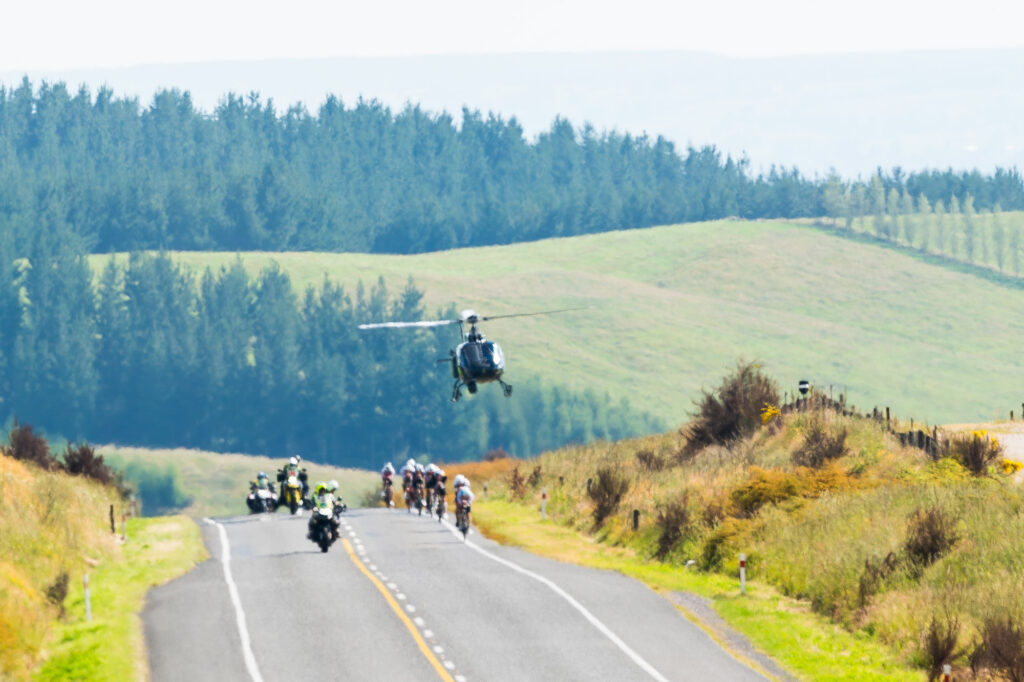
But this is just one example of the interaction of the pro riders and age groupers, and it assumes only the interaction will come from the fastest of age groupers. There’s also the common multi-loop bike courses and pro athletes riding into age group fields, and now those age groupers will also need to understand a.) who is passing them and, potentially, b.) how they need to clear out space for them. We already have seen how these multi-loop courses can wind up causing chaos for professional athletes without adding additional rules complexity to it.
It also would theoretically quell the chances of a repeat of one of the more viral triathlon moments of 2025, with Sam Laidlow and an age-grouper at IRONMAN Leeds.
Ultimately, I can’t help but go back to two thoughts: first, this is a problem entirely of IRONMAN’s own design. There was never a need to change the size of the draft zone for professional athletes, no matter what surveys or data showing that there’s certain percentages of savings for pro athletes at a certain following distance or people claiming “integrity and fairness” were saying. Everybody was racing under the same basic ruleset, minus the prohibition of slingshotting for pros.
The beauty of IRONMAN racing is that it has typically not been a story of just about who the best athlete is; instead, it was about who the best racer was. Those aren’t necessarily the same thing. It’s a mix of being in peak physical condition and marrying it with excellent tactics and gamesmanship. It’s things like Chris McCormack notoriously isolating Craig Alexander in 2010 by making sure Alexander missed the bike pack, or Kristian Blummenfelt “waiting for Casper Stornes” in his duel with Jelle Geens at 70.3 worlds this year. I fear we’ll see less of this, not more.
Second, and arguably most important, is that we’re seeing IRONMAN institute a rule for professional athletes that is having a downstream negative impact on the paying customer. And, in a time period where IRONMAN will be facing its largest scale challenger (in the form of the Triathlon World Tour) for age-group athletes in at least a decade, it needs to be laser-focused on improving athlete experience and ensuring customer satisfaction. Instead we’re on about rules negatively impacting athletes. Again.
Perhaps I’m hopeful that IRONMAN will be as quick to revisit this topic as it was with the Great Water Bottle Fiasco of 2025. Because this feels even more short-sighted than that rules drama.
Tags:
IRONMANOpinionRulesRelated Articles:


Continue the discussion at forum.slowtwitch.com
43 more replies






Being honest, I don’t see a problem with the rules. The issue with the pro women is the slow pro men yo-yoing around them and pulling some of the slower swimmers/closing gaps that are created. Which the 20m draft rule is immensely helpful to prevent this interfering with the race. The AGers that catch pro women usually go right by with no interference, because they’re obviously riding much faster to go across a 5-10 minute gap in start times.
I believe you are 100% right! In the exhaustion of a race it’s mind boggling to have to perform this calculus. I remember half Iron worlds years ago in Clearwater where many jackasses in AG were blatantly drafting. And, unfortunately most didn’t get penalized. That isn’t good either. But, the anal nature of Ironman is frustrating. Between all the logistics, THIS is where they focus their attention? In the real world on planet Earth these days there is blatant crime committed daily right on the world stage. And, yet Ironman is counting everyone’s farts. Like living in a bubble…. And, unless race ranger is coming to Age Groupers…. Rules should be for safety and to stop cheating. I’m sure that even 20 bike lengths back there is some draft that could be measured? When is it enough? To be honest, my eyeballs are just not that good even at 6 bike lengths? It’s an estimate / guestimate at best….
To give some context of how stupid this all can get…. This is something I was sore about decades ago, but, now I just laugh at the idiocy of it…. I’ve been penalized once for ‘blocking another rider from passing’ of whom I just passed while I was following the rules of the road (which was open to traffic) in that race… Basically, I was to the left of a right turn only lane when the race course went straight (and, did not turn right). The person behind me was to the right and subsequently had to get back into the left side at the last second before the exit. On the second lap everyone I could see took the same line I took. Point is, there are cars, and there is danger, and I am not going to put myself in danger. But, according to the race official, I should have been to the right…. So, wammo - 4 min BS penalty. I tried to explain logically after the race, and a few others (including the race official) agreed with me, but, they never overturned. I really don’t know who is getting their rocks off on the ‘power’ Ironman gives them, but, apparently some people do…
Meh. I don’t think it will have much if any impact on most age-groupers, and the very few it may impact are the fastest who are fast enough to meddle within the professional race, and these boys know very well what a pro is.
As to this: “The beauty of IRONMAN racing is that it has typically not been a story of just about who the best athlete is; instead, it was about who the best racer was.” Funny coming from someone who doesn’t give a rat’s ass (probably a slight exaggeration, apologies in advance) about draft legal triathlon!
Again, I think the unforeseen issue is on the multi loop bike courses where you’re bound to have significantly more interplay between the pro fields and the age group fields…and we’ve already seen people willing to try to yeet themselves into oblivion for 15 seconds on the livestream.
As for the second half…draft legal is fun. But based on the data of what people read here on ST…that’s where we have to diverge.
Well said, you are 100% correct.
What sport doesn’t evolve its rules? A dead one. Good to see some rule alignment, no sense in having one race series at 12 and another at 20. Also it’s safer giving more braking distance between pros due to unforeseen hazards or incidents. I could list more reasons why I am at complete other ends of the spectrum as you but I digress and we live in a world where I like having people from all sides of arguments
One could argue when there’s little draft to be had, it matters all the more to make sure you get it.
I’ve commented on other threads with this observation and I’ll keep making it until I see otherwise in Ironman this year - Martin Van Riel in Qatar didn’t take any pulls and sat legally at the back of his group, collecting that little bit of draft that he could and of his group he out ran them all.
20m encourages riding smarter than ever because now everyone is pushing the bike to the limit, and the one guy who saves a few more watts at the limit is better off.
Ironically, the same thing will play out, but somethings will just be a bit more boring. T100 Qatar had great athletes, but there was nothing about the 20m that made it great, indeed at 12m, perhaps Pearson stays in the bike fight longer and gives Wilde a real battle.
I will say in general, I think the OP over estimates the chaos the rules will introduce. Not because it won’t happen, but because IM doesn’t really take AG drafting that seriously anyway. They kind of treat it like Germans handle checking for tickets on the train. Self enforcement with occaisonal but rare spot checks.
On the flip end, it could be argued that Van Riel didn’t have to waste energy playing the passing game. As that expends energy and your nervous system for constantly having to recalculate distance, etc… Maybe he won because of that reason more so than the distance ruling? Didn’t watch race so I can’t comment too much. But, there is something to be said for going up the line and then back and so on… I probably should be on the other side of this argument because people have drafted off of me quite a bit (like not even 1 meter let alone 12). I make sure I notify an official if I can… It sucks when it happens… That said, idk, if someone is 12m behind I care too much. Maybe if I was a pro I would… again, don’t know. I think they should poll the pros if they haven’t already… Curious to their take…
A lot of effort went into writing this article - or at least so it seems, as its piping is well thought out.
However - I can see a bit of can’t see the forest from the trees type issue.
What is the ultimate problem here - that age groupers won’t comply with drafting rules (when behind pros for an extended period) because they’re over-engineered? As if they had when the rules were simple…
but it is so unfair for the 1000s of atheltes that have passed Sam Laidlow on the bike . or how can we expect a fast amateur to differentiate wether he is going to pass a female pro or a male amateur .
yes I do agree it can cause issues in the 2nd and third lap , but we have those safety issues anyway and the safety issues are the bigger issue here but are not mentioned.
and here is the thing lets assume the rule is really not working, I think de Rue has shown that he is not afraid to change things if they dont work.
so why lets not just see how it will actually play out.
this is anohter point that showes you are looking for points that are not factual (just like the same laidlow argument which happens extremly rarely) Kristian Blummenfelt “waiting for Casper Stornes” in his duel with Jelle Geens at 70.3 worlds this year. I fear we’ll see less of this, not more. he apparently was waiting for casper on the run which is of course BS as he does not want to be outrun by him again … but he can still do that ,as nothing changes for the run. so points like this make the article even more biased as they are not facts that are relevant really. its gaslighting.
Pro tip : flashing race ranger lights in many/most of the pro races is a clue

Race ranger in not in “most” pro races at the moment. Only really T100, Ironman pro series & Roth.
I am not 100% sure of the extent but I believe IM has extended beyond the pro series with RR
As you say: “many/most” (there are 62 ‘Pro’ events in IRONMAN’s 2026 race calendar) and I note they’ve just said that, besides the IM Pro Series races another 25 IMs and 70.3s will use Race Ranger (RR) - see # below. Clearly that’s the easy way for very fast amateur men to tell from behind.
Without RR, not so easy, though in practice:
the speed differential is large and they will just blow by
the number of athletes who catch a pro is small,
the number of athletes who catch two pros riding ‘together’ is even smaller
this applies to a two lap race too
From the FAQs one can sense the scrabbling for this edge case (good Q, useless answer):
"Q: How do I identify professional athletes if I am an AG athlete who may interact with the pro field during the bike?
Pro athletes will be intentionally marked in several ways so AG athletes can recognize them quickly to avoid drafting or interference. Here are the key identifiers you can rely on:
Comments:
#“IRONMAN will be expanding its use of RaceRanger to events beyond the Experience Oman IRONMAN Pro Series in 2026. IRONMAN will be implementing RaceRanger for the professional field at more than 40 IRONMAN and IRONMAN 70.3 events globally, including all 16 events that are part of the 2026 Experience Oman IRONMAN Pro Series.”
I am ideologically opposed to this idea. It will reinforce many amateurs’ belief that it’s all about them, that PROs must put up or shut up. Pragmatically, great idea.