
Kona Chill: Ultra Cool Tech’s Glacier TT Cockpit Cooling Kit
No one can forget the absolute meltdown Lucy Charles-Barclay had at Kona last year. Or Taylor Knibb’s. As Charles-Barclay staggered through the aid stations grabbing handfuls of ice and Knibb stumbled to the ground, you could almost feel how overheated they both were. The spectacular sight of the world’s best triathletes unraveling in the Kona heat is something we see every year. In 2024, Léon Chevalier finished fourth but stopped on the run to dunk his whole head in a bucket of ice. That same year, Sam Laidlow famously grabbed a 2L bottle of Coke while walking through an aid station on the run. In an interview with Bob Babbitt last week, Laidlow warned of the Kona-specific heat and predicted some rookies would suffer the consequences if they raced it like it was any other ironman.
The heat, the humidity, the blowups–they will always be a part of Kona. But so will the athletes going to great lengths to stay cool. I remember hearing through the grapevine that Patrick Lange was using copper in his extension pads for cooling when he won in 2024. (His coach Ben Reszel confirmed it when I interviewed him later down the line). Jon Breivold was seen on social media testing cooling gloves a month or so ago. Vincent Luis’s kit sponsor, Tactic, has been working on a Kona-specific suit all year. Kristian Blummenfelt and Gustav Iden both have custom aftermarket 3D-printed hydration reservoirs (first spotted in Nice). Marten Van Riel has been seen training in a cooling hat. Marta Sanchez will be using cooling bar tape. And no doubt we will see plenty of Omnius cooling headbands, hats, and even cooling towels on the run.
Ultra Cool Tech
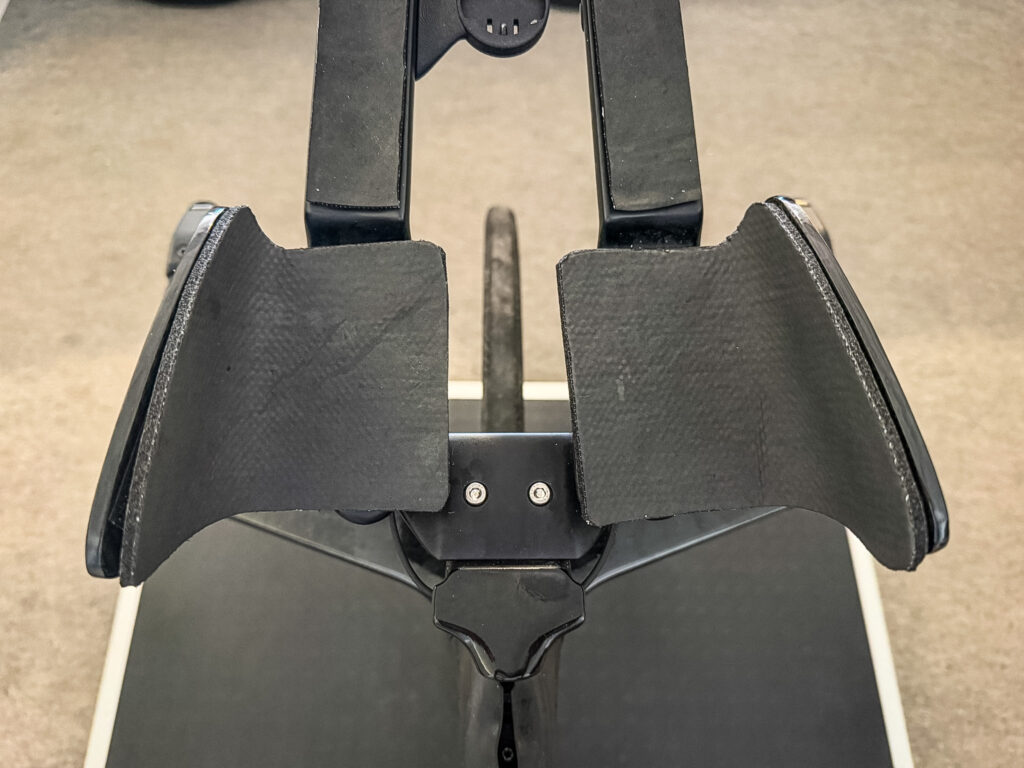
Three of those products, the gloves, hat, and bar tape, are made by Ultra Cool Tech. But the company released something else a few months ago that really caught our eye at Slowtwitch: the Glacier TT Cooling Cockpit Kit. With fairing-style extensions becoming more popular, cockpit airflow is significantly reduced, making cooling an issue. The Ultra Cool Tech kit is essentially a cooling fabric to line your cockpit, their Glacier Bar Tape, and all the tools for self-installation.
I spoke to company founder Chris Blomfield-Brown, who calls himself a “performance engineer.” His background is incredibly varied, from software to sports, but he has been in the business of thermoregulation for several years. Before Ultra Cool Tech, he was the product lead at CORE Body Temperature sensor. He then started Ultra Cool Tech in 2024 and has brought several cooling products to market, including cooling towels, gloves, and headbands. The Cockpit Cooling Kit is his latest project but the demand for cooling products started a few years ago.
“ I was literally getting calls from teams in the team cars at the Tour de France saying, “What else can we do for cooling?” Blomfield-Brown shares.
“So I was out trying to look for solutions for them and what we found is a lot of the solutions didn’t work very well. Or didn’t work at all. There was a lot of marketing around that they work. I’m an engineer by DNA, so instead we took a real simple engineering physics approach and invented some new cooling solutions.”
Cooling Science 101
To understand the science behind cooling products, you need to understand “active” and “passive” cooling. Blomfield-Brown describes passive cooling as allowing the body’s natural thermoregulation to work efficiently. Think breathable fabrics that let skin and sweat do their thing. But the passive fabrics don’t actually add cooling; they just try to stay out of the way.
Active cooling is where their technology comes in. Their water-retaining fabrics “actively” cool by keeping water next to the skin, adding an additional source of evaporation on top of your own sweat.
”When you get hot, your body vasodilates the blood vessels close to your skin, so blood gets pushed to your skin. And then sweat comes out of your blood. It’s the clear part of your blood. Plasma comes out from your blood, seeps out, and then when it’s on your skin, it evaporates, where it goes through a ‘phase change.’ And that phase change cools your skin down,” he explains, taking me right back to high school biology class.
“So when you’re running or cycling and you’re feeling really hot, touch your arms. A lot of times they’re quite cool because the blood that’s close to the surface gets cooled down. And when it’s warmer out, that sweat evaporation equates to 70% to 80% of your cooling ability,” he says.
Our body does a pretty good job at keeping us cool until the math stops working. When there is a big difference between skin and air temperature, it’s easy math in your favour. When that difference gets small, that’s when the effect is minimized because you can only sweat so much and you only have so much skin.
So, Ultra Cool Tech aims to swing that math back into favour by “adding sweat” (water) and surface area (material). Once wet, their material provides a reservoir of water at the skin surface so that when you touch it, either with your hands on the base bar or forearms in the cockpit, the evaporation process is active and there is a cooling effect.
“ It’s all basic physics,” he adds. “There’s no magic in cooling.”
The Product
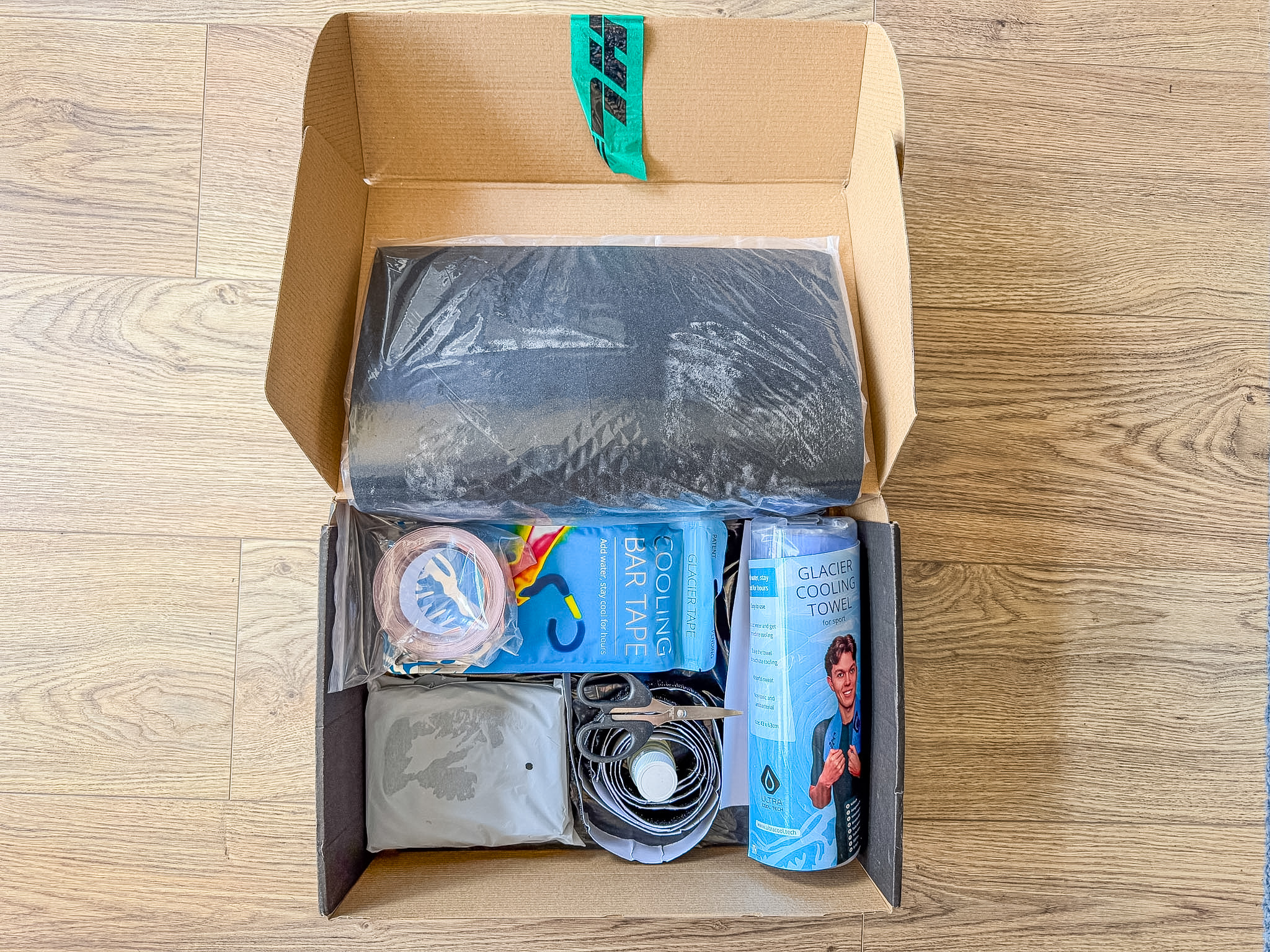
Now that we’ve all passed Cooling Science 101, let’s look at the product. The Glacier TT Cockpit Cooling Kit will run you $132.00. As per their website, you get quite a bit inside the box:
- Bonded Glacier sheet: 55x32cm (black)
- Additional Glacier Sheet cockpit lining: 55x32cm (black)
- Additional Ultra Cool Tech Thermal Foam: 40x32cm
- Copper Lining Tape: 25mm x 900cm
- Velcro bonding strips: 100cm
- Special bonding and adhering glue: 25ml
- Glacier Towel: 64x43cm
- Glacier Tape: 2 rolls of 200cm x 30mm Glacier bar tape including finishing tape and bar ends
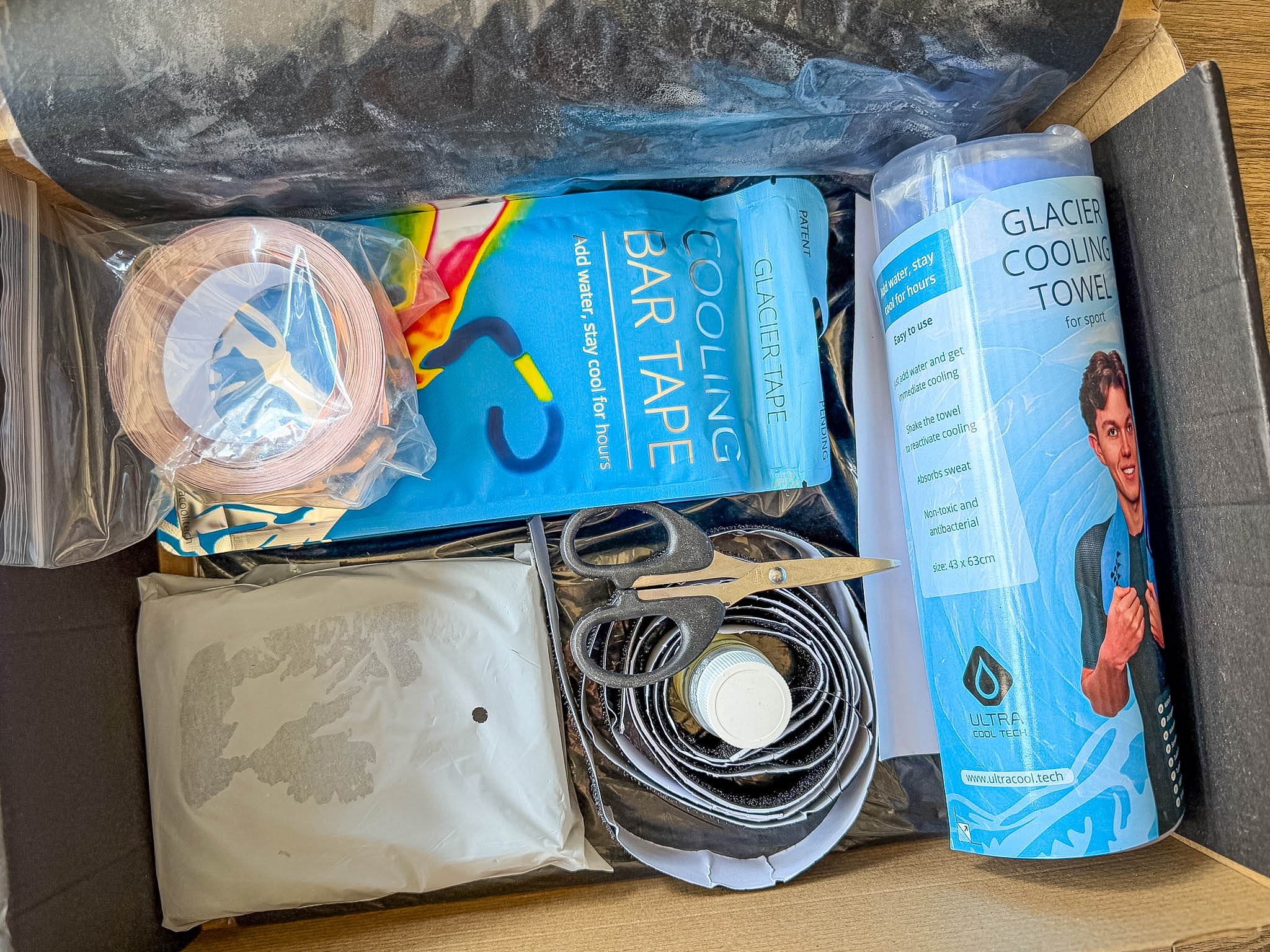
While the Glacier Tape has been on the market for a while and looks like a well-manufactured and refined consumer product, the rest of the products are a little “thrown in” the box. Blomfield-Brown mentions this right away. They weren’t actually planning to go to market so quickly but they were getting so many athletes and teams reaching out, they decided to bring them into the process. The products all work but it is by no means a polished package; however, since it’s essentially an R&D product, we can forgive a little bit of “branding experience” and if it works, who cares about the box.
There is enough laminated foam included to do a few cockpits. If you have an exceptionally large one (Blomfield-Brown mentions “the Cube one” but no athlete names), there is enough to do it once with some material left over.
The first generation kit is now out of stock. Pre-orders for the second iteration are available on their website.
The Install
As someone who is emotionally allergic to bike mechanics, I took the box to my trusted bike fitter and mechanic. But as I watched him install everything, it was actually pretty easy and straightforward. The box comes with the cooling material laminated to a foam and extra cooling material. We used the laminated foam. He used a pencil to measure and mark the laminated foam material, cut it, applied it with the velcro strips and that was that. In less than twenty-five minutes, he was done.
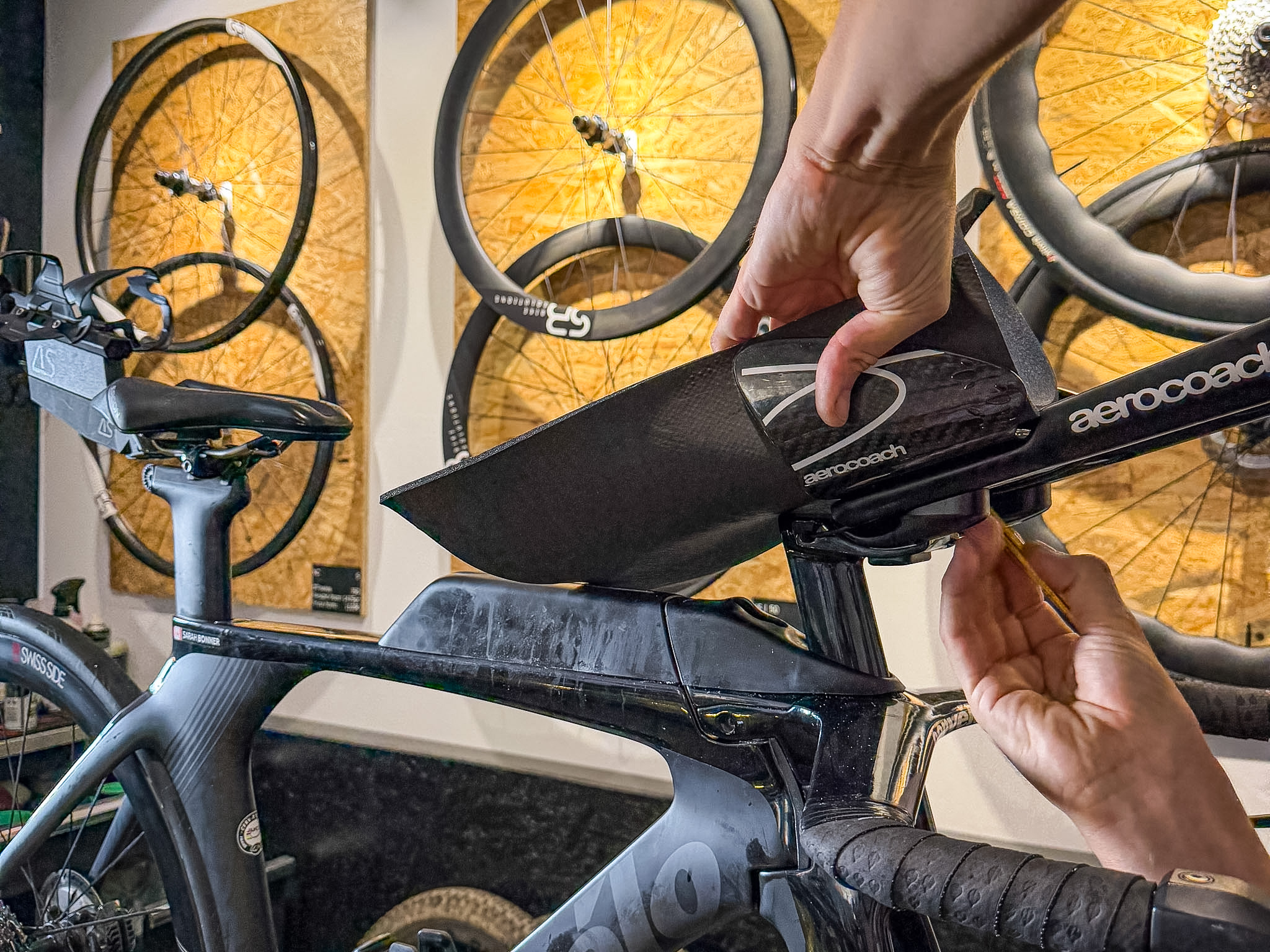
Depending on your cockpit, Blomfield-Brown says it can take some “farting around” to get right. After riding it for a bit, he’s right. If you’re particular and like things “just-so,” it will take some time to get it perfect and professional-looking.
“But don’t get too fixated. It doesn’t have to be perfect,” he says.
How to Use It
For the product to work, it needs to be wet. They suggest dousing the material in water before you check your bike in and then covering it with the cooling towel, which also needs to be wet. In the morning before the race, wet the material again. Although they claim it stays cool for hours, Blomfield-Brown suggested splashing water on it if I could, like when I was going through an aid station.
The Test
I was skeptical that all of this would work. Well, specifically that it would work well enough to make a performance difference or for an athlete to notice. I tested both in racing, heat training inside, and normal training outside.
TEST ONE: Just the Glacier Bar Tape
I actually first tested the Glacier Bar Tape separately when I raced Alpe D’Huez, which hit a max temperature of 38C (100F). I purposely did this so I could compare my non-cooling taped/lined extensions to the cooling tape on my base bar.
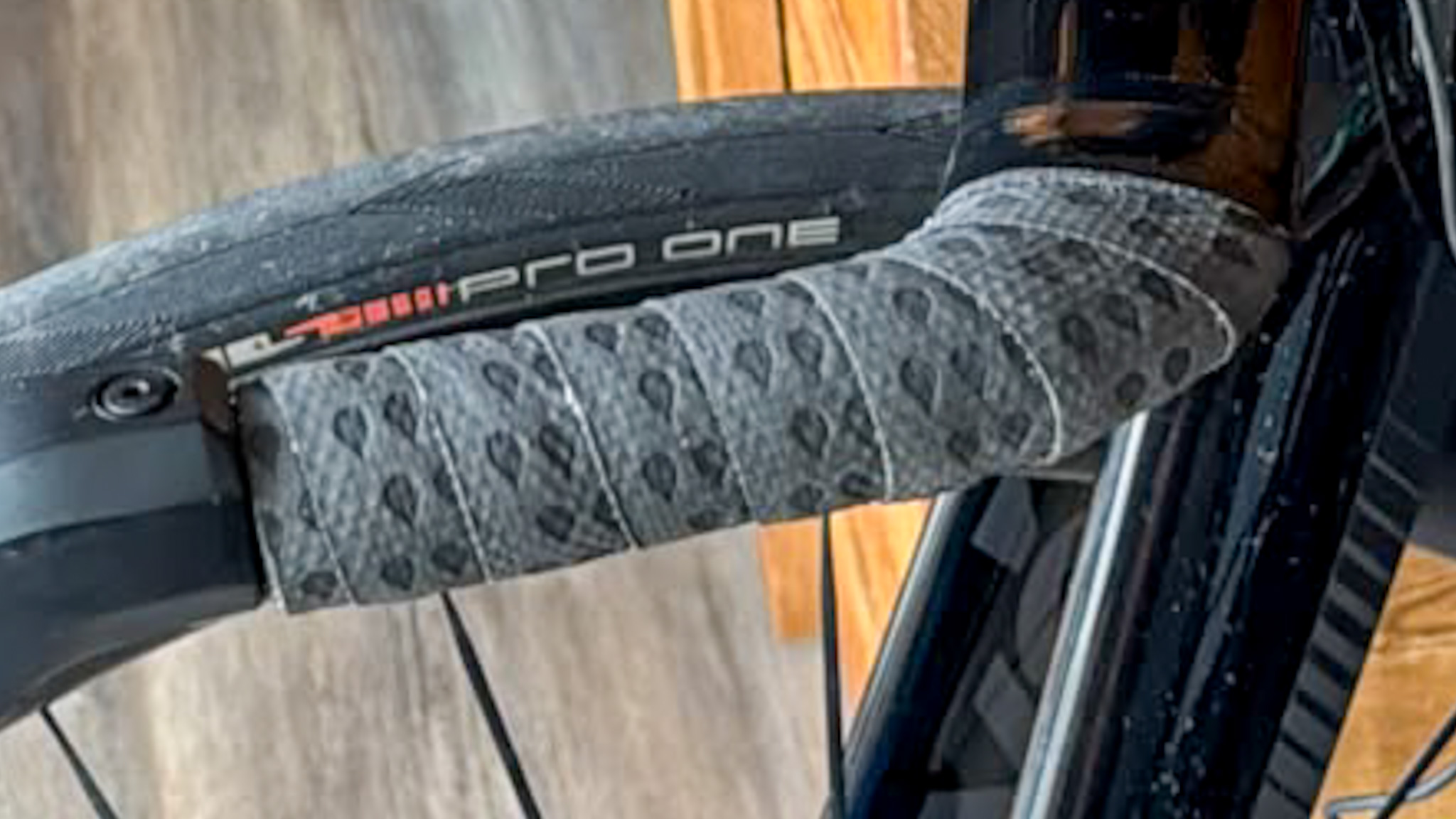
It feels and installs exactly like normal bar tape. Once it gets wet, it feels cold to touch and isn’t slippery.
I actually noticed the cool feeling every time I moved my hands to the base bar for the duration of the almost five-hour bike. The sensation didn’t seem to last but if I moved my hands away and back again, it was still cool. And my extension grips suddenly felt warm by comparison, something I never noticed before.
The bar tape seemed to feel much colder when it had fresh water on it so I took every opportunity to re-wet the surface. It was a bit tricky to do so zipping through an aid station when you have other concerns and, rookie error, it might have cost me too much in actual hydration but that’s an easy fix for next time.
TEST TWO: The Glacier Cockpit Cooling Kit
I have more traditional aero extensions, as in two separate extensions instead of a mono-fairing. Once I had the elbow pads and extensions lined, my second session really put the cooling tech through its paces. An indoor three hours with sustained race-pace efforts in the bars. I lined the floor with a towel and doused the material and base bar. Once again, it did actually work. But once again, the sensation seemed to fade away. However, I remember having this feeling when I first tested the Omnius headband.
I’m sensitive to heat and I hate wearing any extra gear or clothing that feels hot so, even though it was cooling, I was reluctant to wear a headband. I still wear the headband but, not necessarily because it feels cold, but because it doesn’t feel hot. I don’t notice it so I figure it must be taking heat out, otherwise I would feel the trapped heat and take it off. The Ultra Cool Tech material is similar. It might lose its cooling sensation but it doesn’t lose its cooling ability. If it felt hot, that would be different but after a while, you just don’t notice it.
I asked Blomfield-Brown about this and he said that’s the normal experience.
“It’s like aero. When you’re riding and everything’s working and you’re going 42 kilometres an hour, putting out your power, that just feels like it should. And when cooling products are working, after a while you don’t notice them. It just feels like it should be,” he says.
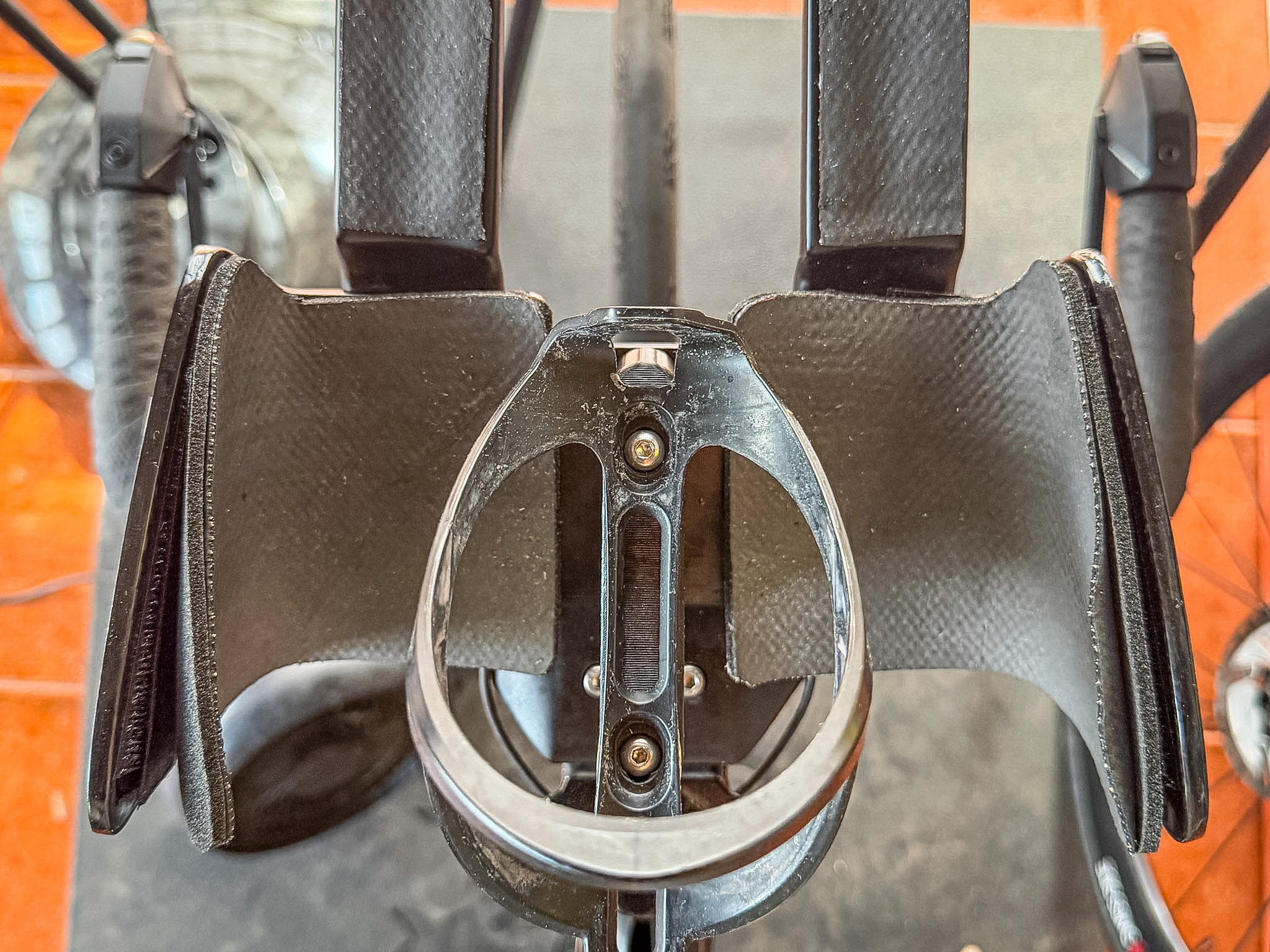
I continued to train as normal, inside, outside, sweaty heat sessions, hard sessions, easy ones, long and short, etc. I have one complaint: The cooling material started to peel off of the foam. It sticks back on if I press it but comes right back off.
Perhaps to the concern of his marketing director who was also on the call, Blomfield-Brown addressed the issue upfront.
“A few people have had some delamination problems. So, that’s one of the things that we’re still improving,” he said. “We found the bonding process was more difficult than expected.”
He further detailed all the current issues and concerns they have, all the negative feedback they have received (primarily the delamination of the fabric on the foam and manufacturing limitations). But they seem to fuel his fire and, honestly, they are small concerns that I imagine will be easily ironed out as they continue to develop the product.
“It’s not perfect to start with, and we’d love to have feedback, but we are continually working to improve it,” he added.
I also found that the Velcro strips worked in the sense that they got the job done but, being a little bit “tiquismiquis,” I started to find the non-perfect adherence to the carbon arm rest irritating. As such, I plan to use the provided glue to get a more polished look.
Hot or Not? Hot in a Cool Way
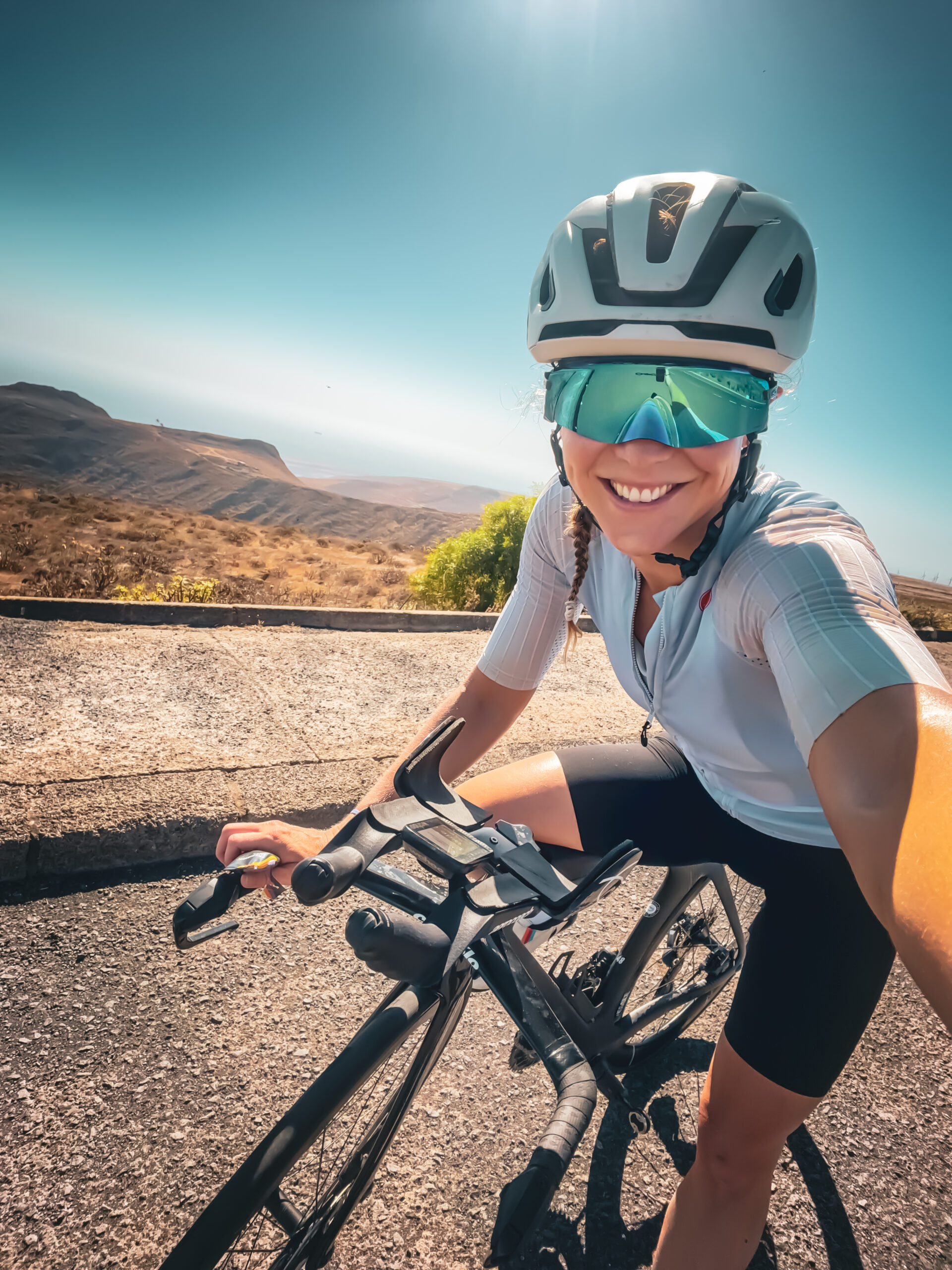
I’m keeping it on my bike but 100% it’s a marginal gain. Is it going to change the outcome of your race? No. But is it helping? Yes.
I brought this up with Blomfield-Brown when I asked whether this is really just a top-end pro product for the Blummenfelts of the world looking for 1% or if he thought every athlete could benefit.
“You just don’t put on a helmet and you go ten times faster, right? Aerodynamics is a combination of all the pieces together. If you just use one thing, it’s gonna help, but if you add that to the next bit, the next bit, thinking about your hydration, thinking about your cooling strategies, it’s really just thinking about it all together, and that’s when you’re gonna get a benefit,” he says.
“A little bit is better than what you have now. Everything is just incremental,” he adds.
I couldn’t argue with him there and triathletes probably understand the culmination of marginal gains more than most.
If the price point is making you waver, the bar tape is sold independently as well for $53 so you can try it out, but if you have a fairing-style zero-airflow cockpit, I can happily recommend it will be a welcome marginal gain. If you have a more traditional cockpit, there is enough product to do a few sets of pads and extensions so you get some longevity there.
When staring down the barrel of Kona or even just summer racing, finding any gain to keep you cool is going to help give you the best day possible.





Thank you so much for this complete test. I’m in Kona for the race and I see many different products to beat the heat.
A while back I actually bought one of their cooling towels and cut it up/sewed it onto my arm pads. Did it feel cool? Sure. But it was also quite slippery. Did it help? Absolutely not.