


Nerd Belts: The ‘No Bounce Hydration Belts’ Taking Triathlon By Storm
When I caught up with Nerd Belts founder Steven McKenna, he had just gotten back from a run. A hot run in the blazing sun of his hometown Adelaide, Australia. It was the middle of a heatwave and temperatures were hovering in the mid-90s Fahrenheit. He logged onto our Zoom call sweaty and red in the face, apologizing for his appearance, but explaining that, as a business owner and father of two young children, he had to squeeze his runs in whenever he could.
He proceeded to unclip his hydration belt (a must-have for McKenna on his runs in that heat) from his waist, giving us the perfect segue into the reason for our call. McKenna is a recently retired professional triathlete who is now dedicating his time to running (he has a marathon PB of 2:16:42), his family and his work with Nerd Belts — a project that started out as a one-of-one product and has grown into a full-fledged business that triathletes around the world are endorsing.
Racing as a Pro
Before McKenna ever ventured into the worlds of business and product design, he was, as already mentioned, a professional triathlete. Growing up, he was a high-level junior runner, but after years in the sport and missing out on national medals season after season, he “was angry at running” and moved on to playing “footy” (Australian rules football) instead.
McKenna says he had spent much of his teenage years training and remaining committed to running, so when he switched over to footy, he was happy to “just be a normal person” and not live so diligently. Australian football led to a broken leg for McKenna, however, and with more than three months on crutches, he was looking for a way to stay fit.
“I did [indoor] cycling and swimming,” he says. “I could only swim with my legs tied together, so it created a really good technique pretty quickly, even though I’d learned how to swim at 22.”
By the time his leg healed, he was swimming and cycling quite a bit, which was when he caught the eye of the South Australian Sports Institute (SASI). Normally, this would mean SASI saw him at an event or in some formal setting where he could showcase his athleticism, but that wasn’t the case for McKenna.
“They saw me going up some climb [near Adelaide] chasing their cyclists,” he says. The coach stopped McKenna and asked him what his best time was on that hill. McKenna told him it was his first time.
“He was like, ‘Oh, your first time [riding there]?'” McKenna recalls. “I said, ‘No, it’s my first ride on the road ever.'”
McKenna’s effort on the climb impressed the SASI coach enough to earn him a shot at making the South Australian team. However, as any cyclist knows, it’s one thing to be strong in the saddle, but the technical element in road racing cannot be overlooked.
“I crashed so many times,” McKenna says with a laugh. “I was like, ‘I think now that I can run, straight lines is probably best for me.'”
Instead of solely running, though, he decided to combine it with swimming and cycling and give triathlon a try. He won his first race — a small local event — and less than a year later, he made his professional debut.
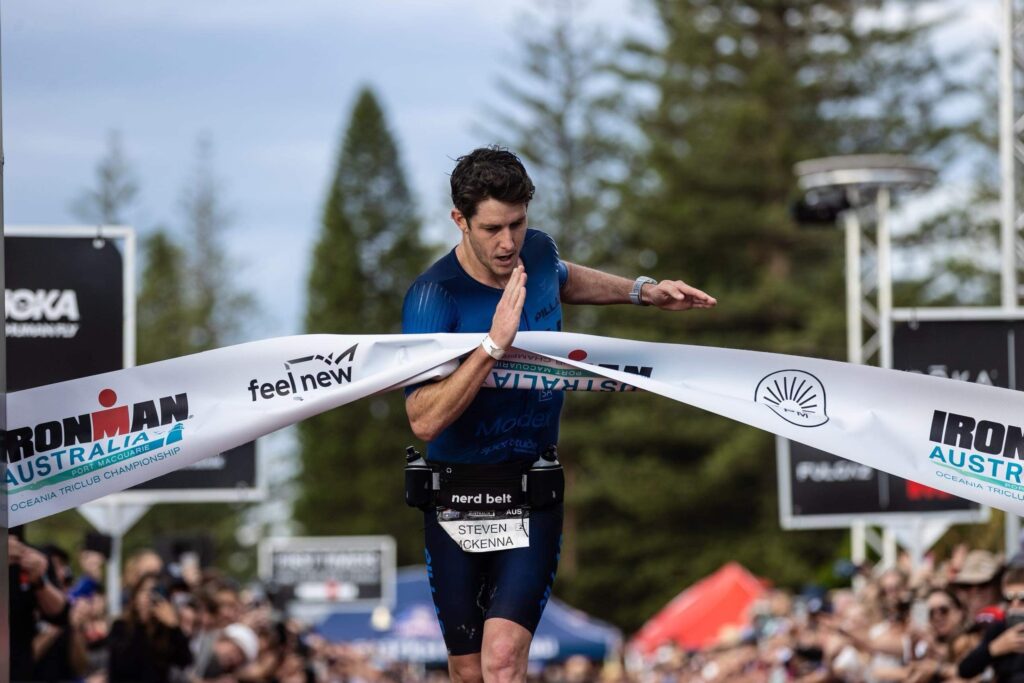
Still so new to the sport, it took him a few years to find his way in the professional ranks, but by 2019, he had multiple wins and podiums to his name. In 2023, he earned a couple of his biggest results, winning IRONMAN Australia and finishing second at IRONMAN Cairns. A year later, he won IRONMAN New Zealand and finished second at the World Triathlon Long Distance Championships, and he raced as a pro in Kona, where he finished 42nd among the pro men.
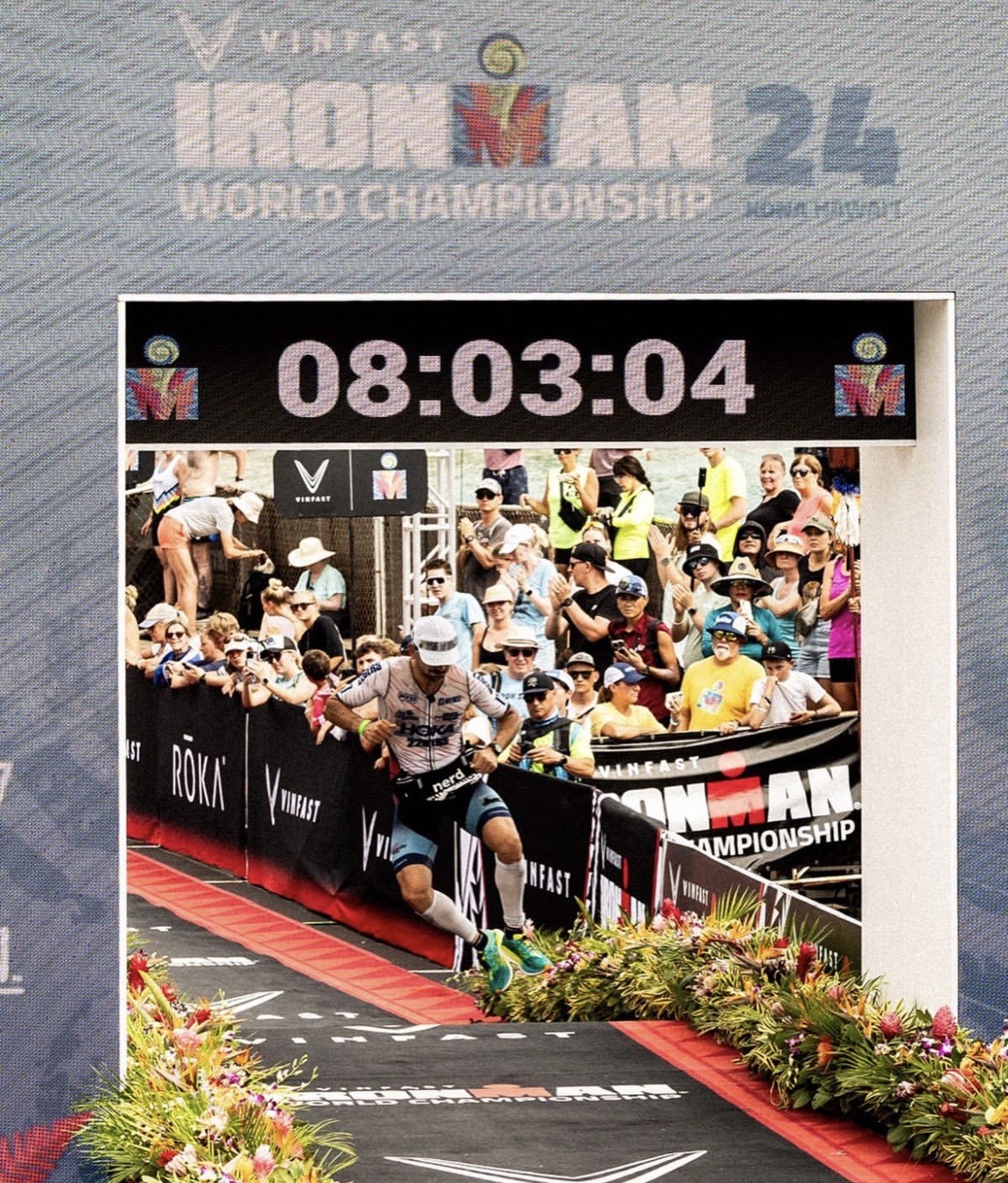
As it turns out, the IRONMAN World Championship would be the last finish line that McKenna crossed as a professional triathlete, as he decided to turn his focus to Nerd Belts full time moving forward.
Becoming Nerd
Racing long-distance triathlon, McKenna wanted a belt to carry his hydration and nutrition, but he was frustrated with the options on the market.
“Some companies’ belts haven’t changed for 10, 15, 20 years,” he says. “And that’s the issue. All they’ve changed is the fact that it will now fit the modern-sized phone, I think. Other than that, they’ve kind of got either this bulky design, or the elastics in the wrong spot.”
Failing to find the belt he wanted, McKenna decided to make his own. He designed it so it could hold multiple bottles with minimal, or no, bounce, then slapped the name Nerd Belt on it to get ahead of any playful jabs he might receive at races.
“I was trying to address the fact that it’s a weird looking apparatus and just make the joke before they could,” he says with a laugh.
This original belt was not meant to be a prototype or a marketable product — McKenna just wanted a belt that was comfortable and didn’t move around when he was running. However, some of the best advertising comes from athletes wearing a product or company logo on their way to big results, so McKenna was unintentionally acting as a moving billboard while doing his job on the triathlon course.
“I won IRONMAN Australia using a Nerd Belt,” McKenna says. “After that, I had, like, 100 people ask if they could get one.”
For a few days, he politely declined these requests, telling people that he wasn’t in the hydration belt game. When the barrage of messages didn’t stop, he reconsidered.
“I was like, ‘Oh, screw it, I’ll just make 500,'” he says. He made a website, launched a pre-order sale for those 500 belts and nearly sold out right away. That was in 2023, and ever since, the business has only grown.
Soon enough, McKenna wasn’t the only pro triathlete using Nerd Belts. To this day, he will still randomly see finish line and podium photos in which pros whom he has never met (and who have no official affiliation with the company) wearing Nerd Belts.
He remembers one day in 2024, when he was packing orders to ship and he came across a familiar name: Jelle Geens. This was just a few weeks before Geens won his first IRONMAN 70.3 world title, McKenna says. Geens wasn’t a sponsored athlete, he didn’t have any connection to Nerd, he just needed a belt to help him get through hot training days in Queensland, Australia, where he lives, and had heard about the company’s success.
After racing in Nerd Belts himself, McKenna likely didn’t need the external validation from other triathletes and pros to know that he had designed a successful product. At the same time, it has to feel good seeing an athlete like Geens (as well as other pros like Sam Long, Jason West, Jamie Riddle and others) wearing Nerd Belts in training and on their way to big wins around the world.
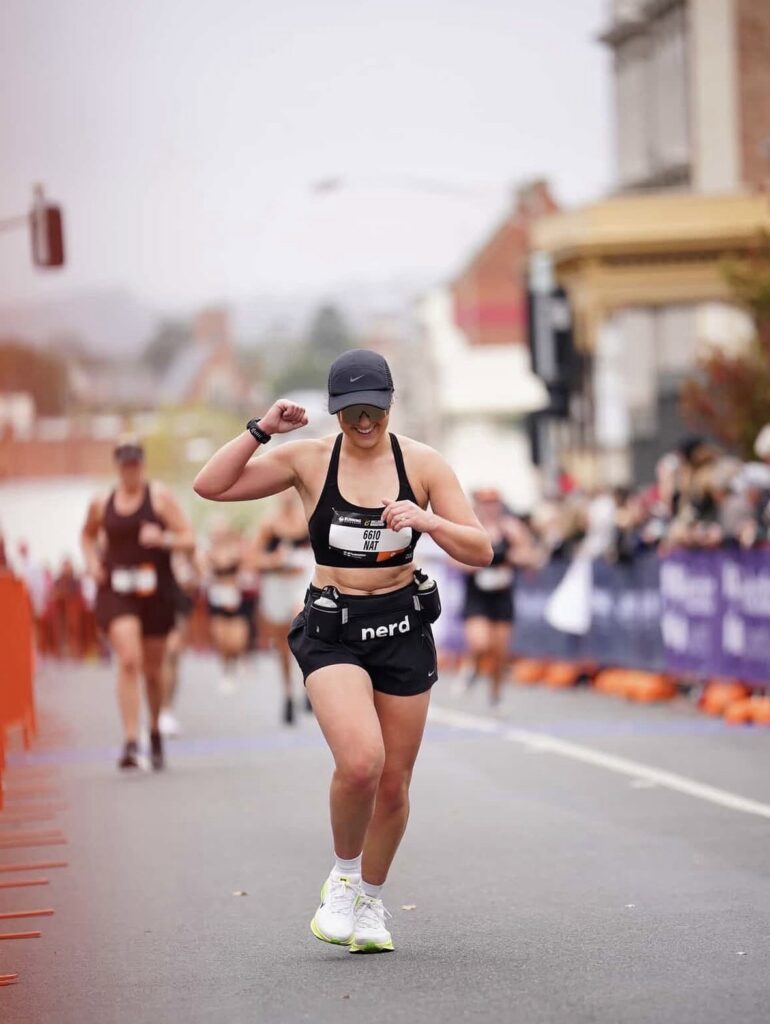
Testing Nerd Belts
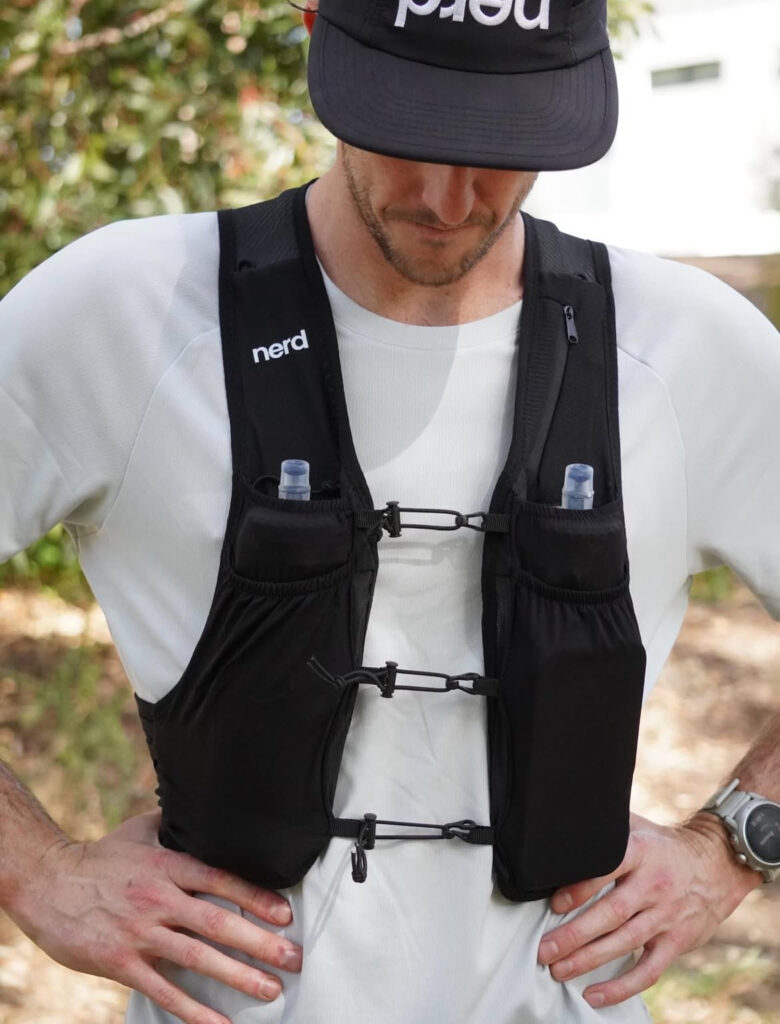
After a few years of growth, McKenna and his Nerd team have developed and launched multiple products. They, of course, have their classic hydration belts, but there are also Nerd Belts without bottles (these are ideal for carrying nutrition, a phone or anything else you might need on a run), soft hydration flasks and even a new running hydration vest.
I first met McKenna and learned about Nerd at a running expo in Texas in December. Most of the brands I met at this event weren’t handing out products, which made it quite surprising when McKenna gave me a massive box to take home after our brief conversation. In the box was every belt Nerd has to offer.
In that quick chat with McKenna, he told me his story and how he had made the first Nerd Belt due to personal needs as a pro triathlete. He explained that there was no bounce and no movement from the belt, no matter your pace.
Frankly, I didn’t believe him. Of course he would tell me all of that. It was his company, after all — he wasn’t going to tell me he had designed a mediocre product. So, when I took my first Nerd Belt test run (in the NB400, which holds two 200ml bottles), I was anticipating the same experience I’d always had with hydration belts. I was ready for a cumbersome, bulky fit that bounced and rocked around on my hips from the first few strides right to the end of the run.
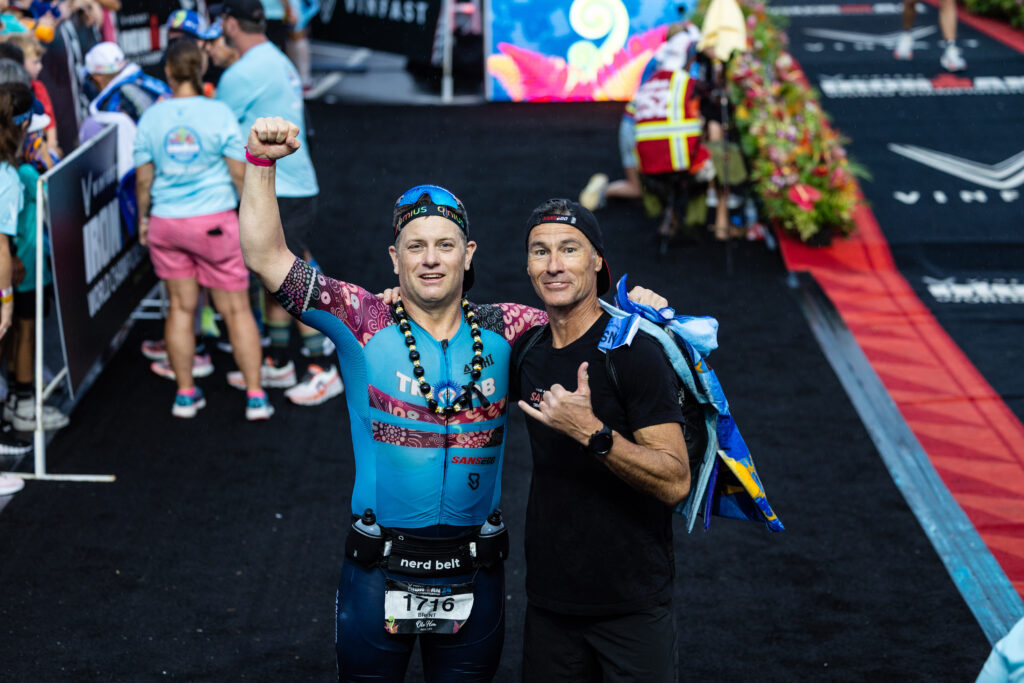
Photo: Nerd Belts
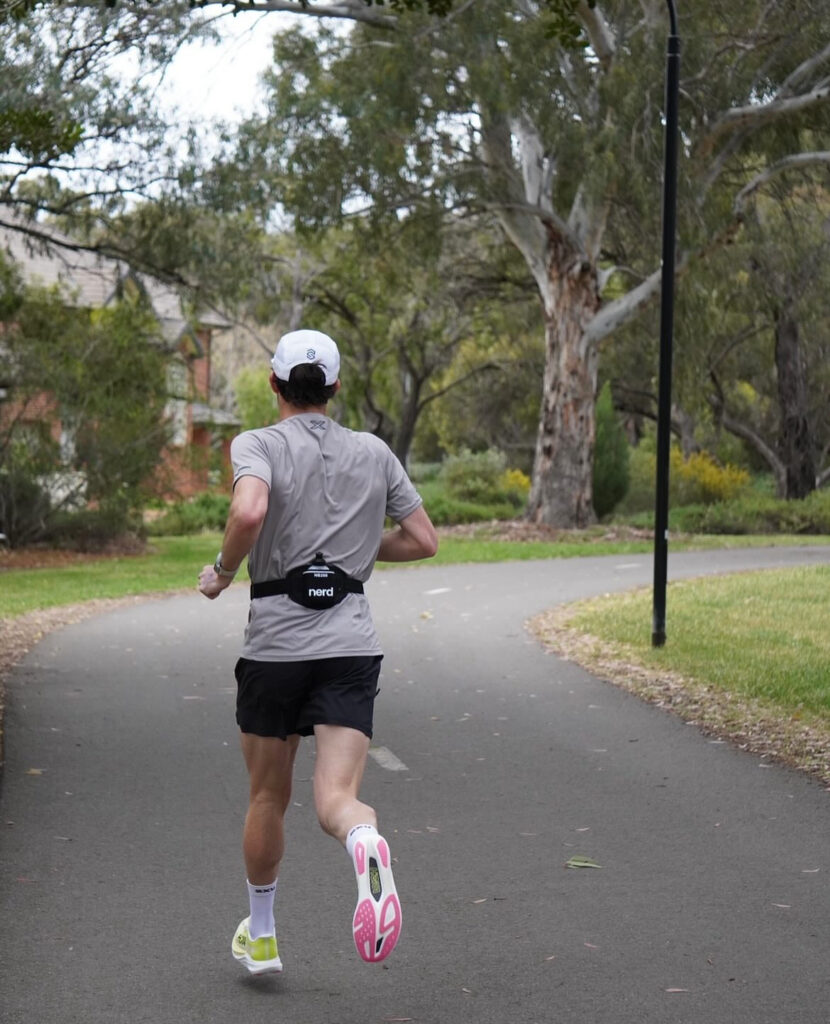
What I got, however, was exactly what McKenna had promised me. After adjusting the straps and fitting it to my waist, there was legitimately no bouncing or movement at all. That was the same experience with every other belt McKenna sent me home with from Texas. They were all comfortable, easily adjustable and free of movement.
If you’re skeptical reading this, that’s fair. I’m often suspicious when reading effusive reviews of products. These days, you can’t know if someone is actually into a product or if they’re simply getting paid to endorse it.
For what it’s worth, this is all the truth. I’m not in the game of crafting misleading reviews. However, if my word isn’t enough, look to the many pros who use Nerd Belts. McKenna says professional triathletes help one another out and, if a pro starts a business, his or her colleagues will often support it. That happened with Nerd, and McKenna saw and continues to see many pros wearing his belts.
Blind support can only go so far, though. No professional triathlete will use a product that is faulty or anything less than the best purely out of the kindness of their heart. The fact that more and more pros are seen wearing Nerd Belts at some of the biggest races around the globe is a testament to their quality.
You may have been disappointed by hydration belts in the past, but Nerd Belts will change your perspective on this particular piece of gear. The only annoying part of the experience of wearing one might came after your races, when (just like McKenna saw when he debuted the first belt) everyone comes asking you where they can get one for themselves.



I’ve got one, I love it.
One drawback, with a phone in it’s got a max capacity of 4 gels in the zip pouch. has an additional couple of loops for more though.