


Quintana Roo Is Pushing into Europe—Here’s Why It’s Working
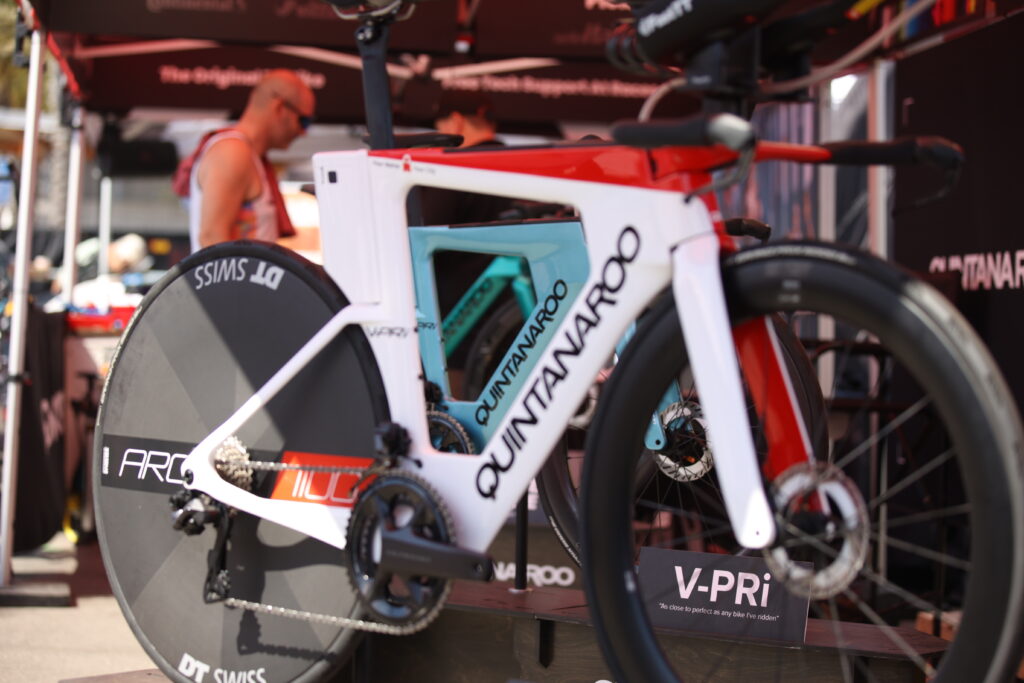
If there is one thing Slowtwitch is known for, it’s the Slowtwitch world championship bike count. One of the success stories emerging from that data is Quintana Roo. Slowly, but steadily, the brand has climbed the rankings—from a niche player to one knocking on the door of the major manufacturers.
Their highest ranking came at the women’s-only IRONMAN World Championship in Kona in 2023, where they finished third. More recently, they placed fourth and fifth at the women’s (Kona) and men’s (Nice) world championships, respectively. As our own Ryan Heisler reported from the 2025 Kona count, “combining LIV, Giant, and CADEX together as a single manufacturer, they could not break past the century mark,” something QR achieved comfortably with 132 bikes counted.
Like most of the leading brands in the count, QR holds a strong position in North American triathlon, but their presence in Europe and beyond has been a different story. Until recently, most Europeans were barely familiar with QR, but CEO Chris Pascarella has set out to change that.
The Plan
Quintana Roo (QR) is owned by parent company American Bicycle Group, which also owns two other bike brands: Litespeed Titanium and Obed, which focuses on gravel and mountain bikes.
QR was founded by Slowtwitch founder Dan Empfield in 1987, originally to manufacture triathlon-specific wetsuits, but two years later the company began its pursuit of the perfect triathlon bike. Since then, the brand has continued to champion that mission, eventually making bikes its primary product line.
They’ve been successful, as our stats reflect, but the brand never attempted to replicate that success in Europe. After QR’s long focus on its home market, now the company is making a deliberate—and well-funded—effort to expand internationally.
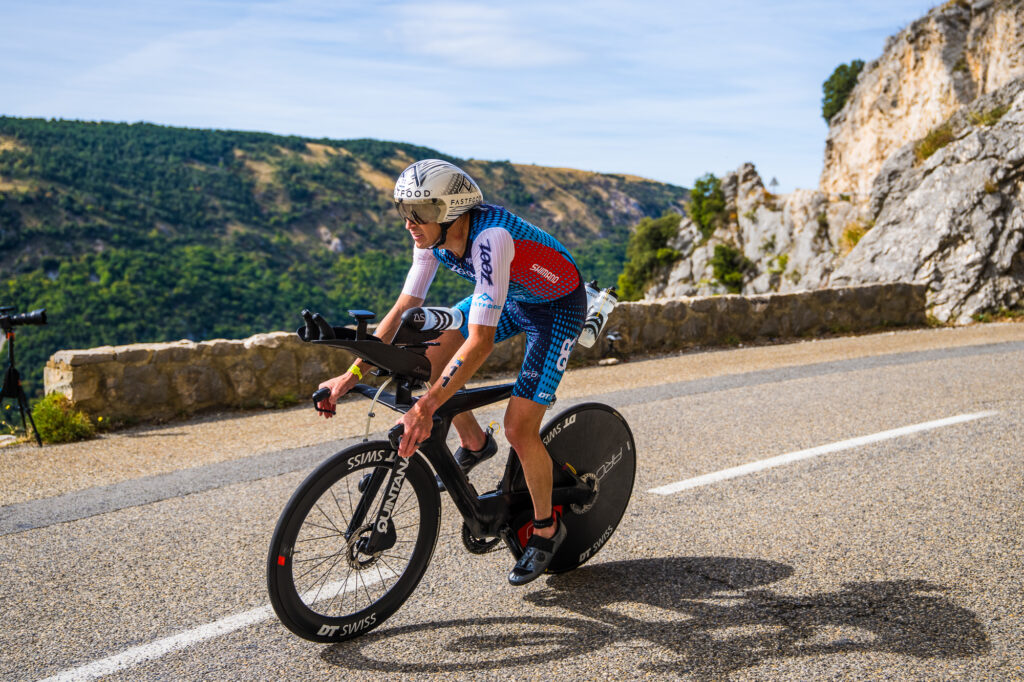
QR’s first move came at the end of 2023 when the company partnered with Challenge Family as its global bike brand. That relationship continues today and now includes QR wetsuits as well. In 2024, QR entered The IRONMAN global ecosystem, first sponsoring the world championship in Kona, and then becoming a partner bike brand in 2025. Now, the company still serves as the official IRONMAN global bike partner for 2026.
QR also began expanding their roster of professional athletes. Joining their marquee American pros, Matt Hanson and Alice Alberts, are Kristian Høgenhaug (DEN)—who brings strong European bike credentials along with his Challenge Championship title—and Alpe d’Huez champion Jon Breivold (NOR). They’ve also assembled a strong roster of women, including Katrine Christensen (DEN), Marta Sanchez (ESP) and Australian super-runner Grace Thek—all ranked inside the PTO top 30.
Their two-pronged strategy appears well thought out, but, surprisingly, it’s not—or at least not in the way you would expect from a brand owned by a 15.9-million-dollar corporation.
“ I would love to tell you, we have some very intelligent, great strategy,” Pascarella says. “No. We know what worked in the US: you show up, you grind it out, you’re there with people, you make connections.”
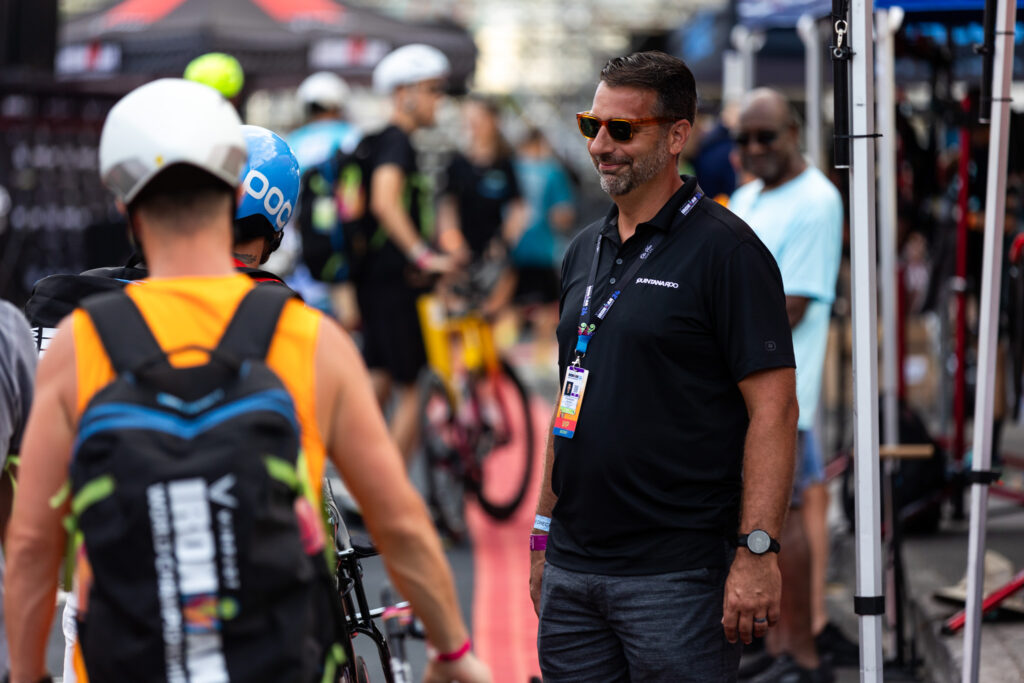
“We’ve done a great job in the United States, bringing up the brand, elevating the brand, and gaining market share,” he continues. “But we would go to these world championship races and 24% of the field would be US, and Quintana Roo, being the original triathlon brand, it just didn’t seem right for it to exist only as a North American or US brand.”
Quite simply, the company wasn’t doing much internationally, so the plan became straightforward: keep doing what they already do so well just in a new geographic area.
“It’s not a different value proposition,” Pascarella continues. “Just because you’re in a different country doesn’t mean things work differently. Triathletes show up, do the work, they pay attention to detail, and they grind it out. Those same values that we see in training and racing have worked really well for us in the US over the past seven or eight years, and that’s what we’re doing internationally.”
Show Up
Their values of “showing up and grinding it out” are exactly how QR has begun to make its push into Europe work. More than just throwing money and logos at events and pros, the company has used its partnerships to secure a genuine presence in the sport.
They leveraged sponsorships to establish event presence—literally putting QR staff (including Pascarella himself) on the ground to meet athletes and introduce the products directly. They also began sending mechanics to major European races, not just to support their pro athletes, but to provide free service to any athlete riding a QR. It’s this kind of boots-on-the-ground approach that sets them apart, and just like it did in the US, it’s beginning to deliver results.
“Two years ago when I started this, I had to tell people about Quintana Roo, where it’s from, and give them an idea of who the heck we are,” Pascarella says. “In a very short two-year timeframe, I no longer have to have those conversations. At the end of last year, I didn’t have to explain anything in Marbella.”
Although those conversations still occasionally happen at other events, he’s closing in on his crystal clear goal: “Success is when I stop having to explain who Quintana Roo is.”
High-Calibre Connections
If there is one group that doesn’t need an explanation of QR, it’s the pro field. Always ahead of the curve and looking for the next best thing, the success of their V-PRi, launched in 2024, attracted attention among professionals.
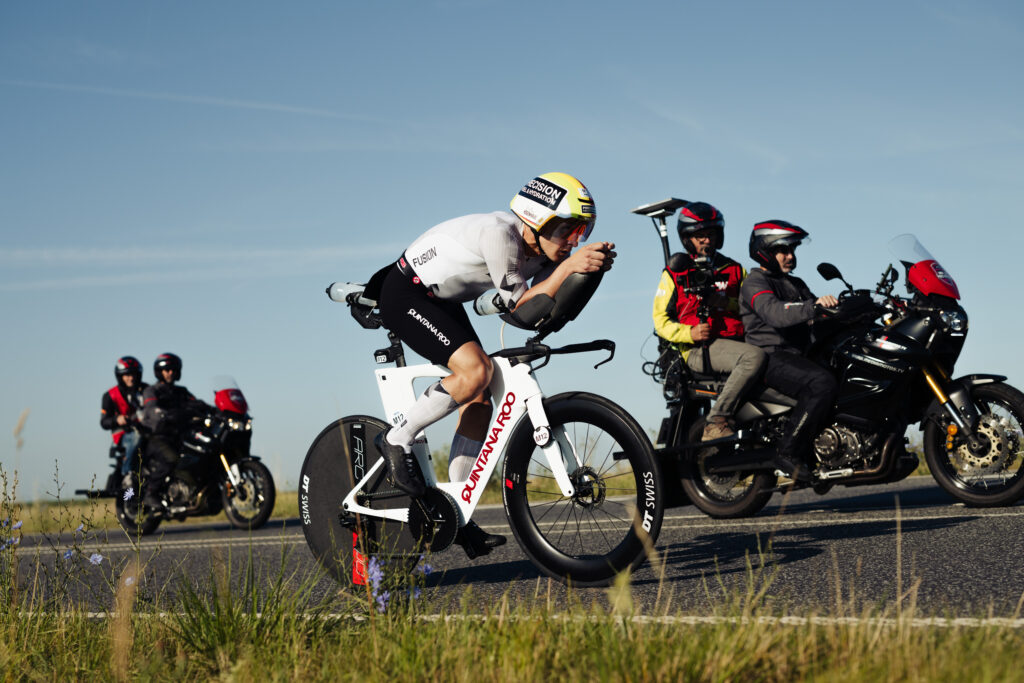
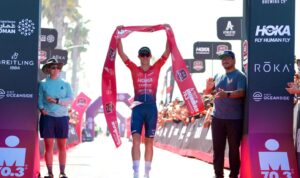
No other moment demonstrated the bike’s calibre of performance more clearly than when Høgenhaug set the fastest-ever IRONMAN bike split at the 2025 Ironman European Championship. With an average speed of 45.7 km/h (28.4 mph), he stopped the clock in 3:52:10.
“The reality is, the top tier pros have been calling us,” says Pascarella. “They start to see our bikes underneath elite pros and we’re now getting those telephone calls, and we’ve made the choice to try and sponsor as many as we can.”
But, largely unseen by the public, another moment demonstrated the calibre of the company when they signed Thek for the 2026 season.
The middle-distance specialist is chasing Kona qualification for the first time and plans to do so aboard a QR. But at five feet tall, frame sizing initially presented a problem. Originally, the V-PRi was only offered in small, medium and large sizes. It marked the first QR bike released without extra-small or extra-large options. Pascarella admits the decision seemed logical during development, but he realized almost immediately that it was a mistake—especially for female riders.
“I’m standing there in front of women [at events] that want to ride the bike and, although none of them ever said ‘you betrayed us,’ I’m thinking in my mind, gosh, we betrayed you, I don’t have something for you,” he says. “Very quickly we came back and we were really pushing our suppliers to get it turned out really fast—and then all of a sudden Grace came into our lives and put a face to it. We already had the extra-small going, but it became ‘we gotta get this bike for Grace.’”
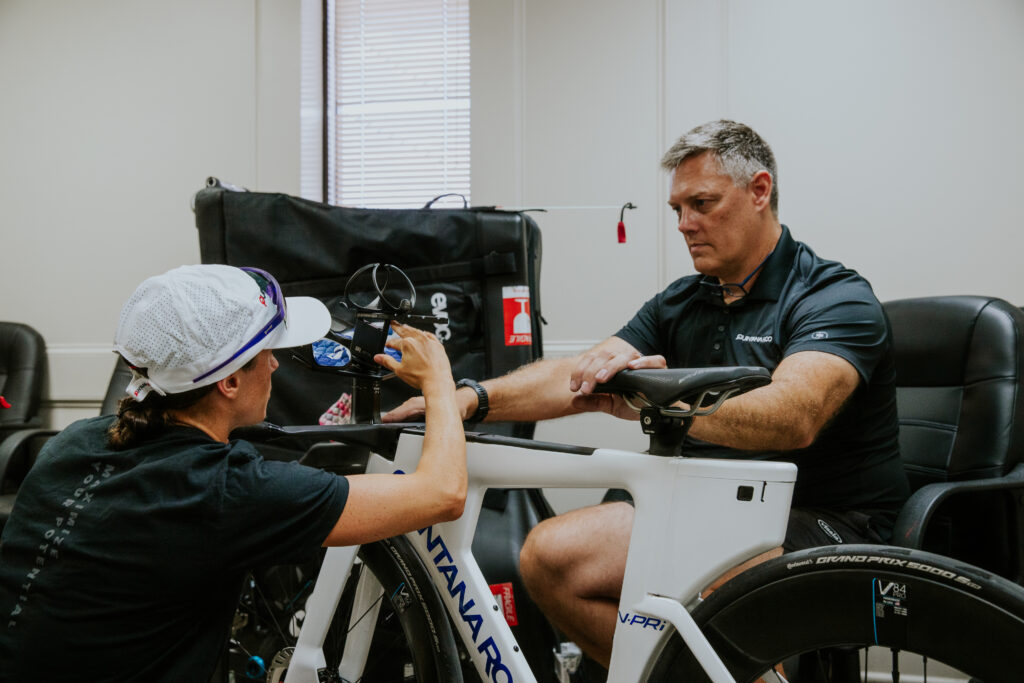
Alongside the extra-small, QR also released an extra-large size, returning their full lineup to a five-size option.
“We have long had the reputation for being one of the brands of choice for female athletes, and I want to continue that,” Pascarella says. “ I’d love to grow that, and I think it comes down to having bikes that fit people, therefore having smaller sizes. But it’s also about communication, service and presence at events—all those things matter.”
Growing Values
Many sport brands wax lyrical about how sport has driven their corporate culture, but at some point, that tends to get lost as a company grows. As QR aims to grow globally, it raises the question of whether the company can maintain the ethos that Pascarella identifies as the foundation of its success.
“There is a certain size where you kind of lose touch,” he acknowledges. “You lose that joy of just going to an event and being there, understanding the organic, foot-on-the-ground things. So as we continue to scale—which we have over the past seven or eight years, tremendously—it’s very important that we never lose that connection with the consumer.”
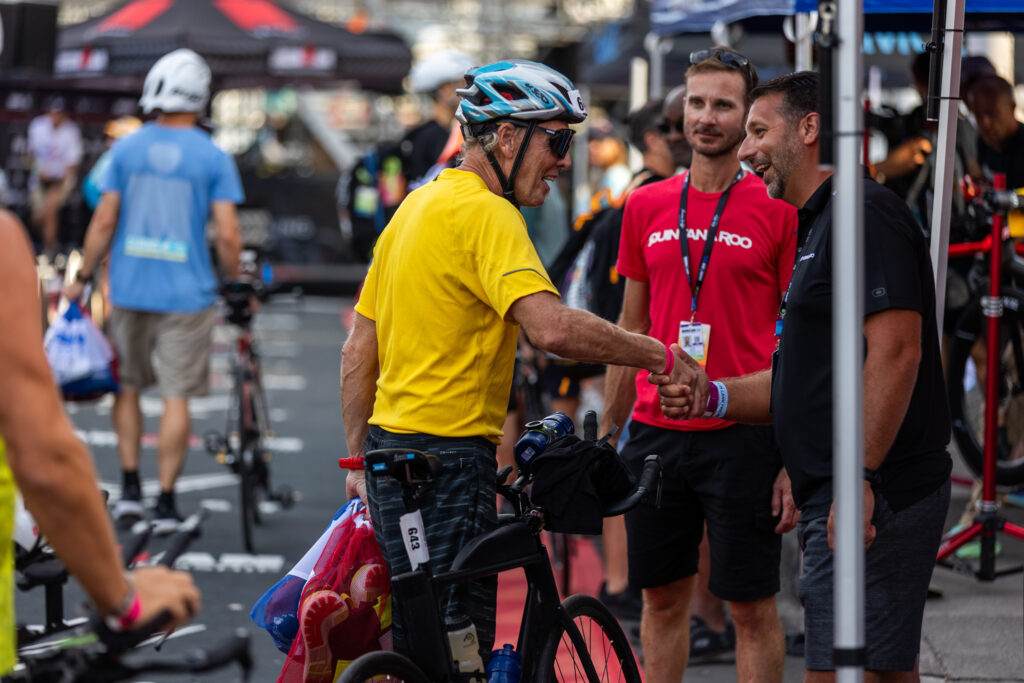
“It is about making money, it is a business, right? But, um…” he pauses. “Actually, I want to go back to the ‘it’s about making money.’ It’s about making a profit so that we can pay for what we’re doing.”
The difference is subtle. Having a bike that competes with the industry’s top brands is essential, but where QR seems to be distinguishing itself is through investing in customer service, support and not just being present in triathlon, but listening to athletes.
Much of that approach reflects Pascarella’s leadership style, both in the US and now across Europe.
“I take notes at events and come back and I’m like, oh, we have to fix this or this would be a great idea,” he says. “I still look at every order that comes through. Even if it’s a derailleur hanger, even if it’s a T-shirt, I still look at every order and it gets me excited. We’re not just about selling bikes, we’re about growing the sport. We show up, we do good things, and the rest will take care of itself.”

Start the discussion at forum.slowtwitch.com