
Triathlon 101: Slang Every Beginner Should Know

As with any niche, triathlon has a lot of slang and terms that only those in the sport know. If you’re a new triathlete, you may have heard other people at the pool, on group rides or at races having discussions that made no sense to you. Maybe someone said they “bonked” at their “A race” and had a “DNF.” That could just sound like a lot of gibberish to you, but trust us, it does mean something. To help you avoid any future confusion in chats, here is triathlon slang you need to know.
A Race
“The IRONMAN World Championship is my A race this season.”
Looking at the above sentence, it’s pretty clear what A race means. It’s the main race on someone’s triathlon calendar. The other races can still be important, but they’re all leading to the A race. It’s the event you’ll build your season around so that you peak at the perfect time and — hopefully — deliver your best performance of the year.
Aero
“Your bike is so aero.”
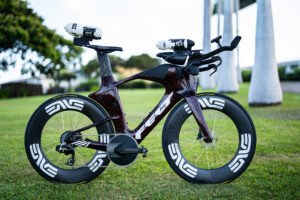
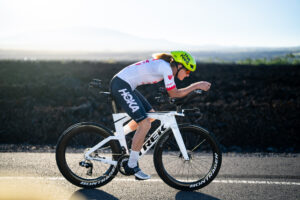
Aero is short for aerodynamic. It’s the adjective every triathlete is chasing. You want an aero bike that slices through the air and helps you get from T1 to T2 (more on those later in the list) as quickly as possible. At some point, you’ll likely get an aero helmet for races that will reduce drag and wind resistance while you’re riding. You may even eventually start shaving your legs, because, yes, even the tiniest hairs can make you less aero and slow you down on race day.
Aid Station
“I walked every aid station.”
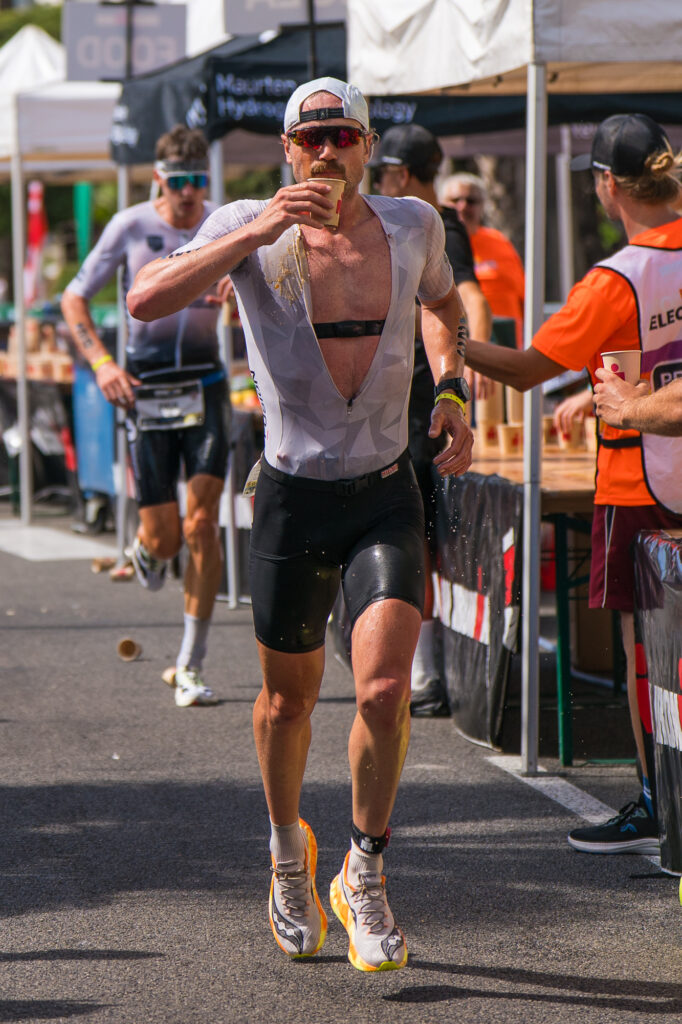
Almost every race will have multiple aid stations. Depending on the length of the race, there may be aid stations on the bike and run courses, but in shorter events they’re usually only part of the run. These are the spots on the course where volunteers are ready with water and sports drinks, maybe some light food, and perhaps ice if it’s a hot day.
Bonk
“I bonked two miles into the run.”
This is a term you’ll never want to use (but one that every triathlete eventually says about a race). To bonk is to hit the wall, to blow up and to be completely depleted in training or racing. Bonking occurs when you haven’t consumed enough nutrition and therefore have used up your body’s glycogen stores. You will feel tired and drained. Once the bonk happens, it’s not a matter of climbing out of this funk, but rather fighting to make it to the finish line at all.
Brick
“I did a brick workout on Saturday.“
The brick workout is a key to triathlon success. You can be a swimmer, cyclist and runner, but that doesn’t mean you’re ready for the swim-to-bike and bike-to-run transitions. A brick workout simulates what you’ll experience on race day and sees you go from swim to bike and/or bike to run with no rest. The swim to bike is important, but it’s the bike to run brick session that will really help you come race day. Your legs will feel like jelly when you get off the bike and start to run, so you want to practice that before getting to your first race.
DNF
“I got a DNF in Kona.“
Hopefully you won’t ever have to say that exact sentence, because DNF stands for Did Not Finish. This means you started the race, but for whatever reason (bike problems, injury or illness) you could not make it to the finish line.
DNS
“I had a DNS last weekend.”
Like DNF, DNS is another term triathletes don’t want to have to use. It stands for Did Not Start, and it’s often due to an injury or an illness that keeps you from even going to a race in the first place.
DQ
“I got a DQ for drafting.”
DQ may stand for Dairy Queen outside of triathlon, but in the world of racing, it means disqualified or disqualification. Joining DNF and DNS, DQ rounds out a trio of dreaded Ds that no triathlete wants on their race results list.
Drafting, Draft-Legal and Non-Drafting
“The Olympic triathlon is a draft-legal race.”
Drafting is the act of positioning yourself behind another athlete to conserve energy. You can draft in the swim and on the run and see benefits, but the best time to draft is on the bike, as this is where you’ll face the most wind. However, drafting isn’t always allowed on the bike course, which brings us to the terms draft-legal and non-drafting.
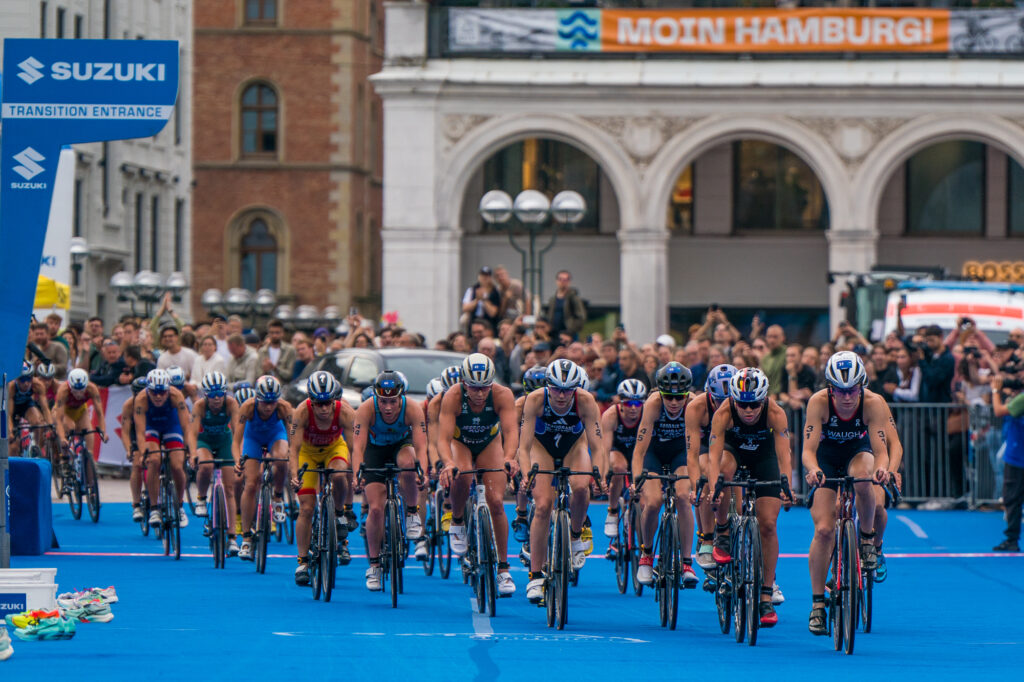
Most age group races are non-drafting triathlons. This means you have to stay a certain distance behind other cyclists (the exact distance depends on the race) unless you’re passing them. Draft-legal races often only feature elite or pro triathletes. If you watch an IRONMAN, you’ll see very intentional spacing between cyclists, but draft-legal races like at the Olympics feature large groups of athletes all bunched together.
Fartlek
“I did a six-mile fartlek session the other day.”
Fartlek is a Swedish term that translates to “speed play.” Many triathletes and runners will do fartlek workouts. These are interval workouts that alternate between faster paces and harder efforts with lighter sections in between them. Instead of going to the track and running 400-metre repeats with however much rest between each lap, you go for a continuous run and mix in the hard efforts on the way. The recovery comes in slower sections, but you never stop running. Fartlek workouts are normally used for runs, but you can incorporate them into swimming and cycling as well.
FTP
“I increased my FTP by 10 watts.”
FTP is a cycling term that stands for functional threshold power. It is measured in watts and represents the highest average power output you can hold for an hour. You can determine your FTP by doing a 20-minute test ride on your indoor trainer. You simply ride for 20 minutes (after doing a proper warmup) as hard as you can, trying to keep your power consistent the whole time. By the end of that ride, you’ll have a wattage that you will then divide by your weight in kilograms. This will be your FTP, which is generally the number you should be able to hold for an hour of racing.
Full Distance
“I did my first full-distance triathlon last year.”
A full-distance race is 140.6 miles. This is the distance popularized by IRONMAN. These races feature a 2.4-mile swim, a 112-mile bike and a 26.2-mile run. While most people will refer to this distance simply as an IRONMAN, there are plenty of full-distance races around the world that are not IRONMAN-branded events.
Half Distance
“I think I’m ready to make the jump to half-distance races.”
As you might have guessed, a half-distance triathlon is 70.3 miles. Half-distance races include a 1.2-mile swim, a 56-mile bike and a 13.1-mile run. As with the full-distance races, IRONMAN has a firm grasp on the 70.3 name, but there are many independent half-distance events on the triathlon circuit.
Negative Split
“I ran a negative split in my last marathon.”
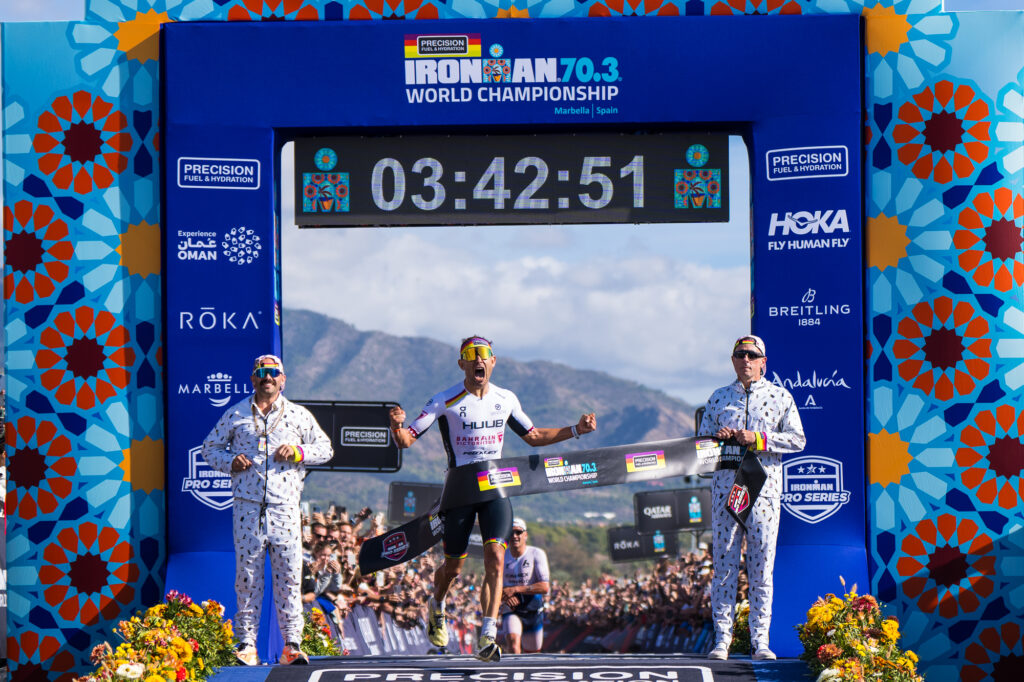
A negative split is something every triathlete wants when racing. It means you completed the second half of the race faster than the first. Generally, a negative split points to excellent pacing – not only did you not fade in the latter half of the race, but you were able to speed up.
Olympic
“I raced the Olympic triathlon.”
Anyone can do an Olympic triathlon. This term is not reserved for Olympians or Olympic events — it’s the title for all triathlons that are the same distance as the race in the Summer Games. And this shortened wording isn’t exactly accurate, but you’ll hear it a lot. It should be referred to as an Olympic-distance triathlon, which features a 0.93-mile swim, a 24.8-mile bike and a 6.2-mile run (1.5/ 40/ 10 km).
PR and PB
“I ran a new PR/PB at the Chicago Marathon.”
Depending on where you’re from, you may say PR when you go faster than ever before, or you may say PB. PR is personal record and PB is personal best, but they mean the same thing. Every new race distance you do is a PR/PB. When you do your first 5K, you’ll have your PR/PB. If you beat that time at another race, that’s your new record. Very few people are in contention for an overall win, but everyone can fight for a PR and PB at every race.
Sprint
“I signed up for my first sprint.”
Triathlon is weird. In any other sport, a sprint is maybe a minute long. In triathlon, a sprint takes even the best athletes about an hour. A sprint-distance triathlon is half (or about half) of an Olympic-distance race, with a 0.5-mile swim, a 12.4-mile bike ride, and a 3.1-mile run (750 m/ 20 km/ 5 km).
Super Sprint
“My first triathlon was a super sprint.”
Super sprint triathlons have several other names. Maybe you know them as try-a-tri or give-it-a-tri races, but whatever you call them, they’re a great entry-level event. The distances may vary depending on the race, but super sprints are often around 0.25 miles of swimming, six or so miles of riding and about one and a half miles of running. If you want to get into racing, but feel intimidated by longer distances, a super sprint is perfect for you.
T1 and T2
“I was slow in T1, but fast in T2.”
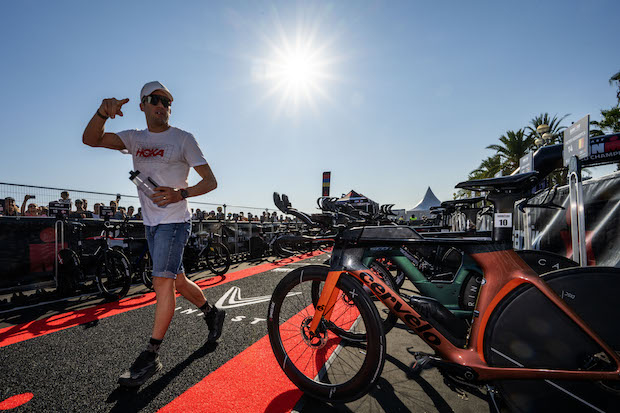
T1 and T2 are quite often the same place, they just represent different points in the race. They stand for the transition sections of the triathlon. T1 is when you go from swimming to biking, and T2 is bike to run. They may be the shortest parts of your race, but you shouldn’t overlook T1 or T2, because they can make or break your results.
Taper
“I start my taper tomorrow.”
The taper is a period of a few days when you take it easy before a race. You’ll still get out for some workouts, but you leave the intense sessions in the past. For many triathletes, it’s hard to commit to a proper taper, because it feels wrong to take your foot off of the gas so close to the race. To give yourself the best shot at success on race day, you need to silence that voice telling you to push hard in training and instead enjoy a chill few days or week of tapering.
XTERRA/Off-Road/Cross
“I just got a mountain bike, so I think I’ll try an XTERRA.”
XTERRA is the main brand of off-road or cross-triathlon racing. You probably know that there are mountain bike and trail run races, but you may not be aware of off-road triathlons. As the name suggests, these races take athletes to the trails. You swim as you normally would, but then you hop on your mountain bike and head off road before slipping into some trail shoes and continuing to run in the woods. These races aren’t for everyone, but many triathletes absolutely love them.



Great selection and very readable.
Might want to tweak the FTP paragraph.
In Poland, someone who is deliberately engaging in illegal drafting is called a frankfurter, or a drafting frankfurter. Don’t ask me why. It’s got nothing do with the city of Frankfurt for sure as the Polish term is parówka.