
What Does It Take To Complete an Ultraman?
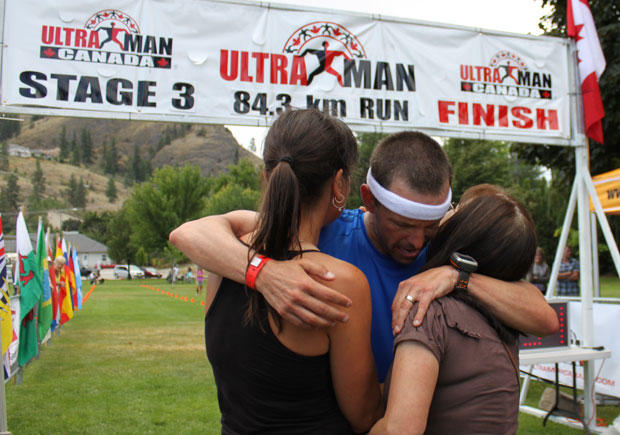
Swimming, biking and running 140.6 miles is more than enough triathlon for most people, but there is a sect of the multi-sport community that yearns for more. For those individuals, there is the Ultraman — a three-day stage race that takes athletes 320 miles when it’s all said and done. Most people reading this right now will think this is insane, but some will find their interest is piqued. For those of you who want to know more, Slowtwitch spoke with Tara Norton and Mike Coughlin, a pair of Ultraman world champions who gave their takes on what is required of you to make the leap from iron to ultra.
Meet the Champs
Norton and Coughlin are both Canadian. Coughlin lives and trains in Guelph, Ont., a small city not too far from where Norton calls home in Toronto. Neither athlete started triathlon with the ultimate goal of racing ultra-distance events. Instead, they both followed the standard path in the sport, starting short and working their way up in distance.
Although both of their careers are defined by their success in ultras, IRONMAN is the race that shifted things for both of them. Coughlin raced his first IRONMAN in 2003, which he calls a “perspective-changing” event.
“It became more than a passionate hobby and more of a personal growth thing for me,” he says.
For Norton, triathlon and IRONMAN were what opened the door to being a professional athlete — something she had had on her mind for many years after competing as a swimmer and elite rower in her earlier days. She raced with the world’s best in IRONMANs all over the globe, amassing many top-10 finishes and a trio of podiums at the always-brutal IRONMAN Lanzarote.
While they loved IRONMAN racing, Norton and Coughlin both wanted more, eventually finding their ways to Ultraman — not as racers at first, but rather as crew members. (Since Ultramans are so arduous and lengthy, athletes are required to have a crew that follows them throughout each stage of the race, providing them with food, water, motivation and whatever else they need to get to the finish line.)
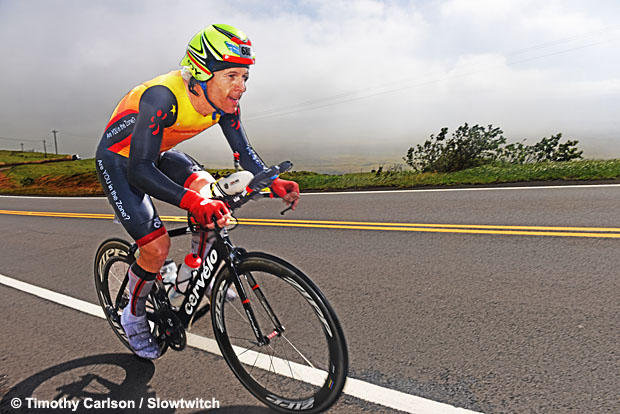
The crewing experience hooked both Norton and Coughlin, with both leaving those races knowing that Ultraman was something they had to do. Coughlin went on to win the Ultraman World Championships (which takes place on Hawaii’s Big Island every November or December) in 2015, with Norton taking back-to-back titles a few years later in 2018 and 2019.
Norton and Couglin now run their own coaching businesses, and although neither of them deals exclusively with ultra-distance specialists, they have both helped train athletes to reach their Ultraman goals.
Making the Jump
The first big question for anyone going from full-distance triathlon up to Ultraman is, “How do I do it?”
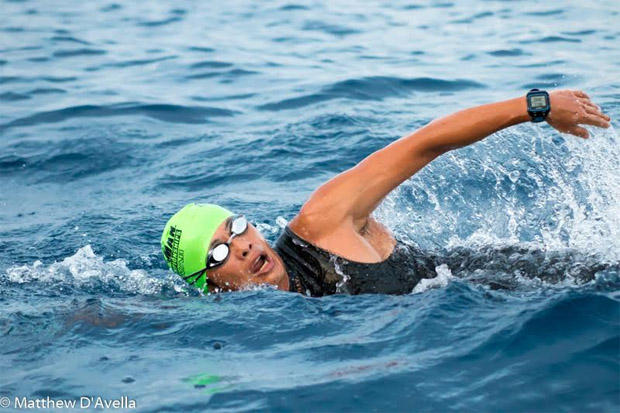
In Ultraman events, athletes swim 6.2 miles and bike 90 on Day 1, followed by a 171.4-mile ride on Day 2 and a double-marathon (52.4 miles) to wrap things up on Day 3. With IRONMAN distances in mind, this may seem like going from your local ski hill to the Alps, but Coughlin and Norton say the training really isn’t all that much different when transitioning between iron and ultra.
“When I have an athlete looking to do their first ultra, I train them in a way that doesn’t feel much different than an IRONMAN,” Coughlin says. “The main thing that’s unique is what it’s like to swim as far as you do in that race and then to have to get on the bike.”
Norton echoes that, saying the swim is one of the biggest hurdles for many athletes.
“It’s not that you have to ride [171 miles] before the day, nor would I ever have anyone run a double-marathon before the day,” she says. “But I do usually have people swim 10K, because it’s a confidence-booster.”
Norton adds that she will often recommend her athletes ride 200 kilometres (124 miles) “just to get to that 200 number,” which she says is “more psychological” than anything (although she does acknowledge that it helps to get used to the physical feeling of being in the saddle for that long).
The main challenge, Norton and Coughlin agree, is the exhaustion of a three-day, 320-mile race. How can you prepare for something as arduous and drawn-out as an Ultraman? You have to set up your own version of the race, albeit one that’s a tad shorter.
Race Simulations
Coughlin says you should aim to do at least two three-day simulations in the months leading up to your Ultraman.
“You want do the first simulation far out enough from the race so that you can do it and get it wrong, re-do it and get it right, and then maybe do it again if you have time,” he says. “You don’t want to overdo the training and leave all your best days in the build, but you also want to be able to figure out things that can go wrong and improve on them.”
Norton recommends the same plan, saying these simulations play into “the mental aspect” of racing.
“Just like at an IRONMAN, most people show up physically able to do it,” she says. “It comes down to your mindset. Your brain has to be on board and positive and you have to believe.”
A key to these simulations is the distance. As Coughlin said, you don’t want to burn yourself out in training, so he suggests shortening the distances to about two-thirds of the race-day totals. The method he uses is quite simple, as he uses the numerical total of each leg of the race, but swaps out the miles and completes kilometres instead. This means six miles of swimming drops to six kilometres, the bikes are cut to 90 and 171 kilometres and the run is a much shorter 52 km rather than the double-marathon.
“You don’t want to do anymore than two thirds on these days,” Coughlin says. “It’s not worth the recovery cost.”
Coughlin and Norton note the same tip for these weekends, both saying it’s important to plan them out far in advance. These should not be spur-of-the-moment training sessions, but rather mini solo events you have in your sights for months before tackling them.
Conducting three-day simulations will give you the chance to feel what it’s like to wake up tired and still get out the door for more work, which is an experience that will be “invaluable” when the real race day finally arrives.
Further, the simulations will allow you to practice with your crew and nail down your nutrition plan for the race. You’re almost guaranteed to still have hiccups in the actual event, but this practice will limit those bumps and problems and put you and your team in the best position to find success over the three days of racing.
Working with Your Crew
Coughlin and Norton both say that your crew will determine your results at an Ultraman. Triathlon is normally a solo pursuit, but Ultraman turns it into a team sport.
“The crew absolutely is a big part of not just surviving the race, but going as fast as your body will allow,” Coughlin says. “Having a crew is a safety net in addition to support. You can focus on what you’re doing and not have to worry about so many things that they’re worrying about for you.”
With the crew being an “integral part of your success,” Coughlin says you “cannot let setting it up and communicating with them be an afterthought.”
He acknowledges that it can be difficult to arrange for everyone to meet for all, or even just one race-simulation weekend in addition to the event itself, but even if that’s not possible, he says it is so important to have multiple conversations with the team to make sure everyone is on the same page when it comes to race plans, nutrition, crew member roles and everything else.
“If you can get people in the same place, your training can almost be like its own program with the crew,” he says.
When it comes to picking your crew, Norton says “you definitely need a minimum of two people” and a maximum of four.
“After four, it gets too complicated,” she says. “Two can be tough, but it’s doable.”
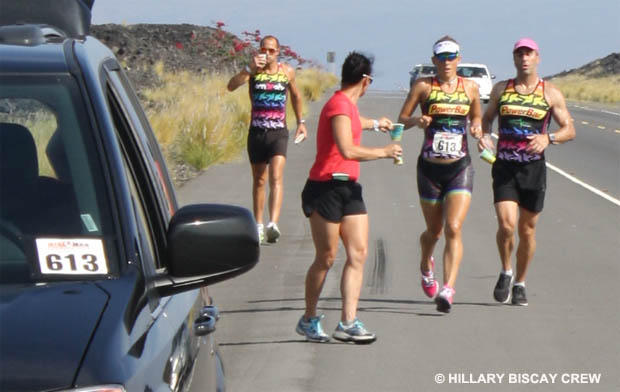
With three or four people, everyone can swap out for the different duties — one person driving, one in charge of nutrition, one on pacing duties.
Another very important consideration, Norton says, is crew dynamics. While she has had great races with her crews, she has heard of others that were “less than ideal” teams.
“If there are a couple of strong-headed people who have differing opinions of what is best for the athlete, that can be an issue,” she says. “When that doesn’t gel, you get conflict within the crew, and that can throw off the entire operation.”
That is why, as Coughlin pointed out, it is necessary to have detailed discussions with your crew well before race day. This way, everyone will be on the same page and there shouldn’t be any need for debates on what the right course of action is.
One final note on crews is a recommendation from Coughlin and Norton. They both say they learned so much when they crewed at the start of their Ultraman journeys, and they believe it is an incredibly valuable experience that all prospective Ultraman athletes should try to grab if possible.
Seeing the event “through the window of a van,” as Coughlin says, showed him just how challenging it could be, what issues could arise in the race and how athletes and crew worked together to problem solve over the course of the three days.
It was still a long road from crewing to winning world titles for both Norton and Coughlin, but it was those very first Ultraman experiences that set them on that path, and it could be the same story for you.
Norton and Coughlin both run coaching businesses, helping triathletes of all levels reach their racing goals. Norton’s company, Tara Norton Training, can be found here. Coughlin’s is reachable at discomfortzonecoaching@gmail.com.




The crewing requirements for this endeavor make it unattractive and limit its participation. It’s 3 “work” days, not RAAM
Unfortunately it seems like this series has died on the vine. I used to love to follow it as there were more than a dozen or so entrants, and some high level athletes doing it. Nothing like it used to be now, have no interest whatsoever in watching people doing their 3 day training dreams..
Offer up some incentives and get some top ironman folks to actually compete in it, then I’m back in..