
The Enhanced Games: Dangerous Gimmick or Harmless Stunt?
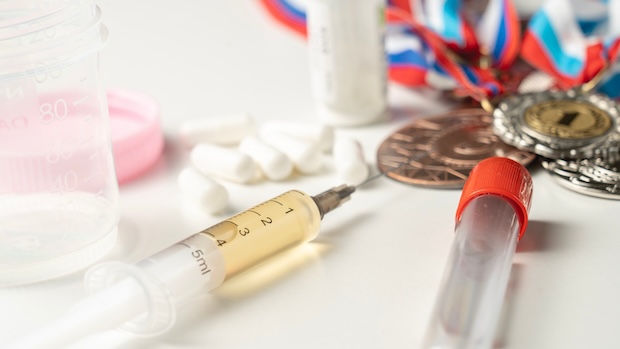
Close to three years ago, shockwaves were sent through the world of sports with the founding of the Enhanced Games — a sporting event that many have dubbed the “Steroid Olympics.” While that might be an oversimplification, it is certainly the easiest way to describe the Enhanced Games to someone who knows nothing about them. The competition allows athletes to take performance-enhancing drugs (PEDs), with the goal of seeing just how far the human body can be pushed when it has access to medical enhancements.
Many people received the news of the Enhanced Games with dismay. After a lifetime of watching sports and looking down on anyone who doped or cheated, it felt like this competition was endorsing that behaviour. Max Martin — Enhanced Games co-founder and CEO of the organization — hopes people will change their mind on the matter when they learn more about the event. They aren’t encouraging foul play or dishonesty, but rather the opposite, as they are giving athletes the chance to compete in what could be the most level of playing fields that many of them may have seen since their days in the junior ranks.
The Enhanced Games Programme
At the moment, there are 50 athletes on the Enhanced Games roster. The list of competitors is made up of swimmers, sprinters and weightlifters. Some of the big names include Australia’s three-time Olympic medalist and three-time world champion swimmer James Magnussen and two-time Olympic medalist and three-time world champion sprinter Fred Kerley of the U.S.
The schedule is quite sparse for the first edition of the event, which is set to debut on May 24 in Las Vegas. There will be 50- and 100-metre freestyle and butterfly races in the pool, the 100-metre dash and 100- and 110-metre hurdles on the track, along with a pair of Olympic weightlifting events in the snatch and the clean and jerk. (Martin says he hopes to add more sports in the future, including endurance-based competitions.)
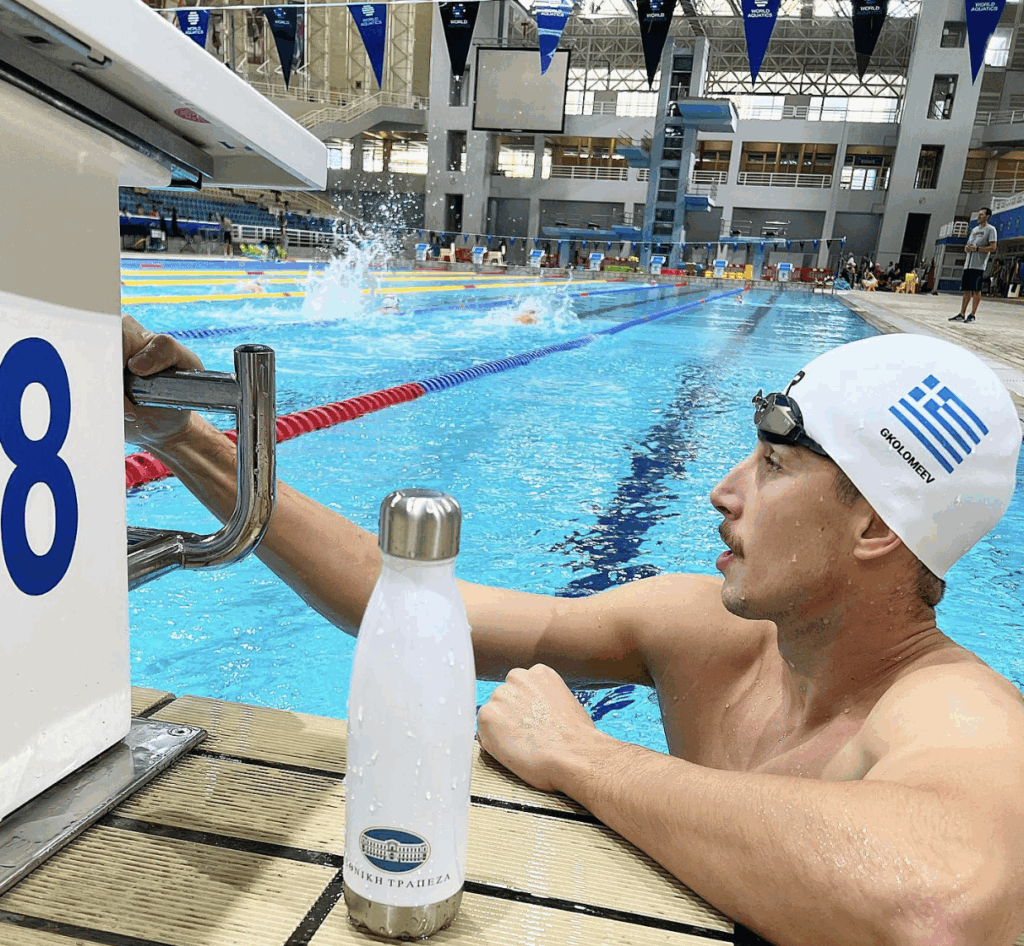
With event prize purses, appearance fees and results-based bonuses, the Enhanced Games team is prepared to dole out up to US$25 million to athletes come May. Each individual event will have $500,000 up for grabs ($250,000 of which will go to the winner), plus a bonus for anyone who beats a world record. Athletes competing in the 100-metre dash and 50-metre freestyle can earn $1 million for a world record time, while any record-breakers in the other events will win $250,000. (The Enhanced Games already paid out one of those million-dollar bonuses after Greek Olympic swimmer Kristian Gkolomeev swam 20.89 seconds for the 50-metre free, beating the world record time by 0.02 seconds at an exhibition in 2025.)
Martin and the Enhanced Games team can afford these payouts (not to mention the venue fees in Vegas, an Enhanced Games-wide training camp in Abu Dhabi and other expenses) thanks to investments from many big names, including PayPal founder Peter Thiel, Saudi Prince Khaled bin Alwaleed Al Saud and Cameron and Tyler Winklevoss (a pair of brothers many people will know from the based-on-true-events Facebook film The Social Network), among others.
Fair Sport
A big criticism of the Enhanced Games is what many consider to be a lack of morality or fairness. Athletes and sports fans have grown up learning that cheating is wrong and using PEDs to have an edge over clean competitors is immoral, and that is 100 percent correct. The world has seen legends like Lance Armstrong taken down because of doping, and rightfully so.
However, as Martin points out, there is a difference between doping in a clean sport with strict rules regarding PEDs — a sport, league or event in which everyone is hopefully competing on a level playing field without illegal enhancements — compared to doping when it is permitted in the rules.
“The athletes are extremely excited about the point of fairness,” Martin says. He refers to a 2011 survey (published in 2017) that anonymously polled elite athletes at the World Athletics Championship in South Korea. The results were staggering, with more than 43 percent of those surveyed admitting to having taken banned substances at some point in their careers. Granted, this survey was run more than a decade ago, and not across the board with all sports and athletes, but similar polls have been conducted in the years since.
A report from The Telegraph in the UK notes that 21 percent of more than 900 athletes surveyed at the 2022 Commonwealth Games admitted to using banned substances. A similar anonymous poll out of Spain saw 36 percent of athletes making the same admission. A study published in 2024 surveyed more than 1,000 American athletes, and up to nine percent of them said they had taken a banned substance in the past 12 months.

There are vast differences between nine, 21 and 43 percent, but all of these surveys point to the same reality: clean sport isn’t actually clean, whether one in 10 athletes or close to half of them are doping. And while many athletes have admitted to taking banned substances, World Anti-Doping Agency tests only find about one percent of athletes guilty of cheating, meaning there are countless individuals getting away with doping scot-free.
“The transparency aspect of the Enhanced Games is a big part of it for our athletes,” Martin says. He has spoken with many Enhanced Games athletes who spent years racing against familiar competitors only to see those individuals transform into stars out of nowhere.
“They’ll say, ‘I’ve been swimming with this guy in every top event for 10 years, I know he’s not capable of doing this,'” Martin continues. “But then the athlete in question doesn’t test positive and their competitors are left feeling they’ve been wronged.”
Athletes have two choices when they realize their competition is doping. The option we all hope they pick is to compete fairly and choose not to dope — even if they know they won’t have a chance against those who are cheating.
The other choice that some athletes make is to do what they see as simply levelling the playing field by joining in on the doping. This if-you-can’t-beat-em-join-em attitude is how Armstrong continues to this day to publicly rationalize and excuse his years of cheating as a pro cyclist, and while he is the most well-known person to hold this mindset, there are undoubtedly many other athletes who dope or have doped who share that point of view.
The difference between Armstrong winning the Tour de France while on PEDs and athletes moving to competing in the Enhanced Games is all about fairness and transparency, as Martin says. It wouldn’t matter if 99 percent of athletes in the Olympics were doping — it is against the rules and therefore wrong and immoral. In the Enhanced Games, however, it is well within the athletes’ rights to take PEDs.
If an athlete were to go from the Enhanced Games back to clean sport, there could be an issue (many sport governing bodies have in fact banned Enhanced Games athletes from rejoining their competition pools). If this is the end of the line in their competitive careers, however, it seems only fair for them to opt in to a chance to see how far and fast they can push themselves while also chasing a big paycheque.
Tarnished Legacies?
Another point many people against the Enhanced Games make is the matter of athlete legacies. They say that an athlete signing on to the Enhanced Games program sullies their reputation and points to a history of doping — as if admitting to doping now, when it’s legal, means they have always done it and are simply tired of hiding.
In some cases, this is perhaps a fair criticism. The earlier-mentioned Kerley made headlines last summer after the Athletics Integrity Unit hit him with a suspension for whereabouts failures (three missed anti-doping tests in a 12-month period). Not long after this news broke, Kerley announced he would be joining the Enhanced Games roster. This is undeniably not a good look for the American sprinter, but it shouldn’t impact how his fellow Enhanced Games athletes are viewed.
Irish Olympian Max McCusker recently signed on with the Enhanced Games, and he says he doesn’t understand the negative opinions people hold toward him and his new colleagues.
“People talk about, like, tarnishing your legacy and all of this, right?” says McCusker, the Irish record holder in the 50- and 100-metre butterfly. “I don’t even know how many drug tests I had over the years of professional sports, but I never had any issues, no failed tests. I was always 100 percent clean. I was a national champion, I was an Irish record holder, I was an Olympian, and all of those things were done in the way they should have been done.”

McCusker continues, saying he has moved on to a “completely different version of swimming” and sport.
“We’re in a different field,” he says. “That’s the way I see it. I’m not competing against people that are un-enhanced while I am enhanced. I think it’s even more of a fair playing field than I’ve ever competed in in the past, to be honest.”
Athlete Safety
Morality and fairness are subjective matters that can be debated endlessly. Martin isn’t going to change his mind on the topic, just as many people against the Enhanced Games won’t change theirs. A major concern that isn’t subjective, however, is the question of athlete safety.
There have been many articles published on the Enhanced Games in the past couple of years that paint them as the Wild West of sports; an event in which athletes could take anything they believed would make them better, faster and stronger. That’s not the case at all, Martin says.
“Everything that is a clinically approved substance that doctors are already prescribing to patients every single day is permitted,” he says. “Our real benchmark is the FDA [Food and Drug Administration] in the U.S.”
Martin notes that there are many substances that athletes, coaches and researchers believe could aid in performance and recovery that have yet to become FDA-approved. Until those drugs and tests meet FDA standards, Enhanced Games athletes will not be permitted to use them.
“That makes it so much safer, because all of the substances that are allowed are clinically approved and we know exactly their risk profiles and their benefit profiles,” Martin says. He adds that the athletes won’t simply be tossed a vial or bottle of pills and told to take them as they see fit. Instead, the Enhanced Games has a lineup of physicians and researchers who will administer the drugs and monitor the athletes regularly after their use.
“When you think doping, you think, like, Arnold Schwarzenegger injecting himself in changing rooms or something,” McCusker says. “It’s completely the polar opposite of that.”
Furthermore, before any athlete is even accepted into the Enhanced Games, they must undergo multiple tests.
“Every athlete needs to pass rigorous medical screenings before they go into competition and in the time leading up to competition,” Martin says. “We will monitor their health and safety over time leading up to the games so that we have a very, very clear understanding of where they sit.”
Martin says the medical team has set “certain biomarker guidelines” so they can pull the plug on any athlete’s Enhanced Games campaign should their tests raise any health concerns. This monitoring doesn’t end after the event, either, as athletes will have access to the medical team, regular checkups and treatments for up to five years after their final competition.
The Future of Sports?
Are the Enhanced Games the future of sports? Is that what Martin and his team want this project to become? No, not at all. They simply want to see what the human body is capable of — how fast it can go and how strong it can become with medical and scientific enhancements.
World record marks may be beaten on May 24 or at subsequent Enhanced Games events, but no one from the team will tout them as official records. Will that make them any less impressive than existing world records? In all honesty, yes, but does that mean it will also eliminate any and all impressiveness from the feats? For some people, maybe it will, but it shouldn’t.
These are completely different worlds. There are the Olympics and clean sport, there are the Enhanced Games and there is room for both.





I made this suggestion, here on Slowtwitch, twenty years ago; analogous to NHRA
Ah yes, paragons of equality and fairness, completely free of bias or privilege. Totally morally pristine - nothing to see here, folks
Let’s see if FanDuel or DraftKings get involved
The CEO Maxmillan Martin also comes across as a “salt of the earth” type. Ex Morgan Stanley Investment *anker.
There are two “Irish” swimmers competing. Max McCusker; born and grew up in the UK and declared for Ireland when he was 19.
Same as the backstroker Shane Ryan who was born and raised in the US and declared for Ireland after he wasn’t very successful in the 2012 olympic trials. He is the current 50m and 100m LC National Record holder. We have a current junior World Champion in the 100m and 200m backstroke (John Shortt) so hopefully he will take down those records soon.
McCusker wrote on an Instagram post re the Enhanced Games “If you don’t get it, you weren’t meant to.” …
Massive disapproval from Sport Ireland, Swim Ireland and the Olympic Federation of Ireland in relation to Ryan and McCusker.
Sprinter Ben Proud of the UK and breaststroker US Cody Miller have also signed up.
For any Feds giving out funding in the future can they contractually include stipulations which prohibits athletes from competing in these games ever?
Hahaha. Great answer. It’s actually not the worst idea in some aspects (especially as many aging age groupers will be on all sorts of ‘sauce’ from their respective Docs to ‘anti-age’) but with the backing by grifters and filth united, it’s sure to be a f***ing circus.
I don’t think that is how it works. As far as I know, none of those substances is approved for enhancement of athletic performance. And while I don’t know what the legal situation is in the United States, in many other countries a doctor which was caught prescribing PEDs to somebody not for medical but for performance enhancement purposes would be looking towards losing their licence.
A sport having no anti-doping rules of its own doesn’t mean that normal legislation against prescription drug abuse doesn’t apply. Not to mention that several countries also have laws which explicitly criminalize doping in sports under at leas some circumstances. Getting involved in these ‘Enhanced Games’ feels like shouting, ‘dear police, please investigate me’.
That remains to be seen. I think the number of people who oppose the whole idea and consider it fundamentally unethical is quite high. As long as the Enhanced Games are perceived as nothing more than Peter Thiel’s little freak show, pressure to act will remain limited. But if they ever grow beyond that, expect attempts to shut them down increase too in response.
I still remember the doping debates of the late 1990s/early 2000s. The concerns weren’t just about fairness in professional sports, but also what impact it will have on children who participate in sports when it gets normalized that their athletic idols are all taking PEDs. That was one of the justifications which got lawmakers involved to pass anti-doping legislation. If the Enhanced Games ever become as popular as their organizers hope for, it’s practically guaranteed that we will see debates spring up about whether stricter anti-doping legislation targeting the Enhanced Games is needed.
So they are going to test for non FDA approved drugs?
Because the female category is based on chromosome composition, I wonder what their policy is on people who have transitioned from female to male gender. I suspect the testosterone regimen for that transition would be strongly performance enhancing, and cisgender women would shy away from similarly high doses.