
Go Big and Rebrand: Supertri Rebalances Heading into 2026
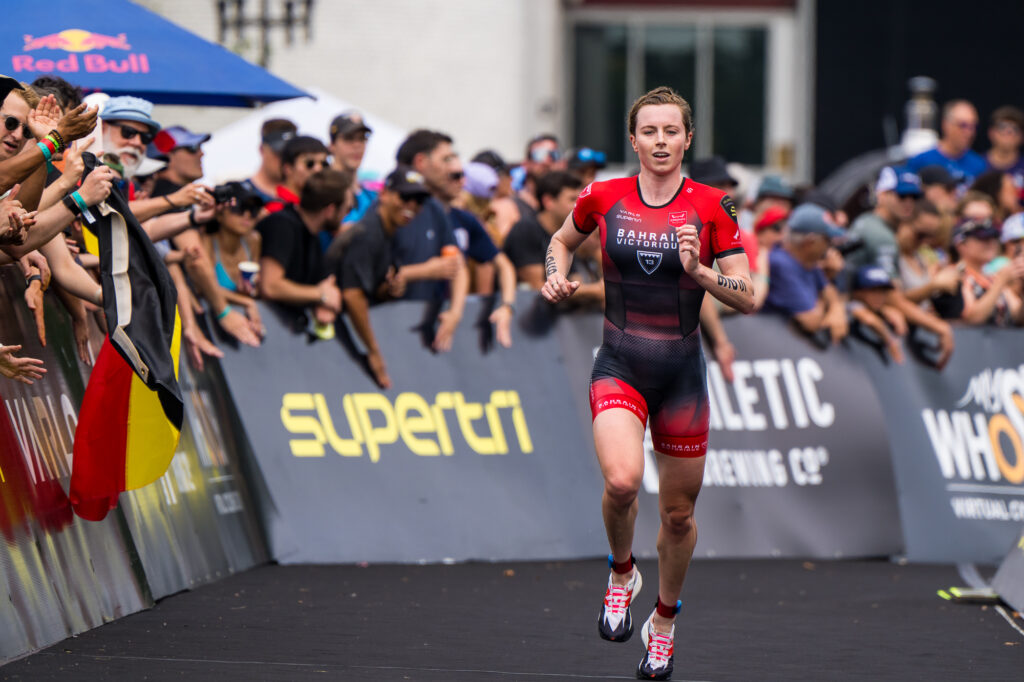
Founded in 2016 by Michael D’hulst and Chris McCormack with the backing of Russian-born Canadian billionaire Leonid Boguslavsky, Supertri began as series designed to showcase short-course triathlon racing through innovative, exciting race formats and elaborate race coverage. In 2023 the series changed it’s name from Super League Triathlon to Superti and acquired a number of major events including the Chicago and New York Triathlons, with the goal of adding mass-participation racing to the company’s mix.
That trend has only continued over the years since. While there never ended up being a Supertri race in New York (and the company would eventually lose the Malibu Triathlon), the growth has been dramatic over the last few years, with the company now putting on a number of events in North America including Austin, Kerrville (also in Texas), Long Beach, New Jersey and Toronto, along with two European races – one at Blenheim Palace in the UK, and Toulouse in France.
While there won’t be a full-fledged series of pro races this year, Supertri remains committed to professional athletes and will hold three Supertri Pro Series races (Austin, Blenheim Palace and Toronto) along with a Supertri Pro Series Final that will offer US$800,000 in prize money.
Supertri CEO and co-founder Michael D’hulst is an avid triathlete who made it abundantly clear during an interview I did with him a few years ago in Montreal that his big goal is to “make short-course triathlon cool again.” D’hulst loves to race, loves the camaraderie of competing in large groups and is determined to build that atmosphere through the Supertri framework. Last year I watched him compete at Supertri’s new event in Toronto, and a couple of years ago I saw him do the same in Boston. I caught up with him last month to get some insight on the new changes for 2026 and how those changes will help Supertri achieve his goals.
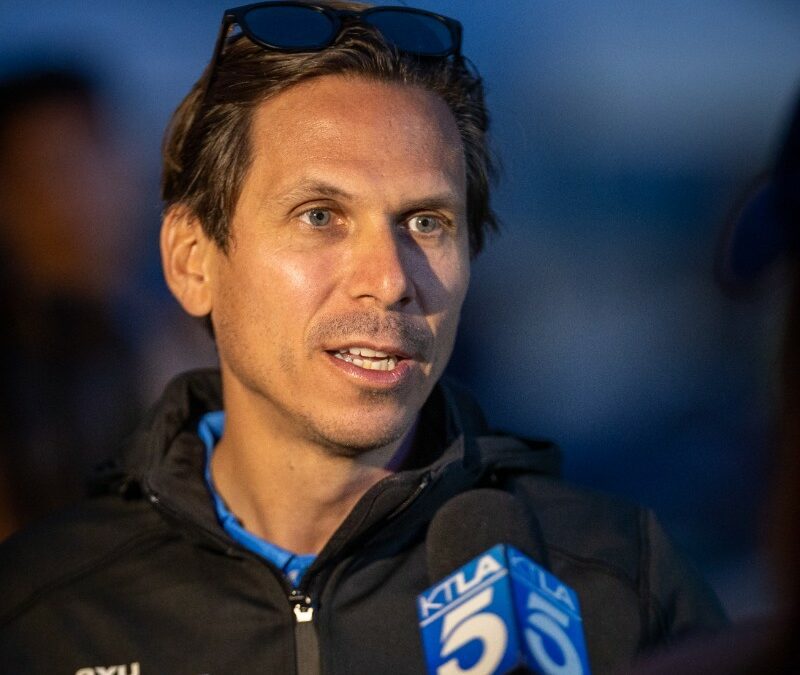
Slowtwitch.com: You’ve got a lot going on with Supertri this year, particularly with the age group expansion. How are you feeling heading into it all?
Michael D’hulst: Extremely excited. It’s a continuation of rebranding from Super League Triathlon — the professional league — to becoming an ecosystem focused on communities. What we’re doing this year is Chicago Triathlon by Supertri becomes Supertri Chicago. Everything becomes integrated into one: Supertri Toronto, Supertri Austin, Supertri Long Beach … That’s a big move for us.
With that, we’re focusing a lot on the athlete experience and our commitment to unify a premium experience across all of our events. We’ve done a lot of surveying, and we have great venues and great events, but we’re going to uplift the experience and bring the community together. Throughout the racing, but also when you’ve crossed the finish line — making sure there’s a setup where there’s food, drinks and people can hang around and celebrate what they’ve achieved. We know that a lot of athletes are keen to mix and mingle, to meet people who’ve just had that same experience, and there’s very much a social element to the sport. That’s where we’re trying to focus: bringing communities together and giving them great experiences, which includes the post-finish-line experience, not only the racing itself.
Supertri began as a celebration of pro racing, and the PTO started as an organization focused on IRONMAN-distance athletes. It seems like everyone is figuring out there may not be enough money in pro athletes alone, and that age group racing is needed to make it work. Is that fair?
I think there is a balance to be struck. Pro racing still remains very, very core to our proposition. In three of our mass participation events, we’re integrating a pro event, and we will have a Grand Final at the end of the season — the biggest one-day prize purse in the sport, with over $800,000 in prize money.
We’ve also opened things up. Previously, Super League Triathlon was a closed league — we approached a team, gave them a contract, and they could join. What we’ve now done is take our participation events and, at some of them, added a pro event as the first wave of the day, similar to what IRONMAN has been doing. We’re inviting everybody to participate and, at every location, we’ve integrated with a national championship or, in the case of the UK, a national pro circuit — bringing young talent in. The top three athletes at those qualifiers will be invited to race in the Supertri Grand Final and compete for a large chunk of money.
On top of that, we’re inviting what we call the reigning champions. If you won the T100 last year, or you won IRONMAN, or IRONMAN 70.3, or you won Supertri, or you won the Olympics, or you won the WTCS — you can come and race automatically. You don’t have to qualify. And we’re also contracting some of our loyal athletes to come and race and automatically qualify for the final. So there are three ways in.
I’m enthusiastic that we provide an opportunity for anybody in Toronto or Austin who wants to show up and race. They come, we still pay prize money 10 deep at the event itself, and they stamp their ticket to come and race in the final. At the final we pay 15 deep, so everybody who comes in is making money.
To your broader question — yes, my observation is that the money in media is disappearing, or rather getting centralized into the big sports. That’s not just triathlon; it’s everywhere. With the rise of streaming services, a lot of the broadcasters that used to buy rights properties don’t have that budget anymore. They centralize around a couple of big sports that command real rights fees. Smaller sports, and triathlon is unfortunately still one of those, end up relying on host venue money and sponsorship.
Host city money, except in the Middle East, is also disappearing in continental Europe and the US. And, when you look at sponsorship — sponsors are looking for professional exposure and a bit of media, but they’re also looking for access to mass participation because they need to sell products. So, I think we need to find the right balance. It’s not abandoning pro sport, but saying there’s a more complete package we need to focus on to build a sustainable business. And that means a nice balance between pro racing and mass participation, all within one ecosystem.
IRONMAN has done a great job at that. They pivoted maybe a decade ago, and now they’ve struck that balance well between pros and age groupers. The opportunity for triathlon is that we actually have a community that participates — a lot of sports chasing media rights don’t have that. So I’d like to think that rather than a retreat, this is leveraging the sport to its full potential to create something economically sustainable.
I’ve always said I could see that balance working — pros as the inspiration, or making it easier for, say, a local newspaper or TV station to come and find a story. Would you agree?
Absolutely, and for us that’s still very much part of it. We’ve always focused on bringing younger athletes into the sport. We had Hayden Wilde when he was still trying to do XTERRA. I remember Kristian Blummenfelt back in 2017, still very young. We picked those guys up. That legacy continues — it’s not just picking up big stars and paying them to come and race. We’ve always focused on having great stars, but also asking: are we bringing new talent into the sport and creating exciting stories with some longevity?
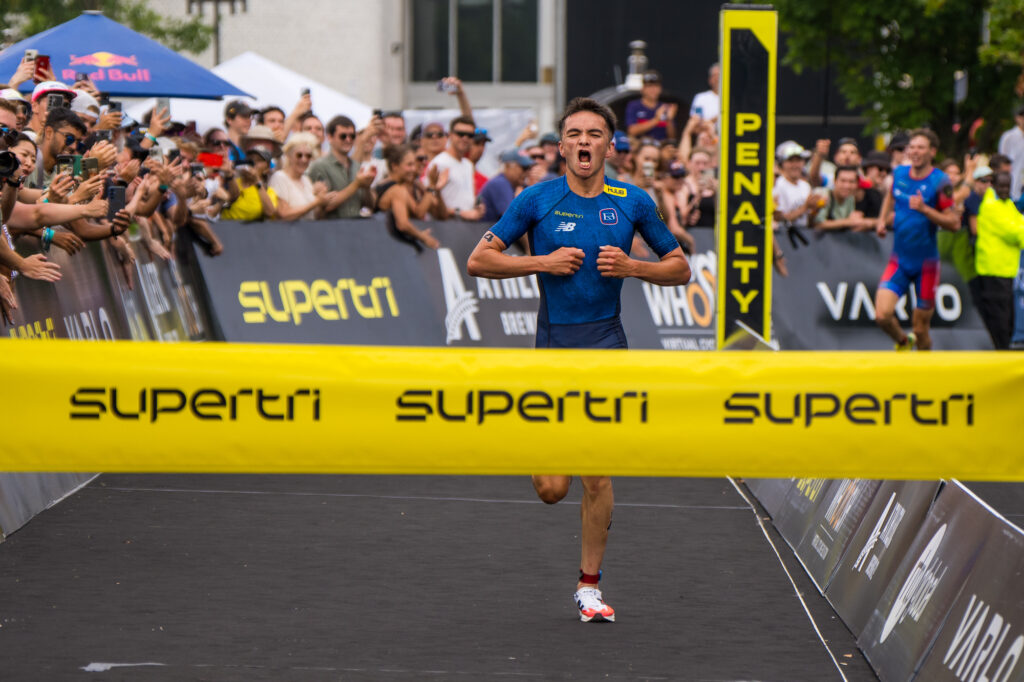
You talked in Montreal about wanting to make short course cool again. Are you getting there?
I think we’re improving. I’m not yet where I want to be, but we always want to strive for that next level.
If I look at our registrations — which I think is a clear indicator — for the first time, the younger age groups are growing. USA Triathlon data confirms it. If I look at events we’ve run multiple years: Chicago is up 33% year-on-year, Toronto up 25%, Long Beach up 21%. More people are signing up in large numbers, and a lot of those are younger people.
We’ve also set a target to bring in 10,000 first-time triathletes — not first time doing Supertri, but first time doing any triathlon — and we’re on track to hit that number. I firmly believe that Supertri as a brand, with its pros, inspirational stories and great content, is part of what’s driving that. Combined with great event locations — Toronto, Chicago, Austin, Long Beach — city-based events with closed roads that offer something unique and attract new people into the sport.
The ambition is to make Chicago the largest triathlon in the world again. It once was. That’s the push.
You’re based in London, but so much of your growth seems to be in the US. Are you looking to build more in Europe too?
It’s a market-by-market play. I still believe there’s great potential in leveraging the 2028 Olympics to get short-course triathlon cool — we have young talent like Reese Vannerson and Mathis Beaulieu, and leveraging a home platform in North America to do that makes sense.
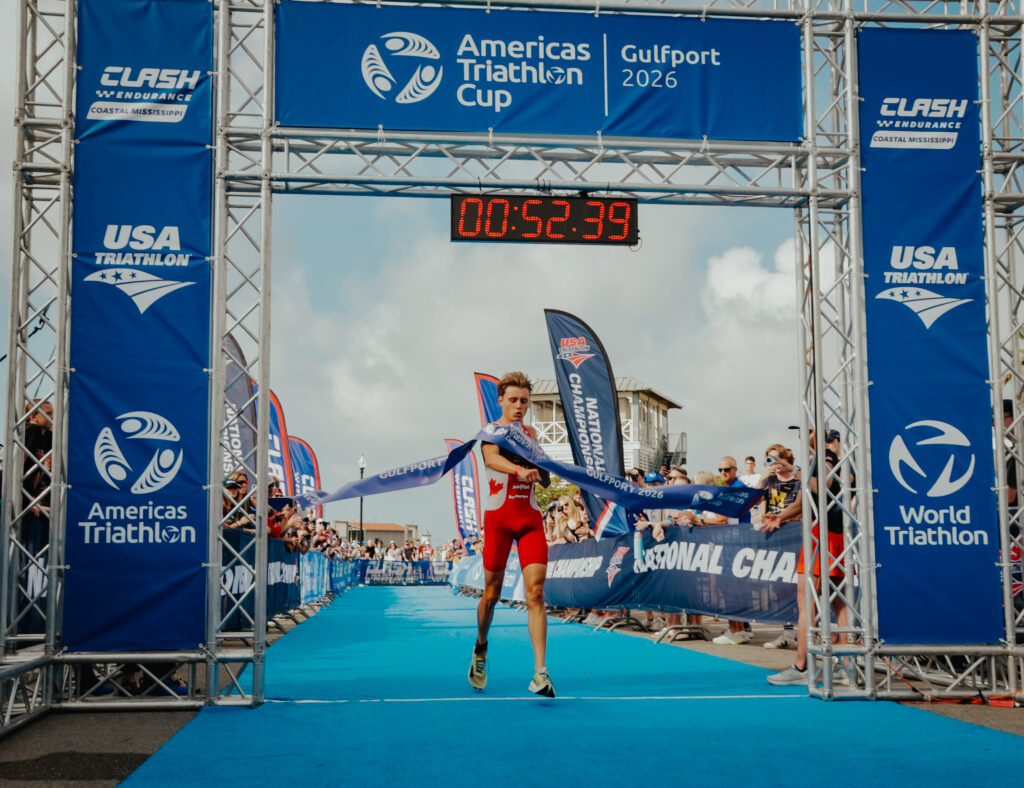
The push has always been to get a bunch of events going in North America first. With one event a year, you have one talking point. Now we do six in North America, which gives us six talking points, and we can build familiarity with the audience and the brand.
That said, the next three or four events we add will most likely be in Europe — UK and continental Europe. I think it’s good to have multiple touchpoints in markets. We have one event in France and one in the UK, which is a great event with around 7,000 people, but having a second touchpoint in those markets lets you deliver more value for partners and engage with the same community again across a season. So: first, big in the US and Canada, and now looking more at Europe.
Is SuperTri now purely an events company, or is media still part of it?
It’s not just an events company. But, in terms of media, we’re no longer pursuing media rights. What we are doing is leveraging media to build community. We’re still investing deeply in content, but it’s about community building and brand development. I’ve actually hired more people in our marketing department focused on event marketing and community marketing. So, media and community remain a big part of what we do — it’s just less about creating something to sell to broadcasters, and more about creating communities where people can engage.
What about teams? Is that concept still alive within Supertri?
That’s been put on hold. I still believe that triathlon needs a team model, but we also need to respect the wider ecosystem and put athletes first. What we were experiencing is that if we continued to operate a closed league, we were making athletes choose between racing Supertri — where they make good money and genuinely enjoy it — and their Olympic dreams. That’s not fair to the athletes.
So we reinvented ourselves: still committing to a compelling format for a final, still committing to investing seriously in professional sport, but de-conflicting the growing options for professional athletes and being more open. Pivoting to that model made it very difficult for teams to continue to exist within our structure.
That said, I have a great relationship with Podium Racing and they’re looking at expanding to become a professional racing team that sits across multiple series — a little like what BMC used to do or what Bahrain does now. I actually like seeing teams play a big role in triathlon. But, since we don’t have a closed league concept anymore, we’ve had to give up on the team concept as it was, at least for us.
Given that, why continue investing heavily in pro racing at all? Couldn’t you just bring a few big names to Chicago to make appearances and spend a lot less than $800,000 in prize money?
I still firmly believe the Supertri format is extremely exciting and has a very important place in the sport. That is recognized by sponsors, by certain hosts, by stakeholders who invest money in the sport. Not to the extent that it justifies five or six events, but definitely to the extent that it justifies one. And there’s a very positive brand-building impact for Supertri as a whole — it provides some of the most exciting racing the sport has seen, and if that inspires new people and helps build personas, that’s crucial.
With one event, the economics look very different than they do with five. And now that we’re calling everything Supertri, this year is about unifying the events and the look. Next year, I’m already thinking about how to leverage the pro element and connect it more closely with the participants — how to extract even more value for the entire ecosystem. The pro racing is so unique that it offers a lot of value, and one event makes it sustainable.
It feels like Supertri is close to being financially self-sustaining. Is that fair?
Yes, we’re probably a year away from that. This year we’re investing quite a lot in the rebrand. But yes, that’s the big pivot: focus on being sustainable, flick the switch and integrate everything into one.
I do think we’re filling a very important white space with large city-based events. We can attract new people into the sport in a way that a remote destination event can’t — if there’s a big event in Chicago, that draws people in who’ve never thought about triathlon. We’re hitting a lot of key points. The numbers are encouraging, but I still want to do a lot better.
Are you still having fun with all of this?
I’m having fun. Now that we do more age group racing, I get to race more, which is a good thing. And I think that authenticity is important. We remain, as founders, people who put the sport first. We’re all still racing. We’ve actually launched a programme for our staff where, if they go and race — not just our events but any events — we’ll help with the entry fees. We encourage people to do a Hyrox, a running event, a cycling event. This has to come from a genuine passion for sport, not just from building a business. That authenticity is key.




OK, now I was a little confused, but I think I get it. 3 PRO fields in Austin, Blenheim Palace and Toronto - plus a 4th PRO field in the final - but only one race in “Supertri format” - the final. I wish we had been told what the format of the 3 events would be? What distance? And why is it so expensive to produce the Supertri format - is it because you then can’t do an age group race?
Has Supertri thrown in the towel on creating a race that’s actually good to watch, at least more than one per year?
Hey @kajet - the Supertri pro events are "draft-legal, sprint distance races, and offer prize money which pays 10 deep to encourage development in the sport,” according to a release they sent out in March. Those races are being billed as “developmental opportunities for regional athletes” - Blenheim is part of British Triathlon’s Super Series and Toronto will be part of Triathlon Canada’s National Development Series. Three athletes from each gender qualify for the Supertri Pro Series Final.
In terms of the expense, they have definitely had age group racing around some of the televised events in years past. It’s still very expensive, though - you don’t just have the coverage costs, you have the costs for paying the pros (and their expenses), etc. I think the biggest issue, though, is that it’s getting harder and harder to find windows where you can get all the best short-course athletes to be able to compete. Last year it was a struggle to get the top athletes to commit to a series of races with the worlds taking place in Australia in October - juggling travel with a bunch of races was challenge.
This solution allows Supertri to still promote a big race with lots of prize money. It will be interesting, though, to see if they can bring back more of the “series” feel and also if the team stuff ever makes a return.
but to be fair this year the series ends September 26 in spain. so that cant really be the bigger issue this year.
and kajets question was what format the races are. for Blenheim it always was a 750 swim 20 k draft legal bike 5 k run. not sure about the other races
Hi @pk , the other two are sprint distance races as well. I guess all I can come back to is what Michael said:
”What we were experiencing is that if we continued to operate a closed league, we were making athletes choose between racing Supertri — where they make good money and genuinely enjoy it — and their Olympic dreams. That’s not fair to the athletes.”
As you say, it might not have been as much of a challenge this year, but I think it’s been getting harder and harder to get the athletes to commit to a four or five race series.