
Magnus Ditlev on His World Record at IRONMAN Florida: “Kona Is Still What I Think About”
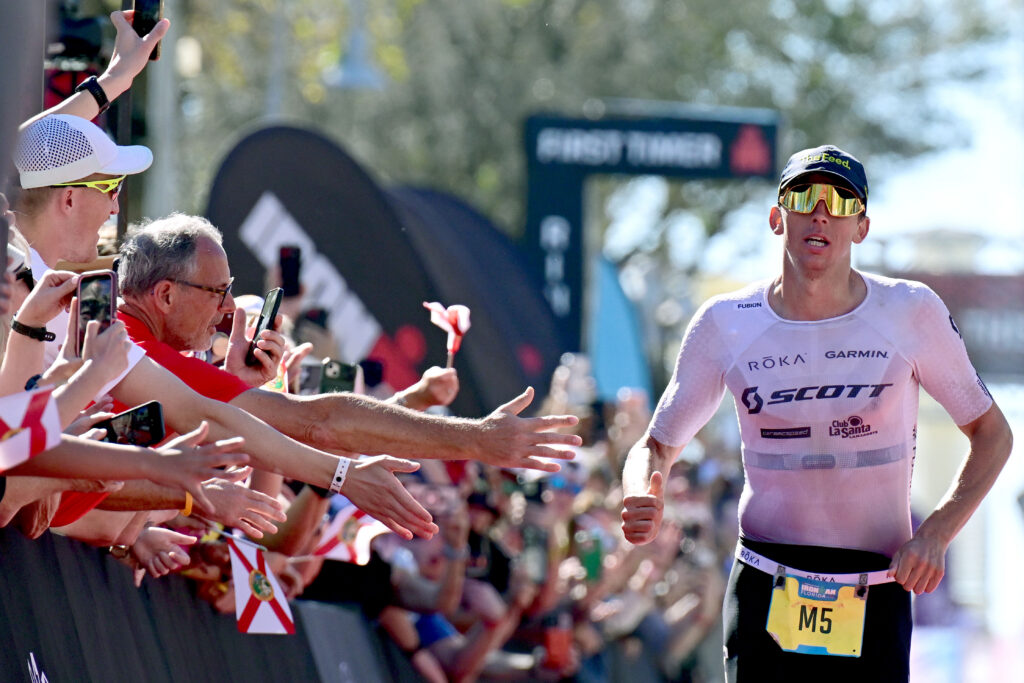
It was a day of redemption for Magnus Ditlev in Panama City Beach. As we reported yesterday, the Danish star bounced back after dropping out of the IRONMAN World Championship just four weeks ago to set a new world record, finishing in 7:19:17 to easily take the win and nail a return trip to the Big Island next year.
We caught up with Ditlev this afternoon to get some insights on the day of racing and how he’s feeling.
Slowtwitch: Congratulations. You must be very happy, and also feeling maybe a little bit of redemption after Kona?
Magnus Ditlev: Yeah, for sure. It’s definitely a nice way to bounce back and end the season, but it still doesn’t take away what happened four weeks ago. It’s really nice that I ended up winning and breaking the record and everything, but Kona was my biggest focus, my big shot at the win there. I’m still thinking about that a lot.
I can imagine. And in a crazy way, does it make it more frustrating, because you now realize how fit you were?
Yeah. Everyone has said to me now, “You’ve really confirmed how fit you are. It must be so nice going into next season.” But I already got that signal in Kona, that I was back from all the sickness I’d had. It wasn’t that I wasn’t in shape to win the race; it was overheating. So I knew after Kona that I was in really good shape. And, as you said, it’s just so frustrating and disappointing that I couldn’t make it. But we’ll have to wait for another year.
I remember we had that great chat in Lanzarote at Club La Santa a couple of years ago, and you were so all-in for Kona. You made that clear. So I can’t imagine how frustrating the last two years have been. You struggle through that season, and then you get everything together for this year, and the plug gets pulled again. How hard has it been to stay positive through all of that?
It’s been really hard, actually. It’s been a big struggle. You start to wonder if you’ve lost your level, or what’s going on. And it’s not a fun feeling, because you don’t feel that you can trust your body. Before, I could always rely on it; I knew I’d be able to push. Last season there was a lot of weird stuff, with the punctures in St. George, the penalty in Frankfurt, and then pneumonia before Nice. This year, after I got shingles before Texas, it’s just been so weird how my body let me down in the races in Frankfurt and Roth. I thought I was in quite good shape, but when I wanted to push as I normally could, there was nothing left. That was quite worrying, and it’s been hard to trust the process.
Luckily I have a really good coach (Jens Petersen-Bach) and a lot of good people around me who always cheered me up. I’m really proud that, although I doubted a lot of things, I never let those doubts affect my decisions in training. I always tried to do what I thought was right. It’s been a long way back, for sure, and I’m just really happy that I can push again and have a body that’s responding to training the way it was before.
Does it make you revisit that all-in-for-Kona approach?
Not really. Everyone has said how calm I am about breaking the record yesterday, but in my head, I’d already had the world record twice in Roth before. It’s of course really nice, but the big thing I’m missing is a world championship title. I’m the kind of person who likes to focus. You can see it a bit in how I race: I don’t go to every race all through the season. I pick my races, and I really enjoy preparing for performances. Of course I enjoy racing, that’s what we do, but I also enjoy the process of getting to the race and optimizing everything around it. That’s how I operate. I’d rather focus on fewer targets that really mean something to me personally, and right now that’s Kona.
You have said before this doesn’t happen without an incredible team. It feels like you’ve been steadily building that team for a few years now, and you’ve got things dialed in. Do you feel that way?
Yeah. That’s probably one of my strengths. People just see the result on paper; they don’t see how the triathlete works. I’ve always tried to surround myself with knowledgeable people. If there’s an area where I feel we’re not sharp enough, where we lack a bit of understanding, I’m not afraid to seek out expertise. A lot of people see that as a weakness. Some coaches never allow other people into their system because they see it as a weakness, but we’re really open and always trying to learn from different experts, in the areas we feel are the next step in my development. That has changed throughout the years. It could be a swim coach dedicated just to me, or working with two engineers on the bike tech side, or whatever it is. We always try to keep an open approach and see where we can improve.
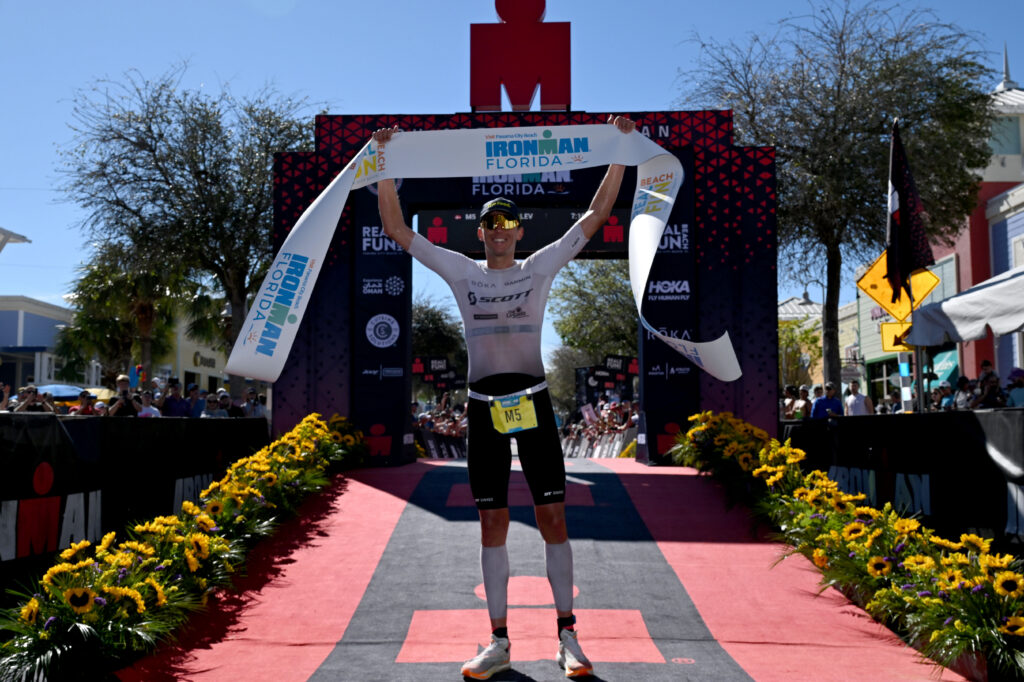
Can you tell me a little about the race? With your previous world bests in Roth, you almost make it seem easy. Is that what it needs to be, one of those days where everything just flows and feels good? Or does it feel that way to you?
My experience is that it comes down very much to the individual race and the day you have. Some days it can hurt the whole day, but you still manage to stay in it. In Kona in 2024 I was hurting like I’ve never hurt before in a race, but I still managed to finish second. And some days it can feel effortless and you’re just on a flyer. Yesterday was definitely one of those. It sounds wrong to say it was the easiest IRONMAN I’ve done, but I felt so much in control the whole race. It was quite crazy, to be honest.
I think it’s because I got the gap I needed on the bike immediately, and I could see the gap just growing. Nobody was chasing me in that way, so I was able to control everything 100%. The energy you have goes up and down all day, so some moments you feel better than others. When you have a big gap, you have the luxury of easing off a bit in the rougher patches, and then five minutes later you feel good again and you’re back to pushing. That’s not how the world championship is raced, and it’s why you see so many people, including myself, blowing up. The racing is so tight that, while you try to do your own race, you also have to react to what’s going on around you.
It seemed as though the day was set up almost from the swim. Did you feel that way? Were you surprised by your splits?
It was a beach start, and I think my long legs probably helped me a bit. It was low tide, so we were able to run quite a way, and I got a really good beach start. I was in second position after 200 meters and thought, “Whoa, I’ve never tried that before.” Then I was swimming in third or fourth position for the whole swim. At the Australian exit, everyone was running in the sand, which was really loose and deep, but I saw that they hadn’t set out any cones, so we could run closer to the water, where the sand is much harder. I ran down there, whereas the others ran maybe a meter to the left, where it’s looser. So I overtook everyone on the Australian exit and entered the second lap in first position. I’d never done that before. From then on, I knew my chances of having a good day were high, but you never know with the bike.
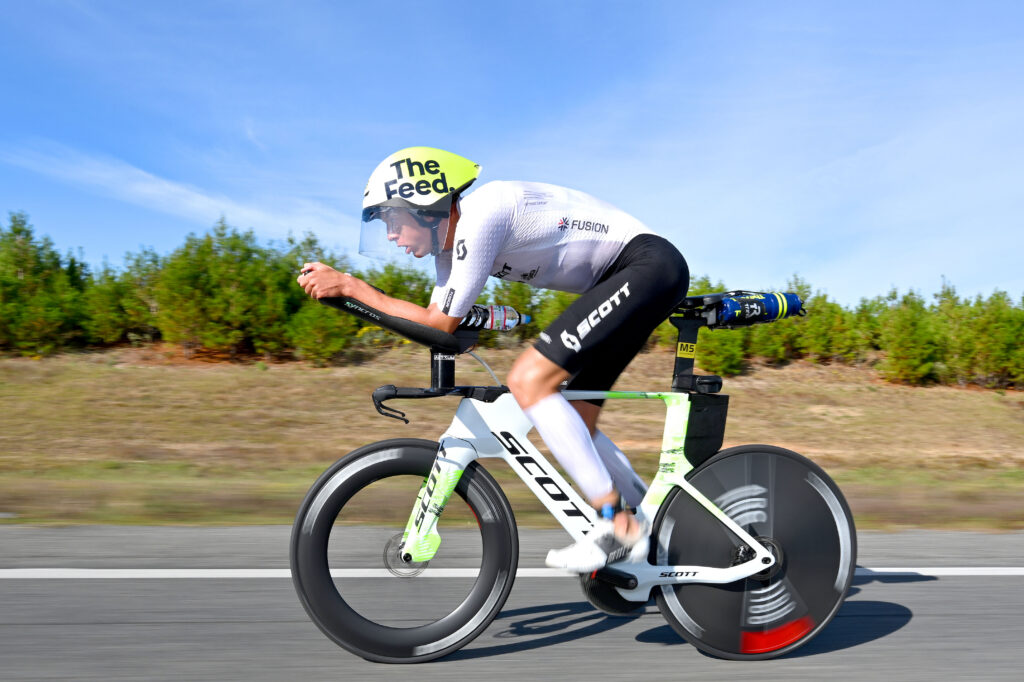
Before the race we’d done some predictions and calculations on the bike split I was likely to do, and we could see it was going to be quick. On the bike I wasn’t focusing on chasing the world record, because if you overpace that early, you can really blow up. I focused on executing the fastest possible bike split, while keeping a little bit in reserve so I could control it. I stayed within my limits, and towards the end I could see it was going to be a really quick bike time. When I saw I had 47 kilometers per hour on average after 160 km, I started wondering. But I wasn’t swimming with a watch, so I didn’t know what time I’d swum, and the first transition is crazy long. So I wasn’t sure what my overall time was going to be going into T2.
When I started running, I asked my girlfriend what marathon (split) I’d need to break the world record, and she said 2:35. I had the choice of going for that and seeing if I could chase it, or playing it a bit safer and just enjoying it. I decided to push and see if I could break the world record. It felt super smooth on the run, and I’m happy I made that decision.
Going back to Kona: When I saw you on the run at the Energy Lab, it seemed like you were struggling and trying to get every bit of water and ice you could at the aid stations. Did you feel like you could get to the finish line? What were you thinking in the last part of the run?
It went downhill very quickly. Going into the Energy Lab I was feeling quite good. I was starting to feel a little fatigued, but I was probably more than seven hours into the IRONMAN, so you’re supposed to be a bit fatigued by then, and it didn’t feel very different from most of the other IRONMANs I’ve done. But going back up the hill out of the Energy Lab, and especially turning right onto Queen K again, that’s when I really started to struggle. It went downhill very, very quickly from there.
It’s something I’ve never felt or experienced before: this kind of heat, or at least that’s what we believe it is, overheating. In an race like Roth or here (IRONMAN Florida), you might slow down a little towards the end because it’s getting harder, but you’re still able to push. Here, my brain was saying I couldn’t even move my legs or arms properly anymore. I think I stopped just before it got really dangerous.
You’ve finished second in Kona before, so you know you can race well there, and you’ve just proven you’re the fastest person ever over this distance. Do you get to spend the next year gearing up for Kona? I’m guessing, based on what you’re saying, that’s the ultimate goal.
Yeah. Now I have to go home, have a little break, and then evaluate Kona and this race and see what we can take with us for next year. Then we’ll set up a plan. It’s not that I won’t race before Kona, but every decision I make about where I race will be linked to building a season with Kona as the biggest goal. It’s good to race against the best people in the world to gauge where you are, so that could mean choosing a really high-level field, or a race like Texas, where it’s super hot and humid, to test some things out. Now that I have the slot, I have the freedom to set up the season exactly how we want.
So ultimately, getting the slot was the main goal for yesterday, and coming away with the world best time is a very nice bonus. But now you’re setting yourself up to go back and go through all that pain again.
Yeah. I swore I would never come back to Kona when I dropped out. I thought it was the worst experience of my life. But there were still so many great takeaways from that race. It’s an iconic race, and I want to be there and see if I’m able to win it. I’m looking forward to it already.
How satisfying would it be to finally get the win in Kona?
It’s hard to put into words. It would be so emotional. What I did in Kona this year already made me emotional, because I felt it was going so well, until it didn’t. I could almost smell the finish line. Especially after the experience I had this year, if I managed to go back one time and actually win, it would be very, very special.
Taylor Knibb said this year that some advice she got from Paula Newby-Fraser – taking care of yourself and making sure you get to the finish line, was really helpful. Is that something you’ll take into the race next year?
For sure. You need to make sure you can actually make it to the finish line. It doesn’t matter if you’re first with 2 km to go if you can’t finish. That’s something to take into consideration. But it’s really hard with the heat; it can go downhill so quickly. I thought I was in control, and then you realize, “Oh, I’m in a really bad place now.” We learn every time, and hopefully we can learn from this and not repeat the same mistakes next time.

Start the discussion at forum.slowtwitch.com