


The T100 World Tour is Coming in 2027. More Details from PTO CEO Sam Renouf
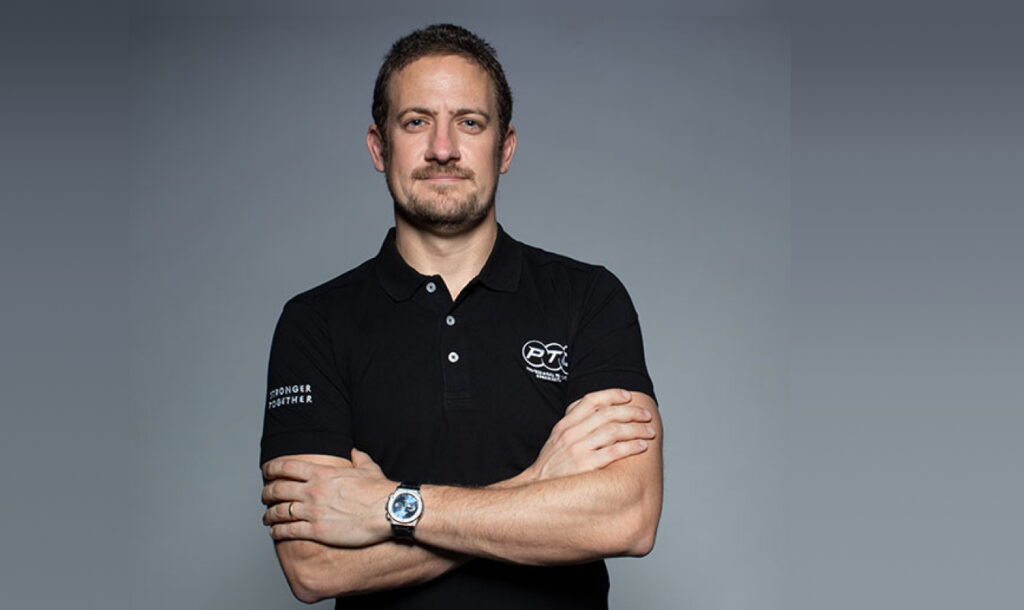
Last weekend World Triathlon and the Professional Triathletes Organisation (PTO) announced some big news for the 2027 season. The new Triathlon World Tour will combine the T100 Series along with the World Triathlon Championship Series (WTCS) and World Triathlon Cup races to a roughly 100-race series.
The new race series will see WTCS events rebranded as the T50 World Championship Series and World Cup and Continental Cup events will join a new “Challenger Series.” Those races will continue to act as a “feeder system” to the higher-end T50 and T100 races.
Exactly how all this will work seemed a bit vague, so we reached out to the PTO to get some answers to our more specific questions about the new series. Here’s an edited version of my conversation with PTO CEO Sam Renouf:
Kevin Mackinnon: As I was writing the story from the press release, I realized I had more questions than answers. That’s why I reached out—to understand how this actually works. One of the first questions everyone’s asking is: Is this a merger? Are you still two separate entities?
Sam Renouf: Right—and “merger” can mean different things. From a sporting-product perspective, it’s a merger in the sense that we’re bringing brands together to create something bigger. But from a corporate M&A standpoint, absolutely not. World Triathlon remains independent. They are the governing body; we’re the commercial partner.
This structure is very much informed by the Deloitte report (prepared for World Triathlon – we wrote about it here) you’ve probably seen. The key takeaway is that many international federations are separating governance from commercial operations—that’s becoming best practice across sport. Formula One is the classic example: the FIA governs, but Formula One operates commercially.
World Triathlon had a choice: build a new commercial entity with outside investors, or partner with someone already set up to do that. We were a natural fit. We already deliver events and can take investment and risk—something a federation can’t easily do.
Another key finding was how fragmented triathlon is—different brands, distances, and competition hierarchies. It’s confusing. That fragmentation makes the sport hard to commercialize and sell. This partnership is about simplifying the structure.
So no, it’s not a merger. World Triathlon is granting us commercial rights to certain IP, which we’ll operate as part of a broader world tour.
Does that mean you’ll be putting on the events themselves?
In many cases, yes. Traditionally, World Triathlon sanctions events but doesn’t operate them. We operate many of our own events, which means we retain commercial rights and can invest to grow them. That’s a core part of our model.
Some events will still operate under license or sanction, but the key difference is that all commercial rights will be pooled and managed centrally. For example, we operate the London WTCS and will continue to do so. In markets where we don’t have operational capacity—like parts of Asia—events may continue under a license model, but we’ll still manage the commercial rights globally.
So the goal is to reduce fragmentation, especially from a broadcast perspective?
Exactly. A broadcaster recently told us triathlon was confusing—World Triathlon, Supertri, PTO, IRONMAN. They didn’t know who to deal with. What we’re doing is simplifying that.
You’ll have IRONMAN as the long-distance product, and the Triathlon World Tour as the core professional product. Each event will include professional racing, mass participation racing and broadcast coverage.
That wasn’t entirely clear in the press release. So every event will have an age-group component?
That’s the vision. Some events—especially former World Cups—don’t yet have mass participation, so it may take time. But long-term, every event will include professional racing, mass participation, and broadcast content. We actually prefer the term “mass participation”—“age group” isn’t very marketable.
There’s still Supertri, Ironman, Challenge… how does this “simplify” that landscape?
Well before it was those three, plus T100, plus WTCS, plus World Cups – so I’d say we’re half way there to simplifying things! And we’ll announce more details in the new year. From a broadcast standpoint, though, most of those events aren’t consistently televised. Our goal is a consistent, year-long broadcast product—roughly February through early December—with around 100 broadcasts.
Does that mean TriathlonLive (the World Triathlon broadcast platform) goes away?
We’ll announce brand specifics at the official launch in Q1. The key idea is a single destination to watch triathlon. Whether that brand is TriathlonLive or something else will be announced later.
There’s room for both a mass broadcast product and a super-fan subscription product (the second-screen concept that we provided with PTO+)—similar to Formula One’s model with F1 TV alongside traditional broadcasters.
Is the second-screen experience working?
We’re happy with the progress. Data is critical. Without timing, biometrics, and context, triathlon isn’t compelling to watch. With data, it becomes much more engaging—like Formula One. That’s where we’re investing heavily, including with major tech partners.
Is the PTO really ready to put on 100 events a year?
That’s exactly why this launches in 2027, not 2026. Many of those events already exist—we’re not creating everything from scratch. We’re repackaging, rebranding and commercializing them under a unified platform.
Will the PTO own a world championship?
No. World Triathlon owns it. They grant us the right to operate it. That’s consistent with the role of an international federation. We could have gone independent, but we believe growing the sport together is the right approach.
Is there concern this creates a conflict of interest, with the PTO becoming too close with World Triathlon? Do you think that could be a concern for other players in the marketplace, like IRONMAN?
We’re only operating a small slice—about 100 events out of thousands worldwide. World Triathlon remains fully independent. In fact, we believe this benefits IRONMAN. If we grow triathlon overall, the biggest player benefits the most.
That makes sense. Everyone wins if triathlon gets bigger.
Exactly. The sport has an incredible demographic but lacks the scale to monetize properly. Other sports—like golf—attract huge non-endemic sponsorship. Triathlon doesn’t yet, because there hasn’t been the right platform. That’s what we’re building.
Thanks so much for your time, Sam. I really appreciate it.
Great chatting with you. Happy holidays.
Before this interview we did talk a lot about this subject on the Slowtwitch Podcast.
Tags:
PTOSam RenoufTriathlon World Tourworld cupWorld TriathlonWTCSRelated Articles:

Continue the discussion at forum.slowtwitch.com
37 more replies






I’m gonna push back on his attempt at a comparison. Formula 1 and FIA, that’s an exception, not a rule. Yes, most International Federations are separating their EventsCo/Commercial Co out. But that’s to drive efficiency. What they’re not doing is giving the responsibility away to a private entity which is what we see here. Those EventsCo units are wholly owned by the Federation. These are for profit units that can take losses in the way their parent non-profits cannot.
I would actually be extremely surprised if the ITU didn’t have an EventsCo handling their events. Also, consider for the most part, a lot of their events are delivered by the host federation or at least in partnership with the ITU skimming off a significant amount of the sponsorship and the losses being taken by the host federation. To this date, PTO/T100 hasn’t delivered a single race on their own. So it’s gonna be interest.
I definitely don’t believe a word he says when he says they already deliver events, those have been delivered by a local federation or a partner where they piggy backed. Did they pay for the Broadcast? yes.
It will be interesting to see, but World Triathlon doing this sounds pretty ignorant and the Deloitte report clearly doesn’t understand triathlon.
(#) As Ryan says:
Read Ryan’s post, that’s been my point since I first read their press release and then read Tim Heming’s article.
And yes, they pay for broadcast. They do not own a production company. They contract a local production company to produce their broadcast product. Did you think I meant they pay the broadcaster? Which to be honest, they might be buying air time (we don’t know). PTO doesn’t have an organic production arm, everything they do is contracted out whether it is the race broadcast or their youtube content.
Delivery means they own everything soup to nuts, they are the ones getting the permits, they are the ones organizing the volunteers. They so far have been an add on to every “race” they have.
Point of order: I believe they own/operate London on their own.
He [Renouf] mentioned that, but when did that acquisition actually close? They bought the promotion company. So they acquired expertise, but I don’t think that was acquired before the first London T100 and for all we know didn’t happen until after the last.
But even in my cynicism, we’ll give PTO one recently organic race that they promoted on their own.
January 2024: "The PTO announces London as the newest stage of the 2024 PTO Tour – through the acquisition of the iconic Challenge London triathlon."
First T100 London and the PTO partnered with LME to help them put it on. I got ‘upstairs’ in the Excel Centre before the men’s day in late July 2024 and, aiui, the broadcast setup was very much being run by the PTO/T100 team (not some “local production company”) - but maybe @TheStroBro has better insight (been to a T100 event yet?).
So PTO owns production trucks? PTO owns broadcast transmitters? They don’t. If they did that would be an incredibly inefficient use of funds.
I have significant insight in regards to race broadcast and sports broadcast production in general. Most of the time, camera guys are stringers unless they’re the very best. They will be independent contractors that work 3-4 events a week in a city to make ends meet. The very best camera guys work in the NFL and make six figures. Those guys get classified as employees. The best camera guys in racing? NASCAR and F1. PTO doesn’t employ a single camera guy to my knowledge. Nor do they employ a single director. All of these people are either employees or subcontractors of production companies. The production company they used in North America was DOME. Does PTO directly contract talent? Yes. But is the broadcast run by them? No.
The great thing about this though is the information is available to you on the internet. IMG has managed the broadcasts the last two years and will manage the broadcasts for 2026. IMG To Represent PTO Media Rights For New T100 Triathlon World Tour – T100 Triathlon
So effectively, PTO isn’t even directly contracting the various vendors. IMG is.
ETA: before you say that’s an agent to sell their broadcast rights, IMG produces radio and television all over American college sports.
ETA2: You answered what I said about London. They subcontracted LME for 2024 and 2025. LME still have T100 listed on their site for events they deliver, so I’m gonna posit here that PTO will be subcontracting out again.
You win. Merry Christmas.
So the PTO have got this partnering and contracting weighed off then. I can see why World Tri chose to go with an organisation with whom they have a long term general agreement and proven capability.
"The study draws on a blended methodology that combines stakeholder insight with financial and market analysis. It includes group interviews with a broad spectrum of voices across the sport, from private event organisers and elite athletes to National Federations and Age-Groupers, as well as in-depth conversations with World Triathlon’s senior leadership. These qualitative insights were complemented by global surveys of institutional actors and recreational athletes, a financial review of eight triathlon events, . . . "
¡Feliz Navidad y Prospero Año Nuevo!
I still think it’s a little unfair to criticise him here. I’m sure that F1 isn’t the only ‘exception’. What about Diamond League and World Athletics? Tennis has yet another different model but as I understand the ATP is separate whilst still under the ITF’s overall governance framework?
He also called out not having wanted to set up an entirely unsanctioned competition. This seems positive in that regard too…
The article mentions T50, is standard/ olympic distance changing to 1-40-9 ?
Many are speculating about what will happen, but nobody knows yet.
Track is even more fragmented than Triathlon. But again not comparable to whatever this is. Diamond League, like F1, is wholly private entity. The only thing that both have are sanctioning agreements. This isn’t that. This is the ITU contracting out their events to a private company. Which maybe is what needs to happen and only do things like World Championships in the off years.
I read the Press Release and trying to NOT sound negative but I was trying to make heads and tails of it all as it was like the proverbial fire-hose of information coming at me.
Indeed - the mention of the T50? What does that mean? Will we be seeing the demise of the the original Olympic Distance Triathlon - 1.5/40/10 - there’s a LONG background story to how those distances were arrived at but the short one is that then ITU President Les MacDonald was advised to come up with a race format that had distances in those swim/bike/run disciplines already contested in the Olympic Games! The change I was anticipating, particularly at the Olympic Games was the ditching of the Olympic and cutting the distances in half to what we now call a “Sprint” 750/20/5. The IOC seems to be on a mission to cut and tighten up various races/events/disciplines on their Program - so this would fit with that.
That led to the other curiosity of the press-release - musing about the inclusion of the T100 distance in the Olympic Games. That because of what I just talked about in the previous paragraph, is a 100% non-starter!
May we live interesting times!
We can see that MacDonald took note of that advice for the swim and bike, but 40km is ‘just’ a round number and about the right relationship with the run. 40km/25 miles is not a distance “already contested in the Olympic Games!” 38.5km will be fine, or just finagle it with ‘roughly 40’ for the T50 total. The run distance matters and will surely stay at 10km.
Talk of a 100km distance being introduced into the games is just that: talk. Athlete limit = 55+55. I also think there’s far more likelihood (and @BDoughtie has pushed this for at least 2 years) that the distances will drop to T25 (stay at half that for the MTR) for Brisbane.