
What to Expect When You Join a Masters Swimming Group
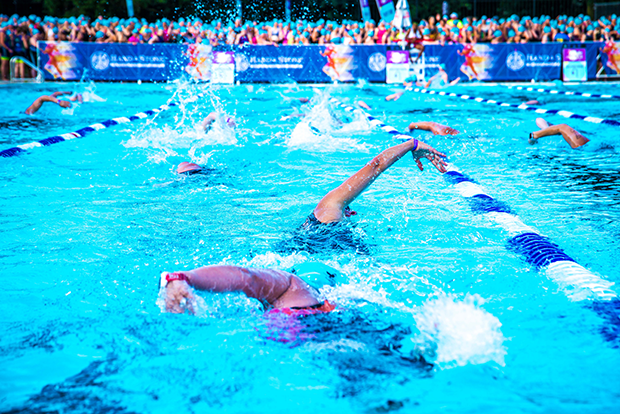
You’ve heard it over and over again: if you want to get good at swimming, join a group. But joining a group isn’t just intimidating—it’s a whole new world of swimming. So here’s what triathletes need to expect when joining a masters swim group.
A Chat with the Coach
Expect to have a short talk to the coach before you join, or at least before your dive in. Explain your goals, your level of experience and proficiency, and ask any questions you may have.
Swimming coaches have seen it all, so don’t be shy to share your concerns, as it will allow them to coach you in the best way. They might also give you individual instructions during the first swim to assess where you are, and what you need to work on.
Lanes Are Organized
Groups are organized by speed. The fastest swimmer goes first and the slowest swimmer goes last, whether that is spread across one or multiple lanes. When you’re new, ask the coach where they suggest you start. Don’t be the person who thinks they’re faster than everyone else only to be passed in the first few lengths. Err on the side of being slower, and work your way up the line rather than jumping in and disrupting the flow.
Swim in Circles
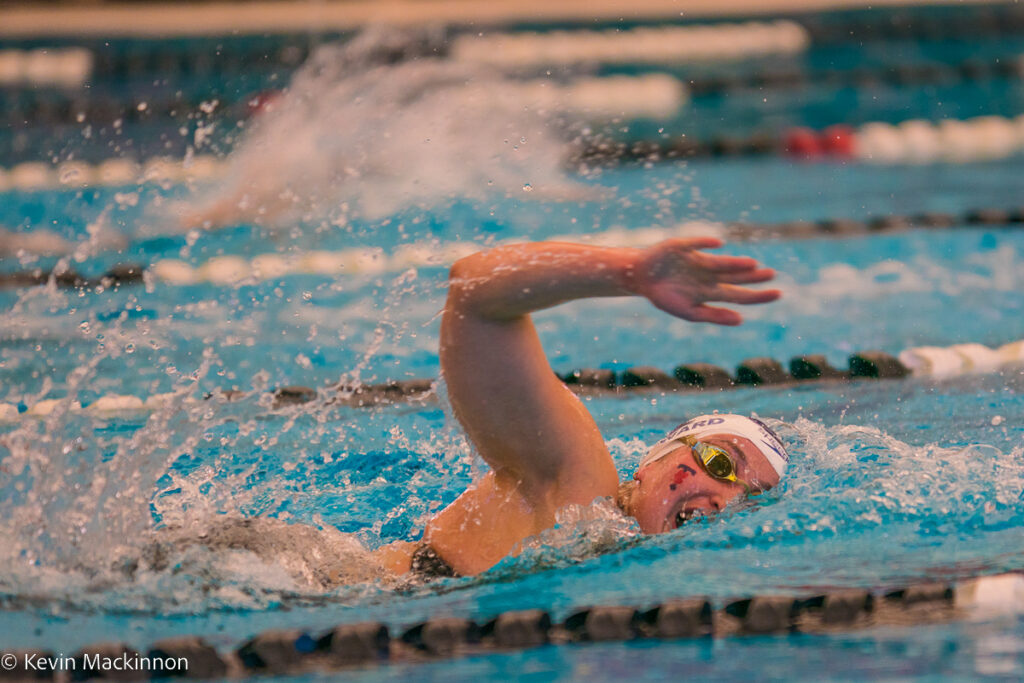
To accommodate everyone, you’ll swim up one side of the lane and down the other. Standard spacing is five to 10 seconds between swimmers unless the coach says otherwise. Use the lane clock to time the gap before you push off.
When you get to the wall, whether you’re doing a flip turn or an open turn, do so on the opposite side. If you swim up the right side, turn on the left side of the lane. When you’re stopping at the wall for a rest, make sure the swimmer behind you has enough space to get to the wall.
If someone touches your feet to indicate they’re swimming faster than you, you don’t need to stop swimming. They may initiate a pass, and it’s their job to do it at the appropriate time. Otherwise, it’s standard etiquette to ask if they want to move ahead of you in the lineup the next time you stop for a rest.
Likewise, if you’re catching the swimmer in front, pass only when you have ample time and space to do so, or wait until the next rest and kindly ask if you can go before them.
You’ll Use Lots of Equipment
Some triathletes think using equipment is cheating—that’s simply not the case. Swimming aids are tools used for specific reasons, and you’ll more than likely use some or all of the standard swim equipment during a session.
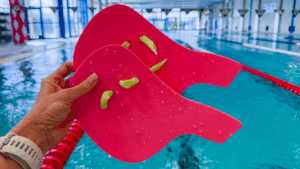
You will be expected to supply most of your own kit, which typically includes paddles, fins, a pull buoy, a snorkel and a kickboard. The pool might supply kickboards and/or pull buoys, but make sure you have the basics with you.
Keep your equipment organized in a mesh bag or in a clean stack at the end of the lane where you’re swimming.
…And That Includes the Lane Clock
A key piece of equipment when swimming in a group is the lane clock. You’ll need to use it to time the gap between swimmers, rest intervals, and pacing.
There are usually two lane clocks, one at each end of the pool (although sometimes there is only one, especially in 25-metre or 25-yard pools). A lane clock has four arms, each a different colour. Remember the colour and time you begin on. For example, the lead swimmer might start on “blue top,” and if you’re swimming second, right after them with a ten-second gap, you would be leaving on “blue ten.”
Swimmers will initiate their start slightly before their time so their feet push off at exactly their start time. However, don’t push off too early (or too late) as you’ll interfere with the flow of the lane.
Sometimes it’s good to practice swimming “on feet,” directly behind a swimmer so you can have a full drafting effect, just as you would in a triathlon. If you want to practice drafting occasionally, speak to the coach and the swimmer in front to ensure they are okay with that and know what you’re up to.
It’s Not Just Freestyle
Swimming groups will use all four strokes. While you don’t need to be equally proficient, you should try to have a grasp of not just freestyle, but backstroke, breaststroke, and butterfly. But, if you don’t, just let the coach know. You can either use an alternate stroke or the coach can suggest a modification to accommodate freestyle if that’s the only stroke you know.
That said, a swim group is the perfect place to learn the other strokes–and other skills. Block starts, medley transitions and fly kicking might not be skills a triathlete really needs, but learning and training any swimming skill will help you be more comfortable, confident and proficient in the water.
It Might Take Longer
Triathletes often rush through swimming. With two other sports, jobs and a life, getting in and out of the pool as quickly as possible is often the norm.
In a group, however, there will be larger breaks between sets. The coach might take a few minutes to explain the swim before you start, go over the main set again after the warm-up, or take time to explain a drill during the swim. You’ll also be waiting for the entire group to finish before you start the next section of the workout.
You’re at a group swim for the group environment so forget about cramming in as much mileage as you can. Use the extra time to take in nutrition, really pay attention to the coach and gather your energy to execute the swim to the best of your ability.
You’re Responsible for Your Own Dry-Land Warm-Up
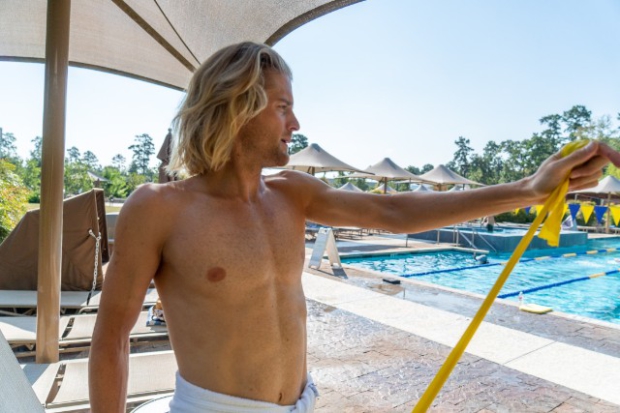
Try to be on deck fifteen minutes before the scheduled start so you can complete a dry-land warm-up with a band. At a minimum, you only need five minutes for muscle activation, and it’s worth it for injury prevention.
During this time, you can also chat with your teammates, listen to any instructions from the coach, and prepare your equipment.
Camaraderie Happens In and Out of the Water
Swimming with a group is so fun because of the people. Enjoy the bonding through tough sessions, the whispers to clarify the coach’s instructions and the post-swim laughs in the change room. Enjoying the process of swimming can be a big ask, but it’s almost guaranteed when you join a group.


Start the discussion at forum.slowtwitch.com