
Still Racing Pro At 49: Check Out the Gym Routine that Keeps Ed Veal Going Strong

He’ll turn 50 this August, but that hasn’t slowed Canadian Ed Veal one bit. Next month the season starts up, and Veal will be representing the Automatic Racing team at events across the United States. Competing in the American criterium circuit, Veal routinely finds himself racing shoulder to shoulder with riders half his age (and sometimes even younger than that). At some events, he’ll even enter the 40+ race and use it as a warm up before the pro event gets started.
As far as Veal is concerned, the key to his longevity in the sport has always been his strength. He didn’t get into the sport until he was in his 30s, but his previous work experience helped him become the athlete he is today.
“When I started, it was like a blue collar thing,” he remembers. “We had a family business installing oil tanks and cast boilers and, as my dad’s helper, into my 30s I was doing this heavy lifting. It was like farm strength.”
Over the years, though, as he pursued a cycling career that included time on the Canadian Track Endurance Program where he competed at the UCI Track World Championships in 2016 and was part of the bronze-medal winning team pursuit squad at the Pan Am Games, the Canadian one-hour record (48.587 km, since broken by Lionel Sanders, who went 51.304 km) and Paralympic appearances as a tandem pilot, that strength started to slip away. Realizing how important maintaining strength was to his career, he turned to the gym.
“It started off as a little bit of gym work, then became a little more serious,” he remembers. “Now I’m pretty much in the gym seven days a week.”
“Well, I’m including mobility and I do a lot of core stuff,” he continues. “Some of it is therapy, some of it is just feeling good. That’s the same on the bike – I’m on the bike seven days a week, too. Every day, when I’m doing this, it confirms that I’m an athlete.”
In fact, the first thing he does when he wakes up is head to the mat.
“I wake up and the very first thing I do, I go to the yoga mat,” he says, conceding that he’ll often grab a coffee on the way. “I do the whole mobility thing while I’m groggy. I think of injury prevention, or just being an old man that’s getting creaky and old. I don’t even feel like an athlete, but I get on the mat, start moving, and then I’m like ‘okay I can attack the day.’”
Some yoga movements flow into planks and side planks – his “nemesis.” Planks are followed by push-ups. Then there are lunges for hip flexors that are “usually smashed daily.” A windshield motion with his legs to crack his back. There’s nothing fancy to that initial mat work – just consistency.


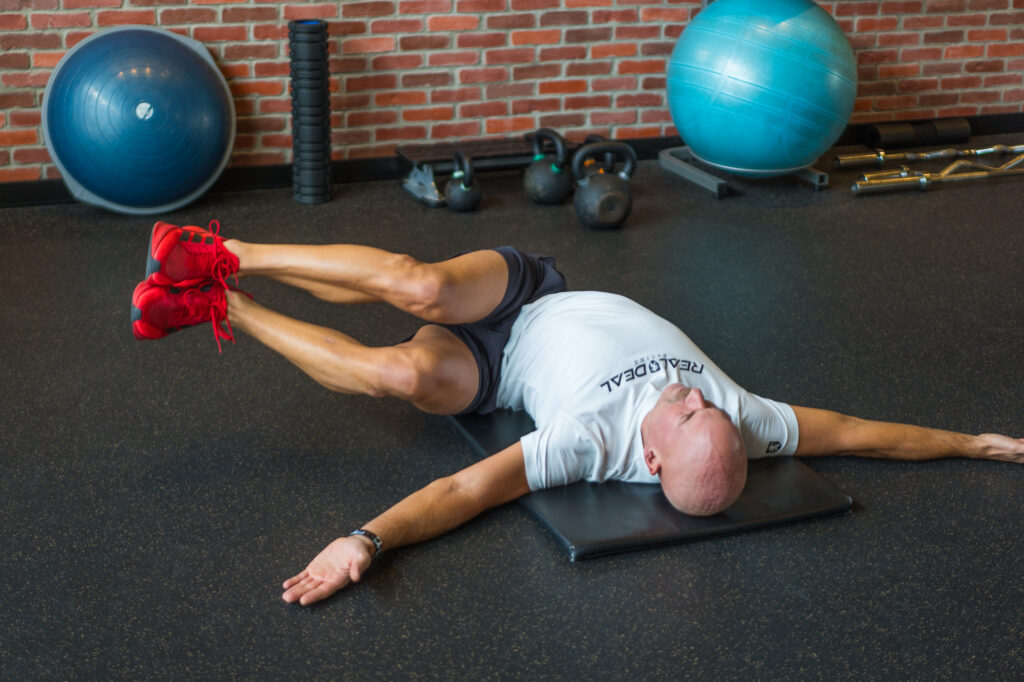
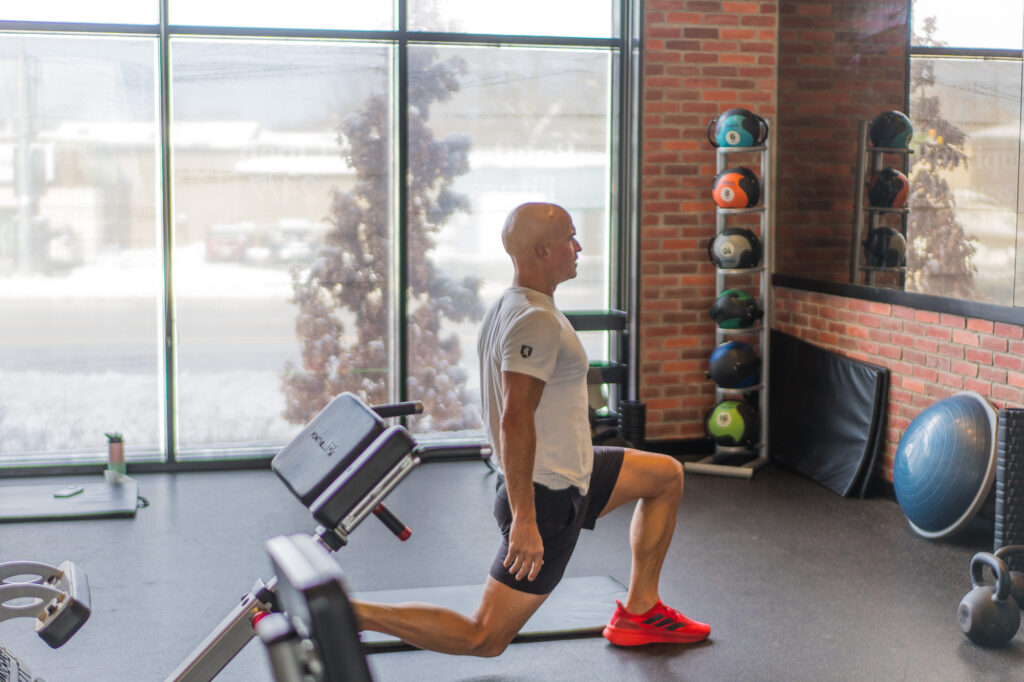
Veal is a staunch advocate of single-leg work for cyclists. Cycling involves using one leg at a time, so that should be an emphasis for your strength training.
“If you’re gonna do a press, try and do a single leg,” he suggests. “A Bulgarian split – anything that would be more cycling specific because what we’re doing is one leg at a time.”
Veal is quick to acknowledge the differences in strength required for a track or road-racing sprinter versus a triathlete. He’s been in races with sprinters putting out 2,000 watts or more. And then, at the other extreme, last November Veal competed at IRONMAN Arizona.
“When I’m hanging out with triathletes, they’ll say they didn’t event know that 2,000 watts was a thing,” he laughs. Track sprinters, he says, are “like gorillas” with insanely strong upper bodies and core muscles, and lots of raw force. Years of back pain taught him the importance of having a strong core for cycling.
“My back would get sore, but it was actually a weak core, so my back was doing more work,” he says. “Once I started putting more core work into my program, my back pain went away.”
While he didn’t train very much for his IRONMAN Arizona appearance last fall, he was pleasantly surprised at how much his upper-body strength work helped his swimming.
“I got in the pool and everyone’s like ‘wow you’re a great swimmer,'” he says. “I could actually pull some water and I felt like a monster.”
The Gym Complements, It Doesn’t Replace
Veal’s gym time involves constant movement. Chest presses followed immediately by core exercises or other exercises.
“I’m the weirdo in the gym doing squats in between my chest reps,” he laughs. “It’s not like one crazy workout today because I’m working at it again tomorrow, stacking these little incremental gains.”
As important as the strength work in the gym might be, Veal emphasizes that the goal should be to spend as much time on the bike as you can. That’s where, for most people, the true bike-specific strength work will be achieved. What should those who do need to develop more power be doing?
“That single leg stuff in the gym,” he says. “Single leg leg press, those Bulgarian split squats – even without weight those are nasty.”
The “farm” strength from all those days of lifting boilers and oil tanks might be gone, but it’s been replaced with a seven-day-a-week gym routine.
While that’s not realistic for most of us, there is a lot we all can learn from Veal’s approach. Adding mobility and core exercises to our daily routine probably isn’t a bad idea. Ensuring our gym-time is focused on complementing our bike training is another. It probably won’t propel you to a 2,000-watt sprint at a pro criterium race, but it certainly can help net a faster bike split this summer.
Key Exercises
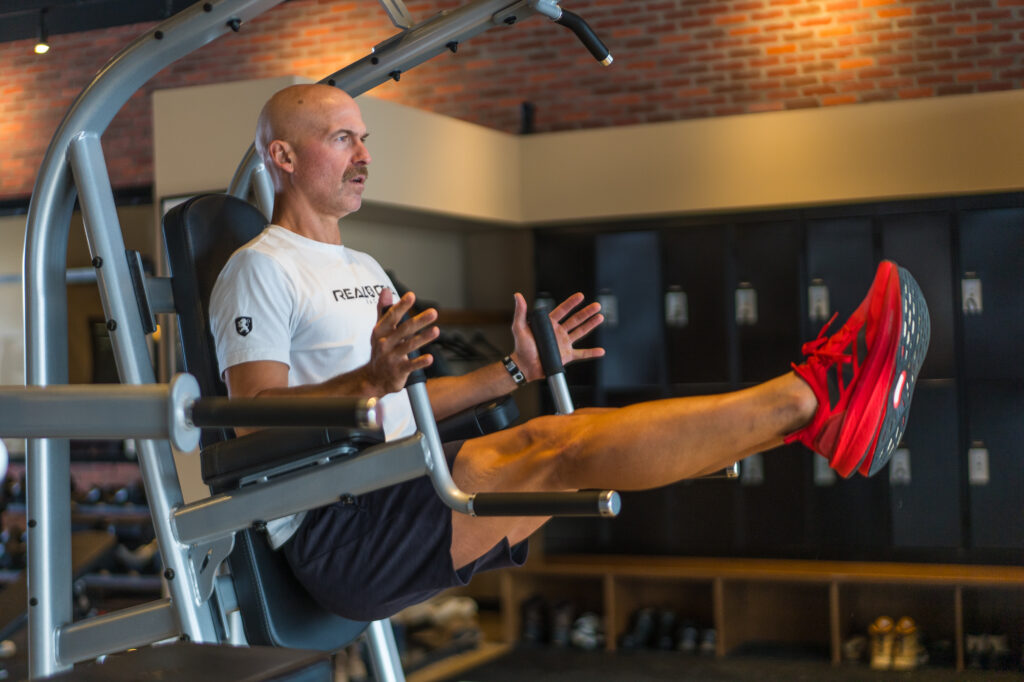
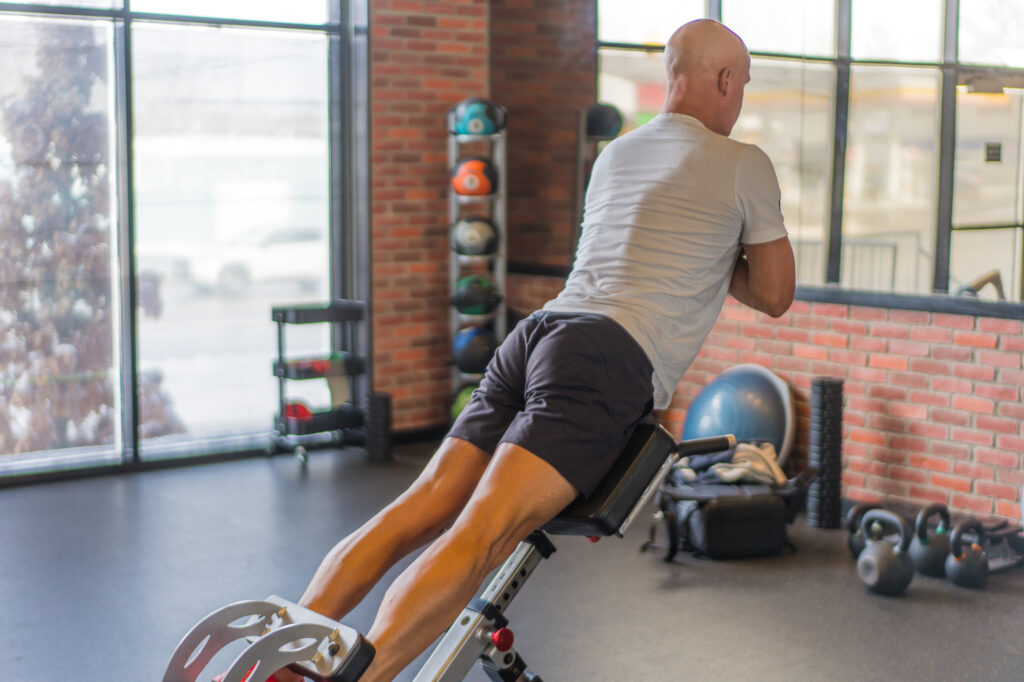
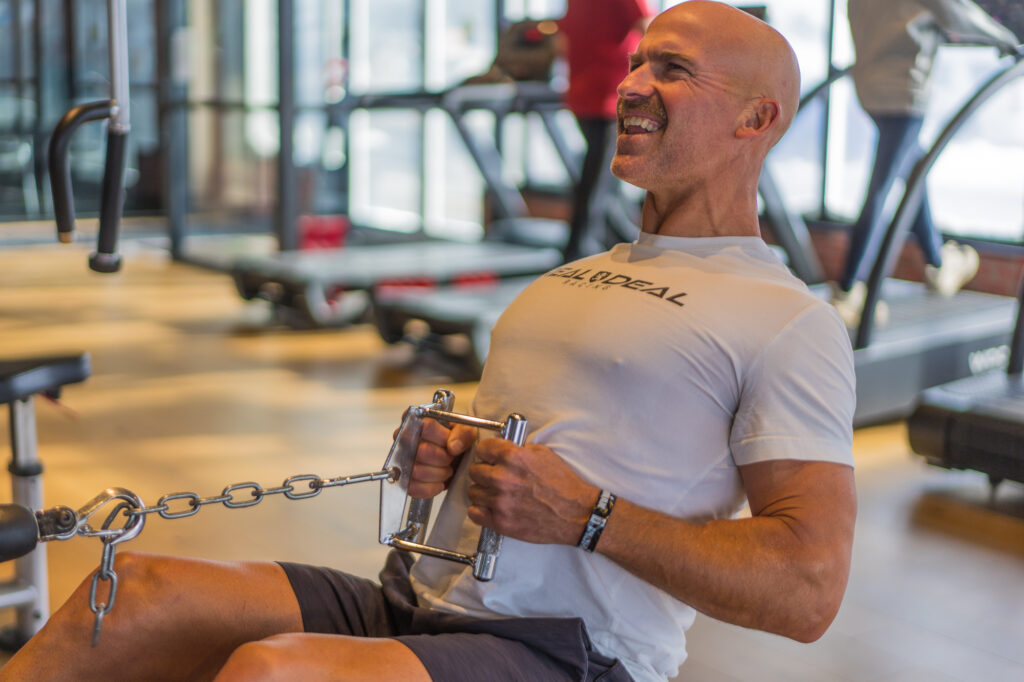
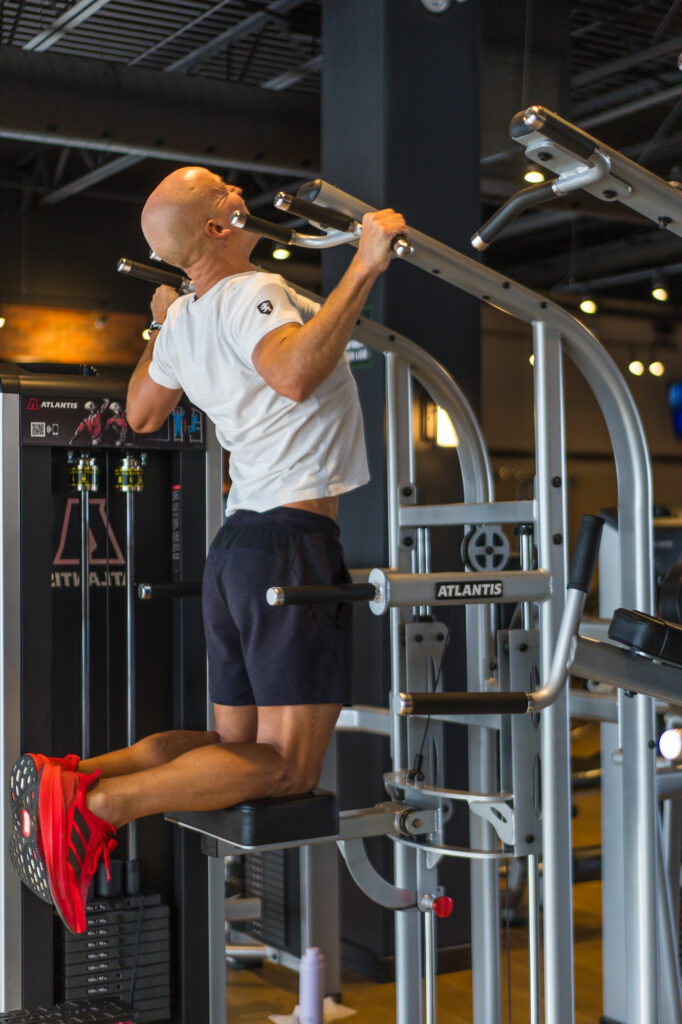
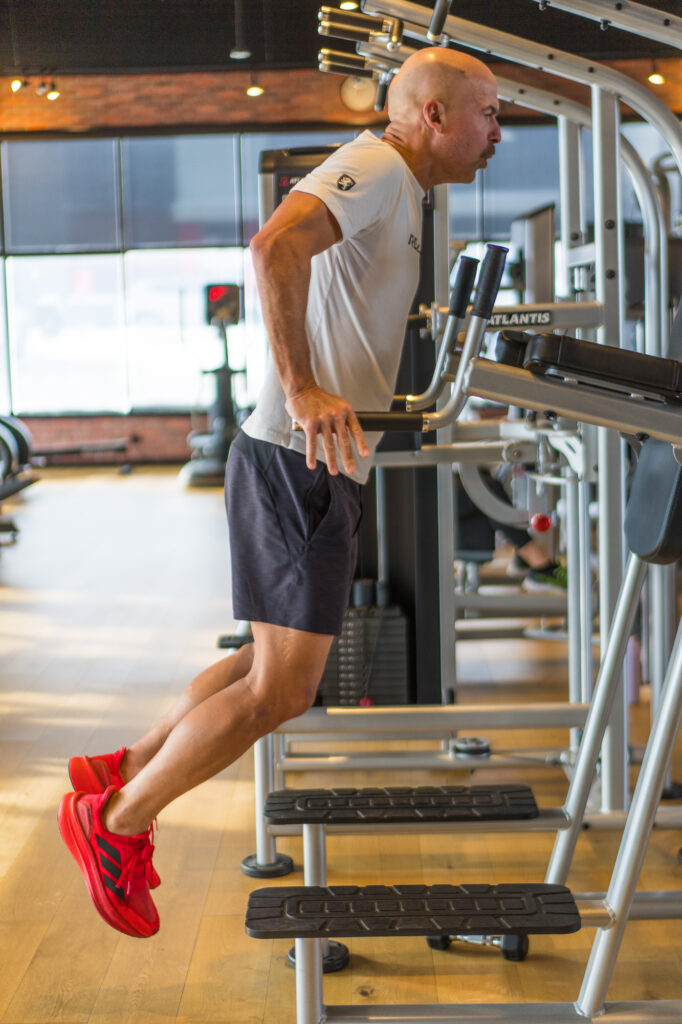
Following Veal around the gym involves lots of motion. He moves from one exercise to the next based as much as on availability as anything else. Here’s a few of the exercises he did during the session we were at:



Tags:
IRONMANTrainingRelated Articles:


Continue the discussion at forum.slowtwitch.com
14 more replies






What are the shoes he’s wearing?
Adidas
Seriously, I’d say they are ultraboosts
Great article @Ironmandad
Thanks Eric!
I’m sorry, but no one is doing yoga with running shoes on, especially first thing in the morning
I’m guessing he’s barefoot, or wearing socks, at the most
Further, running shoes in the Weights Area will definitely get you called out as a Runner (or Triathlete, or Cyclist in the case) ; it’s a place for Chucks, Vans, or basketball shoes
That being said - and I know that I’ve mentioned this 1000x before - I have found that a tech race shirt - with a nice graphic, a date on it, and perhaps a mention of a distance of some sort - is a fairly effective Invisibility Cloak in the Weights Area
he does.. and he can probably kick your butt at all of the above
Well, good for him LOL
My days of worrying about getting my butt kicked are so far behind me
We love you regardless
Y’all need to stop wearing running shoes in the gym.
I have harsh words for people who seem not intelligent enough to understand that you don’t wear running shoes to the gym.
I will wear running shoes IN the gym, when I’m doing the TM before I wander into the weights area, but I’m taking them off between the two efforts
I do not wear running shoes TO the gym. They are in my bag, hidden
I usually stroll up, black t shirt, black jeans, Vans; maybe my battle jacket - if it’s chilly, but not cold enough for the winter jacket
“Are you sure you’re in the right place?”
ETA: I change or move the buttons & pins around from time to time; it’s sort of an Art Project. The current look is above
I would guess the overwhelming majority of endurance athletes wear some type of run shoe vs a cross training shoe at the gym. Having sold running shoes, I would specifically tell people “hoka’s are not going to be great for any lateral movement that you may do at the gym”, the number of “I don’t care” was far more then “direct me to your cross trainers please”. And no our tri store didnt’ sell cross trainers, so it was never a selling tactic to sell more shoes. It was more “hey these high stack shoes are going to be terrible for gym work”…which I think is really important especially for middle aged and older people.
Did they actually say “I don’t care?” or was it more like “thanks for letting me know” then buying them anyway, either from you … or online
Actually they generally gave me look of “wtf are you talking about lateral movement and front/back movement differences in shoes, I don’t care”, take my credit card and I’ll buy them OR “hey i don’t like the color you have” as they already hit “purchase” on the amazon site for the same shoe and color of shoe they just tried on as they walk out the door.
I have worn Nike MetCon 2s since 2011, in fact the same pair. Provided you’re doing very little MetConning (running portion) the rubber outsole lasts forever. Bought them on NikeID and did a custom shoe. I also have Romaleo 2s, but haven’t done anything serious enough to justify lifting shoes in a few years.
But generally, experienced athletes don’t wear actual running shoes to lift. So seeing someone with a high stack running shoe and doing things that require a stable platform shows a lot of ignorance on his part. The last time I wore anything with stack probably was 2009, I bought Merrell Minimus shoes in 2010 and worked out in those for awhile. I realize now that I could have just worn some chucks or Vans. (still could)