
“Chop Wood, Carry Water”: Coach Paulo Sousa’s New Book Will Blow Your Mind
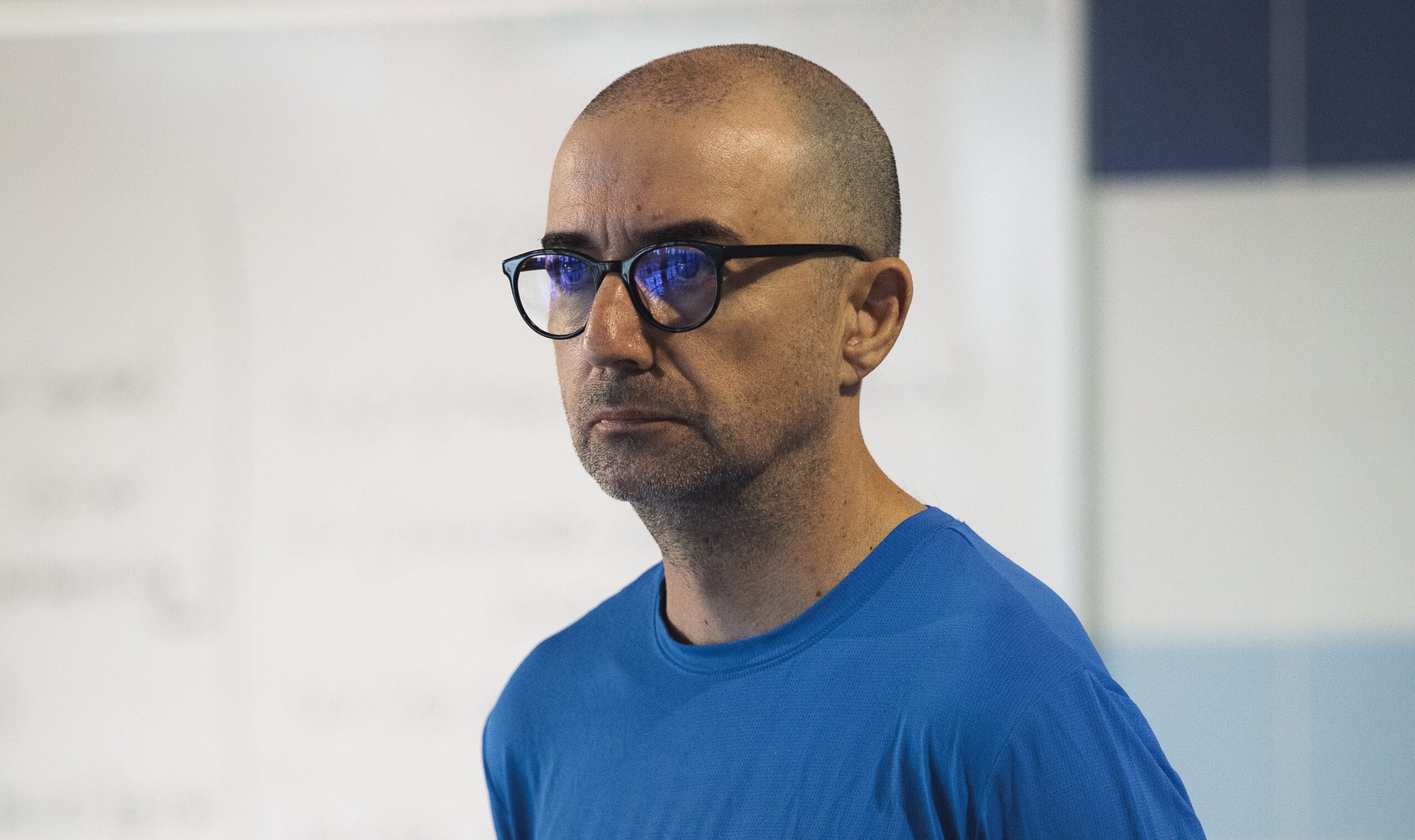
I heard Paulo Sousa before I met him. It was years ago on a podcast while I was researching another article. And then I started seeing him around at the pool. Every summer with his squad, up in the French Pyrenees mountains, at the training centre where all the pros swim. By then I had listened to his podcasts, I knew some of his athletes, and, after passively being in the same space with him, well, I was still a bit intimidated to ask him for an interview.
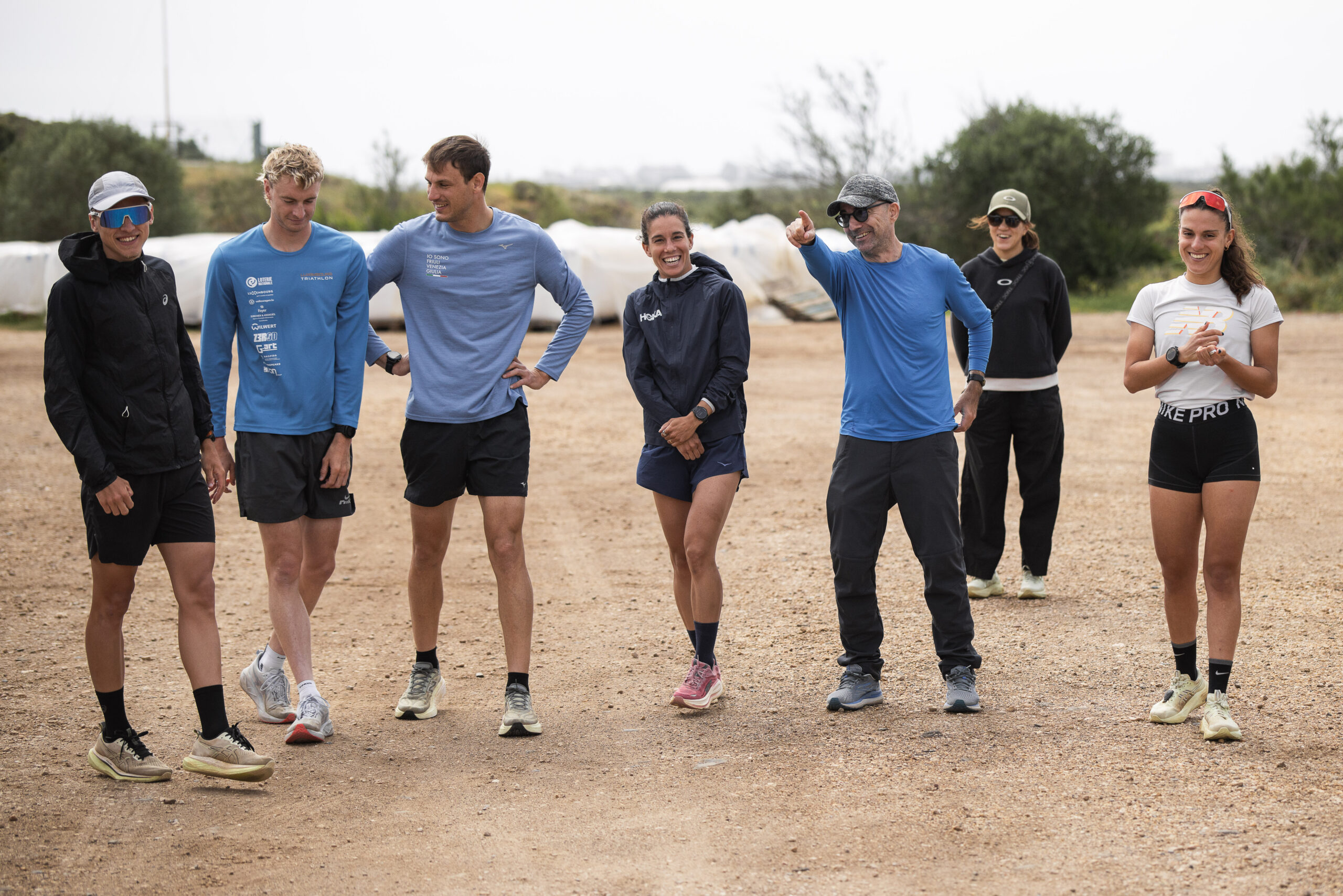
Sousa always looked focused. Not exactly serious all the time, but professional. He habitually sat behind his laptop on the pool deck, checking in with his athletes when needed but letting them get on with the work. His squad includes American Olympic silver medallist Taylor Spivey, 2025 Supertri E world champion Maxime Hueber of France, Jeanne Lehair (LUX), Costanza Arpinelli (ITA), and, not present at this camp, Canadian Paula Findlay (a unique long course athlete on his roster). When he did speak to them, it was with a casual matter-of-fact tone and sense of expectation.
Thankfully, someone introduced us one day and it took some convincing, but he agreed to do an interview. Before that could happen, however, I had to read him in a different way. He had written a book: Chop Wood, Carry Water. The short text is a mental performance guide for athletes, specifically the short-course triathletes he coaches. The book is a window into his philosophy, but the interview revealed even more: an innately analytical engineer who has had to deliberately learn how to work with the emotional complexity of people. It also revealed his delightfully nerdy obsession with paddles (which turned into a separate article you can read here), and the delicate nuances of his coaching style that has become increasingly less directive and epitomized by the proverb that titles his book.
From Proverb to Maxim
After decades of successful coaching, which includes time coaching athletes under Triathlon Canada before starting his own professional squad, his short book is a culmination of his extensive experience. But it is also just a practical solution. In the preface, Sousa explains his motivation to create a “working manual” for his athletes, something he expanded on as we opened the interview.
“The book was basically like sometimes having the feeling that the implicit message was just not coming through,” he explains. “Sometimes I would talk to athletes and say, ‘I cannot believe you’re thinking like this because it’s the opposite of what I think.’ So, I came up with a book, just as another aspect, another dimension of my coaching, as a way to go into their mind. At the same time, it shares a bit of my philosophy and the way I think.”
His philosophy is “less directive,” as he calls it.
“The big part is basically trying to involve the athletes in a way of thinking, in a way of doing things by the work that I do, which is spending a lot of time with the athletes,” he explains. “It ends up being very implicit and more creating the atmosphere, creating the environment, and then letting the environment lead the athletes into a set of behaviors, a way of doing things. I see myself as nudging them instead of directing them,” Sousa says.
The book attempts to do the same thing in writing: it creates an environment by sharing a story and then asks questions that encourage the reader to explore an answer. Each chapter deals with a specific part of athlete life, from competition and decision making to hard training, and how mindset plays a role in each. At the end of each, there are exercises to do. He instructs the reader to use good old fashioned pen and paper and gives directions on what to think about and when to think about it but the answer is left to the reader. The text is short and designed to be read in one sitting, but, intentionally, it was also designed to be reread throughout the season.
“It gives them very, very simple tools to help them with a lot of things,” he explains.
“Most of it is not complicated,” he writes in the preface, “but none of it is easy,” and that is exactly why an athlete will read and return to this book over and over, year after year.

It is the simplicity, not just in prose but in practice, that takes the title from proverb to maxim. In my unique position as journalist and pro triathlete, I didn’t just read the book, I did the work (with pen and paper). I didn’t have an aha moment, but the exercises were effective. First, it made it more actionable to have specific mindset training planned. I was able to observe my thoughts with more distance (something I was already used to practicing) and with a different perspective. I thought about different aspects of training and racing through the “Sousa lens,” and while it didn’t offer anything overtly new, much like doing the same workout but on a different road, with different people, or at a different time of the season, there was fresh nuance.
Concurrent with my experience, Sousa isn’t proclaiming magical results but incremental improvement. “You don’t have to be a different person,” he says. “You just have to be a different, a better version of yourself.”
“Not everyone wants to be excellent,” he says. “Maybe some people want to be really good. Excellence is a really big word.” Some athletes have the ability to become Olympic champions and don’t want to. Some want to be great. Some don’t. His approach nudges all of them to be better.
A Study in Emotional Intelligence
It could be said that the book is narrowly specific for short-course triathlon athletes, as was its intention, but, Sousa tells me, a lot of the book sales so far have been to other coaches–something he never intended. What started as an insular project just for his squad, grew out of his hands when athletes started asking if they could share it more and more. He was initially reluctant, perhaps because so much of the book is inspired from things Sousa is still learning himself.
“A lot of the book comes from interactions with athletes where I didn’t have the answer or it was hard for me to get an answer to help them,” Sousa says. “I almost always do a little communication audit where if I have an episode with an athlete, afterward I’m like, ‘Was it the right way of talking? Was it the right way of doing things? And trying to learn from that.’”
His self-audit is admirable since he describes himself as “definitely not a people’s person.”
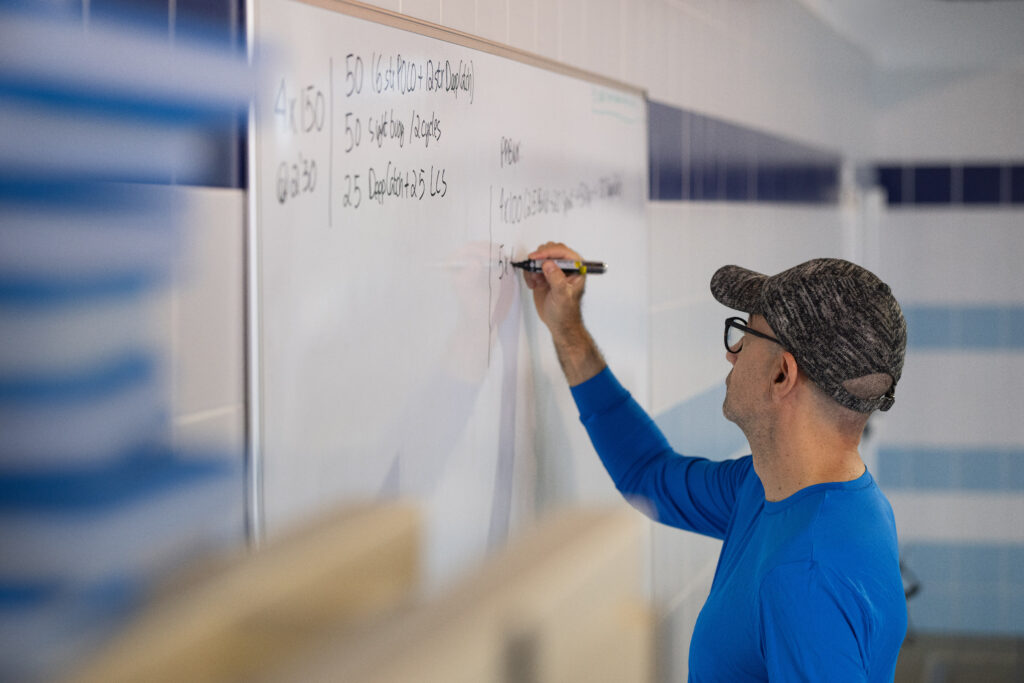
“Talking to people is not natural to me. Interacting with people is not natural to me,” he says. I got a sense of this on the pool deck when I figured out he was more comfortable talking side-by-side, rather than face-to-face. Coaching, however, has forced him to become a student of people.
As an undergraduate student in Portugal, Sousa joined the triathlon team, first as an athlete and then eventually as its coach. At the time, he was close in age to his athletes but as he grew older, the age gap widened and his communication style had to change. He describes it as part of his learning and maturity process, especially the emotional intelligence he had to develop to understand how and when to respond to an athlete.
If an athlete sends him a message before a race and shares that they are nervous, his response is always the same: “Good,” he will tell them. “Because you care. Because this is important to you.”
“They are cliches, but sometimes athletes need to hear that and because it’s true as well,” Sousa says. “I had a coach one day tell me, it was a bad race for his athlete, and this coach said: ‘This guy was totally out of control. He was crying after the race.’ I was like, ‘What about it? This guy cares a lot for this and he was emotional.’ I’ve had athletes crying after a bad race. I just come up to them like, ‘Hey, you care about this, you know? And you’re disappointed, and that’s okay.’ And after having bad races, guess what? I’m pissed off. I’m frustrated. I’m not happy. I don’t see that as being wrong.”
His level of comfort with emotion seems curious for someone who just told me he wasn’t a “people’s person.” I can’t exactly see him, Mr. Focused on the Pool Deck, jumping up and down at a race.
He responds with a laugh: “One of my quotes that’s not in the book is: ‘Coaching: never a good day.’”
“I almost always have multiple athletes at a race and not everyone is going to do well,” he says.
“I am very happy for the guys that do well but the guys that don’t have a good race don’t want me to just be like, ‘Hey, did you see her? She was on the podium!’ There’s emotional control and tact that is required for me to do my job,” he shares.
That control doesn’t mean he isn’t full-heartedly passionate. He cheers and shouts for his athletes on the side of a race, even wearing a bright orange shirt so they can easily spot him. He makes a point to also cheer for any Portuguese athlete in Portuguese. If he’s at home, he might even jump up and down a little when a good result comes through.
His control speaks to the matured nature of his coaching and a level of emotional intelligence I’m not sure even he has given himself credit for.

The Answer Is Always…
“ I don’t wanna be too Zen here, but basically the quote is: ‘Before enlightenment, chop wood, carry water. After enlightenment, chop wood, carry water,’” Sousa says, referencing his title and thesis, laughing that it’s been his email signature for over fifteen years. Jokes aside, those four key words have been such a constant North arrow for Sousa, it seems impossible to imagine a different title or theme to his book.
“I remember many years ago explaining to an athlete that she needed more time chopping wood and carrying water and thinking, hmm, this is interesting. There’s a lot of depth to the quote,” he says with sincerity.
What he likes most about the quote most is that there is no finality.
“The quote says,‘There is no endpoint even if you reach enlightenment,’ which is basically knowing everything, being at the top of everything. In the end, you still have to go out every day and do your work,” Sousa says.
The proverb anchors the book, but it perfectly epitomizes Sousa. He likes the daily work. He is fond of the meticulous, the measured, and the unremarkable habits that can create purpose, growth, and wonder.
If you’re looking for motivation or secrets from the top of the sport, you’re going to be disappointed. If you want insight into how one of the best triathlon coaches approaches mindset training for his athletes, you’re in for a lesson that will keep on teaching long after you’ve read the pages, even if you don’t bother to pick up pen or paper. If you do attempt to do the work, the path, as Sousa says, will not change. But, if you put his lessons into practice, how you experience that path will change.
As we wrap up the interview, Sousa jokes it’s always been and still is a personal fantasy to write a coaching book.
“I want to write a triathlon coaching book where it doesn’t have one single training session in it. To talk about coaching, not training,” he smiles.
After nearly thirty years of coaching, Sousa would have plenty to say about training but that would be a reductive use of his knowledge. The value of his insight is not what he does but how he does it. Chop wood. Carry water.
Sousa’s book is available online from his website. Click here to be redirected.
An Author’s Note
In the author’s note on the very last page of the book, Sousa writes that he used “AI tools” to write the book. He also told me this upfront while I was trying to land an interview so I wasn’t surprised. “The AI was the drafting partner. The work was mine,” he writes.
His disclaimer helps explain the choppy syntax but, as he says in the book, “They allowed me to put years of coaching observations onto the page in clean English, which I could not have done alone.” It’s both honest and understandable why he put it at the end of the book, aiming to lead with the content. When used as a tool rather than a substitute for the writer, AI can make projects like Sousa’s possible, and, at least in this case, doesn’t detract from the message.



I miss Pablo Salsa.
it’s unfortunate his book isn’t titled “smartass coach”.