
Delta Speed Aerobars Review: Innovative Design, Competitive Pricing, But Bigger Isn’t Always Better

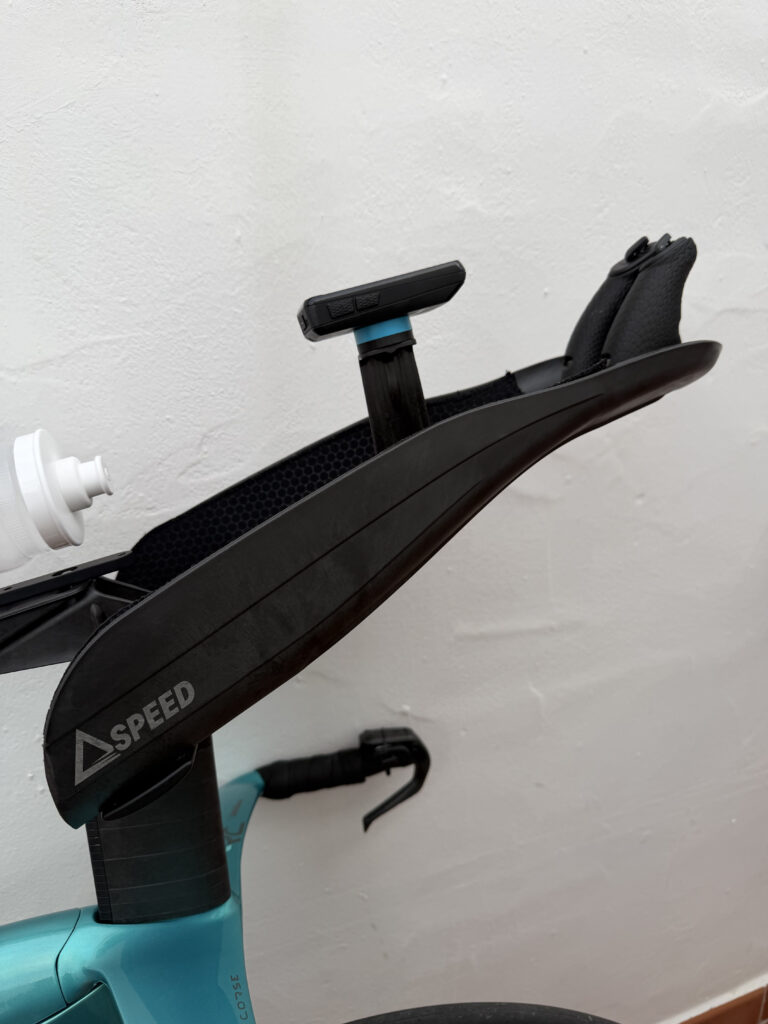
The Delta Speed aerobars occupy an interesting position in the market, offering a fairing-style extension at a relatively accessible price point and weight. It’s easy to see why they’ve been spotted on a few high-profile bikes, including Brazilian superstar Miguel Hidalgo (who, I learned during our interview, is particular and upfront about his equipment and any improvements it might need). When I had the chance to inspect Hidalgo’s setup, I thought the bars looked aerodynamically interesting and, I’ll admit, pretty cool in this current era of fairing-style extensions.
But, as I inspected them and reported back in February, the bars seemed a bit “flimsy.” The Italian company reached out and sent me a set to test and, while there were many positives, my initial assessment ultimately didn’t change very much.
Ordering
Ordering was simple. As a smaller company offering only one product line, the choices for sizing are a standard (over 28 cm forearm) and small (under 28 cm), of which I selected the small. Sizing options are often limited from specialty TT bar manufacturers and, while some offer a few sizes, many offer only one. They only offer one grip style, which works perfectly fine, but a lot of other companies offer grip options, so some riders might find the lack of choice restrictive. There is a choice of a single- or dual-bottle between-the-arms (BTA) mount and an integrated computer mount.
Delta Speed offers a range of bike-specific mounting plates alongside a universal option, making compatibility with almost any cockpit relatively simple and removing much of the guesswork from the setup process. Since mechanics aren’t my strong suit, I ran my selection past them, and they quickly replied to confirm it.
The bars are priced competitively at US$1,199. Additional angle adapters (another 182 g) are sold separately for $162 and you have to seek them out when making your order. These were not included in the product test and, in hindsight, would have been appreciated — after all, who is riding completely flat bars these days? It seems like many bars are sitting around the $1,000 mark and, for what they are offering, Delta Speed delivers a fair amount of product for the price.
Delivery
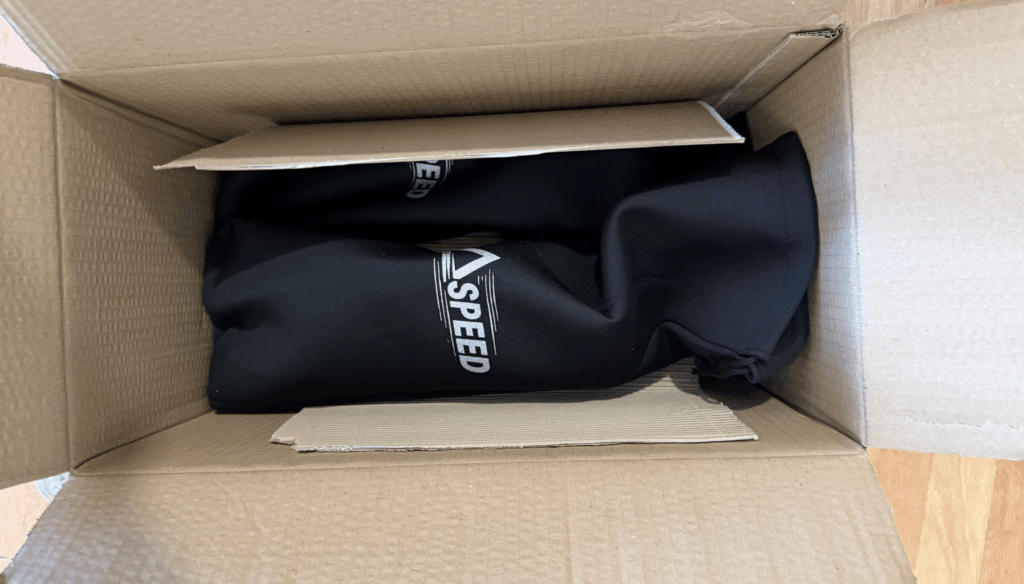
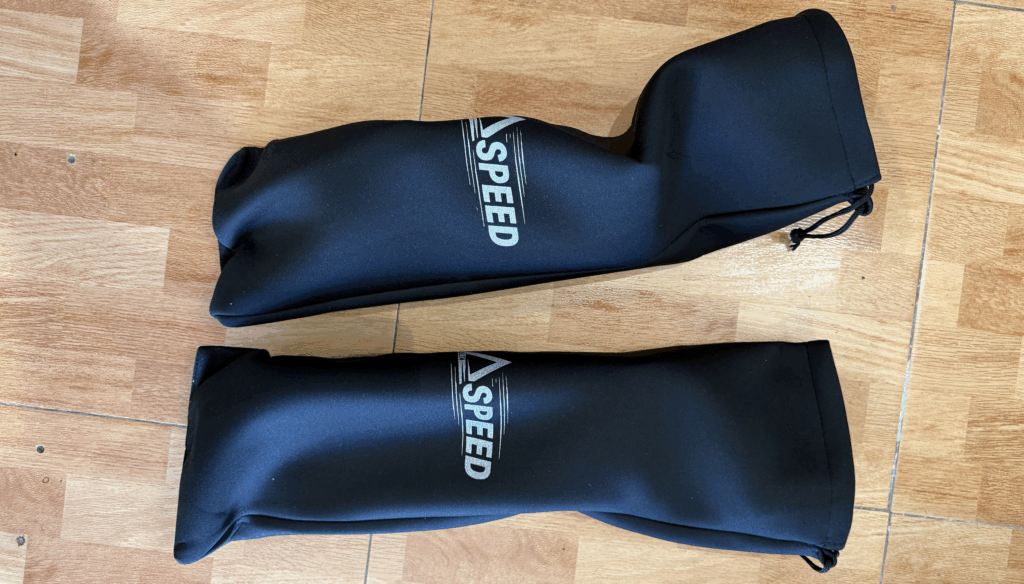
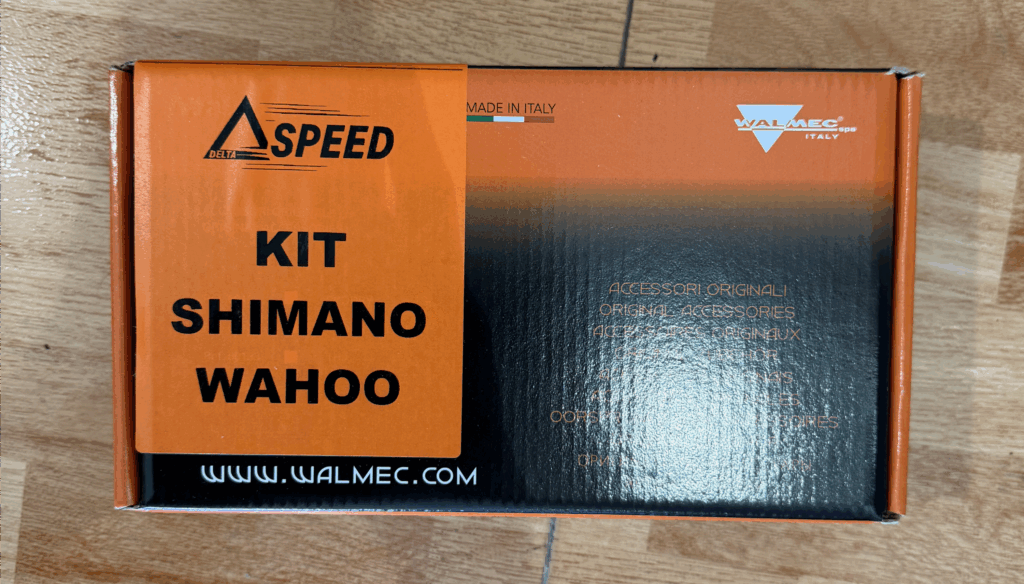
Shipping was fast and, inside the big box, each extension came in a separate neoprene sleeve alongside a small box containing all the mounting hardware. I liked the sleeves, which not only protected the bars during transit, but can also be repurposed for travel and storage. The bars looked as expected and were very light, with the standard size weighing under 700 g.
Many newer extensions rely on 3D printing, but the Delta Speed bars are produced using traditional carbon fibre injected molding techniques. The finish quality is good, and riders who prefer more conventional composite construction may see that as a significant advantage. The company promotes this as a key element of the bars’ structure: “We don’t use 3D printing for structural parts, and you shouldn’t either!”
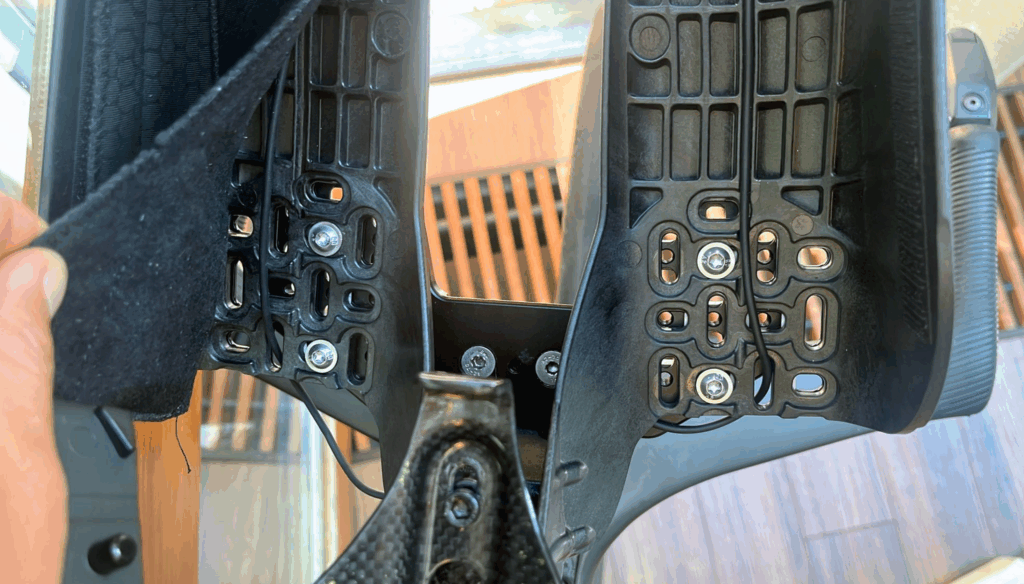
Although my bike fitter installed the bars, the process looked simple and straightforward and took only about fifteen minutes. The cable routing was well thought out and was one of the standout features of the system (my bike fitter agreed).
Testing: Some Adjustment Needed
The bars looked modern and aero, but they also looked big on my bike. I’m a small rider — 160 cm tall on a 48 cm frame — which has always made finding competitive TT bikes and components difficult. I kept an open mind since I had never used a fairing-style bar before and they tend to be on the beefy side, but when I put my arms in them, they felt big. Not necessarily the wrong size since the length from elbow to grip was okay, but the overall impression just felt big. I have limited experience with this style of bar so, big or not, if it’s comfortable and fast, I’d use it.
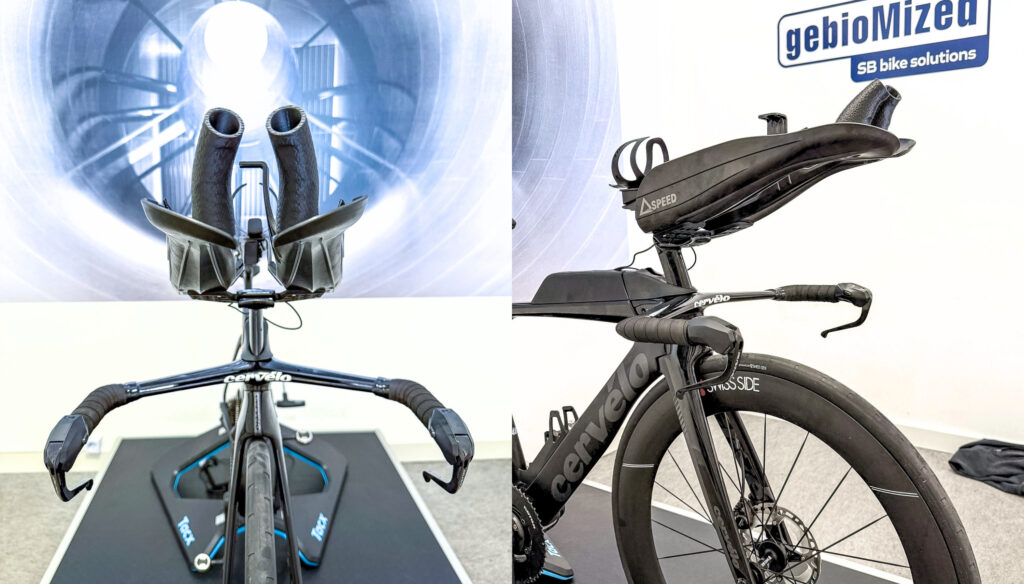
That said, sitting in the bars for the first time, I had other concerns. I remembered Hidalgo’s bars feeling “flimsy,” but mine had even more movement. We immediately checked whether they had been mounted correctly according to the instructions. The mechanic had followed the instructions exactly, placing two bolts on each side, but there was still a lack of stability.
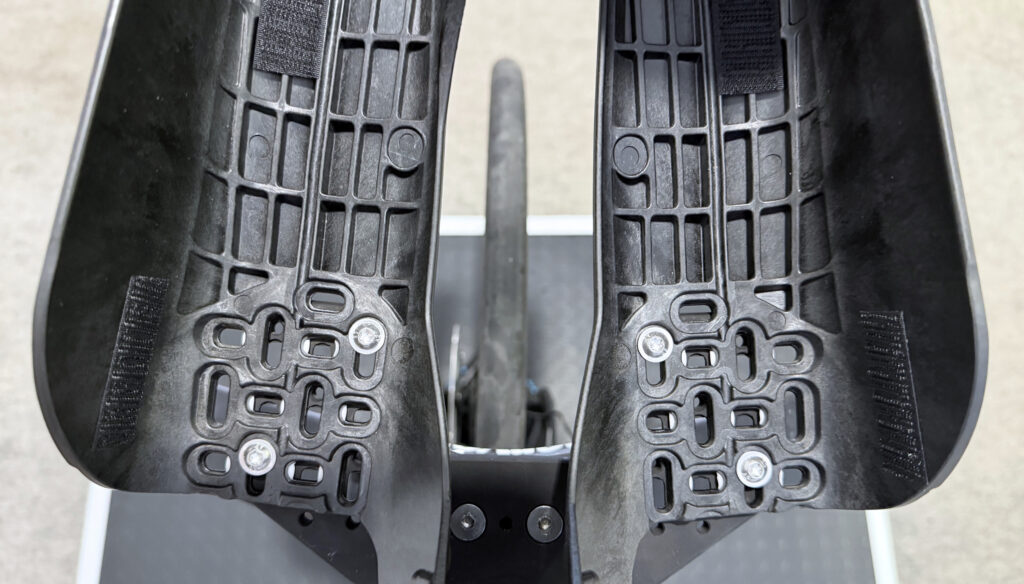
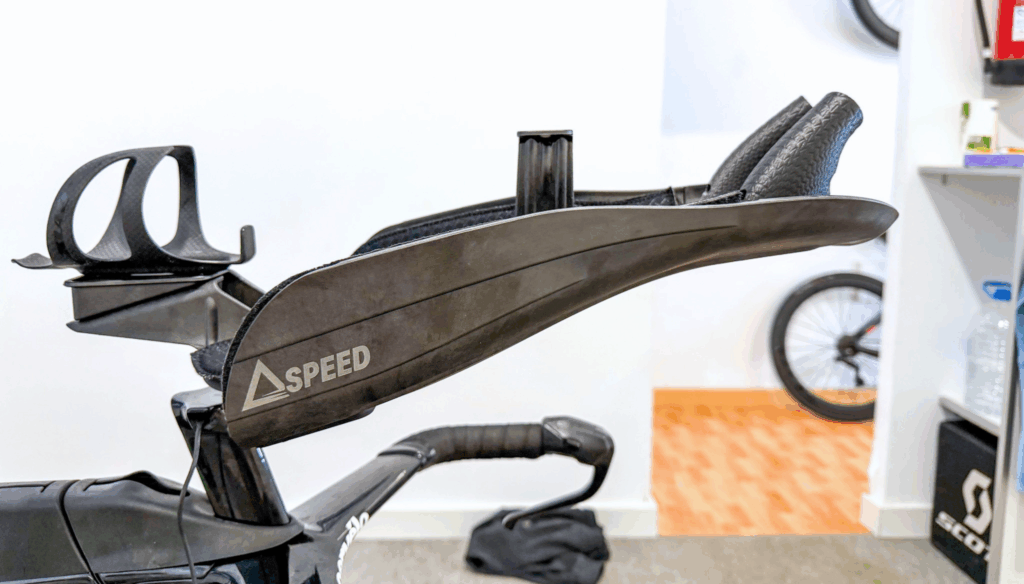
I later connected with Delta Speed for advice. To their credit, Delta Speed was responsive when I raised the issue and suggested adding two additional bolts per side as well as a bottle cage to connect the bars structurally. This did improve the situation, but even with the extra hardware installed, I never achieved the level of rigidity at the hand-end of the bar I expect from an aerobar system. It’s important to note that this does not appear to be a widespread complaint (and many pros are happy racing them), but it was a big factor in my own experience.
I reached out to other pros using the system. All of them were using the standard setup of two bolts on each side. Two said they didn’t have any issues with stability, with one saying, in fact, that they thought the bars were extremely stiff. A third said more stability would be welcome, but it wasn’t an issue for them. After investigating further, the only conclusion I could draw was that my particular setup was the limiting factor.
Sizing: A “Big” Problem
Sizing was another area where I struggled. It’s an off-the-shelf product so of course the sizing wasn’t perfect, nor did I expect it to be. It wasn’t like they were unusably big, it was more a feeling of being oversized for my proportions. My grips were mounted in the shortest position which meant there was a good amount of carbon extending beyond my hands. The sidewalls and upper edges are also relatively tall—which reportedly offer an aerodynamic advantage, according to Delta Speed—and yet, the inside lip seemed small and there was a lack of inside forearm support.
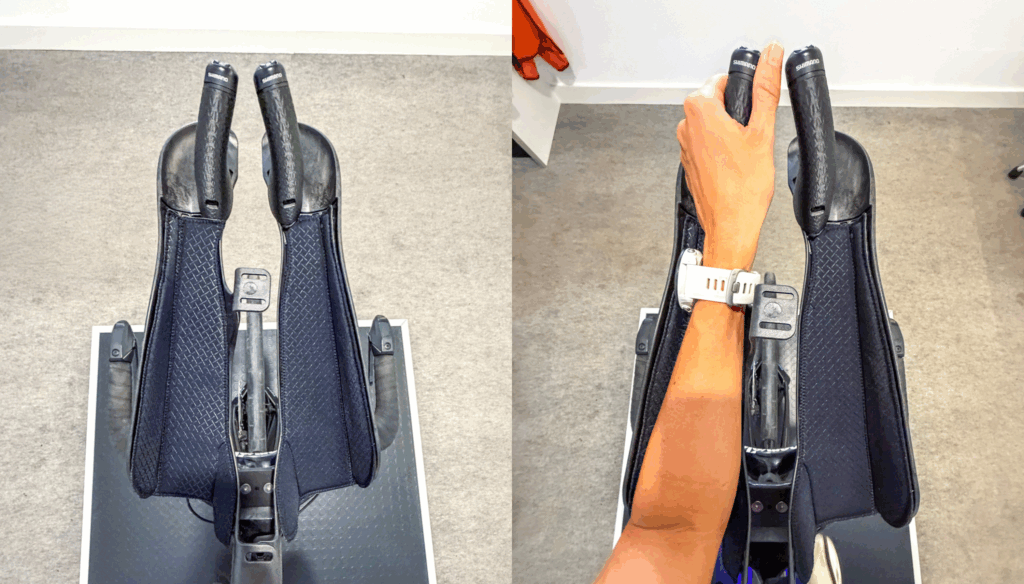
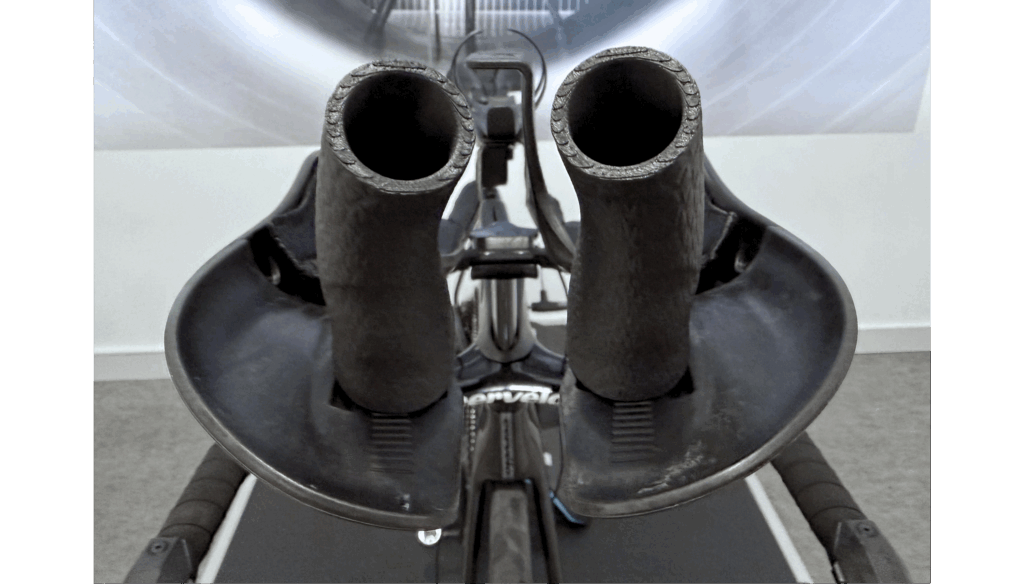
I was not entirely alone in my sizing assessment. One professional athlete I spoke with, who is taller than I am, also felt the sizing ran large and ultimately switched from a standard size to a small. I had other people around me, all taller than I am, put their arms in my size-small bars and all of them fit. That’s obviously anecdotal rather than definitive, but it did reinforce my impression that prospective buyers should pay careful attention to sizing rather than automatically selecting the option they might expect.
Comfort was another weak point. The supplied arm pads were thinner and lacked the support and cushioning found on most other bars I’ve tried. However, one of the pros I spoke to said Delta Speed has upgraded the padding and that it represented a marked improvement.
I can see how riders would like them and take advantage of the aerodynamics, but for my smaller arms and preferences, I didn’t feel support where I wanted it. As I rode, it suddenly hit me: the bars felt just like riding a bike one size too big. Sure, you can pedal and get around, but the handling feels off, comfort is compromised, and you don’t look, fit, or feel “at one” with the bike.
Overall: An Option for Aftermarket Aero Seekers but Bigger Isn’t Always Better
Overall, I can understand the appeal of the Delta Speed aerobars. They offer a modern aerodynamic design, broad compatibility, traditional carbon molding manufacturing and a competitive price point. For many athletes, those attributes will make them a compelling option and one worth considering.
My experience with the mounting stiffness, sizing and pad comfort meant they never felt quite right for me. None of these issues will necessarily affect every rider in the same way—perhaps the fairing-style is just not for me—but together they prevented me from fully committing to the system.
The bars have found their way onto the bikes of some very high-level athletes. As mentioned, Hidalgo, who is picky and outspoken about equipment shortcomings, uses and likes the system, which certainly adds credibility to the platform. For me, after only a few rides, I knew they simply weren’t right for my particular preferences and requirements. With so many more companies coming to market with specialty TT bars, my search continues.





Even after adding the two extra bolts to each side the aerobars still felt flimsy/moved? Was looking into these personally so I appreciate the review!
I tried them as well and returned for similar reasons.
Amazingly well engineered and executed, very smart design. Everything very well thought out. Customer service is top notch, very nice guys.
But they are ridiculously huge an my forearms didn’t feel comfortable in them after a few minutes. Annoying, but not a deal breaker by itself, the computer mount is stupidly high; you have to move your whole neck and head to look at the bike computer
Finally, limited elbow width (if you want to use the bta mount), but to be fair, they do give that information upfront.
As for mounting, not sure if flimsy is the word i’d use, but they are so big, I definitely felt some flex in them (on the trainer!).
I so wanted this to work since its such a nice product. alas, if i can’t keep my arms in the bars for a long period, its a no go.
My new culprit bar will be ready in size small in mid August. Let’s get you a set for review
at the same time as long they dont break flimsy is kind of suspension ? ie if it deforms it should absorb bumps in the road well , bit like a tyre with less pressure ?
also I guess super aero bars should come with a personal aero test ie are they faster than the previous bars ?
otherwise liked to read this review as it also showed what other people thought about it.
As long as they don’t break is a pertinent question. Has the company commissioned any independent testing?
google tells me
Yes! Delta Speed Aero triathlon extension bars Delta Speed for tri and time tria bikes subjects their semi-custom aerobar ecosystems to thorough testing. Engineered in Italy, their cockpits are developed from 3D-printed prototypes into final injection carbon fiber Delta Speed Aero bars for triathlon and tt. Why This Is ….[1, 2, 3]
The brand stress-tests their equipment for mechanical reliability, durability, and safety over the bumpiest road courses
The structural stress test protocol for Delta Speed aerobars centers on meeting and exceeding global cycling safety frameworks, specifically the ISO 4210-5 standard (the international benchmark for steering component safety)
Yes, ‘flimsy’ can function as a suspension - until it doesn’t. My first custom aero bar setup used bike parts never intended for this application, not specifically, although they were handlebar parts. The setup was highly adjustable and versatile for quick changes or fine-tuning, even on the road. All I needed was a single Allen key, and I could perform all sorts of quick adjustments on the road in a matter of minutes. I had dismissed the fact that it wasn’t very sturdy on rough roads as a minimal risk. I actually convinced myself that it was ‘functional’ since it increased comfort by soaking up road bumps.
This setup worked fine for years. I even swapped the bars over to a new bike because I liked them so much. As I was arriving home one day, one of the risers suddenly snapped, and I found myself holding a separated extension in one hand while the other was still attached to the basebar. This happened as I just arrived home and was slowing down to dismount. My speed at that point was slow, and no harm occurred either to me or the bike other than the snapped riser. If I were riding at speed or at any speed and both risers broke simultaneously… Never entertain the thought of allowing aerobars to be makeshift suspension devices due to play or flimsiness. Not for a second…
Unfortunately I was taken for a ride by these guys. Before ordering, I provided my measurements and was assured quickly via email by Lorenzo that they would fit.
I ordered the small version, and upon arrival and assembly, I was concerned how flimsy they were. But the real problem was they were just way too big for my arms. They also threw my position way too far forward.
I messaged Lorenzo and the Delta Speed team advising them that the bars wouldn’t work and I would like to return them. I was flat ghosted after several emails, messages, and calls. My request was well within the return period so needless to say I’m extremely disappointed.