
PTO Catch Up: Prize Money Payments, Investor Updates and New Sponsors
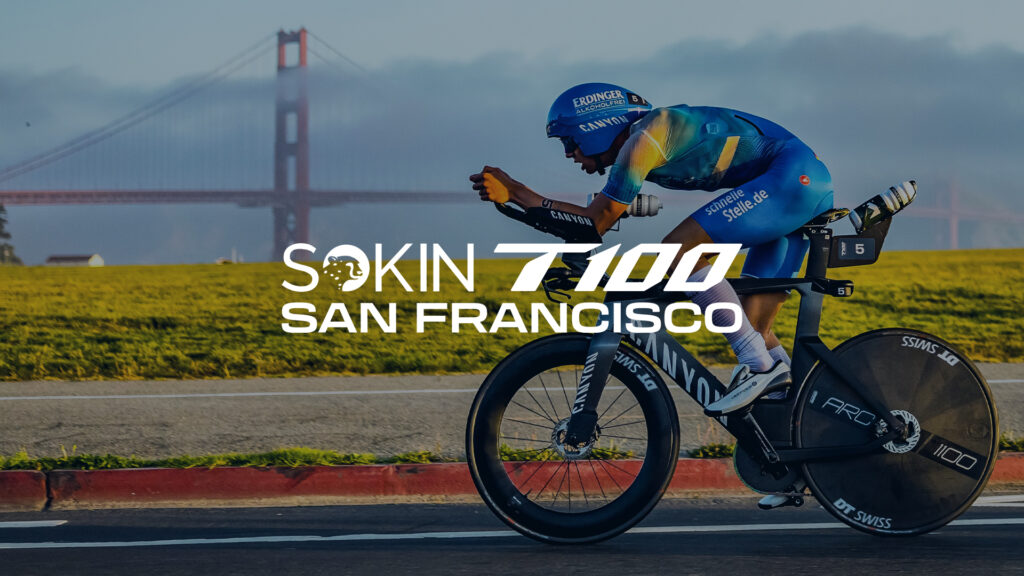
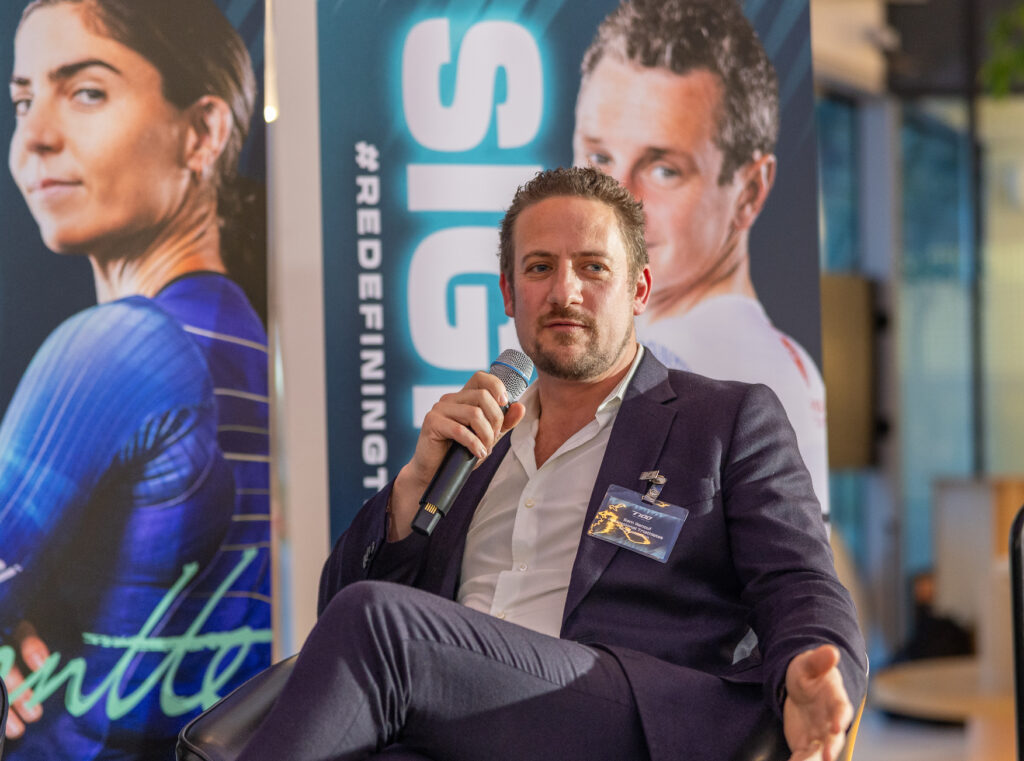
Recent reports that athletes were still waiting to receive prize money and bonus payments from last year’s T100 Triathlon World Tour prompted us to reach out to the Professional Triathletes Organisation (PTO) for some updates. We caught up with PTO CEO Sam Renouf, who was able to provide some insights on the prize money and bonus situation, along with other updates on where things are at on the investor front. All that came on the eve of an exciting new announcement of a three-year deal that Sokin has become a “foundational partner of the T100 Triathlon World Tour” and the title partner of the San Francisco event.
Renouf, who we caught during a business trip in Abu Dhabi, was quick to point out that the athletes were all well aware of the payment situation and when they would be paid.
“Earlier in the year, given what was happening in the region — in the Middle East — we anticipated there could be some delays to payments,” Renouf said. “That’s linked to all of the different economic situations over here, whether it’s sponsors, hosts and all the rest. So we informed the athletes that by early May, prize money from the end of season would be paid. Which is exactly where we are now, and it’s exactly when they’re being paid. We were just hedging — we’ve worked in this market before, and we know things take time.”
“We also want to be respectful of our partners in the region,” he continued. “If we’re talking about sponsorships with folks, they have bigger things on their minds at the moment than trying to finalize sponsorships. So we’re being respectful of that and the broader situation. It’s really nothing much more complicated than that. The more specific point is the athletes have been paid for the event prize money. Now we’re finishing up with the last payment, which is the series prize money, which will be in the next few weeks in May.”
Renouf also addressed reports that there are any concerns about investments, specifically from SURJ Sports Investment, Saudi Arabia’s Public Investment Fund.
“I find that article shows a fundamental misunderstanding of where triathlon’s role is within the sports world and the investment world,” Renouf said. “Without even needing to compare ourselves to golf or tennis — those are sports that are all about publicity and promotion. The investment from Saudi Arabia and SURJ to us was very different. It’s around two things, and they’re on record saying this: one is driving an economic return — they’re investors, they want to see a financial return, no different from Michael Moritz or the other investors we’ve had. But, more importantly, it’s also a sports investment to drive participation in the kingdom of Saudi Arabia.”
“The fact that they may be pulling back from other high-profile international sports sponsorships doesn’t impact the desire to get their population doing more sports,” he continued. “We announced Saudi Arabia would be a location for the T100 a few months ago. We will be announcing soon the specific date, timing, and location — that’s been slowed down by everything happening in the region. But, if the situation stays calm, we’ll be announcing the specific event fairly soon.”
SURJ’s CEO, Danny Townsend, was also quick to point out that there is no plan to reduce the investment in the PTO.
“SURJ’s approach has always been deliberate and long‑term,” Townsend said. “Our mandate is to invest in global sports IP that delivers clear local benefit – strengthening Saudi Arabia’s sports ecosystem through sustainable growth, participation, talent development, and long‑term sector capability. Today, we actively manage a diverse portfolio spanning different audiences and formats, including PFL, DAZN, T100, ATP Masters 1000, and Kings League among other sports industry service providers – while remaining disciplined in how and when we deploy capital. That discipline ensures every investment aligns with our localization and impact objectives, supports the Kingdom’s wider tourism and entertainment ambitions, and creates enduring value – not just near‑term activity.”
According to Renouf, SURJ is attracted to the PTO and triathlon because it is a sport that can “drive participation and health outcomes that you can also invest in.”
“Secondly, we’ve always positioned triathlon’s high-value demographic — people who travel around the world — alongside the fact that the component sports, swimming, cycling, and running, are practiced by 1.1 billion people regularly,” he continued. “That’s the market we really look at. So, at an event in Saudi Arabia, without doubt we will have more swimmers, cyclists and runners than full triathletes in the early stages. That isn’t a negative thing — that’s us building the sport and providing a great platform to grow all three disciplines as well as triathlon.”
Investors
According to Renouf, the PTO isn’t currently searching for more investors at the moment.
“That’s not to say that in the future we might decide to do more and bring in other investors,” he said. “But we did our big investment round last year — we added SURJ … and Verance Capital and Cordillera Investment Partners, two US funds. We’re not proactively looking for new investments now. We get called on an almost daily basis from people who might like to invest, but it’s not a focus of the business.”
Renouf also explained the motivation for many of the new investors to become involved with, and why many in the world of triathlon struggle to understand the new business model.
“Like many venture-backed businesses, it can seem unusual to the market you’re operating in when you bring a different business model,” he said. “No one would have predicted Airbnb to grow to what it is. Basically, all the businesses that Michael Moritz has backed were always relatively unusual, and now they’ve become mainstays of the community — that’s the venture capital model. So when people put out articles saying they don’t understand us, or that this doesn’t make sense, or predict the end of the T100 — it’s perhaps natural not to understand it, because if it were so obvious, it would have already been done. That’s the nature of venture capital businesses. We are one, and hopefully we have the same success as the other investments our backers have made.”
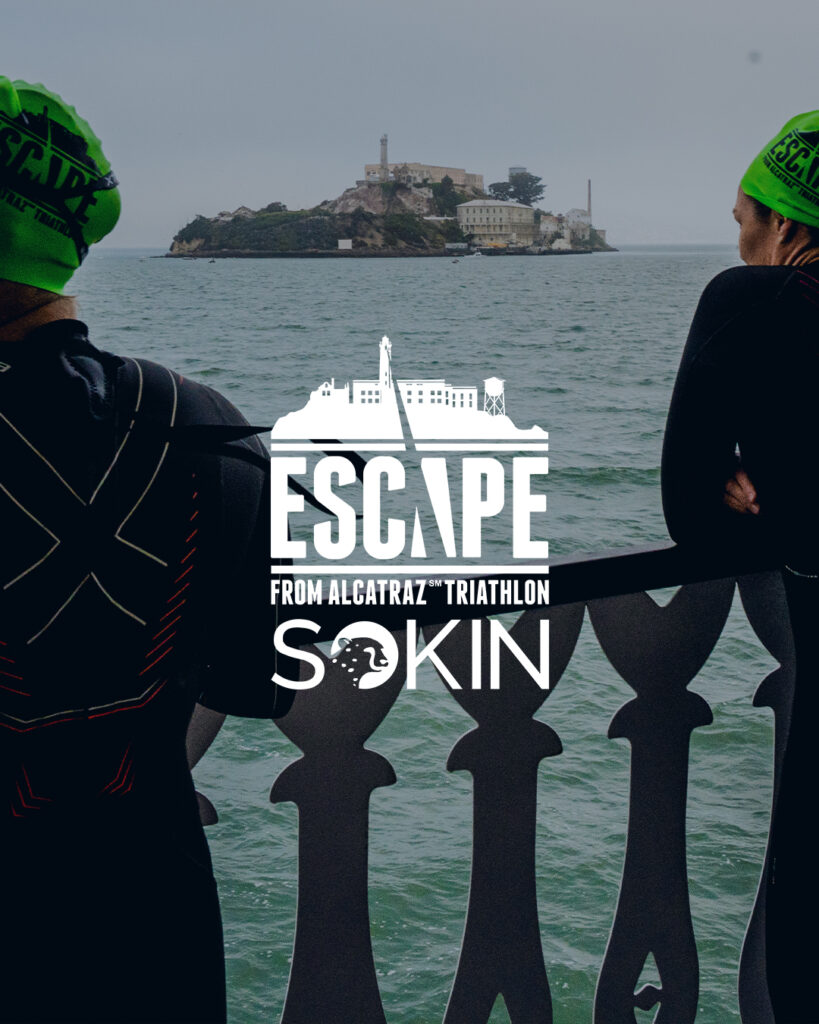
Sokin San Francisco T100 and Escape From Alcatraz Triathlons
Global payments and financial platform Sokin will become the official global business payments partner for the T100 Triathlon World Tour, and will also become the title sponsor of the PTO’s San Francisco event.
The PTO will now have access to utilize the Sokin platform and “streamline its global payments” and benefit from “more efficient and scalable international business operations.”
“The US is a major growth market for Sokin and having the honor of putting our name on the legendary Escape From Alcatraz Triathlon puts us in front of exactly the kind of business audience we want to reach there,” Sokin CEO, Vroom Modgill, said. “Sports partnerships have been one of the most effective ways for us to build brand presence in international markets and sports organizations like the Professional Triathletes Organisation have the global reach and complex business operations that Sokin’s platform is built to support. That dual fit is what made this an obvious partnership for us.”
Tags:
PTOT100World TriathlonRelated Articles:

Continue the discussion at forum.slowtwitch.com
15 more replies






The PTO announced $40 million in Saudi funding in July 2025 not February 2026.
Did they receive that money? How does this funding usually work? Is it merely a contract that the Saudis sign but don’t actually deliver the cash all at once?
Almost certainly over time as opposed to a single lump sum
“We told the athletes we were short on spare cash, but they know we always make good, even though we’re always super late.”
This is a pretty soft one. It’s getting funny. Also the fact that they didn’t get the investment up front says a whole lot…this seems more like donation fee schedule to a non-profit than an investment.
[quote=“Bryancd, post:3, topic:1298194, full:true”]
If they actually agreed to that, which I’m not surprised by, it’s crazy incompetent since they have failed to pay bills and continue to cut expenses on the athlete side of the business.
How do you buy ownership in a company with an IOU? It’s not even buying it on credit unless they are paying interest? So they took a certain percentage of equity and didn’t pay?
Or they just announced at some point in the future they may or may not take a certain percentage of equity but wanted lend their possible commitment to PTO publicly so PTO could make promises to various individuals and organizations that otherwise would not trust their ability to continue to makengood and pay – which was reasonably founded as it turns out?
The entire process sounds a bit shady. I realize some deals get made with smoke and and mirrors like this (maybe more than I realize?) but it is certainly feels misleading to any stakeholders.
Why put this in quotes, as it’s not the actual quote from Sam (only your interpretation of what he said)?!
can one even quote the bamboozelling of sam lol
I for one found this reassuring (as I want the T100 to succeed), and everything made sense. The deal with Sokin in particular seems like it is important as Renouf has always said he is looking for sponsors outside of the sport.
As for the payment from Saudis not being all “given” at once, that seems completely normal to me. I’m sure sponsor deals for athletes are the same, you sign a multiyear deal but you don’t get all the first year. Same with pretty much any multi year deal I would believe. But I know nothing in this field, it just seems logical to me.
The only thing I might push back on is the part about the athletes knowing there would be delays in payments. It seems there have been dissatisfied athletes voicing their displeasure lately (specifically Jelle Geens put in a little comment “if I ever get payed” in his last podcast which was kinda bizarre). If everything was clear from the beginning, why voice it now ? Although if PTO had said : “beginning of May”, I can understand some waited for May 1st, and if they had no news, preferred to go public to put pressure on PTO.
I haven’t been on here in a while. But I read this article and had to get on here to defend my friends and the blatant lie that “athletes were informed they would be paid by May and that’s where we are.” Because Sam makes it sound like that timeline was the original one that was given, but it wasn’t. The May timeline was only given AFTER multiple athletes reached out and were ghosted. Which prompted the article that came out on PTN. Which also coincided with athletes saying they are forgoing their races unless they are paid.
It’s not just athletes they owe money to, athletes pay some of their prize earnings to managers and coaches. This is a pretty big deal that cascades, I really hope I don’t have to post receipts of conversations, emails, etc. and they just pay the athletes like promised.
It’s a writing device to sum up his bullshit quite. Everyone knows that he didn’t actually say it but that’s the truth of it and his quote that was published is the lie.
Based on the quotes, the Sokin partnership is for mostly services and very little money if any. It will allow them to pay athletes without dealing with exchange fees.
SURJ is not a sponsor, so no, this is not normal. SURJ is an owner that purchased a holding in a funding round. So that investment being paid on an elongated fee schedule is not the norm.
Is this the second time or the third time that PTO failed to pay on time and only did so once they had the money AND after pressure from athletes media was created?
Sorry what? PTO was “hedging” by not paying its athletes? So ask the hard question. Did you get paid January-May Sam?
PTO, or “professional triathlon association” is not professional and will not succeed long term. No business succeeds by stiffing their employees/contractors. This is the second time this happened.
Unfortunately now it’s going to be on the athletes to take a stand so to speak. But of course in a sport like tri someone will always want to show up for a chance at a paycheck.
This is only going to get more and more ugly now. The smugness/tone from a few comments doesn’t bode well for anyone.
It’s upside-down world where the boss says it’s disrespectful to the sponsors for the athletes to ask when they will be paid.
The interesting thing with that quote is PTO basically essentially saying they weren’t paying their athletes “just in case things don’t work out.”
What else is the hedge for if not the option to not pay them?
Now, all that being said, if I’m PTO and I made a deal with an organization that didn’t pay me everything promised because missiles were being fired at them, making it so I couldn’t I pay my contractors, I’d communicate that clearly to my contractors.
I suppose they can claim they did that and the timing was such that they got stuck in a waiting game of instant before they could make that announcement.
Your financial partner boarding up their house and going into a bunker on a regular basis might cause them to revisit their priorities instead of writing some unprofitable event payments.
Which is a pretty damn good reason for the PTO to back out of most of these contracts all together of they so chose. The truly craven thing for them to do is pay a portion now, and promise to pay the rest in the future for those who continue to race the series. Not racing it anymore? All payments are off on account of the war forcing a change in their agreement.
To the extent these guys have actually signed contracts I’m assuming there is a force majeure clause.
Not that it would speak well of the PTO and it’s future. I do have to say, this startup has been cursed and gone through the ringer. First right as they are poised to get going COVID shuts everything down. Then within a couple years of getting passed that as they line up their future events their major investors get missiles shot at them and are under a blockade of sorts.
Pretty disingenuous to blame the war in Iran for delayed payments. The US attack happened in Feb. 28/Mar. 1. So why then were athletes not paid in Jan/Feb when all the doping tests were over? It’s the same way they used Imogen Simmonds’ case as an excuse for delayed payments last year.
I don’t recall this being offered as a reason for the slow/no money from the 2024 T100 races and contracted Tour payments (which finally made it in July 2025).
Simmonds was a contracted athlete in 2024 and was #9 in the Tour - final in Dubai a month before Simmonds contamination AAF. How could her circumstance (not public till end February) delay payments due by mid January at the latest?
The PTO had earned a shedload of goodwill from athletes for their 2024 races and had been paying at expected intervals through 2024. So athletes gave them grace February-April for non-payments before ‘offering feedback’.