
We Noticed: New 70.3 Worlds Title Sponsor, Apple Steps into Marathon Partnership and TUE Questions
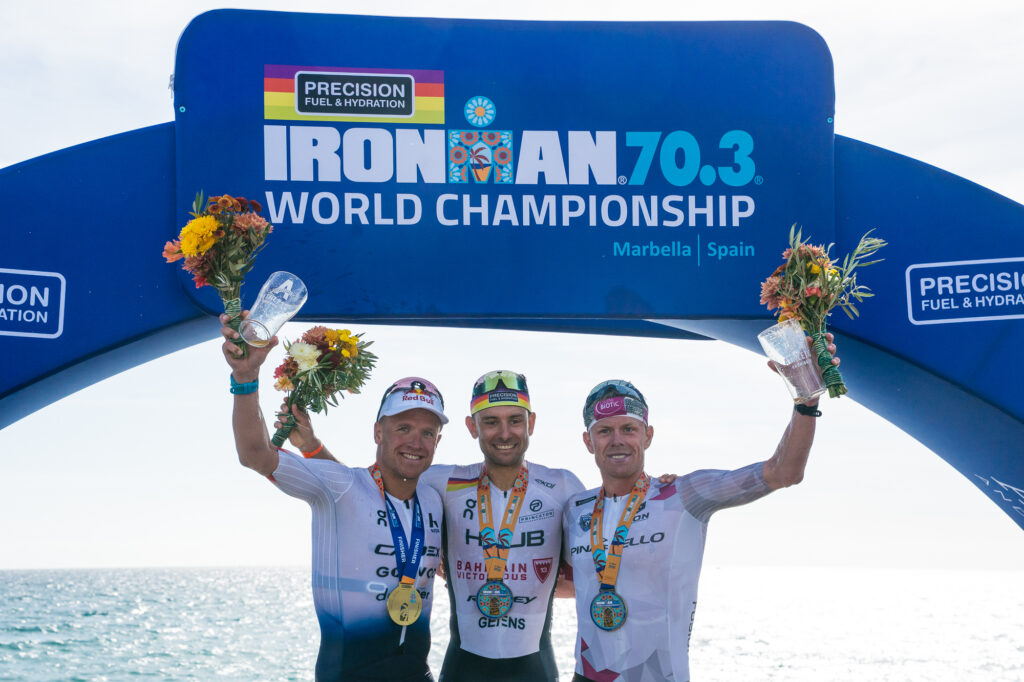
Precision Fuel & Hydration came on board as a last-minute title sponsor for last year’s IRONMAN 70.3 World Championship in Marbella, so it’s not a big surprise that the company has done a multi-year deal with IRONMAN to be the title partner for the 2026, 2027 and 2018 IRONMAN 70.3 World Championship events.
“We’re absolutely delighted to be expanding our partnership with IRONMAN once again,” says Jonny Tye, CEO of Precision Fuel & Hydration. “Marbella was one of the highlights of last year for us, and we’re excited for Nice and the IRONMAN 70.3 World Championships in the years to come.”
The company has certainly been front and centre when it comes to on-site activations over the last decade or so, and that will continue in style throughout the 2026 season. In addition to the on-site promotions, the company will continue to provide its low-calorie PH 1000 electrolyte drink on course.
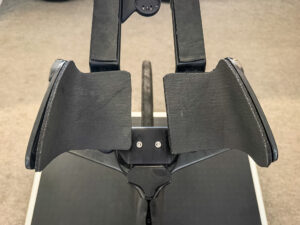
“In 2026, PF&H are executing a campaign that aims to celebrate the 1980s as a formative decade in the sport and IRONMAN’s history,” today’s release states. “This starts in earnest this week at Athlete Brewing IRONMAN 70.3 Oceanside triathlon, where they will be showcasing some special memorabilia from 1980s triathlon at their expo activation: The Tri Bar. This theme will continue through the year, culminating in activations at the Precision Fuel & Hydration IRONMAN 70.3 World Championship, Nice and the IRONMAN World Championship in Kona.”
Apple Partners with London Marathon
This year’s London Marathon takes place exactly 11 years and two days after the launch of the first Apple Watch, and this year’s event is the first time that Apple will be partnering with a major marathon event. We reviewed the latest of the Apple Watches earlier this year (you can read our review of the Apple Watch Ultra 3 here, and our review of the Apple Watch Series 11 here), noting that the company has definitely become more serious about attracting endurance athletes over the last few years.
As we noted in our reviews, Apple has been building more and more high-end running tools into its watches, making it a very viable option for training and racing for most athletes. (Battery life remains an issue for ultra-marathon types who will surge past the Ultra 3’s 42-hour limit, but for marathon runners, that isn’t an issue.)
Now, as the “Official Performance Technology Product Partner” for the event that’s billed as “the world’s most popular marathon, with more than 1.13 million people applying to enter the ballot for the 2026 event,” Apple is signalling that the company is really ready to go after the serious running crew.
“The London Marathon is one of the world’s greatest sporting events and a powerful celebration of the global running community,” says Jay Blahnik, Vice President of Fitness Technologies at Apple. “Apple’s technologies support runners at every level with powerful tools and insights that help them stay motivated, track their progress, and better understand their health and fitness. We couldn’t be more excited to be a partner of the 2026 TCS London Marathon.”
TUE Questions
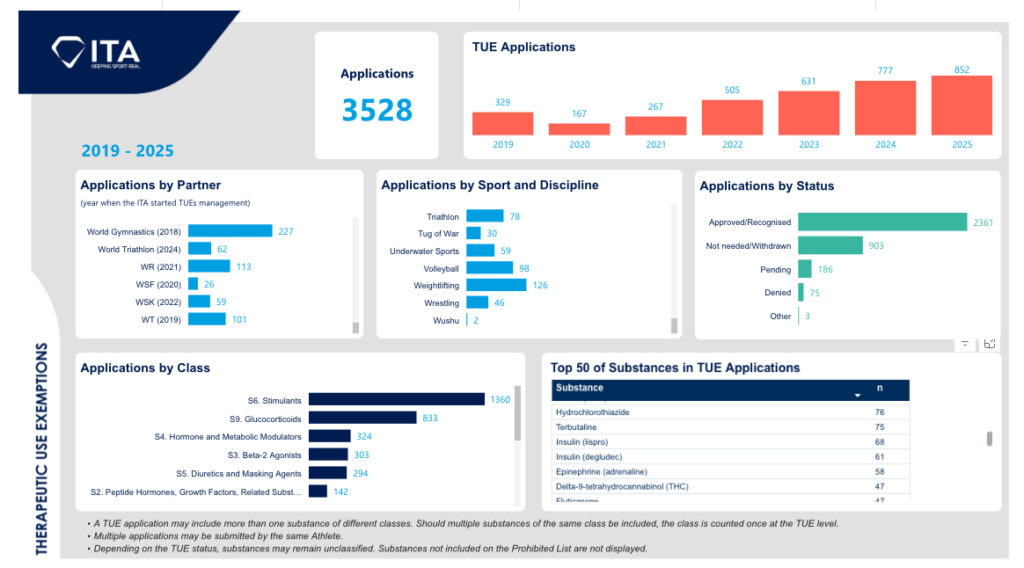
The International Testing Agency (ITA) has launched a new “interactive dashboard publishing anonymized statistics on therapeutic use exemption (TUE) applications it manages on behalf of its partner international federations.”
The idea behind a TUE is to allow athletes who need to take a medication that might be banned to be able to do that. Athletes who suffer from asthma, for example, might be able to apply for a TUE to be able to use an inhaler that might include a banned substance.
“The TUE Program is a necessary part of sport, allowing athletes with legitimate medical conditions to receive appropriate treatment,” says World Anti-Doping Agency Medical Director, Dr. Alan Vernec.
“TUEs are a vital – yet often misunderstood – component of the global anti-doping system,” the ITA explains in a post on its site. “By making aggregated data publicly accessible, the ITA aims to strengthen transparency, improve understanding, and reinforce trust in how TUEs are assessed and managed across international sport.”
Only one to three percent of athletes require a TUE, according to the ITA. To get a TUE, applications follow strict rules and “are carefully assessed by the ITA’s independent International TUE Committee.”
There was roughly a 25% increase in TUE applications between 2023 and 2025, but the ITA says that’s more a factor of it representing more sports as opposed to more athletes asking for exemptions. According to the data released, the ITA managed 650 TUE applications in 2024, and there were about 850 in 2025. About two thirds of TUE applications are approved, one quarter are withdrawn or determined not to be necessary, 10-15% remain pending and only about 2% are rejected.
Triathlon has had 78 TUE applications submitted between 2019 and 2025 – IRONMAN had 16 of those applications, while World Triathlon had 62. (IRONMAN joined the ITA earlier than World Triathlon – who only had the organization take over its anti-doping and TUE management in 2024.) Of those, 54 have been approved, with the rest either not needed/ withdrawn, still pending or denied. Over the years there have been more and more applications made within triathlon – one was made in 2023, 34 submitted in 2024 and 43 last year.
There’s been mixed reactions to the release of the data. 2023 IRONMAN world champ Sam Laidlow has started a petition, stating on Instagram that the goal was to “push organisations to make TUEs public in order to compete professionally.”
The Czech Republic’s Aneta Grabmüller Soldati points out that “because of a TUE, I have a daughter.”
“The ITA recently published statistical data on TUEs which sparked quite a discussion, criticism and even calls to make TUEs public,” Grabmüller Soldati writes in an Instagram post. “The medication I used, letrozole, is on the prohibited list. Yes, it can be misused to mask doping. But it’s also a common part of fertility treatment. Now imagine this is public. My federation, sponsors, EVERYONE would know I’m trying to get pregnant while treatment might not even work. As if pregnancy in elite sport wasn’t already complicated enough.”
There’s certainly lots to debate here. I have absolutely no doubt that there are athletes abusing the TUE system. But, based on the numbers – I was actually surprised that there were only 54 TUEs approved – there aren’t likely to be a lot of people using this as a way to cheat. I also don’t believe that athletes should have to tell the world that they’re trying to get pregnant, or that they might be taking a drug to alleviate symptoms from ADHD or any other condition that they might want to keep private. I also applaud the ITA for disclosing as much information as they can without betraying the privacy of the athletes. In other words, I’m not sure the “make it all public” approach is truly the answer, but I would love to see some sort of solution where people could have more faith in the system.



Did Ironman comment on if the sponser of PH for the 70.3 WC 26 27 and 28 races also mean that they’re all in Nice?the wording on the announcement wasn’t super clear if it should be read as sponser at nice all 3 years or just sponser at the WC all 3 years
Good article.
I have absolutely no doubt that the overwhelming number of athletes using the system to request a TUE are doing so because they need the medication. Based on the numbers: only 55 TUEs approved – the number of triathletes using this as a way to cheat is miniscule.
I also don’t believe that athletes should have to tell the world that they’re trying to get pregnant, or that they might be taking a drug to alleviate symptoms from ADHD or any other condition that they might want to keep private.
#MeToo
I also applaud the ITA for disclosing as much information as they can without betraying the privacy of the athletes.
#MeToo
I’m certain the “make it all public” approach is truly NOT the answer. The TUE system is designed with both privacy/‘medical-in-confidence’ and a high bar, rigorously applied. I wonder if there is a middle way - I hope more knowledgeable people (not on ST!) will address this as opposed to athletes (eg Laidlow) just jumping on the “Transparency” bandwagon.
It’s a pity that people aren’t able to trust the TUE system to navigate this fine line in anti-doping, which allows athletes who can prove their need for medication with banned PEDs/maskers to participate/compete. I see a reflection of the wider world in this lack of trust in systems and authority.
well one big issue is that there is no clear division between pros and amateurs in the list.
while I would mostly agree, based on what facts is that statement made ?
Zero basis. I was (merely) rephrasing/mirroring @Ironmandad 's assertion which I thought true but with a negative spin. Of course it would be excellent to cut out abuse entirely, but there’s a baby and bathwater issue here, and whether the effort is justified by any improvement, with diminishing returns if the abuse is minimal. I doubt the panel who decide whether to approve T or HGH do so without very great care and consideration.
[Edit: Here are the Therapeutic Use Exemption (TUE) Physician Guidelines - on Male Hypogonadism.
Prohibited Substances: Testosterone and hCG ]
I posted the Ironman element of the data in the PTN thread: there are two S1.1 Anabolic Androgenic Steroids ‘approved’ for Ironman athletes (whether amateur or pro not known) over two years!
This really is not a 12m < 20m draft zone benefit issue.
Here’s the current International Standard for Therapeutic Use Exemptions (ISTUE)(2023):
https://www.wada-ama.org/sites/default/files/2022-09/international_standard_for_therapeutic_use_exemptions_istue_2023.pdf
More in the PTN thread.
As much as I respect her desire to become a mother (and I’m happy she was successful), I don’t think it’s unfair for people who are essentially investing in your future as an athlete to know that you might decided in the next few months to stop being an athlete.
Her wanting to maintain that asymmetry of information in her favor is strictly (mostly) to maximize her financial gain at the expense of those doing the paying. While I can respect that both parties in any financial negotiation want to maximize their returns, I don’t think there’s an overriding moral component to making sure her “employers” remain in the dark when compared to transparency across the board.
As much as I respect your unclouded take (not much, sorry), please float these thoughts with a few rational female friends (including an athlete or two) and appreciate their feedback.
I have emboldened a few of your quality phrases/words.
Your take might apply to any female athlete: are you suggesting they hoist a flag to say: “I/we are trying for a baby”? Tell your mum - and that’s a very much ‘maybe’. YMMV.
Cute reply. But nevertheless what she’s ultimately asking for is not privacy that she’s a mother (err, that becomes pretty obvious within a few months), but as she specifically alluded to privacy to help out her contract negotiations. One might say it’s in (slightly) bad faith to secure a deal for yourself, that of necessity prevents that money from going to another athlete.
And female has nothing to do with it. Athletes, male or female hide injuries from their sponsors/employers all the time if they think it will affect things negatively in their favor. It’s a similar information asymmetry.
The Czech Republic’s Aneta Grabmüller Soldati points out that “because of a TUE, I have a daughter.”
“The ITA recently published statistical data on TUEs which sparked quite a discussion, criticism and even calls to make TUEs public, The medication I used, letrozole, is on the prohibited list. Yes, it can be misused to mask doping. But it’s also a common part of fertility treatment. Now imagine this is public. My federation, sponsors, EVERYONE would know I’m trying to get pregnant while treatment might not even work. As if pregnancy in elite sport wasn’t already complicated enough.”
https://www.instagram.com/p/DWO_N1uDJBl
You can assert that “it’s in (slightly) bad faith to secure a deal for yourself, that of necessity prevents that money from going to another athlete.” You’d be wrong in the first part and likely wrong in your second part assumption - “of necessity”.
But then you say this “information asymmetry” goes on all the time. So why should trying to get pregnant be ‘outed’?
The issue in this case though is that if you are applying for a TUE for fertility there is a very real chance that it might not even happen, especially in this class of TUEs. To even apply would likely mean that they’ve already been trying for a while (typically a year) for a baby with no success.
Part of the issue is that to declare this intent at the start of the process is a bit much of a burden - you could apply for the TUE, be accepted and then in a lot of cases nothing happens and you continue your career as if nothing’s happened from a performance perspective…
Pregnancy was identified as a sympathetic trump card that a person was willing to talk about.
The point isn’t that everyone has a right to know if someone is trying to get pregnant, but that if the privacy rights of using banned substances for performance reasons in order to increase the chance of pregnancy outweighs the right of competitors to know how often this is happening. And just as importantly, if it is happening, increase the transparency behind the process so others affected would be able to navigate similar circumstances.
We can say, it’s just as simple as satisfying the criteria, but the reason case law is open in the legal system is so everyone can see how the sausage is made and learn from that process to benefit self and others. I do not think there is any reasonable lawyer who would say it would be best if all trials were secret. Transparency protects everyone, with some unfortunate externalities. Secrecy protects few, with many exernalities.
The fact that the main concern was financial, suggests that’s the real issue isn’t with privacy (and I don’t begrudge that), but is one athlete’s financial concerns more important than transparency in drug use overall. We can say, that’s why we have neutral arbiters to handle this, and everyone should just trust their judgement. But that judgement also serves to protect the arbiters more than it does the other athletes who might be shocked to find out what’s going on (or how they can navigate it themselves).
Regarding Ajax’s assertion that federation or sponsor money is a bottomless pit and spending on one athlete that retires or takes a 1-3 years off has no impact on other athletes, well, that’s just wrong. It could be financial, it could be opportunity cost. Likely both. Again, my point isn’t about whether pregnant or injured athletes should get paid, but rather I disagree with using these things as a sympathetic trump card to override transparency.
There really is not. Sam Laidlow can make as many petitions as he wants, but the chance that WADA will listen to him is effectively zero. Especially, since the actually politically relevant debate right now goes in the exact opposite direction, namely whether WADA’s requirement for mandatory public disclosure of anti-doping violations may be in violation of privacy protection laws like the EU’s GDPR. The whole thing is a waste of time. Non-anonymized publication of TUEs won’t happen.
Let me sort out that ‘point’ for you.
The point is that noone has a right to know if someone is trying to get pregnant and a woman’s privacy rights of using banned substances in order to increase the chance of pregnancy if there is no effective alternative and it doesn’t “produce enhancement of performance” outweighs the right of competitors to know this is happening.
If there is no effective alternative and it doesn’t “produce enhancement of performance” the TUE will likely be approved: otherwise, as McCauley has shared, it’ll be denied. Grabmüller Soldati’s drug, permitted by her TUE, was a masker so did not fail (b) below and indeed is named (implicit approval) in the guidelines.
4.2 [Edited, p11 of 23 in the ISTUE linked above]
An Athlete may be granted a TUE if (and only if) they can show that [all] of the following conditions are met:
Interesting. The way you point things out so definitively as if you were ruling from on high and “silence! the debate is over!” is probably satisfying to type, but really just smacks of shutting down discussion.
Since you want to make pedantic points:
That’s at least 3 and possibly many more in that chain already.
What’s left for debate is if other competing athletes have a right to know that the person they are presently competing with in this very race is authorized to use medications which have been banned for competitors – for any reason, pregnancy red herrings or otherwise.
If you want to agree that an athlete who is using a banned substance under TUE should be ineligible to compete for some period of time, I’m more amenable to the idea of keeping the process opaque.
And without discussion of any individual by name, it should be obvious that anyone who is willing to use PEDs to win, would be willing to lie about all kinds of means, methods, and motives of why they are using either a PED or a masking agent.
I’ve cut your comment down - hope OK,
The pedantic mote in thine own eye, sir, is obscuring the lens you try to peer through.
Debate all you like: other athletes don’t have a right to know and they shouldn’t have. You have presented no persuasive argument for benefits which go near to outweighing the downsides.
Pleased that you have an amenable side. The process is clear, not opaque.