
Can Triathletes Make the Apple Watch Series 11 Work, Or Do They need the Apple Watch Ultra 3?
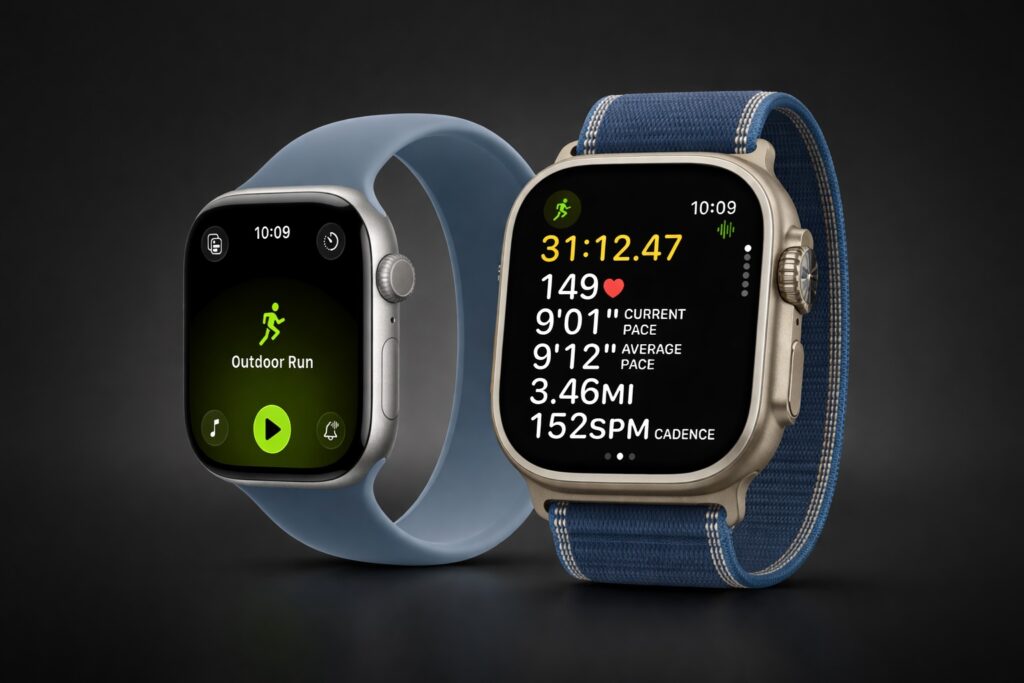
Photo: Apple
Earlier this month I wrote a review of the Apple Watch Ultra 3 and focussed on how the Apple keeps adding more features to its Ultra line up as it caters to serious endurance athletes. The kicker still remains around the battery life of the watch – compared to other GPS training watches on the market, even the added battery life of the latest Ultra (42 hours in full-power mode) pales in comparison to models from Garmin, Suunto or Polar.
As I concluded in my Ultra 3 review, though:
If you’re looking for a new watch and are keen to remain in the Apple ecosystem, the Ultra 3 might be just what you’re looking for. If charging your watch every day or two is going to drive you nuts, this is most definitely not the watch for you. If you don’t have an iPhone, you’re not going to be interested in this watch, either – and you have lots of other great options out there. The Apple Watch Ultra 3 is a viable option for even the most serious triathletes, though, who are comfortable in the Apple ecosystem and want to add the Apple Watch to their collection that likely includes an iPhone and a MacBook.
Apple didn’t just launch a new Ultra 3 this year, though. The company also released a new Apple Watch Series 11, which offers pretty much all the same functionality of the Ultra 3, comes in a sleeker case, but doesn’t have the same battery life and is missing the oh-so-valuable “action” button on the left-hand side of the case. For me that’s a game-changer – the default for that button is to take you to the Workout App, making it really easy to get started with a workout.
(Last year my wife reviewed the Apple Watch Series 10 for me, and she continues to use it – she likes the sleeker case. The lack of an action button doesn’t bother her at all, and since she didn’t do any full-distance races this year, the battery life wasn’t an issue.)
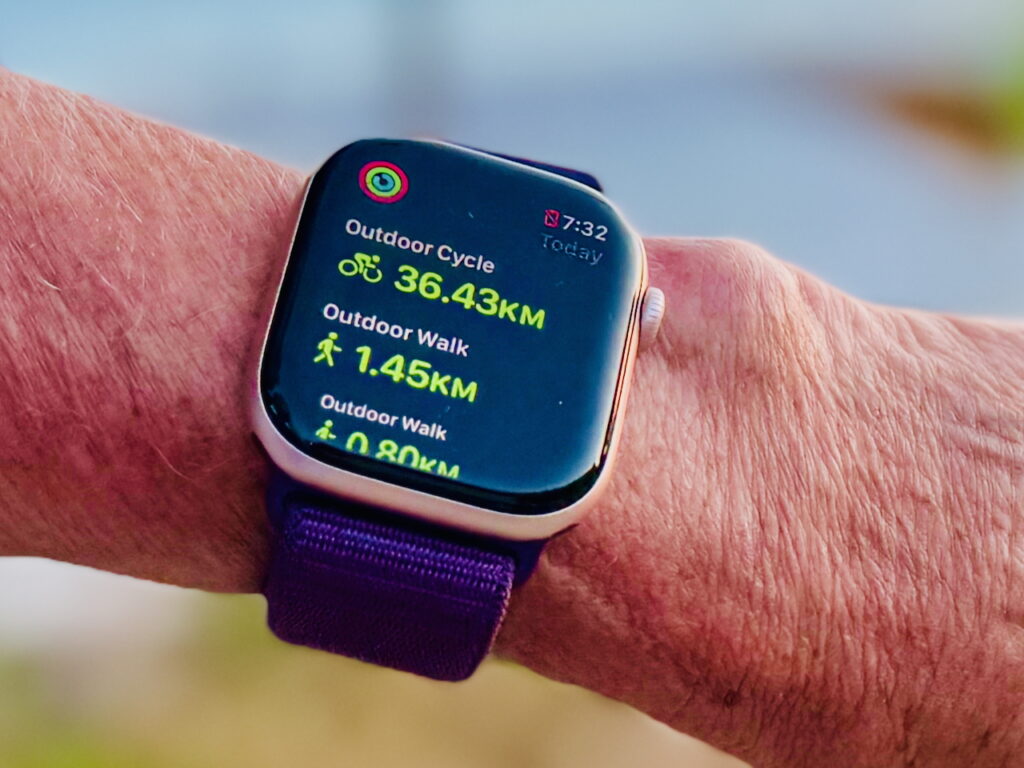
While it still looks huge on my wife’s small wrist, the Apple Watch Series 10 is a bit more comfortable for her to wear. The Apple Watch Series 11 is the same size as the 10.
Once I’d finished my review of the Ultra 3, I dedicated myself to wearing the Series 11 to see if it would satisfy my training and every day needs. For the most part, it does, but there are a couple of features that make the Ultra much more appealing for me. Before I get into those, though, here’s a breakdown of the differences (and similarities) between the two watches:
Apple Watch Series 11 vs Apple Watch Ultra 3
Battery & GPS
Battery Life
- Series 11: ~24 hours (short-course training, daily use; Low Power Mode likely required for long events)
- Ultra 3: ~42 hours standard; up to ~72 hours in Low Power Mode (comfortably covers IRONMAN-distance racing with GPS)
GPS
- Series 11: Standard GPS
- Ultra 3: Dual-frequency, multi-band GPS (better performance in urban, trail and mountainous environments)
Why it matters: Battery life and GPS accuracy remain the biggest performance gaps between the two models. Ultra 3 is clearly built with long-duration activities in mind.
Swim, Water & Outdoor Use
Water Resistance
- Series 11: 50 m (pool and open-water swim capable)
- Ultra 3: 100 m with dedicated dive features
Outdoor Tools
- Series 11: Core compass and navigation
- Ultra 3: Precision compass, Backtrack, siren and expanded outdoor metrics
Why it matters: Both handle swim training well. Ultra 3 is better suited for long training sessions and remote environments.
Display & Usability
Display Brightness
- Series 11: Up to ~2,000 nits
- Ultra 3: Up to ~3,000 nits
Form Factor
- Series 11: Smaller, lighter; easier all-day wear (Available in 42 or 46 mm cases – aluminum or titanium)
- Ultra 3: Larger, heavier; improved readability during activity (Only available in a 49 mm titanium case)
Why it matters: Ultra 3 is easier to read in direct sun, especially during long rides and runs.
Health, Recovery & Sleep Tracking
Core Health Sensors (Both Models)
- Optical heart rate
- ECG
- Blood oxygen
- Skin temperature trends
- Sleep duration and sleep stage tracking
Sleep Tracking
- Series 11: Full sleep tracking with nightly metrics
- Ultra 3: Same sleep metrics, but longer battery life reduces the need to choose between overnight wear and next-day training
Why it matters: Health and sleep data are largely the same across both watches. The practical advantage of Ultra 3 is battery headroom, making overnight wear easier, especially during heavy training blocks when you want to track health and sleep data.
Connectivity & Safety
Cellular
- Both models offer GPS + Cellular versions
Satellite Features
- Series 11: Not supported
- Ultra 3: Satellite SOS and emergency messaging (region dependent)
Why it matters: Satellite connectivity is not a race feature, but it adds meaningful safety value for trail runners, cyclists and remote training.
Price
Starting Price:
- Series 11: US$399
- Ultra 3: US$799
Real Life Testing
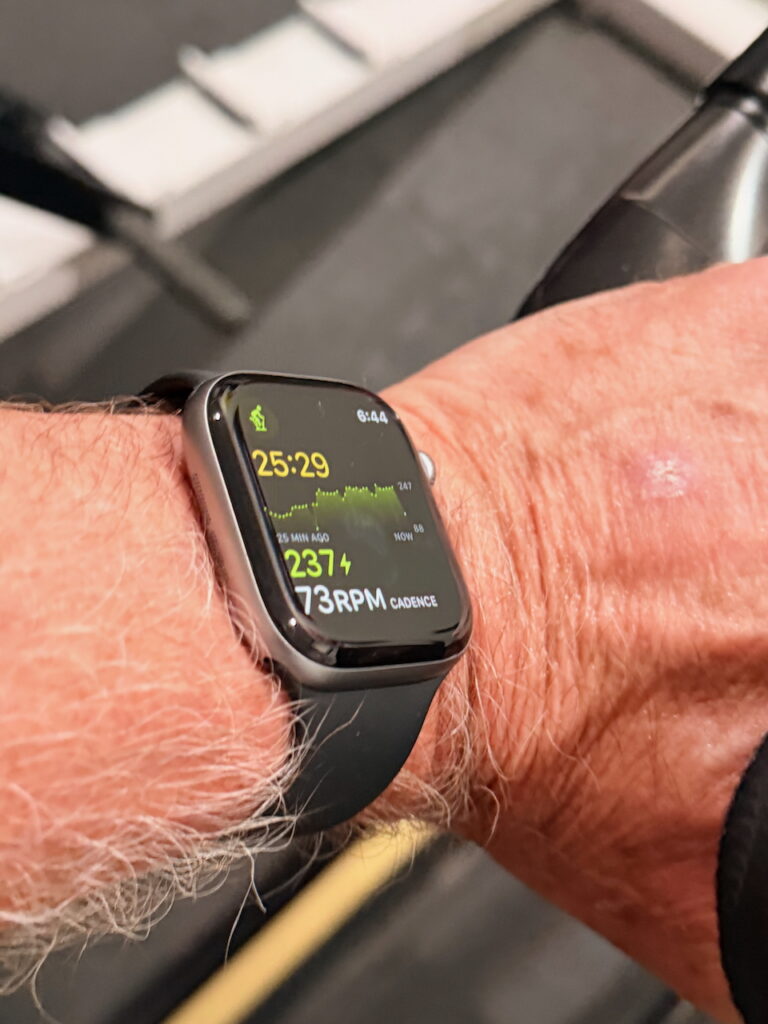
As you can see in the photo above, as with the Ultra 3, you can set the Series 11 up with your power meter to be able to track data during rides and gather lots of pertinent training and racing data. (This was a shot I grabbed while coaching an indoor bike session – yes, I make the group start at 6 am.)

The same goes for running – while the GPS isn’t supposed to be as robust in the Series 11, I had absolutely no issues while either biking, hiking or walking. Now, I wasn’t in any super-remote areas, but for everyday use in three different countries (Canada, the USA and Spain), I didn’t find there to be any problems or shortcomings with the GPS.
When it comes to swimming, athletes I coach know full well that I’m not a fan of people using watches in the pool – a pace clock is all you need. (When was the last time you saw any elite swimmers pressing a button on a watch at the end of all their intervals?) I do like the idea of keeping track of my total meters and training, so I am not averse to wearing a watch during a workout – I just don’t like people constantly stopping and starting their watches during a workout. So, I just let things run. What’s interesting, though, is that the Apple Watch Series 11 (and the Ultra), will provide lap times for those who are really keen to see exactly how fast they were going.
Here are a couple of examples from my swim workout on the weekend:
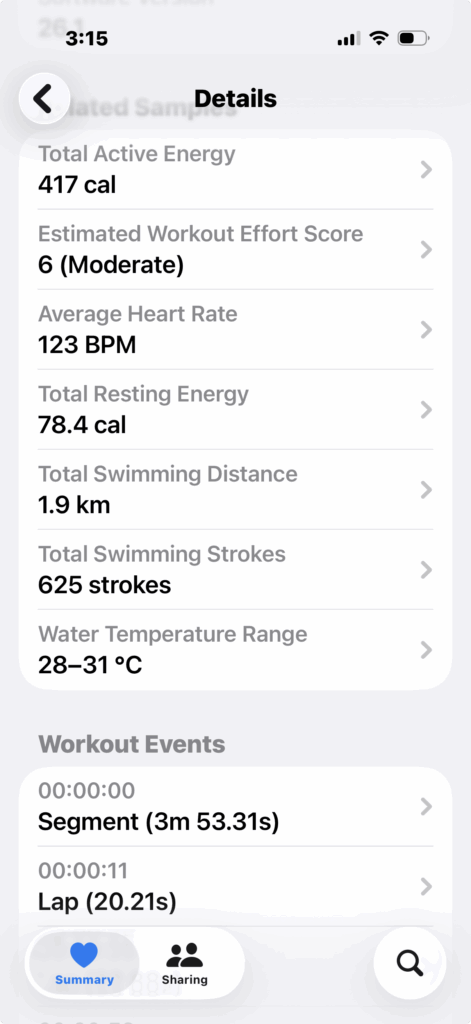
So, for me, the most important data was the total number of meters – I was pleasantly surprised that the Series 11 kept track of my kicking distance. Below you can see how it broke out lap and segments during the set, too.
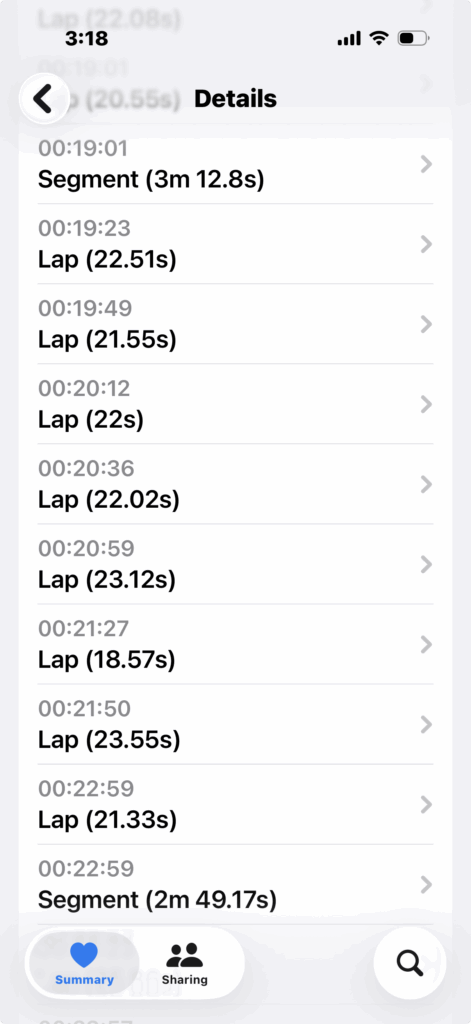
With two bad knees I haven’t been doing a lot of running over the last little bit, but thanks to my very active Labrador retriever, we do a lot of walking, which provides me with lots of opportunity to test out the GPS tracking capabilities of the watch. While the Series 11 isn’t as bright as the Ultra 3, I haven’t found any issues with being able to see the screen. It’s almost as big, provides lots of data and is quite visible even at an angle.
Here’s some of the data the watch gathered from a morning walk on the ice.
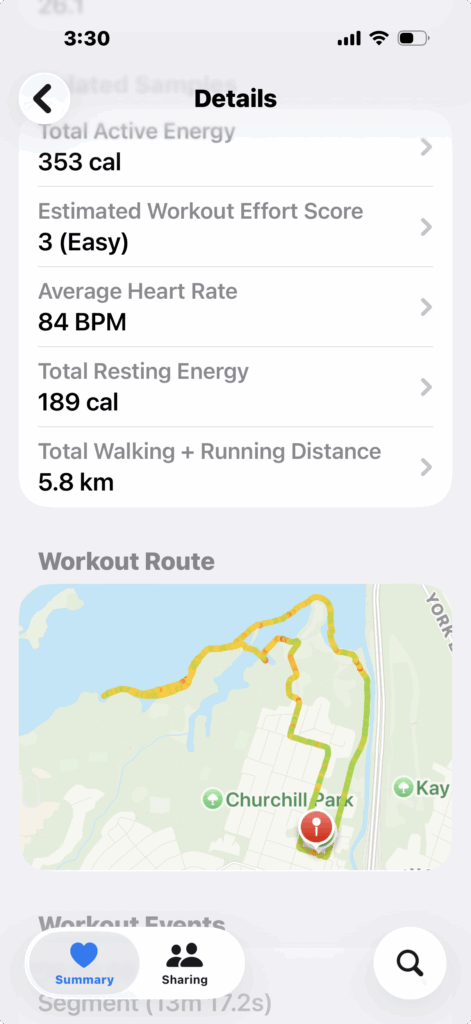
So, if the question is can you track workouts with the Apple Watch Series 11, the answer is an emphatic yes. It also offers up extensive health tracking data, too. I’ve been especially impressed with the upgrades to the Sleep Tracking on the watches.
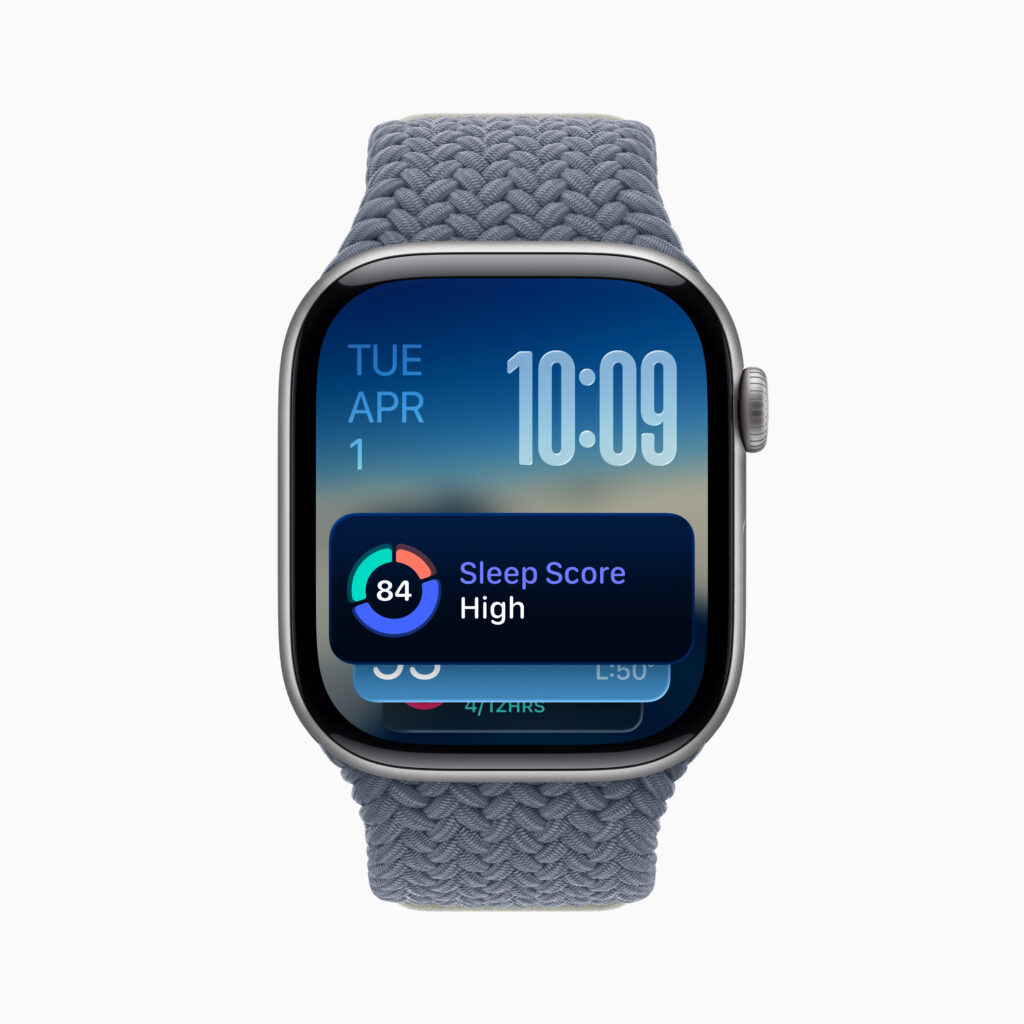
And that’s where things start to go awry for me when it comes to the differences between the Series 11 and the Ultra 3.
As I mentioned earlier, my wife, who trains a lot more than I do, happily uses a Series 10 to track all her workouts. Every night, though, she plugs the watch in to charge, and doesn’t ever sleep with it on. That works for her, but if your wanting to track your sleep data, you’ll have to figure out some time during the day to charge up the watch – because, while the watch is supposed to offer up 24 hours of battery life, I never got that much time when I added a few daily workouts to the mix. The watch does charge really quickly, so it’s not a huge deal to throw it on a charger for a bit during the day. (Apple reports that you’ll get 80% charge in 45 minutes and full charge in 75 minutes – which seemed about right to me.)
Being able to go for a day and a half (at least) between charges is a big selling point for the Ultra 3, in my mind.
Then there’s the aforementioned “action” button. I know it’s not a big deal, but having to press the crown to get to the apps, then pressing the face to get the workout app, then finding the workout and starting it … it just feels like a lot when you’ve become accustomed to being able to hit that action button and then be right at the workout. And, while you can still pause a workout by hitting the two buttons simultaneously, and also track laps by tapping the screen twice, it’s just not as easy a process as using the action button.
In Summary
So, to answer the question posed in my headline: most triathletes can absolutely make the Apple Watch Series 11 work to track their training and racing. Not so much if you’re planning on doing a full-distance event, or some long trail endurance events, but for anything up to a half-distance race, the Series 11 will do the trick.
For newbies to the sport who might already have a Series 8, 9, 10 or 11, this is all great news. Get started with triathlon. Save some money and use the Apple Watch for your training and racing for now. If you find that you need more battery life down the road, you can upgrade at that point.
There are definitely a few upsides other than the price, too – the Series 11 is much sleeker (especially if you go with the 42 mm size) on your wrist and weighs less. While it’s only about 20 g, you definitely feel the difference.
For those in the hunt for a new watch, the Series 11 is a viable choice if you want to stick within the Apple gadget universe, and want to save yourself roughly US$400. Your getting pretty much all the same data and training capabilities – you’ll just have to go through a few more steps to get to a workout and stay on top of keeping it charged, especially if you want to track sleep data.
If money is not an object, you don’t mind a slightly bigger watch and you want all the benefits of an Apple Smart Watch (pay, playing music, syncing with your phone and computer, etc.) the Ultra is probably your answer. If you want all those Apple benefits, like the idea of a smaller footprint on your wrists, and want to save some money, you’ll be fine with the Apple Watch Series 11.





Can Triathletes Make the Apple Watch Series 11 Work, Or Do They need the Apple Watch Ultra 3 Garmin Fenix?
FTFY