
The Needle and the Damage Done
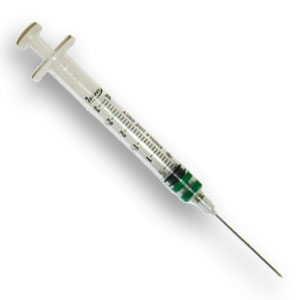
The recent implementation of the 2010 World Anti-Doping Agency (WADA) prohibited list affects all athletes that fall under WADA's oversight. While the list is targeted towards professionals in sport, it equally applies to any participant who falls under the regulations of their specific sport and governing body (i.e., USAT for triathlon).
Until 2009, only the professionals were tested in triathlon, however, the World Triathlon Corporation (WTC) that owns the Ironman brand announced age-group testing as well. Further, USAT's board of directors is batting around the idea of a large drug testing program designed to cover a breadth of important races at which USADA has expressed no interest in testing, and the discussion includes testing of AGers alongside pros.
Knowing what's on the WADA prohibited list is also important because many of these substances, while conferring a performance-enhancing benefit, are also unproven in terms of overall health and well-being. Limited long-term studies have been done with most of the listed substances, and even fewer studies have been carried out on healthy subjects.
It is equally important to note that some of the prohibited substances play an important role in modern medicine for ill patients and can improve quality of life when used according to clinical studies relevant to disease treatment. A substance listed on the WADA-prohibited list means only that the material appears to offer a performance-enhancing benefit to athletes.
A PDF of the 2010 WADA list is available here.
There are two aspects to the list: The first is the black-and-white listing of a great number of substances known to enhance performance. Most of these are banned outright, meaning that detection will result in a positive drug test. Each sport or governing body has its dedicated mode of dealing with a positive test.
The second aspect to the list is the "spirit" of the intended prohibitions and the usage of the statement "…and other substances with a similar chemical structure or similar biological effect(s)" at the conclusion of each substance class. Simply put, this statement means that substances that are not exactly identified in the list but are related to identified materials are also banned.
This is very important because it provides protection against newly designed materials that have not yet been specifically named in the list. Chemists can easily slightly modify the chemical structure of a material changing it from it's named banned substance such that it would otherwise be legal if not for the above terminology. Detecting unnamed substances however provides an ongoing challenge to testing facilities.
Per the WADA website, changes to the 2010 list include the following:
Change of Status for Salbutamol
Salbutamol, a beta-2 agonist used frequently by those suffering from asthma and other respiratory diseases, will be permitted under 1,000 nanograms per millilitre. If the urinary concentration is above 1,000 nanograms per millilitre, there will be a presumption that the substance was not taken by inhalation and the athlete will have the burden to demonstrate through a controlled pharmacokinetic study that the level found in his urine was the result of therapeutic inhaled use. Under the 2010 list, its use by inhalation will no longer require a Therapeutic Use Exemption (TUE) but rather a simplified declaration of use. This measure will allow the handling of salbutamol by anti-doping organizations in a more cost-efficient way while continuing to allow athletes with a medical necessity for inhalation of this drug to benefit from its use.
Platelet Rich Plasma (PRP)
The status of platelet-derived preparations (ie. Platelet Rich Plasma (PRP), “blood spinning”) has also been clarified. These preparations will be prohibited when administered by intramuscular route. Other routes of administration will require a declaration of use in compliance with the International Standard for TUEs. Over the past few years, PRP has found widespread application in injury recovery from chronic joint pain, including tennis elbow and tendonitis of various joints. While still a rather expensive process (one treatment costs about $2000 and is not usually covered by insurance) PRP appears poised to confer nearly miraculous benefits to injured athletes, especially of poorly-vascularized tissue such as ligaments. The WADA prohibition involves it's use via intramuscular dosing, presumably leading to muscle growth rather than joint injury recovery. One concern is how athlete testing will be able to differentiate between these modes of application and how sanctions against a positive PRP test will be considered if there is any ambiguity in the dosing method. Basically, WADA is saying that PRP can be used by athletes, but not intramuscularly. It will be interesting to see how this evolves during 2010.
Pseudoephedrine Reintroduced
Until 2003, pseudoephedrine was prohibited in sport. Pseudoephedrine was subsequently included in WADA’s Monitoring Program in 2004. The Monitoring Program includes substances that are not prohibited in sport but are monitored in order to detect patterns of misuse. Results of the Monitoring Program over the past five years have shown a sustained increase in samples containing pseudoephedrine concentrations of more than 75 micrograms per millilitre. The Program indicated clear abuse of this substance with high concentrations in a number of sports and regions. In addition, available literature shows scientific evidence of the performance-enhancing effects of pseudoephedrine beyond certain doses. Based on literature and results of controlled excretion studies funded by WADA, pseudoephedrine was reintroduced on the list with a urinary threshold of 150 micrograms per millilitre. Of particular note to athletes is the wide availability of medicines containing pseudoephedrine, placing the burden of using non- pseudoephedrine containing medications on the athlete. This addition to the list will likely lead to positives by athletes who are unaware of the presence of pseudoephedrine in their medication. Read the labels!
Jonathan Toker, in addition to acting as the Slowtwitch Science Editor, is an elite-level triathlete/trail runner who hails from Canada and lives in Southern California. He received a Ph.D. in organic chemistry from The Scripps Research Institute in 2001 and worked at biotech Amgen for four years. Jonathan invented the SaltStick products back in 2002, and has since worked tirelessly to bring the products to market. Every lot of SaltStick products is tested for WADA-prohibited substances.




Start the discussion at forum.slowtwitch.com